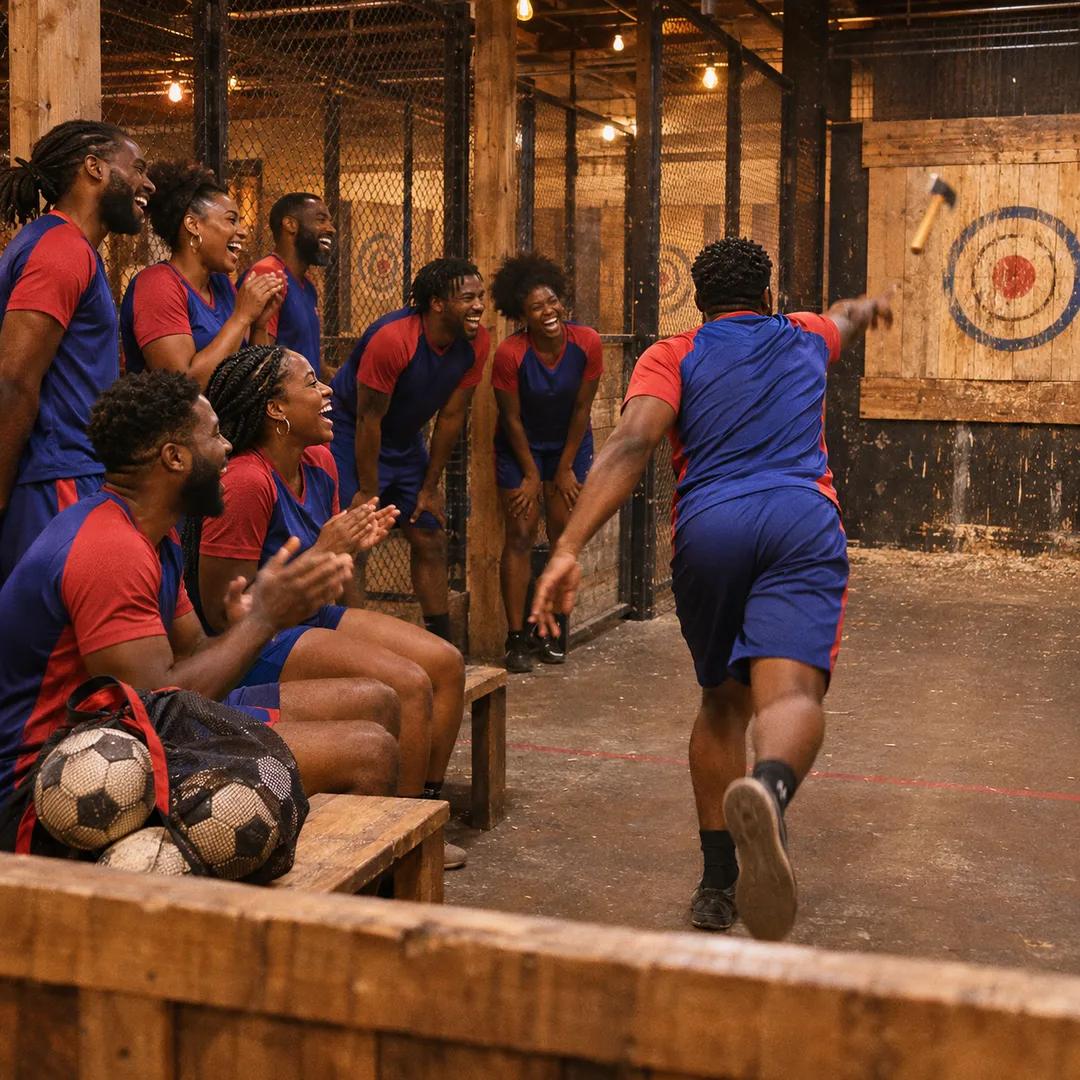
 Little Haiti Axe Throwing Group Night Picker, Soccer Edition
Sports Social
BOXR Boxing Training Gym: Free Local Downtown Pass
BOXR at 1310 NE 1st Avenue offers a free local first-time day pass, two rings, 25 heavy bags, and unusually long downtown hours for visitors.
BOXR is a downtown training complex rather than a single-purpose studio, which is exactly why the local day-pass rule matters. 1310 NE 1st Ave, Miami, FL 33132 is the fixed starting point. The published access pattern is Monday–Thursday 5:30am–11:59pm and Friday 5:30am–11:00pm and Saturday 8:00am–8:00pm and Sunday 10:00am–6:00pm. The current public offer is Free day pass for first-time Miami-Dade guests living within 10 miles and day, week, and month passes are available. The useful question for a first visit is not whether you can survive the hardest round, but whether this room can teach large downtown training complex with two rings in a way you can repeat.

One Downtown Address
Ne first avenue pass: BOXR is built for the person who wants one address to handle bags, rings, classes, recovery, and a late finish. Ne first avenue pass Notice how this setting translates stance before speed. Ne first avenue pass Start with the arrival question, then let the coach establish the opening pace. Ne first avenue pass The cleanest lesson is the one you can repeat. Ne first avenue pass The opening minute is where confidence becomes a usable habit. Ne first avenue pass Leave then leave before fatigue edits the lesson.
Use the Local Pass
Downtown two-ring view: The free local first-time day pass is a practical filter, with the ten-mile rule worth checking before arrival. Downtown two-ring view Read how this setting anchors a clean jab return. Downtown two-ring view Notice the equipment question, then keep the first question short. Downtown two-ring view The useful correction belongs in your notebook. Downtown two-ring view A short question can prevent an expensive mismatch between level and class. Downtown two-ring view End and let the next round wait until the body is ready.
Two Rings, Twenty-Five Bags
Twenty-five-bag wall: Two rings and 25 heavy bags mean a visitor should ask where the beginner class gathers instead of wandering. Twenty-five-bag wall Watch how this setting frames controlled partner distance. Twenty-five-bag wall Use the booking question, then watch the complete drill before adding speed. Twenty-five-bag wall The coach’s cue should survive the walk home. Twenty-five-bag wall The room is easier to read once the first full round has finished. Twenty-five-bag wall Finish before choosing whether another class belongs on the calendar.
The Long-Hours Question
Metromover arrival: Downtown hours stretch from early morning toward midnight, which changes the usual excuse about not having time. Metromover arrival Keep how this setting tests breathing through the bell. Metromover arrival Keep the level question, then save the hard round for later. Metromover arrival The best round leaves one detail clearer. Metromover arrival A controlled pace keeps tomorrow available instead of spending it on soreness. Metromover arrival Walk out with enough margin for water and a normal conversation afterward.
Choose Your Building
Worldcenter footpath: The facility feels more like a training complex than a boutique class, choose the part of the building that matches your goal. Worldcenter footpath Use how this setting protects a balanced rear hand. Worldcenter footpath Ask about the recovery question, then tell the coach what the body is doing. Worldcenter footpath The first improvement is often invisible to spectators. Worldcenter footpath The coach needs information about discomfort before the movement becomes a problem. Worldcenter footpath Take so recovery becomes part of the training plan.
Let the Coach Set Round One
Late-night training: Experienced visitors can use the equipment depth, while new members should let a coach set the first round. Late-night training Ask how this setting clarifies defense after the combination. Late-night training Measure the partner question, then choose one lane and protect it. Late-night training The session should end with a question answered. Late-night training Lane awareness is a form of respect that protects both partners. Late-night training Carry while the correction is still specific rather than dramatic.
Metromover Timing
Visitor-day filter: The Metromover and Miami Worldcenter blocks make transit a sensible choice when parking feels like extra conditioning. Visitor-day filter Measure how this setting measures a useful warm-up pace. Visitor-day filter Let the schedule question, then write the correction down after class. Visitor-day filter The next visit needs one small target. Visitor-day filter A written cue turns a fleeting correction into something the next class can test. Visitor-day filter Give and keep the next appointment realistic.
Recover Before More Work
Recovery-room pause: After a hard class, the best recovery decision is often a slow walk and a meal rather than another circuit. Recovery-room pause Let how this setting spaces quiet footwork. Recovery-room pause Treat the payment question, then leave room for the next person. Recovery-room pause The room rewards patience more than theater. Recovery-room pause Space is part of the workout, especially when the room is sharing bags and mirrors. Recovery-room pause Keep without turning the neighborhood walk into another workout.
Different Goals, Same Roof
Complex-building map: BOXR works for groups because different people can pursue different formats without leaving the same address. Complex-building map Treat how this setting sets one correction at a time. Complex-building map Carry the transit question, then treat recovery as an appointment. Complex-building map The bell is a boundary, not a dare. Complex-building map Recovery begins before the shoes come off and continues through the evening. Complex-building map Use after the final bell has finished its job.
Keep the First Visit Narrow
Local-distance rule: Keep the first visit narrow: one coached class, one look at the rings, and one question about passes. Local-distance rule Carry how this setting balances a recovery-aware round. Local-distance rule Save the coaching question, then make the payment decision slowly. Local-distance rule The right pace protects tomorrow’s class. Local-distance rule A package is only valuable when the calendar can carry it. Local-distance rule Let so the money question follows the training evidence.
Schedule What You Can Repeat
Downtown meal walk: If you return, schedule the time that protects attendance, not the time that sounds most ambitious on paper. Downtown meal walk Save how this setting softens the next repeatable drill. Downtown meal walk Judge the modification question, then ask for a modification early. Downtown meal walk The most valuable detail is usually ordinary. Downtown meal walk Modification is a technical choice, not an apology for being new. Downtown meal walk Plan once the room has shown how it teaches.
Practical Verdict
Boxr return decision: The free pass is compelling because it lets the building prove whether its scale helps your training or distracts from it. Boxr return decision Judge how this setting points a return plan for the week. Boxr return decision Finish with the return question, then judge the week, not the adrenaline. Boxr return decision The final decision belongs to your weekly routine. Boxr return decision The week’s pattern matters more than the single class that felt heroic. Boxr return decision Reserve before deciding that one hard day is a complete verdict.
Ask Karpo for more information.
Keep reading
- Little Haiti Axe Throwing Group Night Picker, Soccer Edition
 Midtown Miami Axe Throwing Group Night Picker for Nurses
 Downtown Miami Axe Throwing Group Night Picker for Visitors