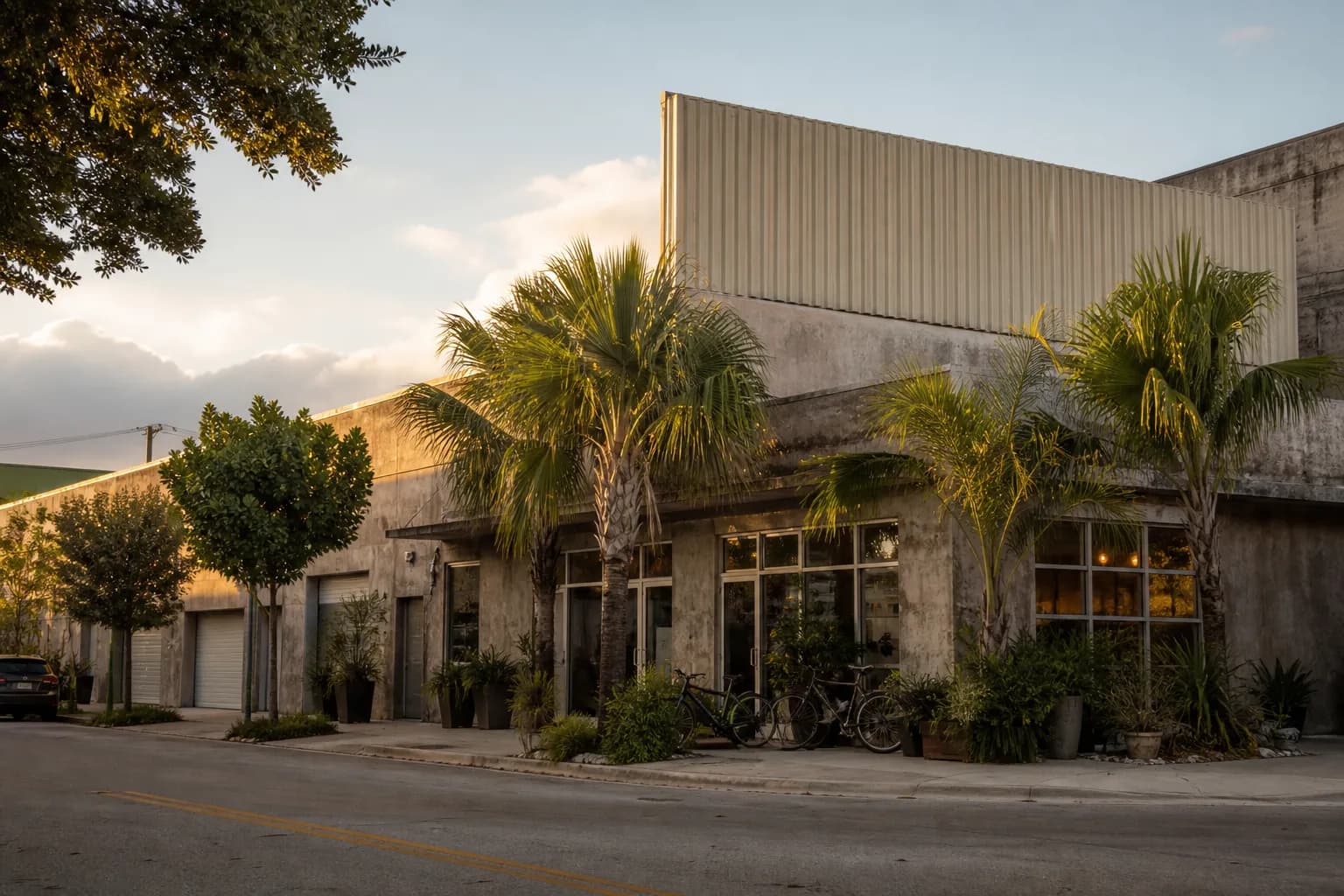
Miami's art scene has a structure you do not find in older American cities: a very large share of what is publicly visible is privately owned. Collectors here built their own museums and opened them, rather than donating to a civic institution and waiting for a wing to be named. That produces a city where the most important contemporary art is in converted warehouses belonging to families, and it changes how you should plan a visit.
Some of these are free, some are ticketed, and several run workshops most people never hear about. Ask Karpo what is showing near you this week and what it costs.
PAMM: the civic anchor on the bay
The Pérez Art Museum Miami sits on Biscayne Bay in a building by Herzog and de Meuron, and the architecture is doing a specific job — a deep overhanging canopy, hanging gardens and a wide terrace, all designed for subtropical heat and hurricane exposure. The collection focuses on international art of the twentieth and twenty-first centuries with a deliberate emphasis on art of the Atlantic rim, which is the correct frame for this city.
The terrace is the underrated part. It is one of the best free-feeling public spaces in downtown Miami, shaded, on the water, with the Frost Science museum next door and the park between them. A visit that includes an hour on the terrace is a better visit than one that does not.
The private collections, which are the real distinction
The Rubell Museum in Allapattah is the flagship of this model: a family collection built over decades, housed in a purpose-adapted complex of former industrial buildings, showing contemporary work at a scale most civic museums cannot match. The Rubells have a long record of buying artists early, which means the collection is a document of contemporary art history as it was being formed rather than after the fact.
Several other collector-founded spaces operate on the same principle across the Design District, Wynwood and the northern corridor, some open by appointment, some on fixed days. The variable opening is the thing to plan around — these are not nine-to-five civic institutions, and turning up unannounced is the standard mistake.
ICA Miami, and the free-admission fact
The Institute of Contemporary Art, Miami sits in the Design District with a sculpture garden behind it, and its most useful characteristic is that general admission is free. That makes it the correct first stop for anyone unsure whether they like contemporary art, because the cost of finding out is zero. It programmes emerging artists heavily and turns exhibitions over frequently, so it rewards repeat visits in a way ticketed museums do not.
Miami Beach: the Bass and the Wolfsonian
The Bass, in Collins Park, is Miami Beach's contemporary art museum, in a 1930s building expanded for the purpose. The Wolfsonian-FIU, in South Beach, is the genuine oddity of the list and the best museum in Miami that visitors miss — a collection of design, propaganda and decorative arts from roughly 1850 to 1950, assembled to show how objects carry political and social intent. It is a museum about persuasion, in a city built on it, which is either a coincidence or not.
The historic houses
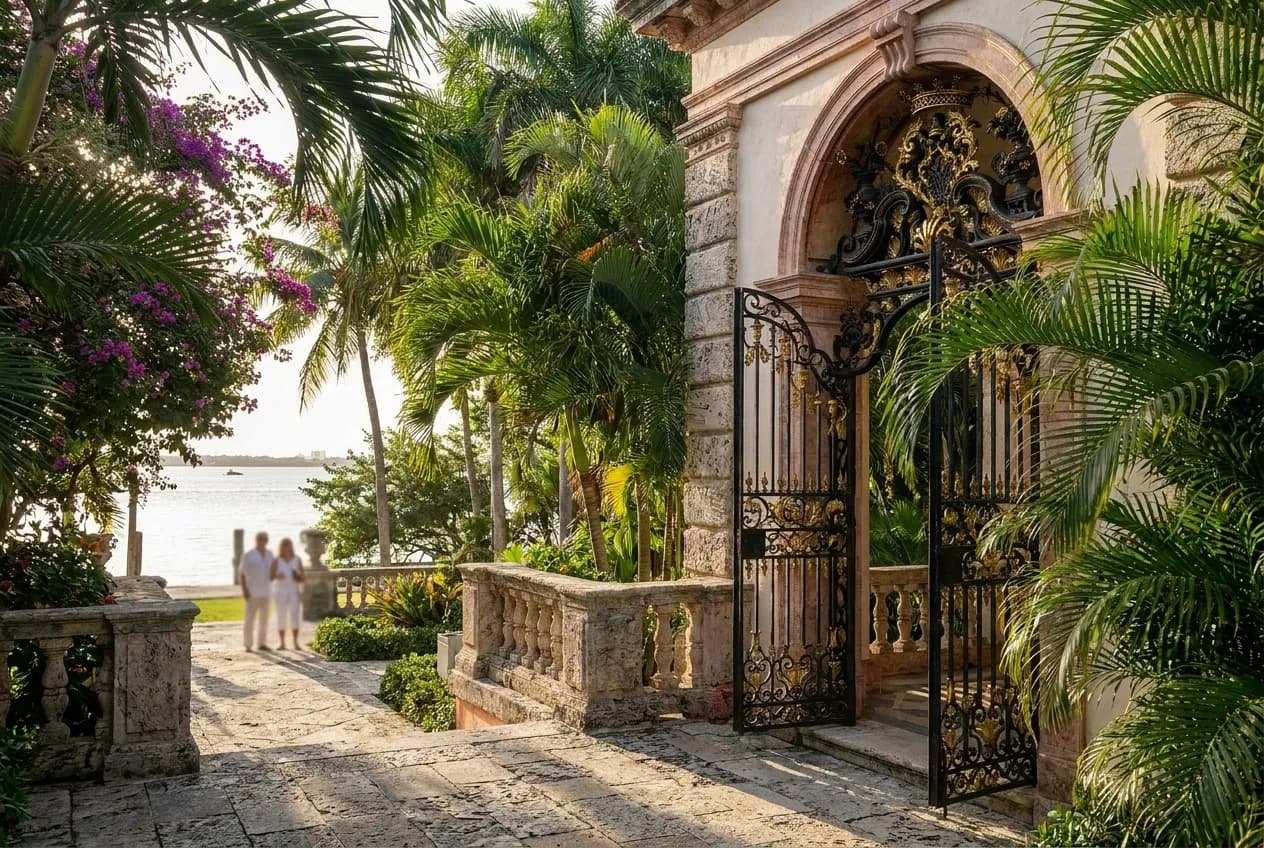
Vizcaya Museum and Gardens is an Italianate villa on Biscayne Bay built in the 1910s, with formal gardens running down to the water and a stone barge sitting offshore. It is the most photographed building in Miami and it is genuinely worth the ticket — it is also the coolest place in the city on a hot day, because the whole thing was designed for cross-ventilation before air conditioning existed.
The Deering Estate further south does the same period differently, with a much larger natural site attached — pine rockland, mangrove, and a genuine archaeological record. It runs canoe trips and naturalist programmes, which makes it the crossover point between the museum list and the outdoors list.
The university and civic museums
The Lowe Art Museum at the University of Miami in Coral Gables is an encyclopaedic collection — antiquities, Renaissance, Asian, Native American — which is the category Miami otherwise lacks entirely. HistoryMiami covers the region's own history, including the Everglades, the land booms and the successive waves of migration that made the county what it is, and it runs guided city tours that are the best structured introduction to Miami available.
The workshop layer nobody advertises
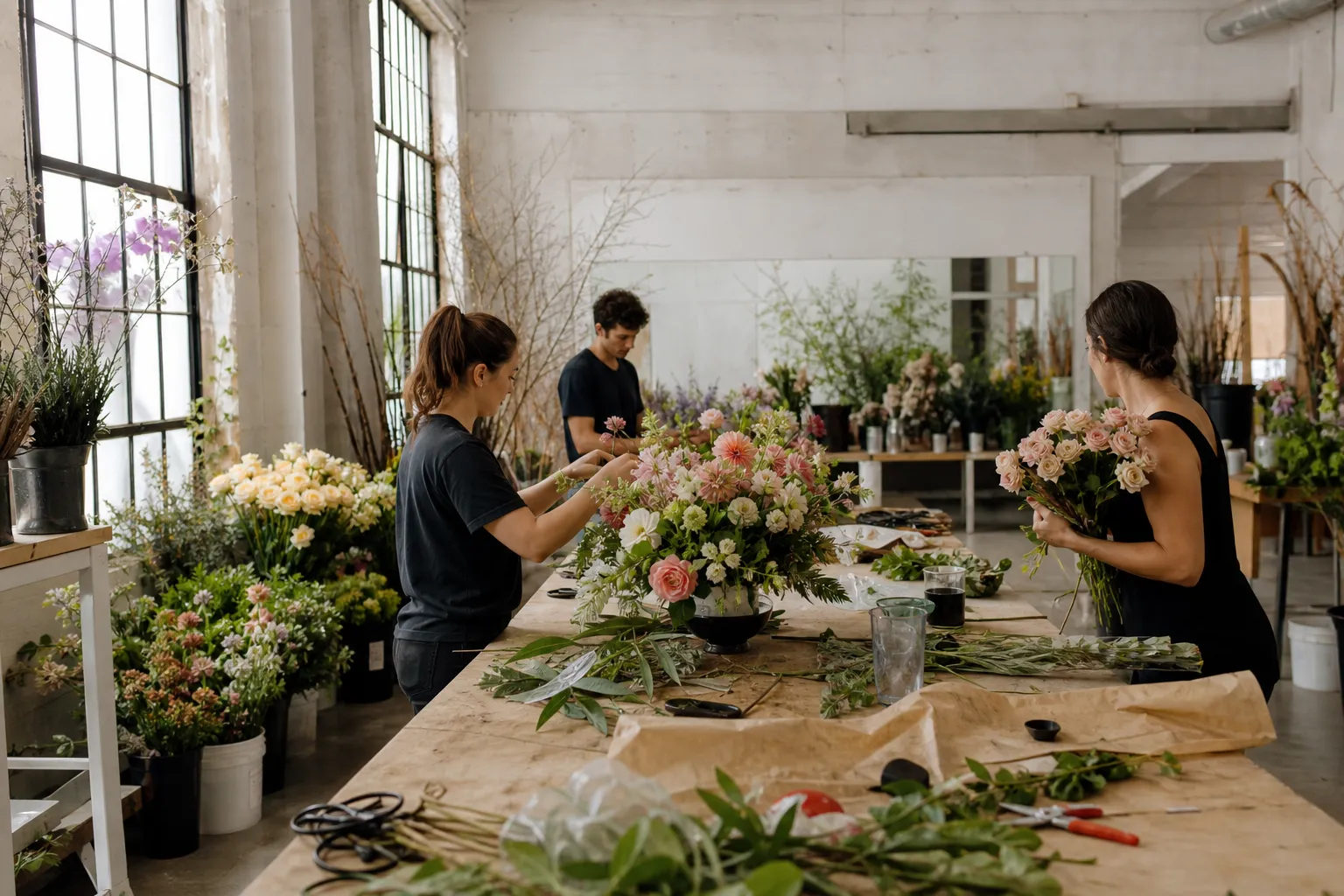
Almost every institution on this list runs public programmes that are advertised badly: printmaking and ceramics sessions, family workshops on weekend afternoons, artist talks, drawing classes in the galleries. They are usually cheap, frequently included with admission, and almost never full, because they are announced on the institution's own calendar and nowhere else.
If you want to make something rather than look at something, that calendar is where to look — plus the open studios in the Bird Road Art District, where the teaching is done by the artists themselves. It is the least visible and most rewarding part of Miami's art infrastructure, and it costs a fraction of what an equivalent class costs in New York or Los Angeles.
Tags: #BestMuseumsMiami #PAMM #RubellMuseum #ICAMiami #TheBass #Wolfsonian #Vizcaya #DeeringEstate #LoweArtMuseum #HistoryMiami #CreativeWorkshops #Miami #MiamiArt #Allapattah
All trademarks are the property of their respective owners.
Ask Karpo first
Want one museum and something to make afterwards? Ask Karpo which of these is open today, which are free, and whether any of them are running a workshop you can still get into this week.