Most people ordering empanadas in Miami stick to the usual suspects—beef, chicken, cheese. But walk into the right Venezuelan spot and ask for cazón, and you'll get something far more interesting: shark meat stewed with tomatoes, peppers, and spices, folded into golden fried dough that shatters on first bite. It's a coastal Venezuelan tradition that thrives here in South Florida, where the Venezuelan diaspora has turned empanada stands into serious operations. This crawl takes you through three national empanada traditions, anchored by the one place in Miami that does cazón empanadas exactly right.
Karpo knows which empanada shop is open right now, what's fresh today, and which filling matches your mood—whether you're chasing cazón or exploring the whole pastry spectrum.

El Arepazo: where cazón means something
El Arepazo on Bird Road doesn't look like much from the parking lot, but inside it's all business—a long glass case filled with arepas, cachapas, and a rotating selection of empanadas that changes daily based on what the kitchen prepped that morning. The cazón empanada is the reason you're here. Cazón is dogfish shark, a small coastal species that Venezuelans have been cooking for generations, and the filling here tastes like a good fish stew condensed into pastry form: flaky shark meat in a sofrito base with olives, capers, and a hit of cumin. The dough is cornmeal-based, fried to order, with a texture that's denser and grainier than wheat-flour empanadas.
Order at the counter and grab a table near the back where you can watch the kitchen work. The empanadas come out almost too hot to handle, wrapped in wax paper that soaks up some of the frying oil. Cazón usually runs around seven dollars, sometimes eight depending on the day. If they're out—and they do sell out, especially on weekends—try the pabellón empanada instead, which stuffs the entire Venezuelan national dish into pastry: black beans, shredded beef, fried plantains, and white cheese. Go early, ideally before noon on a Saturday, when the first batch is fresh and the line hasn't formed yet.
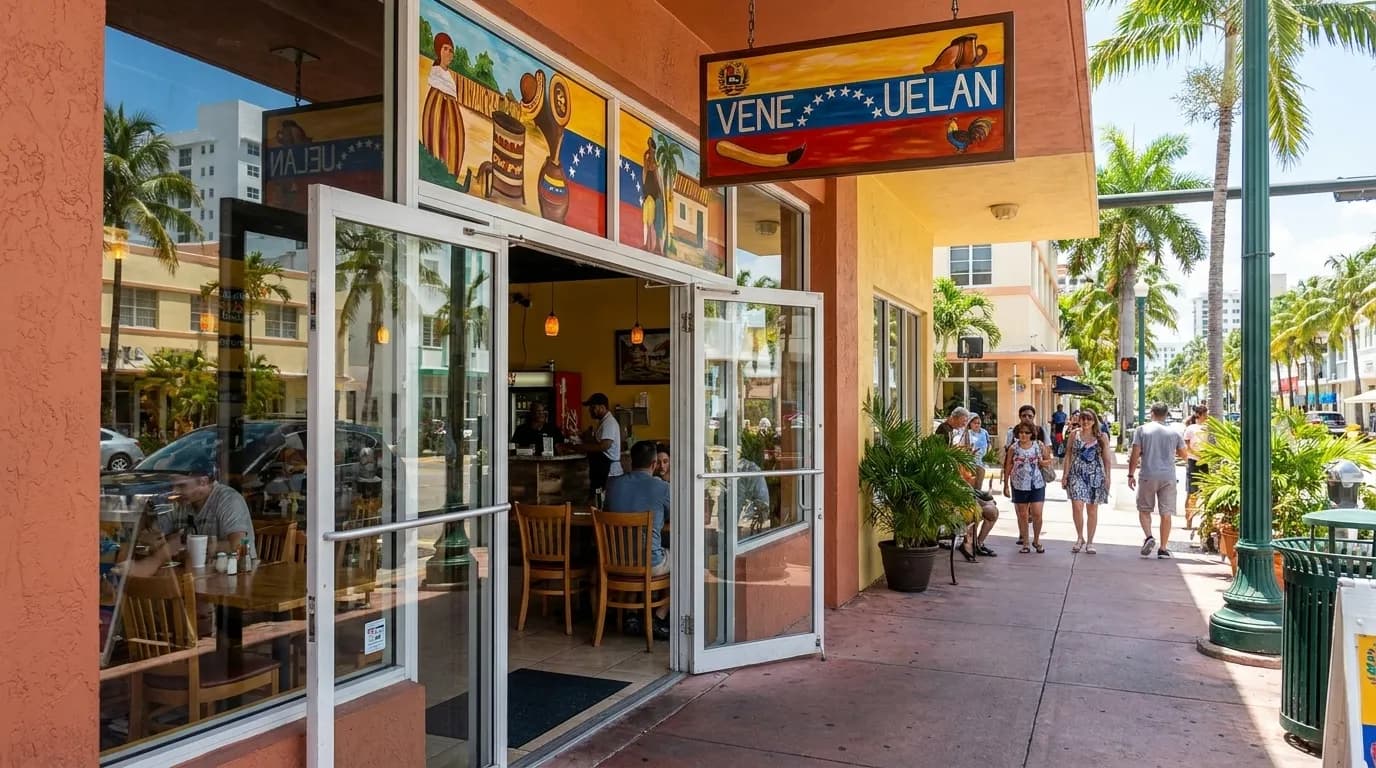
What cazón actually tastes like
If you've never eaten shark, cazón is the friendliest introduction. It's a mild white fish with firm texture, somewhere between swordfish and halibut but less oily. Cooked correctly, it flakes apart but holds its shape, absorbing whatever sauce or sofrito it's stewed in. In Venezuelan empanada filling, the shark is shredded and mixed with onions, peppers, tomatoes, garlic, sometimes a little wine or vinegar for brightness. The result is savory and slightly briny without tasting overly fishy. It's also protein-rich and filling in a way that chicken empanadas rarely are.
Cazón empanadas are a coastal Venezuelan staple, especially popular in states like Sucre and Nueva Esparta where fishing economies have always dictated the menu. In Miami, the tradition survives because the city's Venezuelan population skews heavily toward people who left in the last fifteen years, many of whom grew up eating cazón at beach shacks and family gatherings. That means the empanadas here often taste closer to the original than what you'd find in Caracas today, where ingredient shortages have made cazón harder to source. Miami's access to fresh Gulf fish keeps the tradition alive and affordable.
Half Moon Empanadas: the Argentine contrast
After the Venezuelan detour, Half Moon Empanadas in Coconut Grove offers a completely different empanada philosophy. Argentine empanadas are baked, not fried, with wheat-flour dough that's thinner and flakier, almost pastry-like. The fillings are simpler and less saucy—ground beef with onions, hard-boiled egg, olives, and paprika in the classic carne version, or just cheese and onion in the caprese. The shop itself is tiny, counter-service only, with a handful of stools and a chalkboard menu that lists about a dozen varieties.
Order the carne and the humita (a corn-and-cheese filling that tastes like creamed corn elevated by béchamel and fresh basil). The dough here is the star—it blisters and browns in the oven, developing layers of crunch that hold up even after the empanada cools. Argentine empanadas are meant to be hand-held meals, sturdy enough to eat on the go, and Half Moon's dough delivers on that promise. Prices hover around five dollars per empanada, and you'll want at least two. Pair them with a bottle of Quilmes if you're feeling nostalgic, or just grab a couple to go and eat them in the Grove's parks a few blocks away.
Graziano's: the old-school Argentine experience
Graziano's started as a butcher shop in Coral Gables in the nineties, expanded into a full restaurant, and now operates multiple locations across Miami. The empanadas here are baked Argentine-style, with a slightly thicker dough than Half Moon's and fillings that lean rich—think short rib, blue cheese and pear, or the classic jamón y queso with ham and mozzarella. The Coral Gables location has a full dining room with white tablecloths, but the empanadas are just as good ordered at the butcher counter and taken home.
The short rib empanada is the move if you're only getting one. The meat is braised until it falls apart, mixed with caramelized onions and a little chimichurri for brightness. The dough is sturdy enough to hold all that richness without turning soggy. Graziano's also sells frozen empanadas by the dozen if you want to stock your freezer, and they bake up surprisingly well at home. Expect to pay around six dollars per empanada at the counter, a little more if you're ordering off the restaurant menu. The vibe here is more polished than the other two stops, so come dressed for a sit-down meal if you're planning to linger.
How to build your own empanada crawl
The logical order is El Arepazo first for cazón, then Half Moon or Graziano's depending on your appetite and location. El Arepazo is west of Coral Gables on Bird Road, about a twenty-minute drive from either Argentine spot. Half Moon is walkable from Coconut Grove's main strip, while Graziano's sits closer to Miracle Mile in the Gables. If you're doing all three in one day, pace yourself—each empanada is a full snack, and three stops means at least six empanadas if you're sampling properly.
The real insight here is understanding that empanadas aren't a monolith. Venezuelan empanadas are fried and filling, built for street eating and quick lunches. Argentine empanadas are baked and portable, designed for picnics and long dinners. Colombian empanadas—though not covered in this crawl—are smaller and often come with ají sauce for dipping. Each country's version reflects its own culinary priorities, and Miami's empanada scene is one of the few places in the U.S. where you can taste all of them within a few miles. The cazón at El Arepazo is the anchor, but the real payoff is the side-by-side comparison that follows.
Practical notes
El Arepazo opens around ten and runs until early evening most days; cazón empanadas sell out by mid-afternoon on weekends, so go before one if you're set on trying them. Half Moon Empanadas keeps consistent hours in the Grove and takes phone orders if you want to skip the wait. Graziano's operates both a butcher counter and a dining room, and you can order empanadas from either—counter service is faster. None of these spots take reservations, and parking at El Arepazo can be tight during lunch rushes. Bring cash for El Arepazo; the other two take cards. Budget around twenty to thirty dollars per person if you're doing the full crawl.
Tags: #empanadascazon #empanadascrawl #miamiempanadas #venezuelanfoodmiami #elarepazo #halfmoonempanadas #grazianos #birdroad #coconutgrove #coralgables #miamifoodcrawl #cazonfilling #argentineempanadas #venezuelanempanadas #miamilatinfood
All trademarks are the property of their respective owners.
Ask Karpo first
Before you drive across Miami chasing empanadas, let Karpo check what's open, what's fresh, and which spot is closest to wherever you're starting. Whether you're hunting cazón or just hungry for something good, Karpo knows the neighborhood routes, the parking situations, and the fillings worth ordering today.