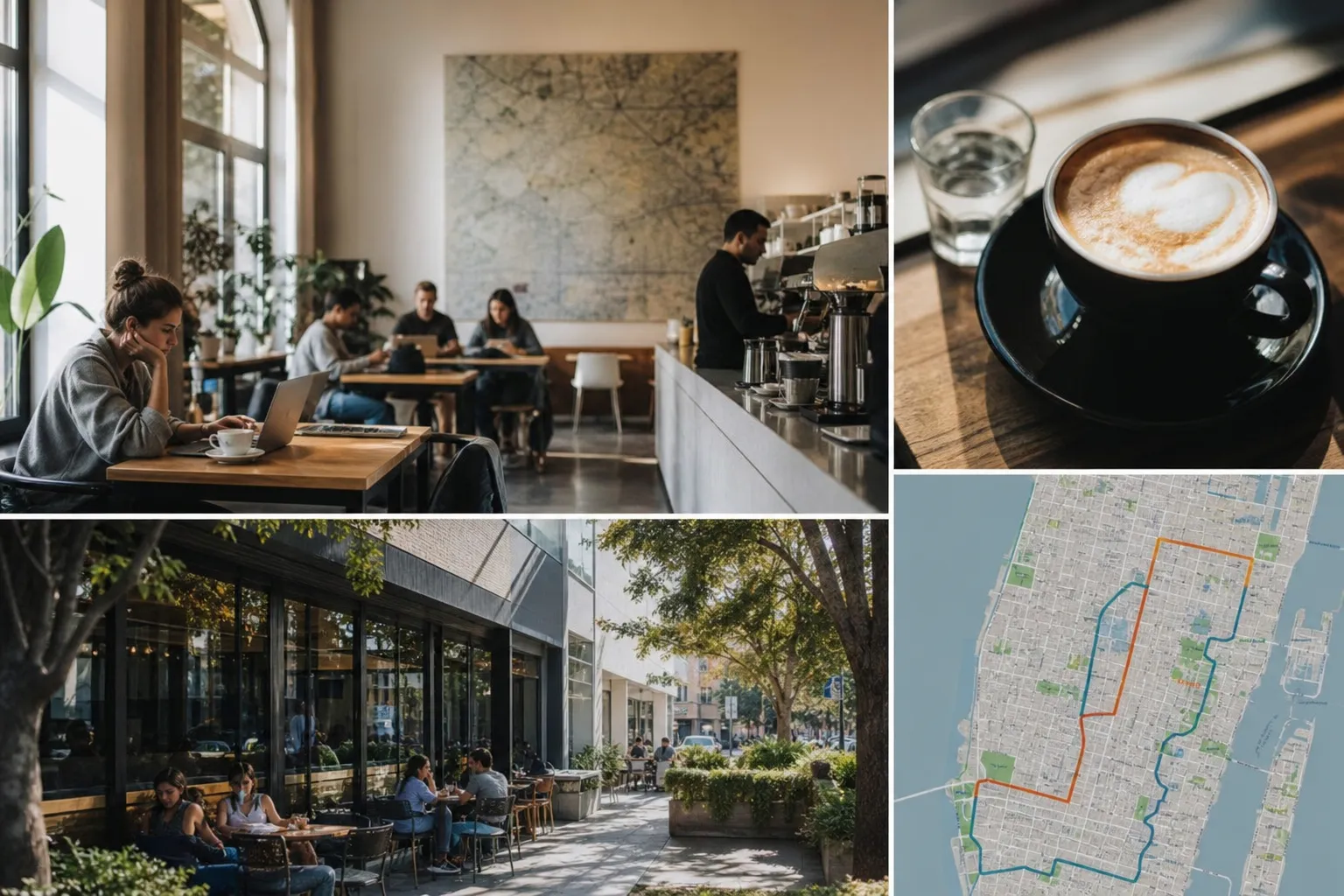
For the best cafes for studying in Miami, start with what is true today, not what was true last month. Open maps and search for cafes near the area you actually plan to be in, then check recent photos, recent reviews, and the busiest-time chart if it appears. You are looking for practical signals: tables that look large enough for a laptop, outlets near seats, indoor air conditioning, and a layout that does not force you into the walkway. In Miami, a pretty patio is not enough if the afternoon heat, glare, or traffic noise will make you leave in 20 minutes.
Pick your first stop and backup before you head out.

Before you commit, verify the details that matter for a long session. Recent comments often reveal whether the Wi-Fi is steady, whether the music stays low enough for focus, and whether there is a realistic place to sit with a charger. If you need accessibility, check for step-free entry, aisle width, and restroom access before you go. If you work with two screens or a large notebook, the table shape matters as much as the coffee. The goal is not to find the most famous place; it is to find the place that will still feel workable after an hour.
Use Miami neighborhoods to narrow the search
Miami is easier to study in when you match the neighborhood to the kind of focus you need. Coral Gables and Coconut Grove usually make sense when you want a calmer, more residential feel and less constant foot traffic. Brickell and Downtown are better if you want transit access and a dense cluster of nearby options, which helps when you need to move quickly between meetings or classes. If you are staying north or want a more creative atmosphere, Wynwood and Midtown can work, but expect more movement, more visitors, and a greater chance that the room gets lively at peak times.
South Beach is often the hardest area for deep focus because the pace is built around visitors, beach traffic, and unpredictable noise. That does not make it unusable, but it does make timing more important. Little Havana and nearby central neighborhoods can be a smart middle ground when you want a neighborhood feel without being far from the center of the city. The simplest rule is this: choose quieter residential edges for longer writing sessions, central transit-heavy zones for flexible stopovers, and entertainment-heavy districts only when you already know the room will stay calm enough.
Time your visit around traffic, lunch rush, and weather
In Miami, timing changes the study experience as much as the cafe itself. Weekday mornings are usually the safest window for quiet, especially before the lunch rush and before the city fully heats up. Late morning can still work if you want energy without the sharpest traffic pressure. After lunch, expect more movement near business districts, more casual visitors in neighborhood spots, and more competition for the best seats. If you need a full block of focused work, try to arrive early enough to claim a table before the room fills and the line starts to build.
Weather matters here in a way many cities do not. Afternoon rain can change foot traffic fast, and strong heat can make patio seating unusable even when it looks appealing online. Plan for indoor seating with reliable air conditioning unless you are certain you want an outdoor session. Also consider event timing: beach weekends, cruise activity, sports nights, and holiday periods can all shift traffic and parking. A good habit is to check the map and the weather together, then decide whether the first stop should be the final stop or just the beginning of the route.
Build a simple route that reduces friction
A practical Miami study route should be short, flexible, and easy to reset if the first cafe does not work out. One sensible pattern is to start in a calmer neighborhood such as Coral Gables or Coconut Grove for a morning session, then move toward Brickell or Downtown if you need a second round of work and better transit access. That keeps your first stop relatively quiet and your second stop close to the city center. If your day begins near the water, avoid crossing the city during the worst traffic unless you truly need a specific area; the trip itself can drain the time you wanted to protect.
Transit can help simplify the day, especially if you are near Metrorail, Metromover, or a rail-linked part of the core. If you are driving, factor in parking friction and the possibility that a cafe with easy street access will be more useful than a slightly better room hidden behind difficult parking. If you are walking, choose a route with shaded blocks and limited crossing stress, because Miami sun and humidity can make a short trip feel much longer. A good study route leaves you with a clear next step, not a long commute between each attempt.
Keep backup logic ready before you sit down
The best backup plan is one that takes less than ten minutes to use. Pick a second cafe within the same neighborhood or one short ride away, and keep a third option only if your schedule is long. If the first place is too loud, too crowded, or missing outlets, do not try to force it. Move quickly to the next stop while your energy is still intact. In Miami, a backup that is a few blocks away is often better than a supposedly perfect place across town, because the city can turn a short relocation into a lost hour.
Have backup criteria ready for the common Miami problems: a sudden rain burst, a room that feels too warm despite the AC, a table that is technically available but not usable for laptop work, or a neighborhood that gets louder after lunch. If you need guaranteed continuity, build your plan around a primary cafe plus a backup bakery, coffee shop, or quiet indoor stop nearby. Check for power, restroom access, and accessibility on the backup too, not only the first place. The most reliable study day is the one that stays useful when the first choice fails.
A simple plan before you go
- Check live photos and recent reviews for Wi-Fi, outlets, seating width, and noise before you leave.
- In Miami, plan around heat, rain, and traffic as much as around crowd levels.
- Use neighborhood logic: calmer residential areas for longer focus, core districts for flexible movement, beach-heavy zones only with a strong backup.
- Keep one backup within a short ride or walk so a bad first stop does not break the day.

Tags: #free_things_to_do #miami
Sources consulted: Official city information · Google Maps · Karpo local search
All trademarks are the property of their respective owners.