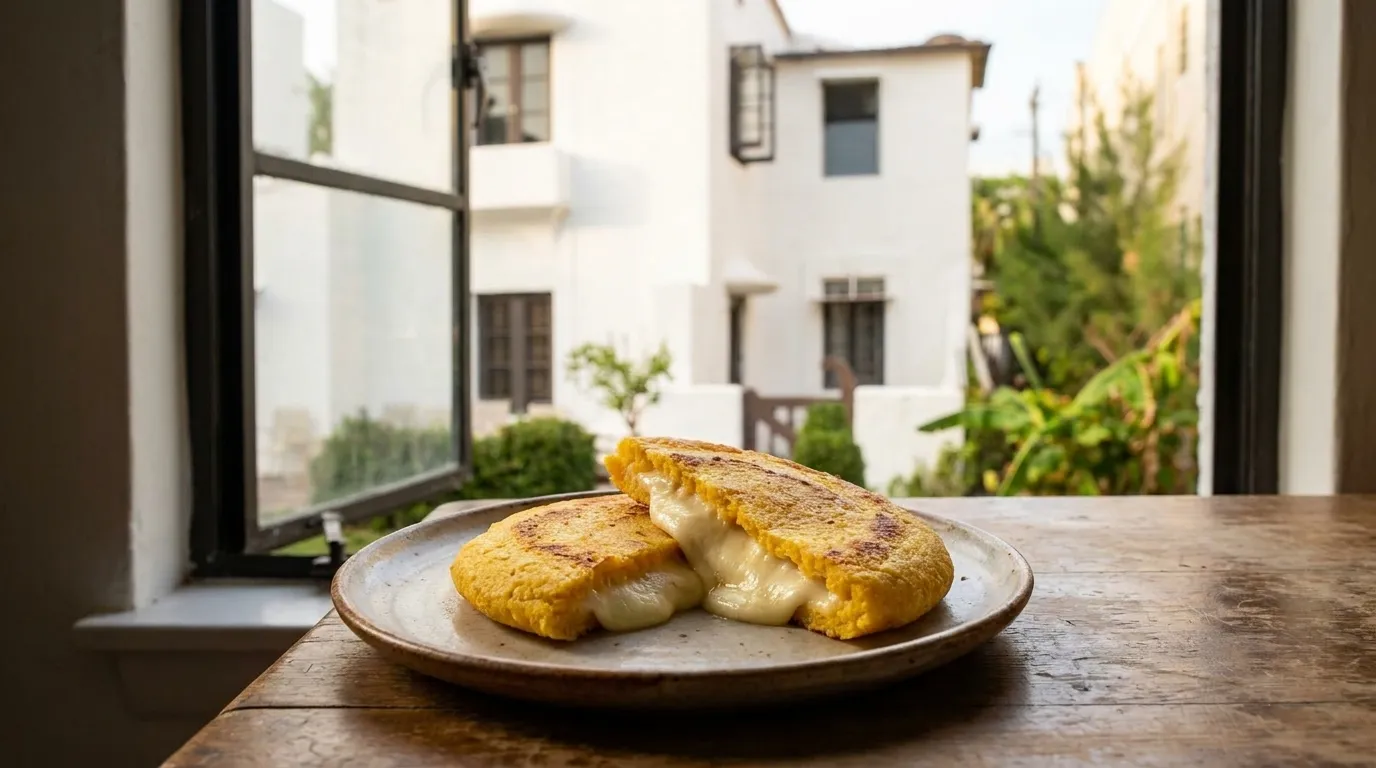
The thick, sweet corn cake stuffed with cheese that Colombians call arepa boyacense doesn't get the Instagram treatment that patacones or bandeja paisa do, but it's the thing Colombian families in Miami actually crave on weekend mornings. You won't find it at every Latin spot on Calle Ocho—most default to the thinner coastal versions—but there's a small circuit of places that do it right, the Boyacá way, with the masa thick enough to hold its shape and the cheese melting into pockets throughout.
Karpo tracks the Colombian spots opening in Doral, the Venezuelan counters in Westchester, and which food stalls are actually setting up this Saturday. Ask before you drive across town.

La Ventana on Calle Ocho
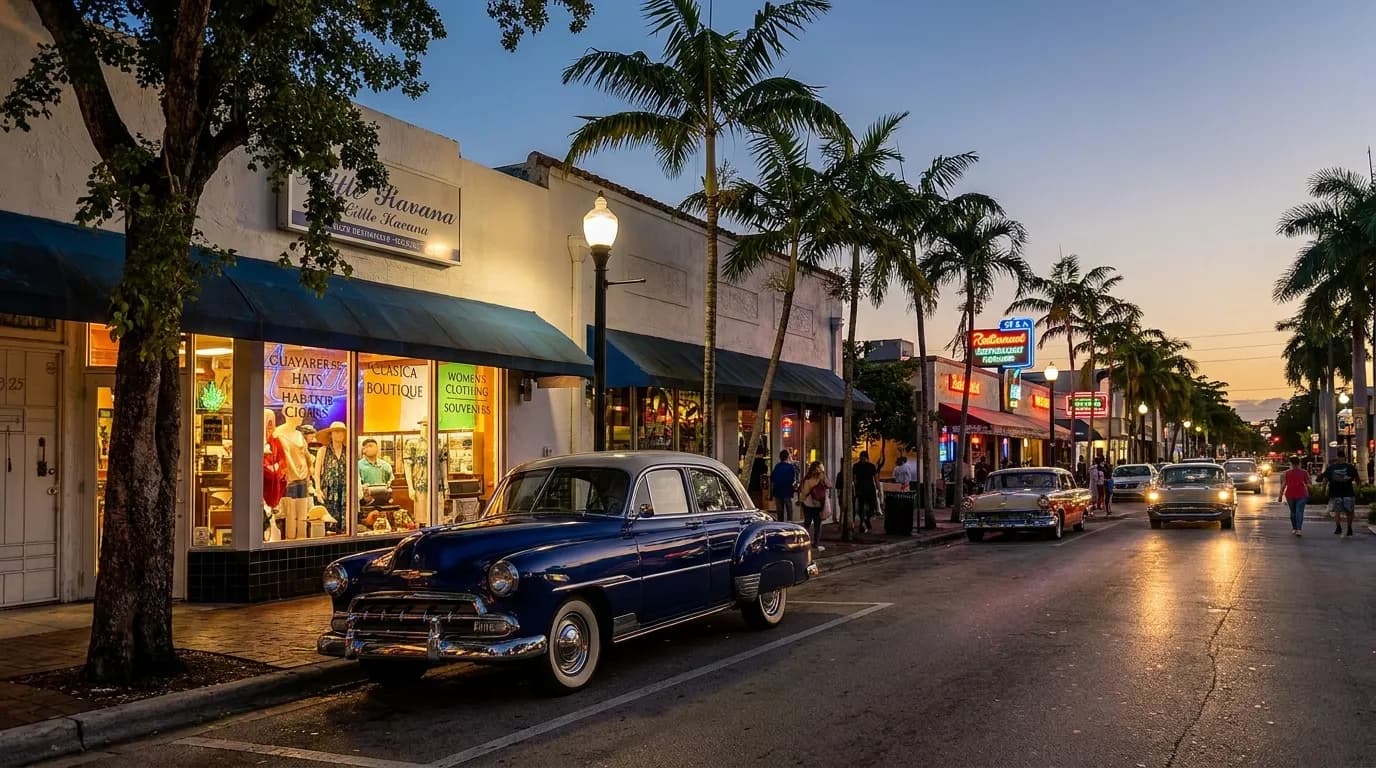
La Ventana sits a few blocks west of the main tourist stretch on Southwest 8th Street, in a strip center that also houses a check-cashing spot and a Colombian bakery. The dining room is plain—fluorescent lighting, tile floors, a handful of tables with plastic chairs—but the kitchen turns out some of the most accurate Colombian home cooking in Miami. Their arepa boyacense comes out hot, the exterior golden and slightly crisp from the griddle, the inside still steaming when you split it open. The cheese they use is closer to a farmer's cheese than mozzarella, salty and just fatty enough to stay creamy without turning greasy.
Order it as a side to their changua if you're there for breakfast, or pair it with hot chocolate—the Colombian kind, made with agua de panela, not milk. The kitchen moves slowly on weekend mornings when the place fills up with families ordering full breakfasts, so if you're in a hurry, call ahead. They'll have it ready wrapped in foil at the counter. Parking is easier before 10 a.m., and the staff is more relaxed then, willing to walk you through the menu if you're new to Boyacá-style food.
Los Verdes
Los Verdes is a smaller operation, more counter-service than sit-down, and their version of arepa boyacense skews a little sweeter. The corn masa has more sugar worked into it, which is polarizing—some people from Boyacá will tell you it's wrong, others say it's closer to what their grandmother made. Either way, the texture is what matters here, and Los Verdes nails it: dense but not heavy, with a slight chew that gives way to the molten cheese in the center.
The spot itself is utilitarian, tucked into a shopping plaza with signage you might drive past without noticing. There's usually a short line during lunch, mostly construction workers and Colombian families picking up takeout. The staff works fast, and the arepas come off the griddle in steady rotation. You can watch them shaping the masa by hand, pressing it into thick rounds before it hits the heat. If you're ordering multiple, ask them to keep them separate—they'll stack them otherwise, and the steam softens the crust. Grab extra napkins; the cheese drips.
Weekend market stalls
There's a weekend market scene in Miami that rotates between a few locations—sometimes near Doral, sometimes closer to Kendall—where Colombian vendors set up folding tables and portable griddles and cook arepas to order. The exact schedule shifts, but the stall to look for is run by a woman who makes arepa boyacense the old way: she grinds the corn herself earlier in the week, mixes the masa with cuajada cheese, and cooks each one fresh while you wait. The result is rougher around the edges than what you'll get at a restaurant, but the flavor is deeper, almost nutty, with a char on the outside that only comes from a well-seasoned griddle.
These market arepas are smaller than restaurant versions, closer to the size you'd actually get in a Colombian home, and they're cheap—usually a couple of dollars each. The vendor wraps them in foil and hands them over still too hot to hold comfortably. Eat them standing up, before the cheese cools and hardens. The market itself is worth walking through even if you're not hungry: there are fruit vendors selling lulo and guanabana, a stall with Colombian sweets, sometimes a woman selling tamales wrapped in banana leaves. It's the kind of scene that feels temporary, like it could disappear if the city decides the parking lot is better used for something else.
What makes boyacense different
If you've only had arepas on the coast or at Venezuelan spots, the Boyacá version will feel like a different food entirely. It's thicker, sweeter, heavier—meant to stick with you through a cold morning in the mountains, not to be a light snack. The corn is white, not yellow, and it's often mixed with a bit of wheat flour to give it structure. The cheese is tucked inside before cooking, not added after, so it melts into the masa rather than sitting on top. You don't split it and stuff it with fillings the way you would a Venezuelan reina pepiada; you eat it as-is, maybe with a smear of butter if you're feeling indulgent.
In Miami, where most Latin food skews Cuban or Caribbean, the Colombian community has quietly built its own infrastructure—bakeries, import shops, restaurants that don't bother translating the menu because they're cooking for each other, not for tourists. Arepa boyacense is part of that. It's not flashy, it's not on any best-of lists, but if you know to ask for it, you're immediately signaling that you've done your homework or you have Colombian friends who've brought you into the fold.
Practical notes
La Ventana opens early, around 8 a.m. most days, and the kitchen runs through mid-afternoon. Cash is easier, though they take card. Los Verdes keeps slightly later hours and stays open into early evening on weekdays. For the weekend markets, check community boards or ask at Colombian bakeries—schedules aren't posted online consistently. Most of these spots are not on delivery apps or are poorly represented there; go in person. Parking is easiest at La Ventana before 10 a.m. and after 2 p.m. If you're coming from the beach, expect a twenty-minute drive west into Little Havana or Flagami. Don't confuse arepa boyacense with arepa de choclo, which is thinner and closer to a pancake.
Tags: #arepaboyacense #colombianfoodmiami #calleocho #littlehavana #miamistreetfood #colombianbakery #losverdes #laventana #weekendmarkets #colombiancuisine #boyaca #miamifood #authenticcolombianfood #southfloridafood #miamieats
All trademarks are the property of their respective owners.
Ask Karpo first
Karpo knows which markets are actually happening this Saturday, whether La Ventana still has the same cook in the kitchen, and where else in Miami you can find Boyacá-style food that isn't just arepas. Instead of driving around Little Havana hoping to stumble onto something good, let Karpo route you to the spots that are open, serving what you actually want, and worth the detour off Calle Ocho.