 Little Haiti Axe Throwing Group Night Picker, Soccer Edition
Sports Social
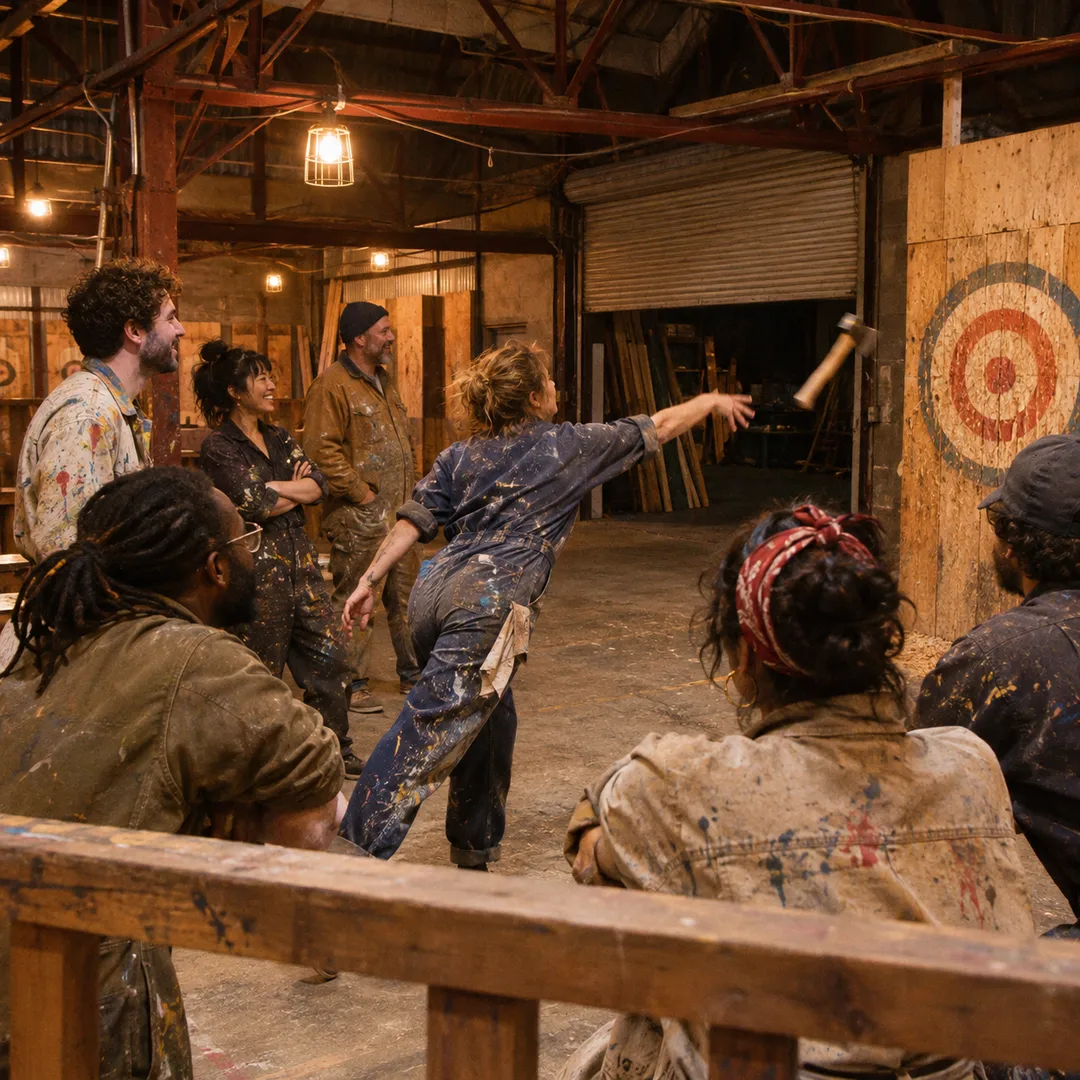
Little River Axe Throwing Group Night Picker for Artists
Little River studio artists closing a group show can pick one axe night for the whole crew. Here is how to choose the room, run it and stroll home after.
Little River has become the part of Miami where a lot of working artists actually rent space: low warehouse buildings with roll-up doors, shared studios split into bays with plywood walls, and a few galleries that open on the same nights so visitors can drift between them. When a group show finally comes down, the people who spent six weeks building it rarely want another reception. This axe throwing group night picker is for that crew, the painters, ceramicists and printmakers who share a building and want one evening that has nothing to do with wall labels or hanging wire.
Why a Studio Crew Needs a Night Away From the Walls
A group show is a strange kind of teamwork. For weeks the people in a shared studio negotiate wall space, borrow each other's drills, argue about lighting and stay late to patch holes. By the time the work is wrapped and carried back to the bays, everyone is tired of talking about art and a little tired of each other. An axe night gives them a different shared task, one where the stakes are low, the rules are simple and nobody's reputation is on the line.
It also levels the room. The sculptor who can lift anything does not automatically win, and the quiet printmaker who measures everything twice often turns out to have the steadiest release. Artists tend to enjoy that. The target is honest in a way that a critique session never is, and a bad throw is forgotten as soon as the next axe lands.
Choosing a Night That Fits the Studio Calendar
Timing matters more than any feature of the venue. The evening after the de-install is tempting, but people will have sore shoulders from carrying plinths and a van to return. A better choice is a weeknight a few days later, once the work is home, the invoices are sent and the studio has had a chance to breathe. Pick a night that does not clash with the next opening in the neighbourhood, because half the group will want to be there.
Ask the people with day jobs first. Many artists in Little River also teach, frame pictures, install for museums or work in restaurants, and their schedules are the hardest to move. Once the teachers and the installers can make it, the people who work only in the studio can usually rearrange their days around them.
What to Look For in an Axe Venue for Artists
Axe throwing venues around Miami tend to sit in larger warehouse-style spaces, which suits a studio crew who already feel at home with concrete floors and high ceilings. When you compare options, think about the group rather than the decor. Does the room have enough lanes for everyone to throw without long waits? Is there a coach who will run the safety talk and keep score, so nobody from the studio has to play host? Can people who do not drink still enjoy the evening without feeling sidelined?
Noise is worth considering too. Some venues play loud music and run several parties at once, which is fun for a big celebration but hard for a group that wants to talk between rounds. Others feel more like a workshop, with a calmer pace. For a crew that has just finished six weeks of busy openings, a quieter room usually wins.

A Scoring Game Built Around the Show
Artists like a little ritual, so give the night a light structure. Draw teams by mixing the bays in the building, so the people at the far end of the hallway end up throwing with the people by the front door. Name each team after a piece from the show, or after the most stubborn problem you solved while hanging it, and keep a running tally on a sketchbook page rather than on anyone's screen.
Start with a warm-up round that does not count, then play a short round-robin and a final. Most venues have their own target games, and the coach can suggest one that keeps everyone involved instead of leaving the strongest throwers to dominate. The prize can be something only a studio would value, such as first pick of the leftover frames or a week off the cleaning rota for the shared sink.
Safety, Shoes and Paint-Stained Clothes
Every reputable venue starts with a safety briefing, and it is worth listening even if someone claims to have thrown at a festival. Closed-toe shoes are standard, so remind people who live in sandals between the studio and the beach. Paint-stained work clothes are perfect, because they are loose and nobody minds if they get dusty, but leave rings and loose bracelets in a pocket.
Think about hands as well. A ceramicist with a kiln load to unpack the next morning, or a painter with a commission deadline, may prefer to throw lightly and spend more time cheering. Make it clear from the start that sitting out a round is normal, and that the evening is about the group rather than the score.
Using the Karpo APP to Narrow the Shortlist
This is where the Karpo APP is genuinely useful. Describe the evening in plain language, for example axe throwing for ten artists on a weeknight, somewhere relaxed, close to Little River, with good options for people who do not drink. Karpo can help you compare venues, think through how far each one is from the studio building, and suggest a dinner spot nearby for afterwards.
Share the shortlist in the studio group chat and let people vote. Once the group has chosen, follow the venue's own process to arrange the lanes. Karpo helps with the choosing and the planning, while the details of the visit stay between you and the venue.
Getting the Whole Building There and Back
Meet at the studio rather than at the venue. The building is the one place everyone knows, and gathering in the corridor gives late arrivals a chance to catch up before the group leaves. If the venue is close, walk or share a couple of rides. If it is across town, split into cars by bay so nobody ends up stranded.
Plan the return before you set off. Some people will want to keep going, others have an early class to teach or a kiln to check. Decide on a clear end point and make sure the people heading home in the same direction leave together.
Walking Home Past the Murals and the River
Little River is at its best after dark, when the heat has eased and the murals on the warehouse walls catch the streetlight. The walk back toward the studios is a good moment to slow down and look at the neighbourhood the way visitors do, noticing the new pieces that went up while everyone was busy with the show, the mango and banyan trees leaning over fences, and the low buildings that still hold machine shops and furniture workshops between the galleries.
If the group has energy left, follow the side streets down toward the river itself, the small waterway that gives the area its name. It is quiet there, a reminder that this was a working edge of the city long before it was an art district. For a crew that has just spent weeks indoors under gallery lights, ending the night by the water, with an axe score still being argued over, is exactly the right kind of ending.
Turning One Night Into a Studio Tradition
If the evening works, make it the standard way to close a show. Keep the scoring sheet pinned to the studio noticeboard, add each new result underneath, and let the trophy, whatever it turns out to be, move from bay to bay. New tenants will learn the building's culture faster from one night at the targets than from any welcome email, and the next group show will have something to look forward to at the end.
Ask Karpo for more information.
Keep reading
- Little Haiti Axe Throwing Group Night Picker, Soccer Edition
 Midtown Miami Axe Throwing Group Night Picker for Nurses
 Downtown Miami Axe Throwing Group Night Picker for Visitors