 MiMo District Free Indoor Weekend Plan Finder for Retro Fans
Free Things to Do

Miami Autumn Stargazing Spot: South Beach Without the Rush
Plan a South Beach sky pause with an ocean horizon, a simple observing goal and a comfortable return. Keep city light and your companions in the picture.
An autumn stargazing spot around South Beach can begin with a simple change of attention. Instead of treating the ocean as a backdrop for another photograph, give the sky a few uninterrupted minutes. This is a plan for choosing a brief observation during an evening walk near Ocean Drive, not a recommendation for a certified dark location. The coast does not erase city light, and the route name does not establish access to any particular patch of sand. Decide what you hope to notice before deciding how far to walk.
Start with a horizon, then choose a question
The ocean-facing idea is most useful when your question involves the shape of the visible sky. You might want to compare the color near the horizon with the blue overhead, watch the Moon against a palm silhouette, or find one bright object using a dated chart. Each gives the walk a purpose without requiring a crowded field of stars. Do not begin with a list of constellations copied from a different month. Their usefulness depends on the date, time, direction and obstructions that apply to your actual evening.
Describe the question to your companion in ordinary language. “I want to see how much sky we can hold in one view” invites participation more easily than a test of astronomical knowledge. For a family, let each person choose one feature to sketch mentally before speaking. Someone may notice a cloud band while another sees a gap between buildings. Those differences can carry the outing even if the stars remain faint. The aim is shared observation, with room for an honest result rather than a performance.
Make the beach portion a deliberate option
A sidewalk walk and a sand walk are different outings. Before leaving home, choose whether you actually want sand underfoot and whether everyone can manage it comfortably. Keep the pavement alternative equally valid. Carrying a chair or a telescope changes the practical burden substantially, while a short naked-eye stop can remain light and flexible. Do not let a picture of the ocean persuade the group into a longer excursion than anyone intended. A comfortable standing point can be enough for a first attempt.
For the eventual destination, use the relevant public authority's access information and posted instructions. An apparently quiet approach is not evidence of permission. If a section is restricted or the footing is unsuitable, end that part of the plan without searching for an unofficial entrance. Choose the return direction before settling into the view. Looking up is absorbing, and a route that felt obvious on arrival can feel less obvious once attention has shifted away from the surrounding streets.
Let the bright city remain part of the experience
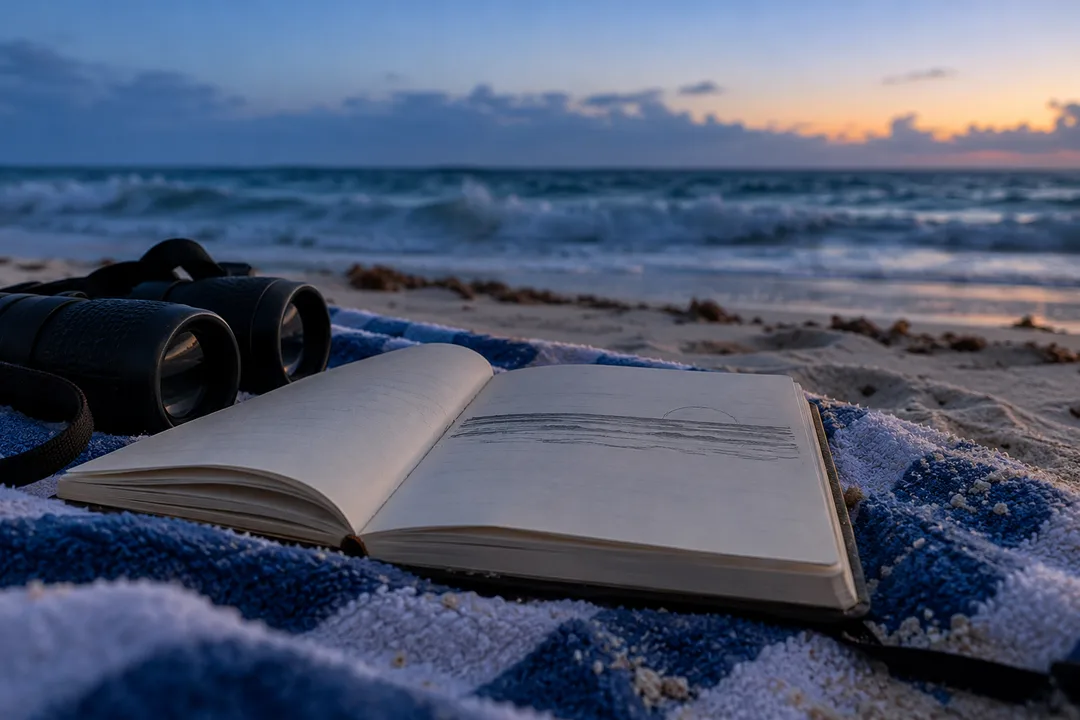
A South Beach sky walk can acknowledge brightness instead of competing with it. Compare what is visible when a bright sign occupies your peripheral vision with what you notice after facing away from that glare at a lawful, unobstructive standing point. The comparison is an experiment, not a promise that moving a few steps will reveal the Milky Way. Keep the lighting needed for navigation in mind. A darker-looking corner is a poor choice if you cannot read the ground or remain comfortably connected to your route.
Avoid turning every passing vehicle or illuminated facade into a frustration. The city is part of the setting you selected. Frame the evening as a small pause within an active neighborhood, and save ambitious faint-object observing for a separately researched outing. That distinction helps a beginner enjoy a bright Moon or a changing cloud edge without feeling that the trip failed. It also prevents the familiar mistake of walking continually toward a hypothetical perfect spot and never actually looking up.
Separate an appealing photograph from an observation
Phone cameras can make a dim scene look much brighter than it felt. If photography is part of your plan, take a quick record of the setting and then put the screen away for the observation itself. Later, label the image as a camera view rather than a faithful inventory of what your eyes detected. A photograph can preserve a palm outline or a friend's posture beautifully. It cannot, by itself, identify an unfamiliar point of light or establish the quality of a viewing location.
Try an alternative record that asks less of the camera. Note the direction you faced, the object you tried to identify, and whether cloud interrupted the view. A rough drawing of the horizon may be more useful for a future visit than a heavily processed image. If you return, compare the drawings before deciding whether the position suited your goal. The point is to learn which choices helped, rather than accumulate increasingly dramatic photographs that make the ordinary sky seem disappointing.
Give conversation a rhythm
For a pair, alternate between a quiet interval and a short exchange. One person can describe the view while the other listens, then reverse the roles. This avoids an evening where the more confident skywatcher narrates constantly and everyone else waits for instructions. For a larger group, agree on a meeting point and keep the observation compact enough that nobody has to scatter to find a personal view. Leave ordinary pedestrian circulation clear, including space for people who cannot easily step around a stationary group.
If interest fades, let the next part of the evening begin. Do not insist on waiting for a sky event that has not been researched or promise that more stars will appear after a specific interval. The conversation might move naturally from the sky to how the city feels after dusk. That is still a successful pause. A route works better when its purpose is clear but its outcome is flexible, especially when the outing includes people with very different levels of enthusiasm for astronomy.
Use Karpo for the shape of your evening
Ask Karpo APP to help organize a South Beach evening around your own constraints: a short sky break, little equipment and an easy transition back to your other plans. Put the astronomy question in a dedicated sky chart set for Miami and your chosen time. Put cloud questions in a weather service. This division keeps the conversation useful without treating a city suggestion as a forecast or a verified observing report. Describe what you want to do, then make the final decision from the conditions and access information relevant to the actual destination.
Practical Notes
Before heading back, choose one detail worth keeping. It might be the outline of a palm against a fading blue sky, the first object you managed to identify, or the realization that an ocean horizon was less important than freedom from nearby glare. Write that down in one sentence. The next attempt can begin from that experience instead of from an idealized photograph. A modest South Beach observation becomes rewarding when it leaves you curious, comfortable and willing to look again.
Ask Karpo for more information.
Keep reading
- MiMo District Free Indoor Weekend Plan Finder for Retro Fans
 Coral Gables Free Indoor Weekend Plan Finder for Book Lovers
 South Beach Free Indoor Weekend Plan Finder for Rainy Days