 MiMo District Free Indoor Weekend Plan Finder for Retro Fans
Free Things to Do
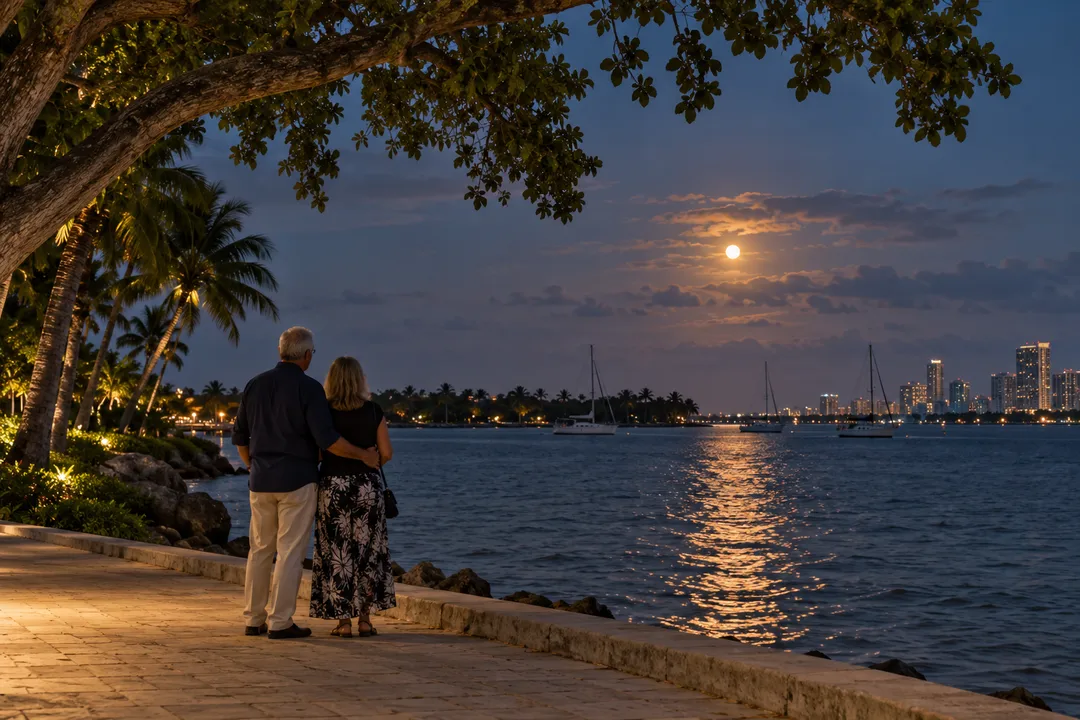
Miami Autumn Stargazing Spot: Coconut Grove at Your Pace
Shape a gentle Coconut Grove sky walk around comfort, conversation and one clear target. Keep the baywalk optional and make the return part of the plan.
Choosing an autumn stargazing spot in Coconut Grove can be a lesson in doing less. A suggested baywalk evening need not become an equipment expedition or a long search for an impressive photograph. Begin with the person you are walking with: how far do they want to go, how long do they enjoy standing, and what would make the pause feel comfortable? The baywalk in this plan is a general planning idea, not a named observing facility or a statement that every waterside section is available after dusk.
Let comfort choose the scale
If you are accompanying someone who tires easily, the best first decision is a short outing with a clear end. Set your own modest time budget and leave room to turn around before that limit. Do not describe the choice as a compromise. A carefully observed patch of sky can be more memorable than a long circuit punctuated by distracted glances upward. Ask whether standing, sitting or alternating between the two would work better before deciding on the eventual destination.
Comfort includes more than walking distance. Some people dislike a breeze on their face, others find an exposed edge unsettling, and others prefer to keep moving. Discuss those preferences before making the sky portion the centerpiece of the evening. Avoid assigning everyone the same enthusiasm. One companion might want to identify a bright object while another simply enjoys a quiet view. A plan can accommodate both if it treats observation as an invitation rather than a task that has to be completed.
Think of the bay as a direction
Water can help you imagine a more open part of the view, but it does not answer the astronomy question by itself. Work out which direction your chosen target requires using a sky chart for Miami and the intended time. Then compare that need with the lawful destination you are considering. An attractive view across water is not useful for a target hidden behind you. This small planning step can save a great deal of unnecessary walking along a pretty but unsuitable edge.
Keep the word “baywalk” loose until the route is settled. Different waterside spaces have different access arrangements, and a map line does not establish permission to enter every segment. Use the appropriate authority's published information and any instructions on site for the final choice. If an approach is restricted, switch to the ordinary street option or finish early. Do not treat a fence, a private marina or a quiet-looking property as a puzzle to work around for a better horizon.
Make room for a shared silence
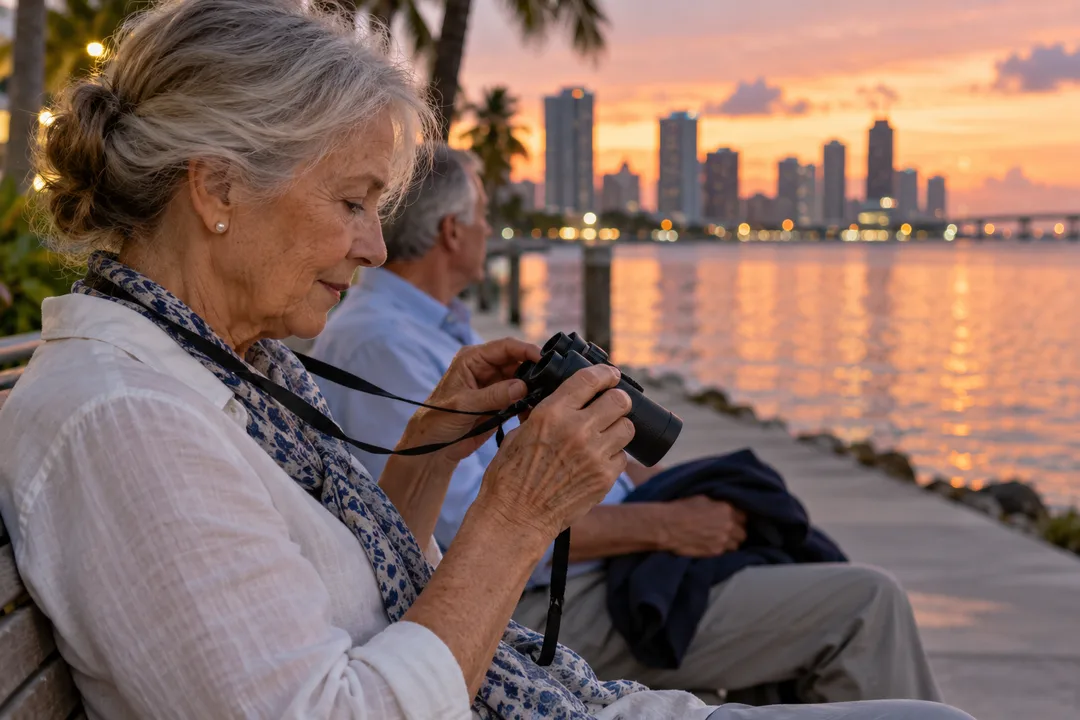
A quiet observation is easier when the group knows what the silence is for. Suggest a brief interval in which everyone simply looks, followed by a chance to describe one thing. You do not need to count down or insist that nobody speak. The point is to avoid filling every moment with explanations. A newcomer may need time to notice the difference between a cloud edge, a building outline and a faint point overhead without someone immediately assigning names to everything.
Afterward, ask an open question: what caught your attention first? The answer may concern reflections on the water rather than astronomy. Follow it. This kind of walk is valuable because it gives people a shared object of attention without demanding expertise. If one person has more knowledge, invite them to explain only the object the group has already noticed. That keeps the exchange grounded in the actual view and avoids turning a relaxing evening into a lecture.
Choose equipment that earns its place
Start with your eyes and a concise plan. Binoculars may be enjoyable for someone who already knows how to use them, but they add another thing to carry and another reason to stop moving. A telescope introduces still more practical decisions about transport, setup, permission and space. Do not bring it simply because the outing is called stargazing. Let the intended observation decide the equipment, and let the comfort of the people attending decide whether the added burden makes sense.
If you carry binoculars, practice adjusting them in a familiar setting first. During the outing, keep them directed at the intended sky area and be considerate of surrounding homes and other people. Give each person enough time to settle into the view without rushing the handover. A companion who prefers unaided viewing should not feel that they are missing the real event. The equipment serves the observation. It does not determine whether a simple evening outside counts as a worthwhile experience.
Keep the return as thoughtful as the arrival
Before stopping, identify the route back to your meeting point or onward plans. Consider how the walk will feel after everyone has stood still and focused overhead for a while. Keep your navigation light available without repeatedly flashing it toward companions' faces. Use well-defined lawful routes and leave room for other people to pass. The right viewing position is one where you can look up without forgetting the ground, the edge of the path or the practical needs of the group.
Choose a natural ending rather than waiting indefinitely for conditions to transform. You might finish after finding the target, after each person describes one detail, or when the outing stops feeling comfortable. None of those endings requires an astronomical spectacle. If cloud prevents the intended observation, compare the shapes it makes and then move on. The decision to stop can be part of good planning, particularly when the purpose was to spend attentive time with someone rather than collect a particular sight.
Ask Karpo for an unhurried evening
Describe your Coconut Grove outing in practical terms when asking Karpo APP for ideas: a companion who prefers a short walk, a relaxed sky pause and an uncomplicated continuation. Treat the response as help shaping the city experience. Use an astronomy resource for the target's position and a weather service for cloud conditions. Destination access comes from the relevant operator or public authority. Keeping those sources distinct makes the plan easier to trust and prevents an appealing suggestion from becoming an unsupported promise.
Practical Notes
On the way back, ask which part felt most restful and which part required more effort than expected. Those answers are the beginning of a better second outing. You may discover that the route mattered less than having permission to stop, or that a simple horizon gave a companion something new to describe. Keep one sentence about the sky and one about the experience. A Coconut Grove observation earns its place in your evening when both are worth remembering.
Ask Karpo for more information.
Keep reading
- MiMo District Free Indoor Weekend Plan Finder for Retro Fans
 Coral Gables Free Indoor Weekend Plan Finder for Book Lovers
 South Beach Free Indoor Weekend Plan Finder for Rainy Days