 Coral Gables Hidden Speakeasy Bar Picker: Parents Night Out
Bars & Nights Out

Miami Autumn Cider House: Plan A Waterfront Tasting
Build a waterfront cider outing by comparing breeze, travel, food timing and a dry or sparkling flavor brief without relying on scenic assumptions.
A waterfront autumn cider house plan in Miami can sound perfect while hiding wind, heat, parking and a long walk. Use the Karpo APP to state the starting point, preferred arrival comfort, drink style and whether the group wants a meal or only a tasting. Ask for a core destination plus one practical alternative. The answer should distinguish a waterfront idea from a venue fact so the plan stays useful if the view or outdoor seating is unavailable.
Define what the water adds
Maybe the breeze is the goal, maybe the walk matters or maybe the group only wants a relaxed setting near the coast. Say which benefit matters. The assistant can then compare a scenic destination with an indoor option that offers better drink or food evidence. “Waterfront” should be a criterion, not a substitute for checking the actual service.
Describe shade, wind tolerance and maximum outdoor walking. Include the time of day and mobility needs. Miami weather can change the comfort of the same route, so a plan with a short indoor fallback is stronger than one that depends entirely on a patio. Keep the constraint visible in the shortlist.
Set a breeze and heat limit
A crisp sparkling pour may refresh, while a rounder drink may suit a longer meal. Use those as preferences and ask the app to match them to what a menu actually says. If no flight or style is listed, do not invent it. A good recommendation can still be useful when it explains what the source does not answer.
Say whether you want seafood, vegetarian plates, a snack or no meal. If food and cider need separate stops, ask for a route with enough buffer and an easy escape if the weather turns. Do not assume a view guarantees a kitchen or a menu. Keep the two facts separate in your notes.
Give the cider a job
Ask for one alternative that keeps the flavor and meal priorities while reducing exposure to heat, wind or a long walk. The backup should be a decision, not another scenic noun. If the waterfront is too busy, you already know what to switch to and why.
One guest may drive, another may take transit and a third may use a rideshare. State those starting points. The assistant can compare meeting shapes, but it cannot guarantee parking or real-time travel. The final route should be checked through the relevant venue and transport information.
Make food timing concrete
A walk can connect the meal and tasting, but it should not become a requirement. Ask for one nearby public space or market only after the core plan is chosen. If the breeze is too strong or the group is full, skip it. That keeps the outing comfortable rather than performative.
A good follow-up names the failure: no outdoor seating, too much sun, a longer queue or a menu with no dry option. Request an alternate that addresses it. This is more helpful than asking for a second “best” place with no reason.
Plan a dry-land version
Use the venue’s own current information for hours, menu, reservation and seating details. The app can summarize the decision and identify the fact that matters most, but it cannot promise a live view, table or pour. Make that limit part of the plan.
Waterfront fallback contingency note: decide what the group will do if the first option is too crowded, too far, too warm or missing the flavor detail that mattered. Waterfront fallback Name one alternate and the exact reason it exists. Waterfront fallback Keep that fallback short enough to use while everyone is already traveling, and leave the final service question for the venue’s own information.
Practical Notes
Waterfront fallback decision worksheet: write the main preference, the acceptable compromise and the one unanswered detail that belongs to the venue. Waterfront fallback Keep a second line for the companion who has a different pace, appetite or way home. Waterfront fallback A short record is easier to use than a list of twelve names, and it gives the next request a clear starting point.
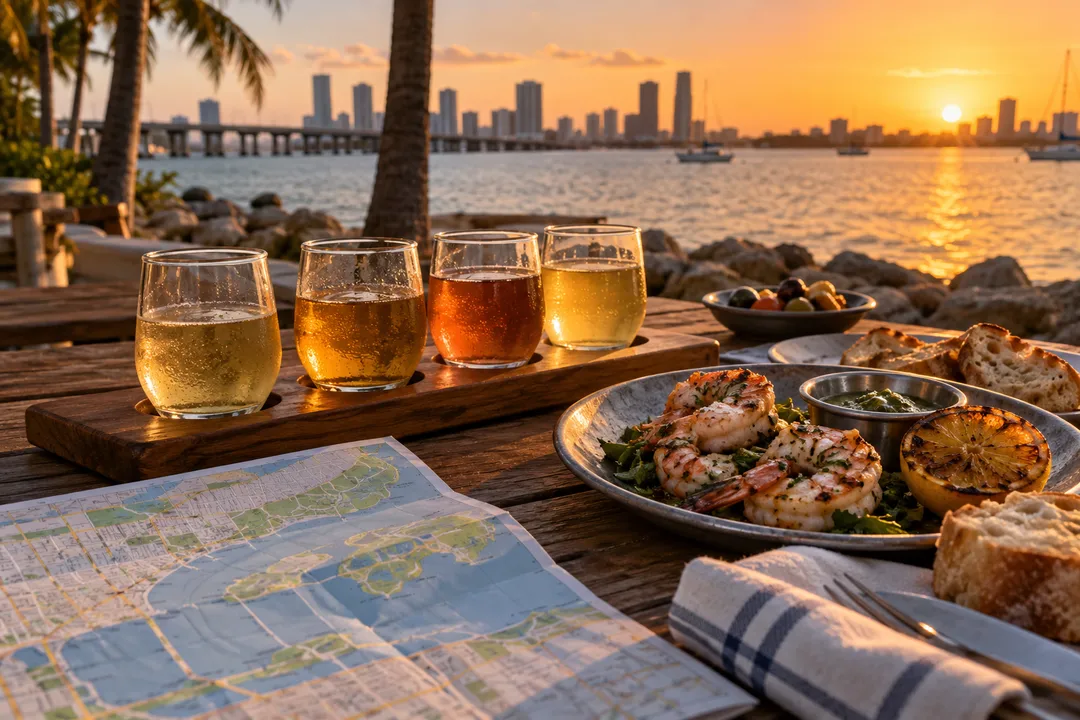
Treat the water as an optional benefit, state the heat boundary and prepare an indoor alternative with a clear purpose. The images are generated editorial illustrations, not evidence of a specific Miami venue or waterfront. Finish with a route that remains enjoyable if the breeze, view or patio disappears. A waterfront idea should survive the loss of the view. Save the breeze preference, the heat limit and the dry-land alternative before choosing a route. If the wind or distance makes the scenic version tiring, switch to the option that preserves the food and flavor priorities. The next request can narrow the search to one shaded, indoor destination with a short optional promenade. That approach leaves room for the coast without making a comfortable evening depend on it. Ask each option to explain how the tasting still works if the scenic benefit disappears. Should the breeze fail, the same dry style brief can guide a nearby indoor choice. Treating water as optional avoids turning a coastal image into a claim about access or comfort. A waterfront search works when view, breeze and heat limit appear as separate choices in the opening note. Save the view preference, the distance cap and the land-based alternative that protects the evening. Separate the waterfront image from the actual decision. List the breeze, view and walking tolerance as optional benefits, then state what must remain if the coast is too hot or busy. The indoor alternative should preserve either the meal or the drink goal, with a short route between them. Ask the tool to explain that tradeoff in plain language. Later, keep the detail that made the shore worthwhile and the fact that made the backup safer. That pair of notes is more useful than another list of waterfront nouns. Keep the water reference descriptive rather than definitive. A shaded pause, a shorter approach or a meal before the view may be the real reason the group enjoys the plan. Write that reason down so a later search can preserve the useful part while dropping the fragile one.
Ask Karpo for more information.
Keep reading
- Coral Gables Hidden Speakeasy Bar Picker: Parents Night Out
 South Beach Hidden Speakeasy Bar Picker Beyond the Clubs
 Brickell Hidden Speakeasy Bar Picker for a Double Date