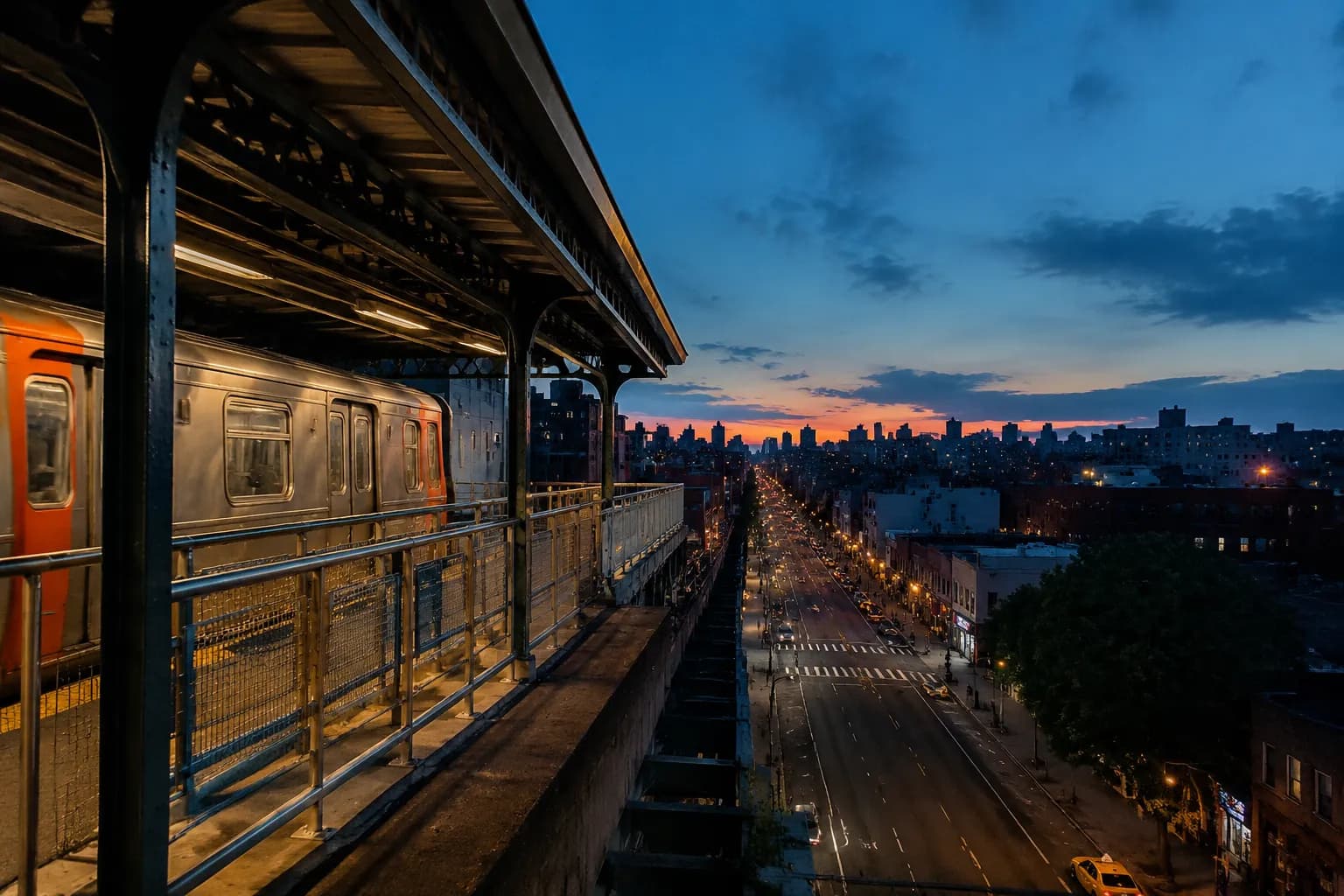
Hosting a group of four to eight friends for **mets vs guardians** interleague action on a 7:10 PM first pitch means balancing proximity, guaranteed screen time, and the flexibility to handle extra innings without losing your table. Queens venues near Citi Field offer pre-game energy and post-game spillover crowds, while Midtown Manhattan bars provide central subway access and corporate happy-hour infrastructure that can accommodate larger parties. The tradeoff hinges on whether you prioritize being steps from the ballpark's atmosphere or minimizing travel time for friends arriving from different boroughs. Both corridors demand advance reservation calls to confirm the establishment will lock onto the Mets broadcast and won't flip channels if another game runs long, and neither geography guarantees outside food policies for marathon extra-inning scenarios. This comparison walks through verification steps, transit routes, and the decision factors that match your group's excitement level with the practical realities of game-day crowding.
Text Karpo your group size, preferred neighborhood, whether you want food or just drinks, and if anyone needs accessible seating—we'll send three bars with confirmed Mets audio, compare pricing and space, and hold one quieter backup spot if your first choice is packed.

Flushing Corridor Proximity vs. Midtown Subway Convergence
Sports bars within a ten-minute walk of Citi Field—clustered along Roosevelt Avenue and Northern Boulevard—capture the pre-game buzz of jersey-clad fans streaming off the 7 train, but that same foot traffic saturates every booth by 6:30 PM. If your group of six plans to arrive exactly at first pitch, you'll compete with season-ticket holders who ducked out early and casual fans hunting overflow seating, meaning even a confirmed reservation may land you at a high-top near the kitchen rather than a banquette with sightlines to multiple screens. The emotional upside is palpable: cheering alongside other Mets faithful amplifies every strikeout, and post-game celebrations spill directly onto the sidewalk if the home team pulls ahead.
Midtown options between Penn Station and Grand Central consolidate subway lines—1/2/3, A/C/E, N/Q/R/W, 4/5/6, and 7 all intersect within a twelve-block radius—so friends commuting from Brooklyn, the Bronx, or New Jersey face shorter connection times than a single-seat ride to Flushing. Corporate sports bars in this zone design floor plans for after-work groups of eight to twelve, with modular seating and dedicated account managers who confirm broadcast assignments days in advance. The tradeoff is atmosphere: you'll share the room with finance teams watching West Coast baseball and tourists asking staff to switch to basketball highlights, diluting the focused Mets energy that defines a true watch party.
Reservation Mechanics and Channel-Lock Guarantees
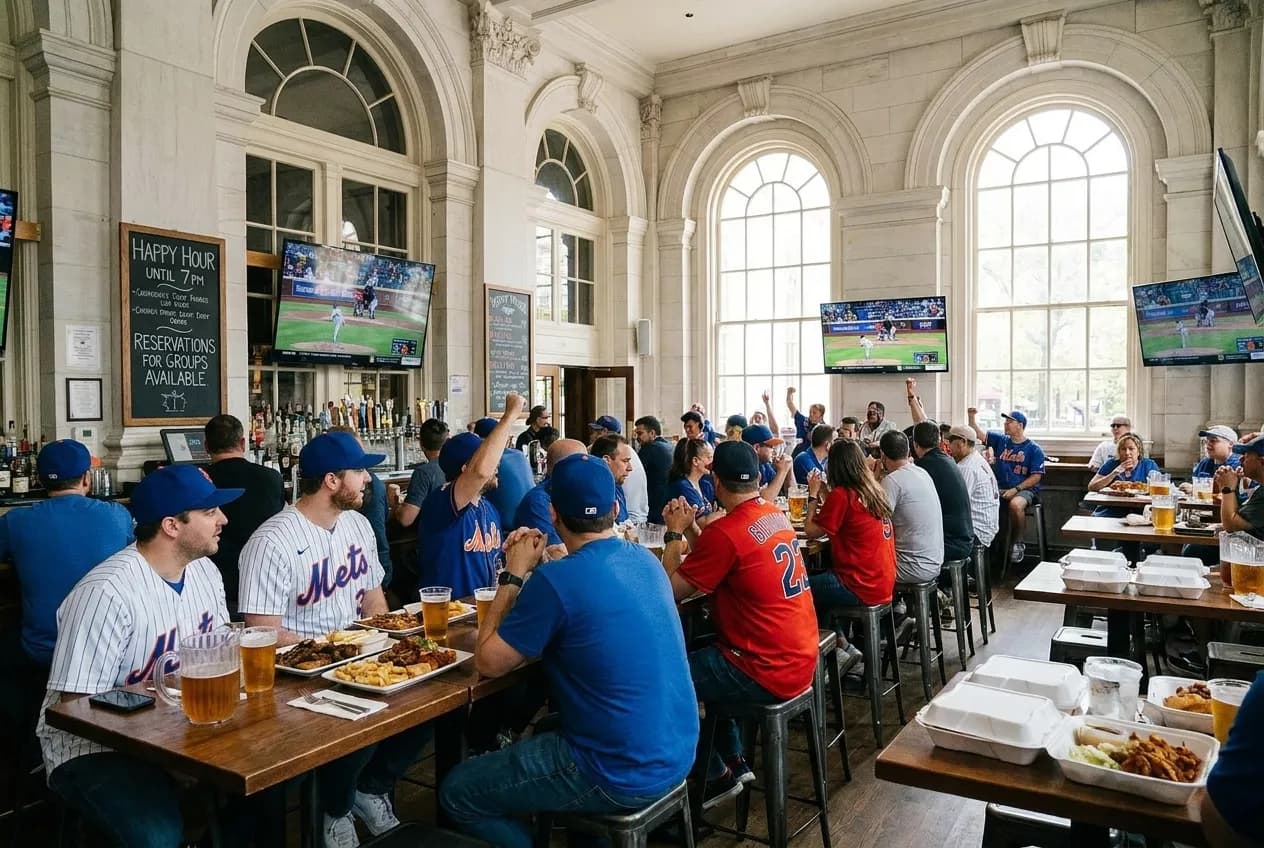
Calling three business days before game day lets you ask two non-negotiable questions: *Will the Mets–Guardians game remain on our section's primary screen for all nine innings, including extra frames?* and *Does the reservation hold past the scheduled 10:00 PM end time if the game enters the eleventh?* Many establishments near Citi Field operate first-come, first-served on weeknights, reserving tables only for parties of ten or more, so a group of six may need to arrive by 6:00 PM to claim a corner booth and defend it through lineup announcements. Verbal confirmation over the phone is not a contract; ask the manager to note your party size, arrival time, and screen assignment in their reservation system, then request a confirmation number you can reference when you walk in.
Midtown chains with national footprints often use OpenTable or Resy for group bookings, allowing you to prepay a per-person minimum or deposit that locks your table and assigns a server who knows your game. These systems timestamp your reservation and trigger automatic reminders, reducing the risk that your table gets released if one friend runs fifteen minutes late. However, corporate policies rarely guarantee a specific screen—staff may promise "a good view" but reserve the right to relocate you if a larger buyout arrives. To verify, email the general manager forty-eight hours out with your confirmation number and ask which zone (bar rail, dining room, patio) your party will occupy and whether that zone has line-of-sight to a TV currently tuned to SNY or MLB Network.
Happy-Hour Windows and First-Pitch Timing
A 7:10 PM first pitch falls at the tail end of most happy-hour menus, which typically run 4:00–7:00 PM on weeknights. Arriving at 6:45 PM gives your group fifteen minutes to order discounted appetizers and drink specials before prices reset to dinner rates, but it also means you're walking in during the rush when bar-rail seats fill and kitchen tickets stack. If budget matters more than securing the best sightlines, plan to have half your party arrive at 6:00 PM to claim the table and start a tab, while the other half joins at 6:50 PM to maximize happy-hour savings. This staggered approach works better in Midtown, where venues expect corporate groups to trickle in; Flushing spots may interpret a half-empty table as fair game for walk-ins.
Conversely, if your priority is uninterrupted viewing and elbow room, skip happy hour entirely and book for 7:30 PM—thirty minutes after first pitch. You'll miss the national anthem and leadoff batter, but you'll avoid the standing-room scrum and secure a table that won't be pressured to turn over before the seventh-inning stretch. This strategy assumes the game proceeds at average pace; a pitcher's duel that ends in two hours and twenty minutes leaves you with only ninety minutes of social time, while a four-hour extra-inning marathon rewards the late arrival with a relaxed environment as casual fans depart.

Outside-Food Policies for Extended Games
New York State law does not require bars to allow outside food, and most establishments with full kitchens explicitly prohibit it to protect revenue. If your group includes friends with dietary restrictions or you're worried about mounting tab totals during a fourteen-inning game, call ahead to ask whether the venue permits outside snacks for medical or religious reasons—some managers will allow sealed granola bars or fruit if you're ordering drinks and entrees. Never assume; walking in with takeout pizza or deli sandwiches risks immediate ejection and forfeits any deposit. The safer play is to scout the menu online beforehand, confirm at least three shareable appetizers your group will enjoy, and budget for one additional round of food per extra inning.
Flushing venues near diverse residential blocks sometimes adopt lenient policies for regular customers, especially if you're ordering alcohol and tipping well, but that goodwill evaporates on high-traffic game nights when the kitchen is slammed. Midtown corporate bars enforce policies uniformly because franchise agreements and liquor-license compliance leave no room for manager discretion. If outside food is non-negotiable, your only legal option is a bar with no kitchen that explicitly advertises a BYOF (bring your own food) model—rare in Manhattan, slightly more common in outer-borough neighborhoods. Verify this detail during your reservation call, and ask whether the establishment has a partnership with a nearby restaurant that delivers directly to your table.
Who This Plan Fits and When to Pivot
This venue-comparison approach suits a Mets fan who values group cohesion and broadcast certainty over spontaneous bar-hopping. If your friends are punctual, comfortable with moderate noise levels, and willing to commit to a single location for three-plus hours, either corridor works. The Flushing route rewards groups that thrive on communal energy and don't mind standing if seating falls through; the Midtown path favors friends who prioritize reliable logistics and climate-controlled comfort. Both require the host to make phone calls, send reminder texts with subway directions, and designate one person to arrive early and hold the table—moderate difficulty that pays off in smoother execution.
Pivot to a private apartment watch party if your group grows beyond eight, if anyone has mobility challenges that make crowded bars stressful, or if you learn forty-eight hours out that your preferred venue double-booked your reservation. Hosting at home eliminates channel-switching anxiety, allows full control over food and timing, and costs less per person, though it shifts setup and cleanup labor onto you. The MTA's real-time service alerts—accessible at mta.info—help you communicate subway delays to late arrivals, and the city's restaurant inspection database at a816-health.nyc.gov lets you vet any establishment's recent health grades before committing your group's evening to their kitchen.
Tags: #Metswatchparties #sportsbarsnearCitiField #MidtownsportsbarsNYC #groupreservations #interleaguebaseball #Flushingnightlife #gamedayplanning #happyhourtiming #broadcastguarantees #extrainnings
Sources consulted: Source 1: nycgovparks.org · Source 2: new.mta.info · Source 3: nypl.org · Source 4: a816-health.nyc.gov
All trademarks are the property of their respective owners.
Ask Karpo first
Ask Karpo to turn this NYC idea into a current plan for your date, budget, companion, transit preference, and energy level. Karpo can narrow the route and flag what to verify before you go.