There's a particular quality to river light in motion—the way it flickers through trees, doubles back from stone, catches the wake of a barge sliding south. You can spend an afternoon chasing it on foot, or you can sit still in a east-facing train seat and let the Hudson unroll for an hour. The Metro-North Hudson Line was built for bankers and lawyers, but off-peak it belongs to anyone willing to treat infrastructure as entertainment.
The case for a train to nowhere in particular
Most transit rides are preamble—the thing you endure to reach the thing you want. The Hudson Line inverts that logic. The destination, if you need one, can be Tarrytown: a riverfront village with galleries, a long main street good for lunch, and the Rockefeller estate if you're feeling ambitious. But the real substance is the northbound crawl itself, the way the city's brick and glass give way to the Palisades, then to wooded slopes and stone rail bridges that look like they were sketched by a 19th-century engineer with a taste for the sublime.
It's a ride that rewards low stakes. No itinerary, no must-see list. Just a window and an hour. The off-peak fare to Tarrytown should be verified against the current Metro-North tariff before publication., which means you can stretch a long lunch or a gallery walk into late afternoon before catching a train back. For less than a museum admission, you get both the journey and the latitude to improvise once you arrive.
Timing and the art of the empty car
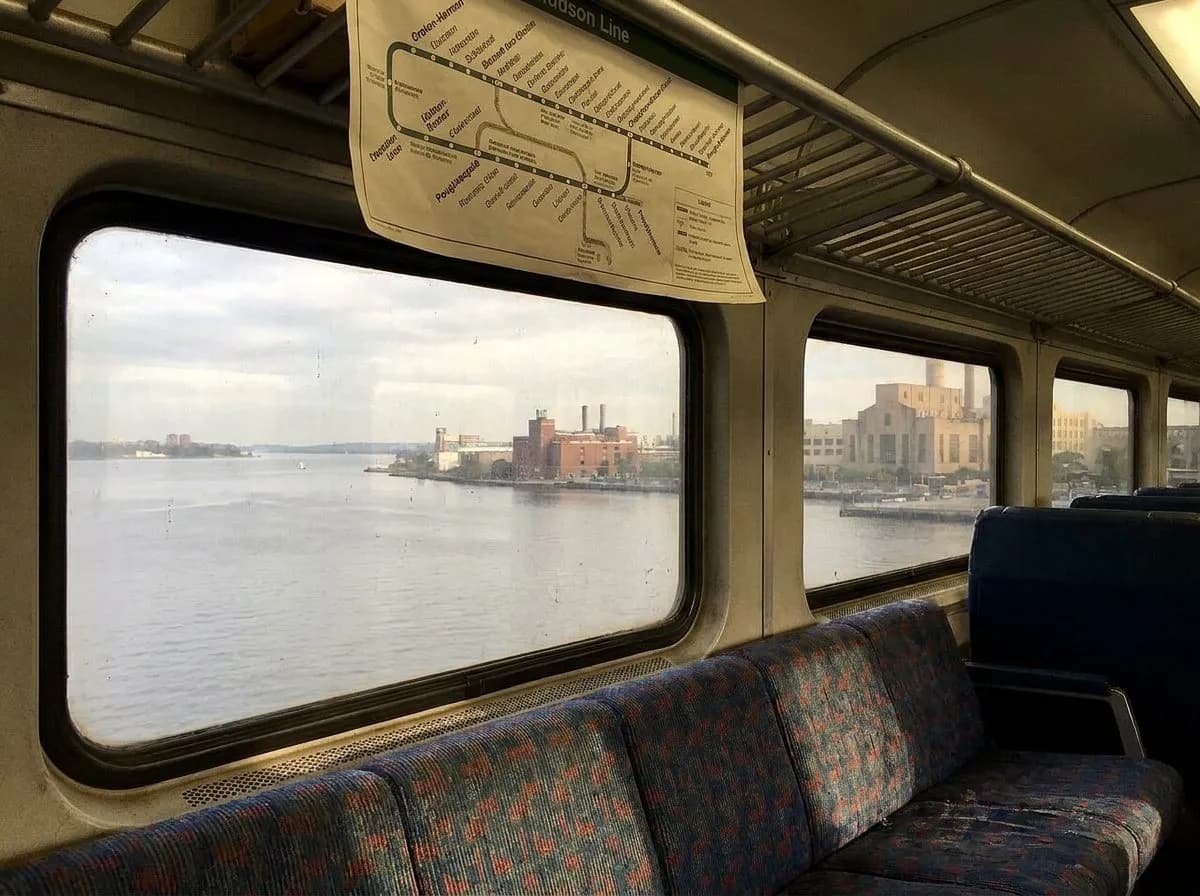
Commuter rails have two personalities: the crush-hour scrum and the midday lull. You want the latter. Midday trains departing Grand Central between 10:15 AM and 1:45 PM run significantly less crowded than peak schedules, and in summer the conductors often leave the vestibule doors open for air—a small, unregulated pleasure that turns the ride into something closer to a screened porch than a sealed tube.
The light is better midday, too. Morning trains chase shadow; late afternoon heads into glare. But a 10:30 or noon departure gives you clean, oblique sun on the water, the kind that makes the river look like hammered pewter. Weekday trains are quieter than the weekend plans crush, which means you're more likely to claim the seat you want and keep it all the way to Tarrytown.
Choosing your seat like you mean it
Not all Metro-North cars are created equal. The newer M8 models are sleek and efficient and entirely wrong for this trip. You want the older M3 and M7 cars, the ones with single seats on the east side—no seatmate, no negotiation, just you and the window. The trick is to look for car numbers ending in odd digits; those are the ones that tend to carry the solo configuration.
Stake your claim early. Board at Grand Central, walk toward the rear of the train where the crowds thin, and scan for that unobstructed east-facing perch. The single seats offer a cocoon effect: enough space to spread a book or a notepad on the tray table, enough privacy to stare without feeling observed. It's the difference between being a passenger and being an audience of one.
What the window shows you
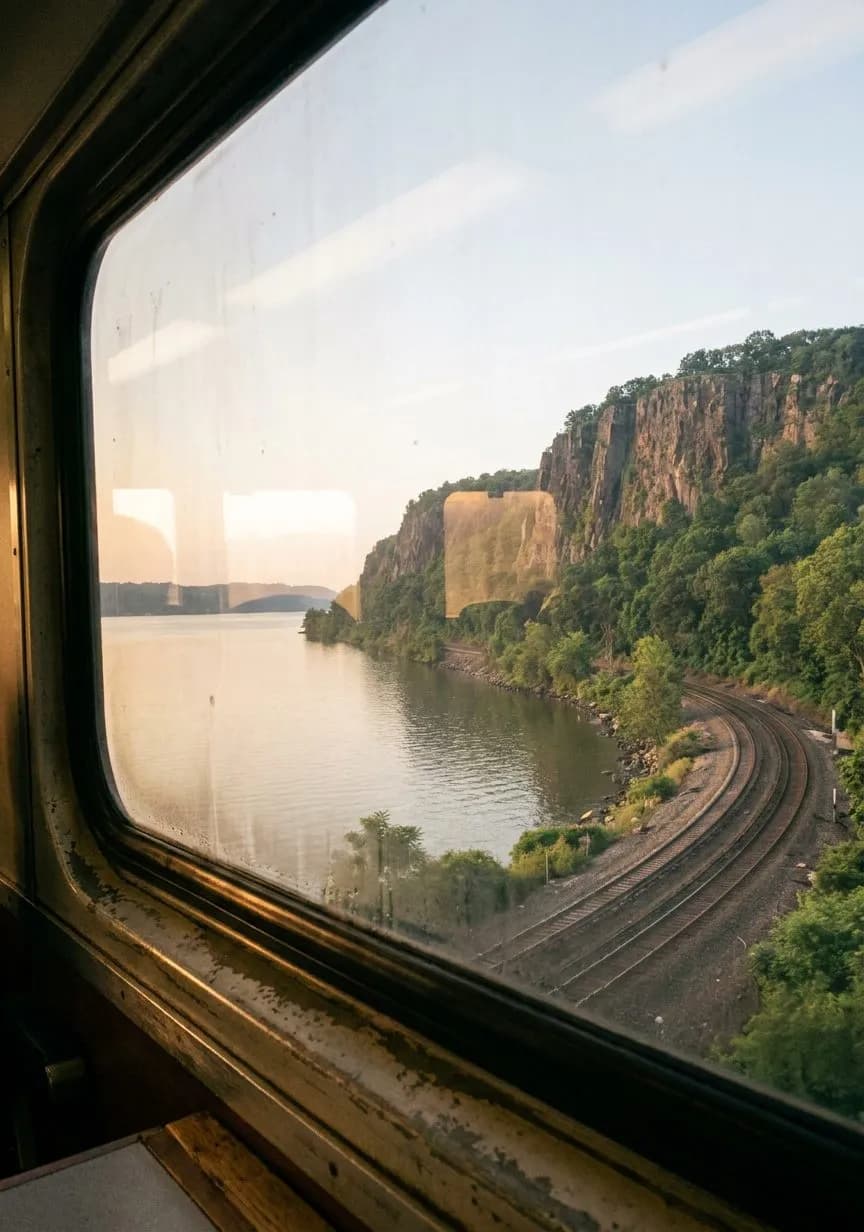
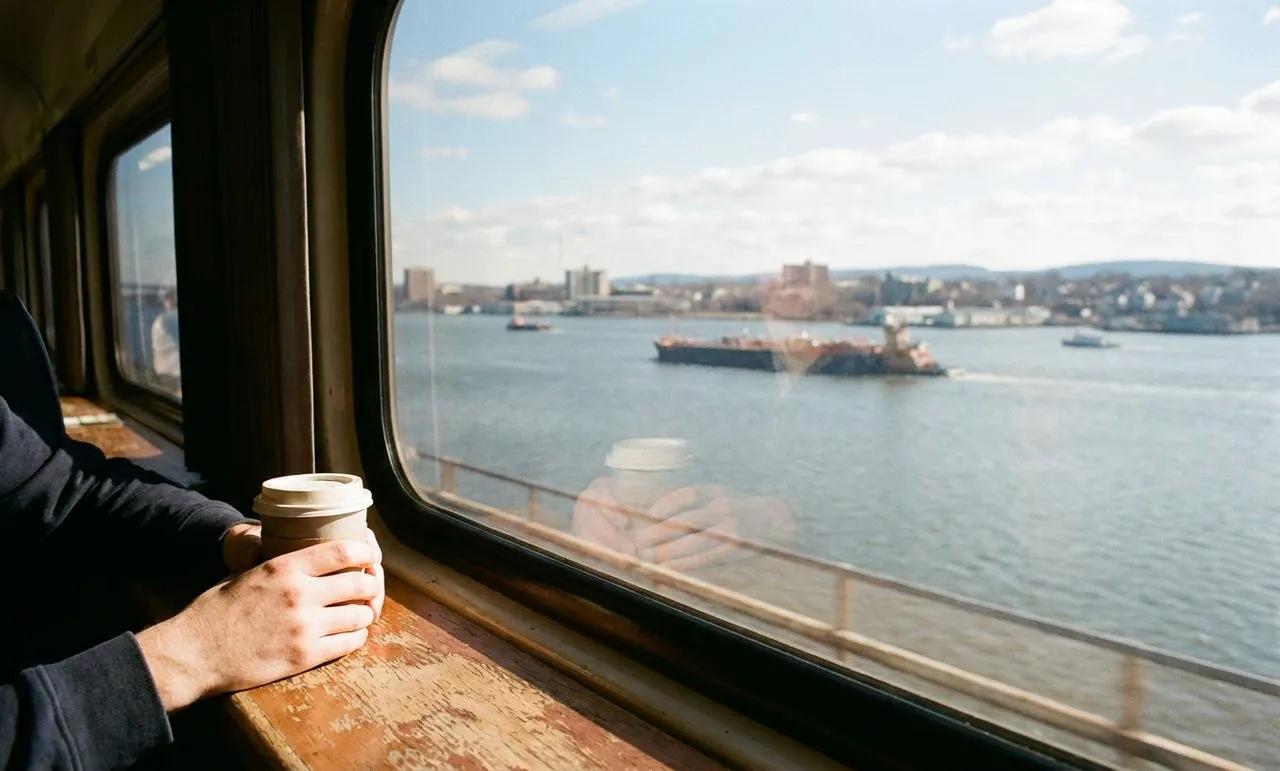
The first fifteen minutes are preamble: Harlem's rail yards, the Bronx's backside, graffitied retaining walls. Then the train curves east at Marble Hill and suddenly the river is there, wide and silver-green, the Palisades rising sheer across the water. The cliffs are columnar basalt, dark and geometric, streaked with lichen and shadow. In certain light they look almost carved, as if someone designed them for drama.
North of Yonkers the rhythm changes. Small stations appear—Greystone, Glenwood, Irvington—each one a study in Victorian rail architecture, wood brackets and bracketed eaves and ticket windows that may or may not still sell tickets. The train slows, stops, starts again. Between stations the river widens, narrows, catches the wind in whitecaps or lies flat as poured resin. Sailboats tack upriver. A barge noses south under the Tappan Zee. It's the kind of watching that requires no effort and no conclusion.
Tarrytown as punctuation
Tarrytown is small enough to walk end to end in half an hour, which makes it ideal ballast for a trip that's mostly about sitting still. The village has a main street with the usual boutique-and-cafe mix, a riverfront park where you can watch the new Tappan Zee Bridge from below, and enough lunch options that you won't default to a chain. If you're inclined, the Rockefeller estate—Kykuit—offers tours, though you'll need to book ahead.
But the real point of Tarrytown is that it gives the ride a shape. It's the turn-around, the excuse to get off and stretch before you board again. You can make a day of it or just an afternoon. The return ticket doesn't care. Replace with a non-specific reference to returning on a later off-peak train after checking the current Metro-North schedule., and the fare remains the same. It's a small, old-fashioned flexibility that makes the whole enterprise feel less like summer travel logistics and more like a choice you're allowed to remake hour by hour.
Why bother
There are faster ways to see the Hudson. You can drive, though that means watching the road instead of the river. You can take a river cruise, though those come with narration and timetables and the faint guilt of tourist performance. The train splits the difference. It's public, anonymous, designed for function but generous with incidental beauty. No one expects you to be awed. No one's checking to see if you're getting your money's worth. You're just there, moving north along a river that's been a thoroughfare for centuries, watching light and stone and water do what they do.
It's the kind of small, repeatable luxury that a city ought to offer: a route that costs less than brunch, requires no planning, and returns you by dinner. A moving window. A quiet hour. The long way home.
Practical notes
Metro-North Hudson Line trains depart from Grand Central Terminal, accessible via the 4/5/6/7/S subway lines at 42nd Street-Grand Central. Off-peak trains to Tarrytown run frequently midday; check the MTA schedule for current departure times. The Tarrytown station address should be verified; do not state a specific address unless confirmed from Metro-North or the station listing. Trains are wheelchair accessible; verify specific car accessibility with the conductor. Bring water, a book, and something to clean your window if it's smudged—the view is worth it. Verify hours and operational details directly with Metro-North before travel.
Tags: #MetroNorth #HudsonLine #HudsonRiver #Tarrytown #TheLongWayHome #NYCTrains #WindowSeat #RiverViews #GrandCentral #OffPeakTravel #ScenicRoutes #TrainTravel #NYCExploration #SummerInNYC #QuietLuxury
Sources consulted: Hudson Line - Wikipedia · Metro-North Railroad · Hudson River - Wikipedia · New York Times - NY Region · Time Out New York
All trademarks are the property of their respective owners.