 Best Trick or Treating Neighborhoods Near Me: Park Slope
Neighborhood Guides
Metro-North Hudson Line Poughkeepsie Turnaround and Platform River View Wait: A Fresh Field Note
The Hudson Line's northern terminus offers something rare: a designated pause. Document the elevated platform wait, the dual-bridge vista, and the slow southbound drift through river towns as destination, not detour.
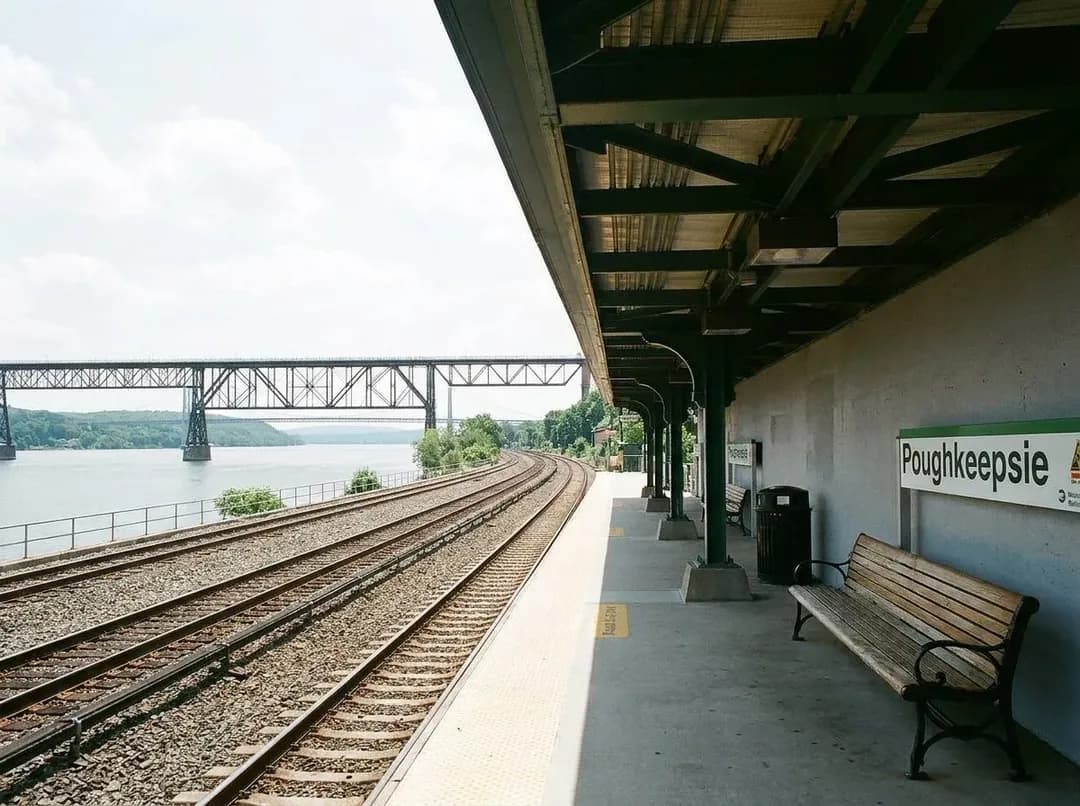
The platform at Poughkeepsie station sits high above the city, cantilevered over tracks and parking lots, facing west across the Hudson with the attentiveness of a ship's prow. This is not a place you pass through. It's the end of the line, literally—Metro-North's Hudson Line terminus, where trains pause, rest, and reverse direction. The turnaround here is mechanical and meditative in equal measure, a built-in interval that transforms the usual commuter calculus. Stay on board or step onto the platform; either way, you're invited to linger. For those reconsidering their weekend plans, this is the blueprint: ride north not to arrive somewhere, but to inhabit the in-between.
The geometry of arrival
Poughkeepsie announces itself gradually. The train slows through Dutchess County bedroom communities, past clapboard Victorians and marinas crowded with shrink-wrapped boats, before banking into the final approach. The station emerges: a brick headhouse below, a long elevated platform above, all sharp angles and functional steel. There's no grand concourse here, no vaulted ceiling. Just clarity of purpose. The platform stretches north-south, parallel to the river, its corrugated metal canopy offering intermittent shelter. Everything here speaks to utility rather than ornament, which somehow makes the spectacular river view feel earned rather than staged.
When the train pulls in, particularly on off-peak weekend runs, it may use either platform track depending on operations. This positions the river-facing side of the train adjacent to the platform for optimal boarding views, so that passengers disembarking or waiting step directly into the Hudson panorama rather than facing the station house. It's a quiet courtesy, the kind of detail that makes a journey feel considered rather than merely scheduled.
The layover as amenity
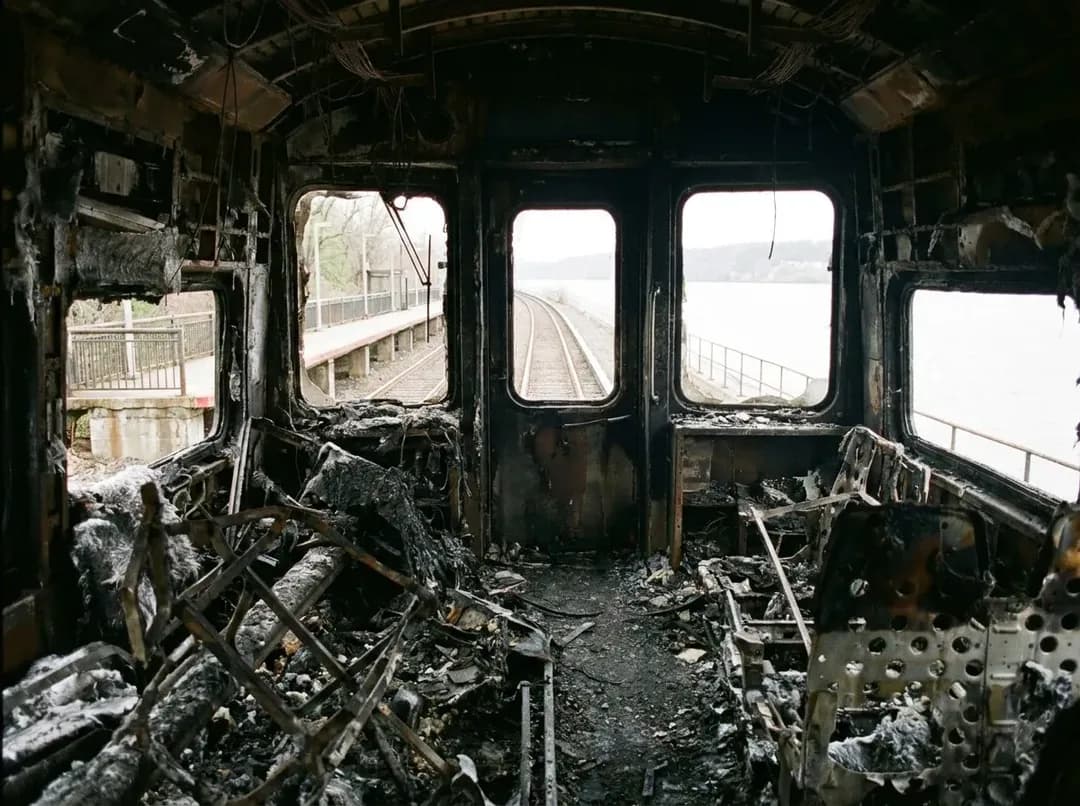
Trains typically dwell at Poughkeepsie for fifteen to twenty-five minutes while conductors complete paperwork and engines are serviced. Passengers may remain aboard in climate-controlled cars, and many do—reading, napping, staring out at the river as maintenance crews move efficiently below. The layover is part pillow, part intermission. In summer it's a relief from platform heat; in winter, a refuge from wind that funnels up the valley. The stillness of a stationary train car has its own peculiar comfort, a pocket of suspended time where you're neither traveling nor arrived.
But the platform itself, especially in fair weather, offers the better theater. Walk its length and the Hudson spreads out in full: a muscular, working river even this far north, its surface catching light in facets that shift with cloud cover and season. After recent station work completed, the station feels scrubbed and functional, the station feels scrubbed and functional, its sight lines unobstructed. There's no romance imposed here, just vantage. The platform's elevation—roughly thirty feet above street level—provides a viewing angle that transforms the river from backdrop to subject, a living geography that changes by the minute.
The twin bridges
From the northern end of the platform, the view resolves into architectural call-and-response. The Walkway Over the Hudson—a former rail bridge converted to pedestrian and cyclist use—stretches across the river in a long, linear gesture, its truss work dark against the sky. Just south of it, the Mid-Hudson Bridge arcs in steel and concrete, carrying Route 44 traffic. Stand in the right spot and both structures frame themselves simultaneously, a layered composition of infrastructure and negative space.
It's a view that rewards patience. Wait through the layover and you'll see joggers and cyclists crossing the Walkway, tiny and determined; cars streaming over the bridge in tidal commute patterns; maybe a barge pushing upriver, slow as a thought. The scene is ordinary and hypnotic, the kind of tableau that urban life rarely pauses long enough to offer. This is why you came north.
Station surroundings and Main Street's quiet pull
The station sits at the edge of Poughkeepsie's struggling but persistent downtown, where Main Street slopes toward the waterfront through a mix of renovated storefronts and optimistic vacancies. If the layover stretches long or curiosity wins out, a quick descent via the station elevator delivers you to street level, where a handful of coffee shops and delis serve the commuter crowd. The neighborhood carries the particular energy of a place between chapters—not quite revitalized, not quite forgotten, sustained by the steady pulse of train arrivals and the proximity to Vassar College a few miles east.
But most platform waiters never make this descent. The river view holds them in place, and the knowledge that the train will soon reverse creates a gravitational pull that's hard to resist. There's a tacit understanding among weekend riders that leaving the platform risks breaking the spell, turning a self-contained excursion into an errand. Better to stay put, to let Poughkeepsie remain a name and a vantage point rather than a destination requiring navigation. The city exists below, functional and real, but the platform offers a different kind of arrival—one measured in views rather than streets walked.
The southbound drift
When the train reverses direction, the journey takes on a different texture. The urgency of the outbound leg—getting somewhere, making distance—dissolves. Now you're drifting home through the same river towns, but with the satisfaction of having reached the edge of the line. The late afternoon light slants differently. Garrison, Cold Spring, Beacon slide past in their particular choreography of waterfront and bluff. Each station platform appears and recedes, a brief punctuation in the long sentence of the return journey.
The southbound Hudson Line in this context is pure scenic detour, the train a moving observation deck. Commuters who ride this route daily carry novels and laptops, performing productivity or escape. But on a weekend return, the etiquette shifts. It's acceptable—expected, even—to simply look. The Hudson Highlands rise and fall. West Point's gray stone keeps its stolid watch. The river widens as you approach the city, and the train picks up speed, reluctant to end the interval but committed to its schedule.
Why the terminus matters
End-of-line stations occupy a peculiar psychic territory. They're goal and anticlimax, arrival and waiting room. Poughkeepsie handles this liminality with grace, mostly by not trying to be anything other than what it is: a place where trains pause before turning back. There's no pressure to disembark and explore the city below—though you can, and the waterfront has its charms—because the station itself delivers the essential experience.
This is transit as field study, infrastructure as destination. The train, the platform, the view, the return: together they form a contained excursion, a loop that asks nothing of you except attention. In an era when every journey is supposed to optimize toward productivity or Instagram yield, the Poughkeepsie turnaround offers something stubborn and unfashionable. Time that doesn't convert into anything except the memory of having been there, on that platform, watching the river.
Practical notes
Poughkeepsie station (verify current official address before publication). Accessible via Hudson Line from Grand Central Terminal (roughly 90 minutes; schedules vary, verify directly via MTA). Station is ADA-accessible with elevator service to platform level. Street parking available nearby; small station lot. Bring layers—the elevated platform is exposed to wind year-round. A water bottle and something to read enhance the layover. Weekend off-peak service is less frequent; check return schedules before boarding northbound. The platform has minimal seating; many passengers remain on the train during the turnaround.
Tags: #TheLongWayHome #PoughkeepsieStation #HudsonLine #MetroNorth #HudsonRiver #RiverTowns #WeekendByRail #TransitAsDestination #EndOfTheLine #HudsonValley #SlowTravel #PlatformView #NYCDayTrip #TrainJourney #UrbanFieldNotes
Sources consulted: Poughkeepsie Station · Hudson Line · Metro-North Railroad · New York Times NYC · Scenic Hudson
All trademarks are the property of their respective owners.
Ask Karpo for more information.
Keep reading
- Best Trick or Treating Neighborhoods Near Me: Park Slope
 Best Trick or Treating Neighborhoods Near Me: Carroll Gardens
 Best Trick or Treating Neighborhoods Near Me: West Village