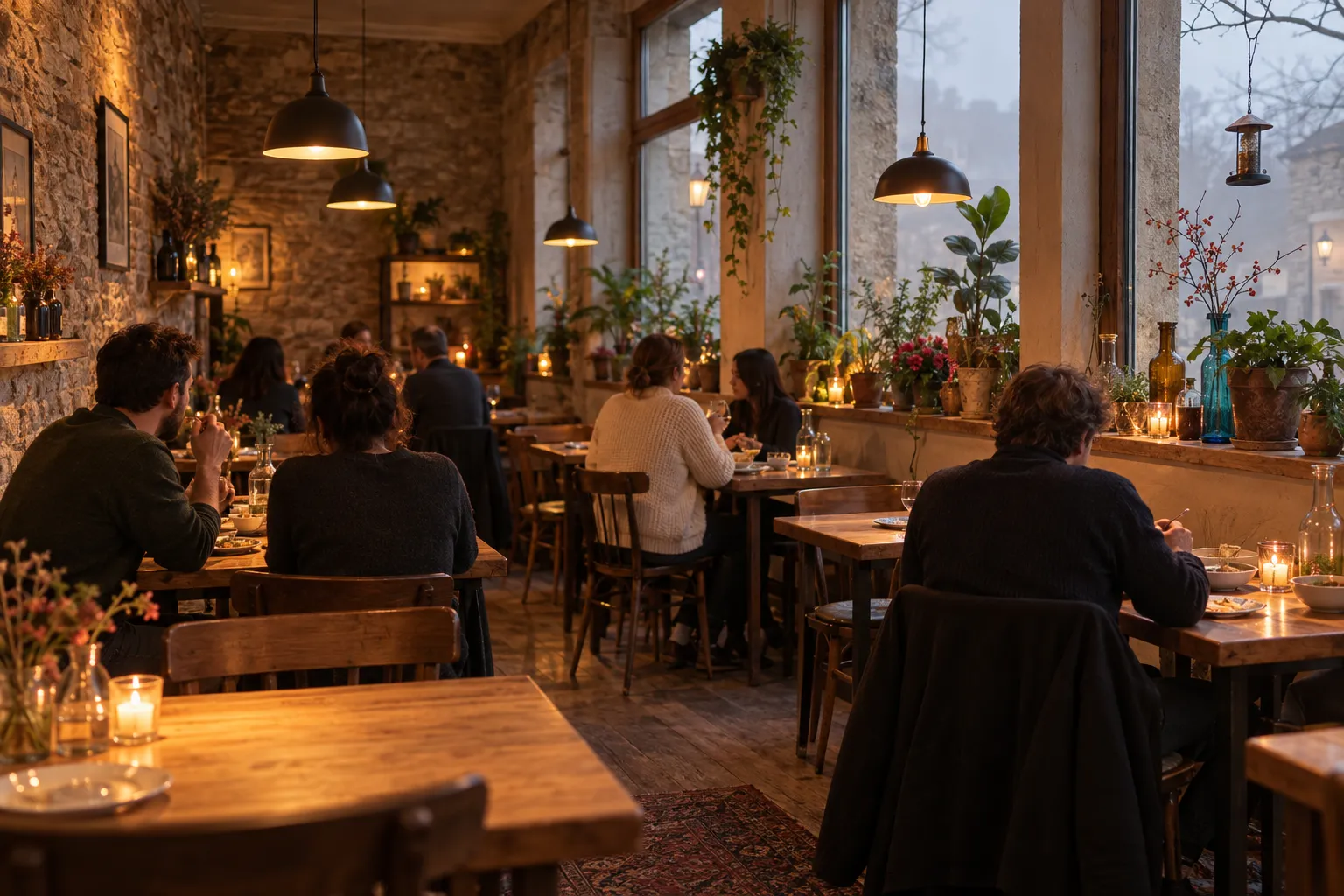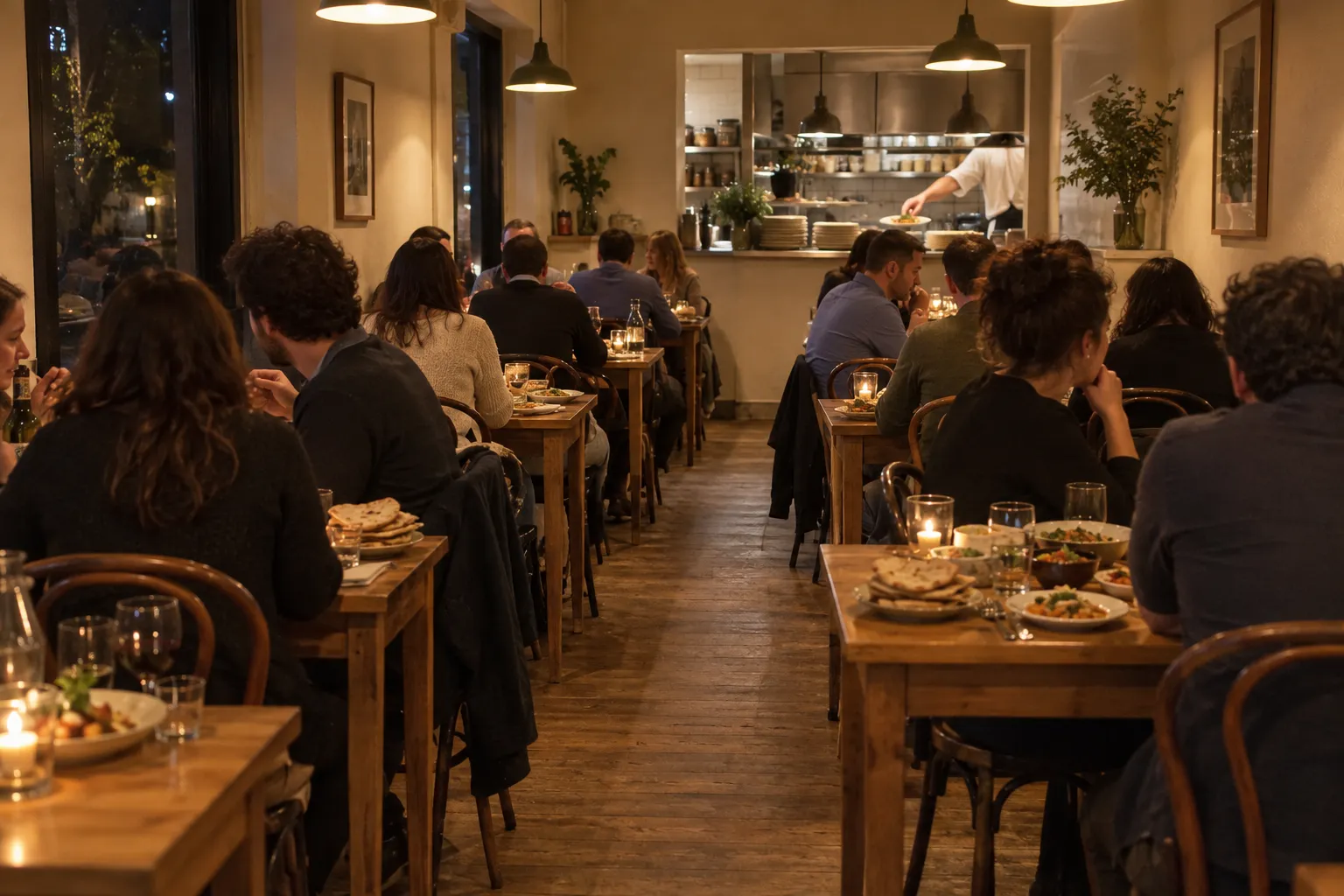
Beit Rima is named after a house in Daly City — the one Samir Mogannam grew up in, where his parents cooked and threw dinner parties for anyone who turned up. He spent a year persuading his father Paul to let him convert the family's Church Street BurgerMeister into a Palestinian restaurant. It opened in 2019 and there are now two rooms, in Duboce Triangle and Cole Valley.
Two branches, two neighbourhoods, and the wait at each behaves completely differently on a weekend evening. Ask Karpo which room has space right now and how long the other one is running.
The conversion story matters
Restaurants that replace a family business usually erase it. This one did the opposite: a son took over his father's burger restaurant and turned it into the food his mother cooked, which is a more interesting act than opening a new room somewhere else would have been. The name is a direct reference to the house rather than a branding exercise.
What that produces on the plate is cooking that is confident about being domestic. These are not restaurant interpretations of Palestinian and Jordanian dishes reworked for a tasting menu — they are the versions that get made at home and served to a table of people, scaled up for a dining room.
The recognition followed quickly. San Franciscans voted it Best New Restaurant via SF Weekly, and it has appeared on the San Francisco Chronicle's Top 100 list. For a room that began as a conversion of a burger joint, that is a steep trajectory.
Order the musakhan
Musakhan is the national dish of Palestine and it is the thing to order here. Baharat-spiced chicken over toasted pita, heaped with caramelised onions, pine nuts and Palestinian sumac, at around twenty dollars. The structure of the dish is the point: the bread underneath absorbs everything, so by the end the best part is the layer you were sitting on top of.
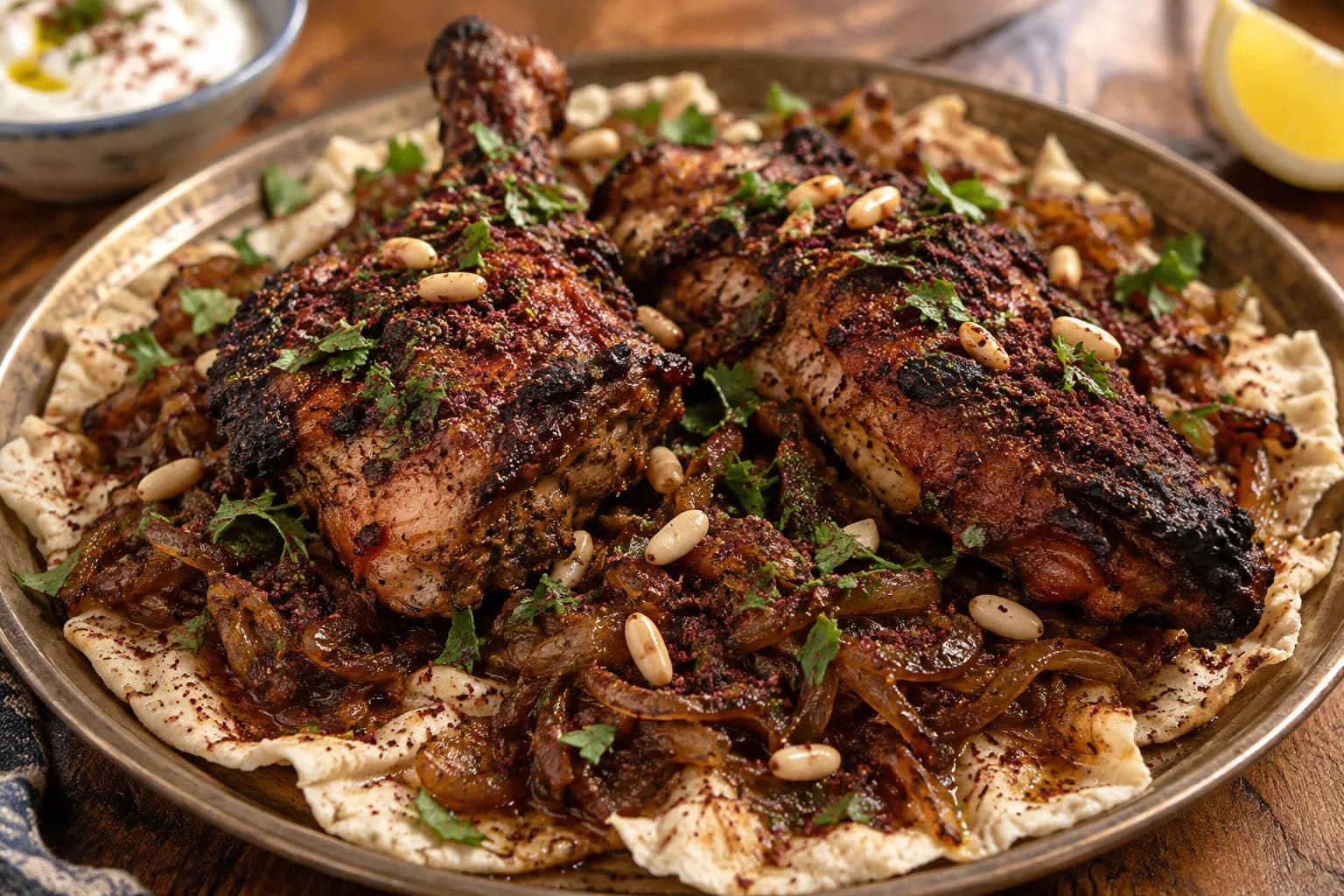
Sumac is doing the critical work. It is sour rather than sharp, closer to the tang of a good tomato than to lemon, and Palestinian sumac specifically is the ingredient that makes this dish taste like itself. If you have had a version somewhere that tasted flat, the sumac is usually why.
Order it to share and order something green alongside it. Musakhan is rich and the caramelised onion load is substantial, and a plate of something acidic beside it turns a heavy dish into a balanced meal. The kitchen knows this and the menu is built accordingly.
Beyond the musakhan, the mezze section is where the house-cooking premise shows most clearly. Hummus, labneh, fried cauliflower, stuffed grape leaves — none of them reinvented, all of them made properly, and collectively they are what turns a single dish into a meal worth sitting over for ninety minutes.
Two rooms, two different evenings
The original is at 138 Church Street in Duboce Triangle; the second is at 86 Carl Street in Cole Valley. Same kitchen, same menu, different neighbourhoods — and that difference is more useful than it sounds when you are deciding where to eat on a Friday.
Church Street sits on a busy transit corridor with the J line at the door and a dense stretch of bars and restaurants around it, which means it fills earlier and turns over faster. Carl Street in Cole Valley is quieter, more residential, further from through traffic, and generally the easier of the two to walk into without a plan.
If you are coming from downtown or the Mission, Church Street is the obvious choice. If you are prepared to go slightly out of your way for a better chance at a table, Cole Valley is the answer, and the walk up through the neighbourhood is pleasant in a way that Church Street is not.
How to order for a table
This is food designed for sharing, and ordering it as individual main courses is the most common mistake people make. The format the kitchen is built around is several dishes in the middle, bread, and everybody reaching — which is exactly how the food was eaten in the house the restaurant is named after.
For four people, four or five plates plus the musakhan is the right volume. For two, the musakhan and two smaller things. Ordering one dish each will leave you with a table of separate meals and none of the point of the menu.
Vegetarians do unusually well here, which is not always true of restaurants known for a chicken dish. A large share of the Levantine repertoire is vegetable-based by default rather than by adaptation, so a table that orders entirely from the mezze section is eating the cuisine as intended rather than working around it.
What it costs and when to go
Prices sit in the comfortable middle of San Francisco dining — this is a neighbourhood restaurant rather than a special-occasion one, and the musakhan at roughly twenty dollars is representative. Feeding four people properly here costs less than you would expect given the critical attention the kitchen has received.
Early evening on a weekday is the best version of either room. Weekend evenings are busy at both, with the Church Street branch the harder of the two. Lunch is quieter and the menu is largely the same, which makes it the underrated option.
Practical notes
Beit Rima serves Palestinian and Jordanian home cooking at 138 Church Street in Duboce Triangle and 86 Carl Street in Cole Valley, San Francisco. Samir Mogannam opened it in 2019 by converting his father's BurgerMeister, and named it for the Daly City house he grew up in. Order the musakhan — baharat chicken, toasted pita, caramelised onions, pine nuts, Palestinian sumac, around twenty dollars — and order to share rather than individually. Church Street is busier and better connected; Cole Valley is quieter and easier to walk into.
Takeaway is handled properly at both branches, which matters for a menu built on dishes that travel well. Musakhan survives a ten-minute walk better than most restaurant food, because the bread is supposed to be soaked through by the time you eat it.
Tags: #SanFrancisco #BeitRima #MediterraneanFoodNearMe #Restaurants #PalestinianFood #Musakhan #DuboceTriangle #ColeValley #SFEats #SFRestaurants #LevantineFood #ChurchStreet #SFFoodGuide #SharedPlates
All trademarks are the property of their respective owners.
Ask Karpo first
Want to know which branch has a table, how long the wait is and what to order alongside the musakhan? Ask Karpo before you pick a neighbourhood.