Mezze is one of the few restaurant formats where the ordering is genuinely harder than the eating, and New York gives you an enormous number of places to get it wrong. Four people sit down, everybody picks the thing they like, and the table arrives as five variations on a beige dip, one plate of meat and nothing green. It is not a matter of taste; it is a structural problem with a straightforward solution, and once you have the shape of a good table in your head you can order it anywhere from a Levantine dining room in Manhattan to a Turkish grill in Brooklyn without reading the menu twice.
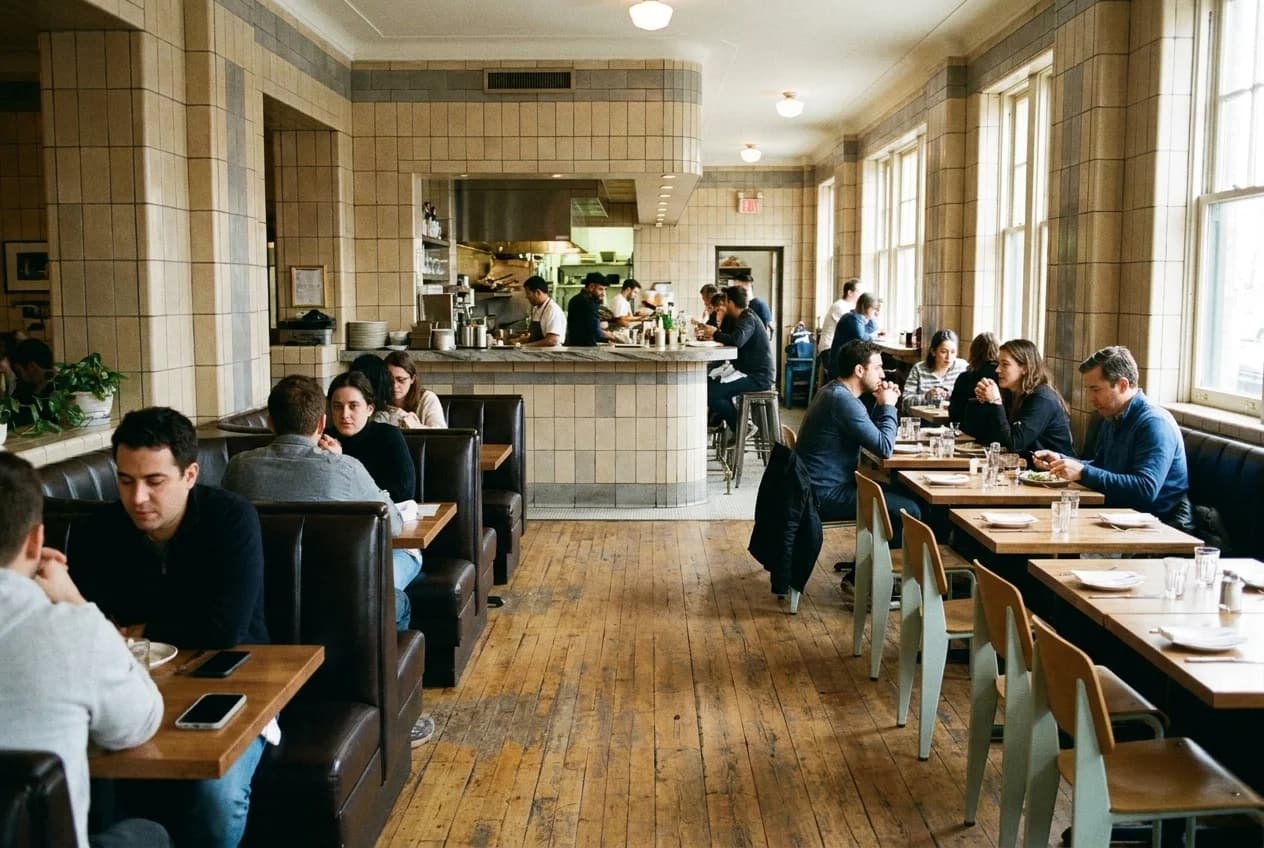
The right room matters as much as the right order, because a bakery counter and a sit-down mezze house are doing different jobs at different prices. Tell Karpo how many of you there are and roughly what you want to spend, and it will find a table built for sharing rather than a place with good reviews and two-tops.
The shape of a table that works
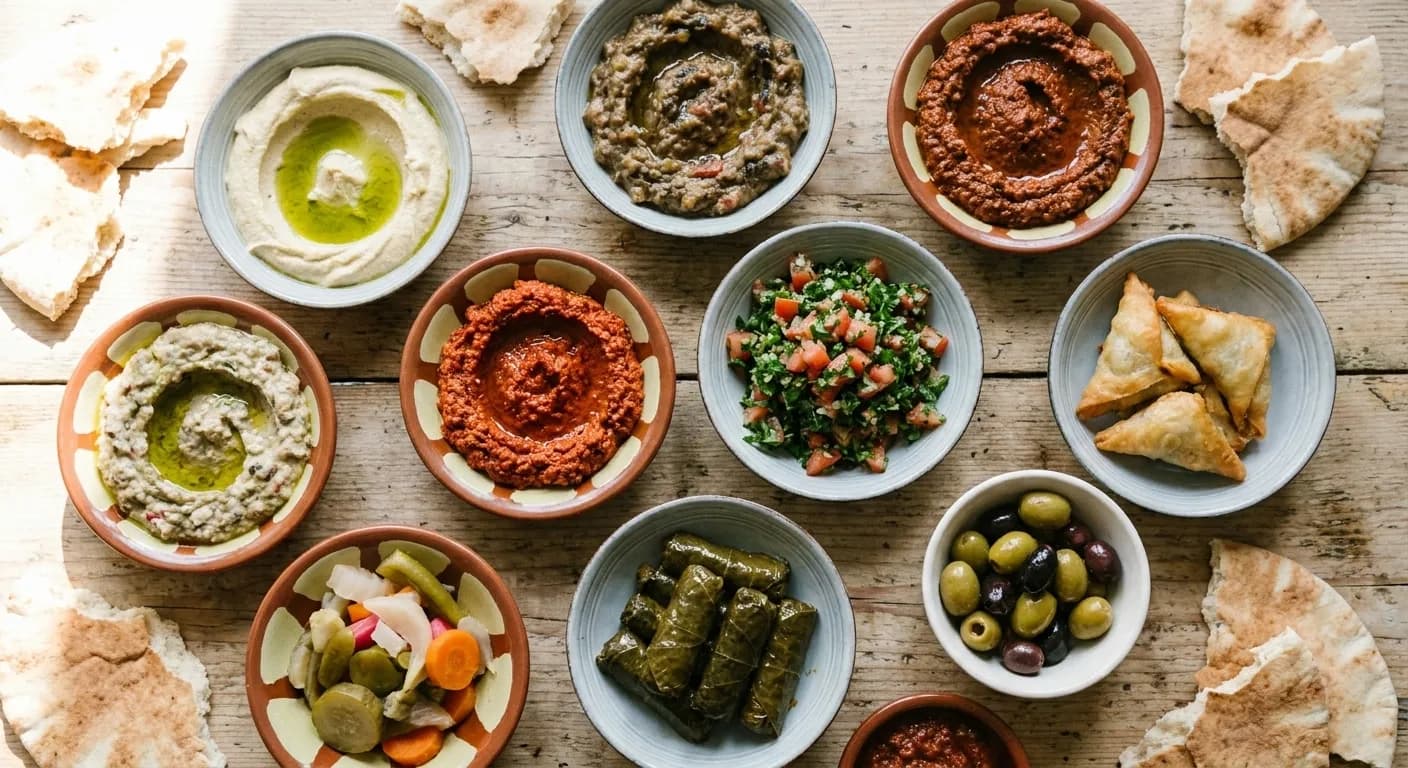
For four people the target is eight to ten small plates plus one thing from the grill, and the useful ratio is roughly two dips, three vegetable dishes, two pastry or fried items, one raw or pickled element, and then the meat. That is it. Everything else is preference within those slots.
The reason it works is that mezze is eaten with bread over an hour, and a table of soft, rich, similar textures becomes tiring by minute twenty. The vegetables and the acid are not health decisions, they are pacing decisions.
Only order two dips, and make them different
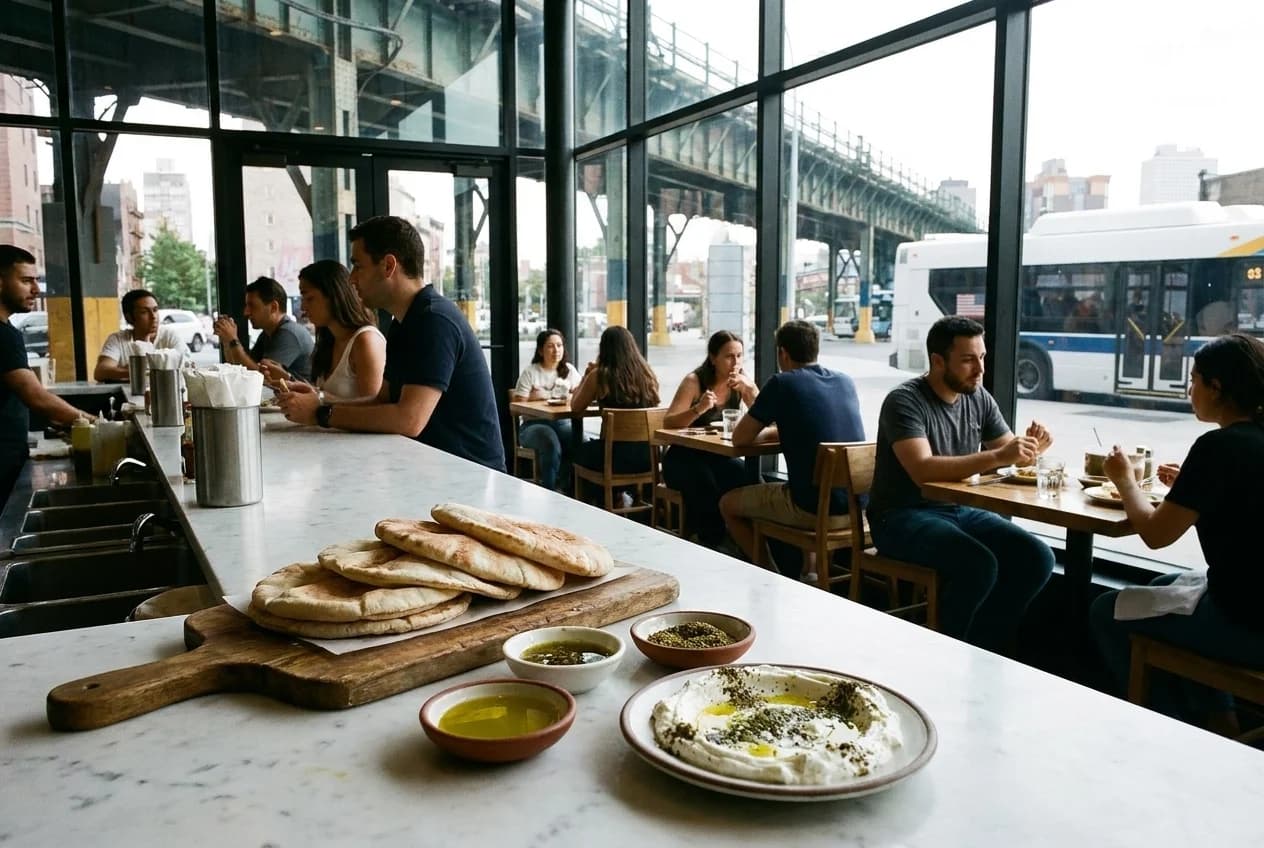
Hummus and something that is not hummus. The second one should differ in either temperature or texture - a whipped feta, a muhammara with walnut and pepper, a labneh with oil and za'atar, a baba ghanoush with real smoke in it. Three or four dips is the single most common ordering error in this format.
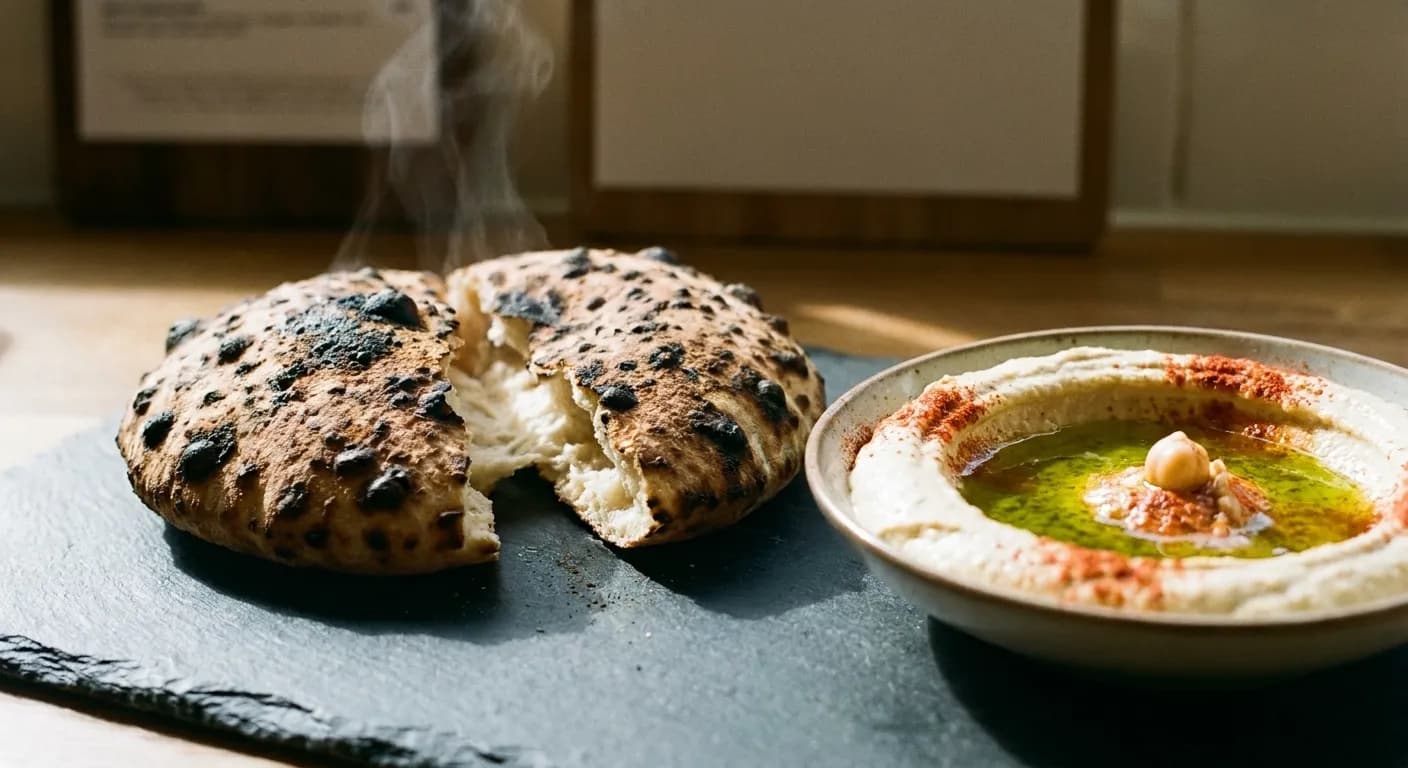
The test of a kitchen is usually the hummus anyway, and it takes one bite: it should be warm or at least not cold, loose rather than stiff, and taste of sesame as much as chickpea. If it arrives fridge-cold in a moulded dome, order fewer dips and more grilled things.
The vegetables are where the cooking is
This is where the good kitchens separate themselves and where diners under-order. Charred aubergine, roasted cauliflower with tahini, green beans in tomato, stuffed vine leaves, a proper chopped salad with sumac - these are the dishes with technique in them and they are usually cheaper than the meat.
Order three, and make one of them raw or lightly dressed. The chopped salad exists to cut through everything else on the table and it does more work than any single dish there.
Pastry, fried things and the bread question
Two items from this group is right: borek or sambousek, falafel, kibbeh, fried halloumi. More than two and the table tips heavy. These are also the dishes that suffer most from sitting, so they should be eaten when they land rather than saved.
Bread is usually included and usually replenished, but ask rather than assume - some rooms charge per basket. If the bread is coming out of an oven in the room, order less of everything else, because it will be doing more work than you expect.
One thing from the grill, not four
The mixed grill for the table is the efficient version of this, and it is what most rooms are set up to serve. A single lamb or chicken plate for four people alongside ten small plates is the correct proportion; ordering a main each on top of a full mezze spread is how a table ends up with a third of it uneaten.
If the room does a whole fish or a slow-cooked shoulder that needs ordering in advance, that is the exception worth building the entire meal around - and it is worth calling ahead, because those are usually limited to a couple a night.
Where the format changes across the city
The word Mediterranean covers at least four different traditions in New York and they order differently. A Levantine room leans on dips, pastry and grilled meat. A Turkish one gives you more vegetable dishes cooked in oil and served cool. A Greek table pushes towards seafood and simply dressed vegetables. A North African kitchen brings in preserved lemon, harissa and slow-cooked things.
The ratio above works across all of them, but the specific dishes filling each slot change. If you are not sure which tradition you are in, the giveaway is the bread and the oil on the table before you have ordered anything.
Cost, and how to keep it sane
A properly built mezze table for four is one of the better value group meals in New York precisely because the expensive item appears once. Small plates land in a narrow price band and the grill is the outlier, so the bill is largely determined by how many plates you order rather than which.
The discipline is to order in one round rather than two. Mezze arrives in waves and a table that keeps adding dishes at the forty-minute mark always over-orders. Set the ten plates, eat for an hour, and add only if you genuinely finish.
Tags: #MediterraneanFoodNearMe #NYC #Mezze #Levantine #GroupDinner #Shawarma #Hummus #NewYorkCity #NYCFood #Restaurants
All trademarks are the property of their respective owners.
Ask Karpo first
A good mezze table is an ordering decision made before anybody looks at the menu. Ask Karpo which rooms near you are actually built for a table of four and a spread of ten.