The Lower East Side is not a Mediterranean neighbourhood in the way that Astoria is a Greek one or Bay Ridge is an Arab one. It has no corridor and no community anchoring it. What it has instead is an accident of the last fifteen years of restaurant openings: within about six blocks you can eat Greek, Levantine and Iberian cooking at a serious level, from kitchens that have nothing to do with one another and are unusually good at what they each do. Eating them in sequence is the most efficient way to understand what people actually mean when they use the word Mediterranean, which most menus use to mean nothing at all.
These rooms are small, several of them do not take bookings, and the wait at eight on a Friday can be an hour at one and nothing at the one round the corner. Tell Karpo when you are eating and how long you are willing to stand, and it will tell you which of the three to walk to first.
The Greek end, and why it queues
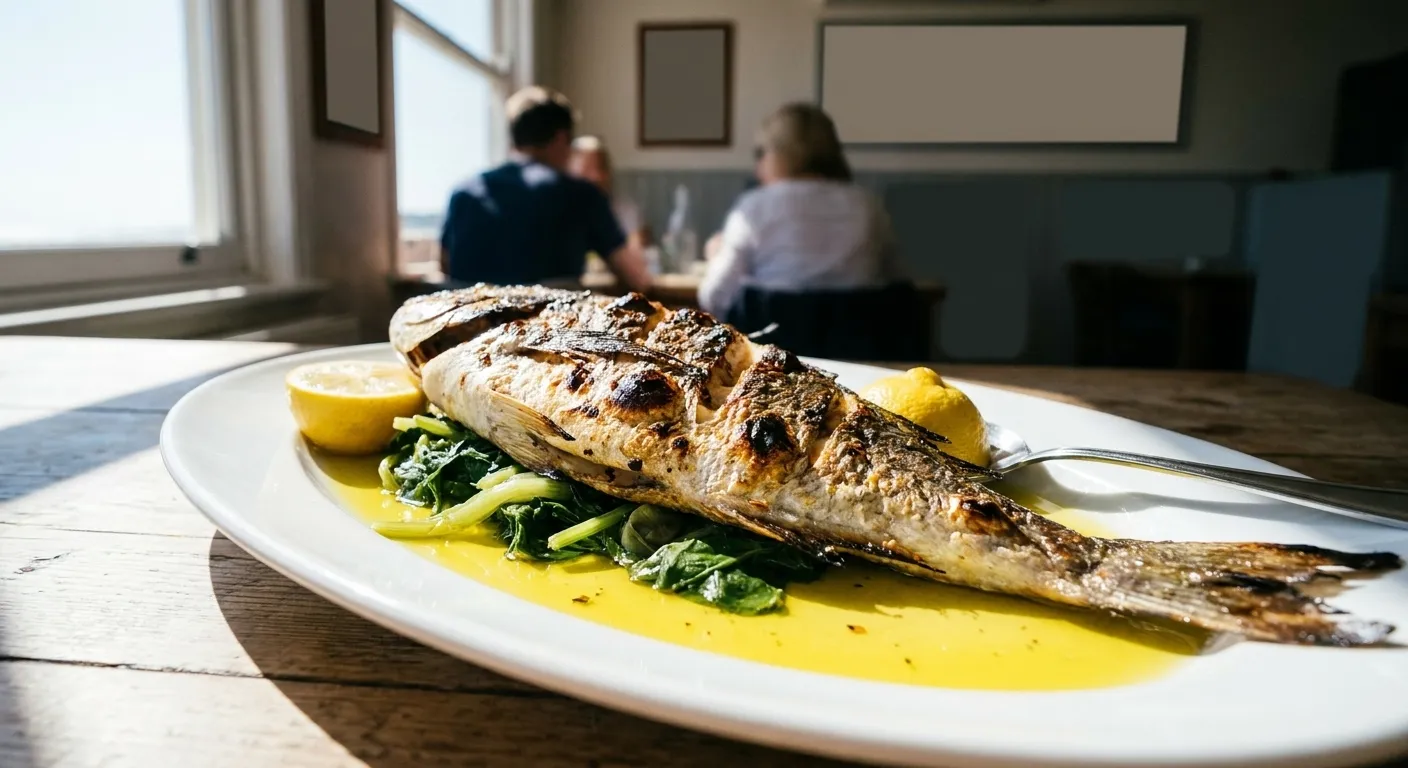
The southern edge of the neighbourhood, down towards Division Street, is where the Greek cooking sits, and the best-known room there - Kiki's - has run a long no-reservations queue for years. It is a small, loud, cash-conscious dining room doing straightforward island food: greens with lemon, fried cheese, grilled fish, a lot of oil and very little decoration.
The queue is the price and it is genuinely long at peak. The workaround is early or late rather than clever: a table at half past five or after ten is an ordinary wait, and the food is identical.
What Greek cooking is actually doing
The defining move is restraint. A Greek kitchen puts a fish on a fire, dresses it with oil, lemon and oregano, and stops. The complexity is in sourcing and timing rather than in sauce, which is why a mediocre version is very obviously mediocre and a good one is hard to improve on.
Order accordingly: the vegetable dishes and the grilled protein, not the things with three components. Horta - boiled wild greens with oil and lemon - is the dish that tells you most about whether the kitchen is serious, because there is nowhere at all to hide in it.
The Levantine rooms and the spice-forward turn
Move a few blocks north and the cooking changes register entirely. Levantine kitchens on and around the LES work with tahini, sumac, za'atar, preserved lemon and a great deal more heat and acid, and they build meals out of many small plates rather than a centrepiece.
This is the tradition that has expanded fastest in New York over the last decade, and the LES version tends to be younger and more improvisational than the Bay Ridge or Astoria versions - more likely to put a Levantine sauce under something that is not Levantine at all. Whether that is a virtue depends on the kitchen.
The Iberian corner, which people forget counts
Spain and Portugal are Mediterranean and Atlantic at once, and the LES holds a couple of rooms working in that register: tinned fish and conserva, plancha-cooked seafood, sherry and vermouth by the glass, small plates that lean salty rather than herbal.
It is the most bar-shaped of the three and the easiest to do on a walk-in, because much of it is designed to be eaten standing at a counter. It is also the cheapest way to eat well in this neighbourhood if you order conserva and bread rather than a main.
How to eat all three in one evening
Start Iberian at seven with a couple of tins, bread and a glass of vermouth at a counter - twenty-five minutes, no waiting. Move to the Levantine room at eight for four or five small plates, which is where the bulk of the meal happens. Finish Greek late, after ten, when the queue has gone, with greens and a fish between two.
The order matters because it moves from salt to spice to simplicity, and because it puts the no-reservations room at the hour it is easiest to get into. Reversed, you spend an hour on a pavement.
The geography that makes this possible
The whole route is walkable in under fifteen minutes end to end, which is the actual reason it works. The LES is one of the few parts of New York dense enough that a three-stop evening does not involve a train, and the streets between - Orchard, Ludlow, Essex - are interesting enough to be part of the evening rather than an interval.
It also means you can abandon a plan cheaply. If the queue is impossible, the alternative is ninety seconds away, which is not true in most neighbourhoods with this quality of cooking.
What this teaches you about the word
Eating three Mediterranean kitchens in one night makes the term visibly useless as a description of food. What the three actually share is a set of ingredients - olive oil, lemon, bread, fish, wheat, sheep and goat dairy - and almost nothing about technique, seasoning or structure.
The practical upshot for ordering anywhere in the city is to stop reading the word Mediterranean on a sign and start looking at which coastline the menu is actually from. The distance between Thessaloniki and Beirut and Cadiz on a plate is much larger than the six blocks between these rooms.
Tags: #MediterraneanFoodNearMe #LowerEastSide #NYC #GreekFood #Levantine #HiddenGems #NewYorkCity #LESFood #FoodCrawl #NYCFood
All trademarks are the property of their respective owners.
Ask Karpo first
Three coastlines, six blocks, one evening. Ask Karpo which of them has room for you tonight and what to order when you sit down.