The problem with searching mediterranean food near me in Little Havana is that the phrase does not tell you whether the shawarma cone is spinning live or whether the kitchen pre-sliced the meat two hours ago and is reheating it to order. It does not tell you if the kebab grill is running on charcoal or gas, or whether the mixed grill is cooked fresh or assembled from warmers. The search returns addresses and star ratings, but what you need to know is which counter is carving to order right now, which grill is hot, and what time of day the meat is at its best. That information lives in the operational details the kitchen does not advertise.
Karpo cross-references the cone schedules, the charcoal grills that are actually lit, and the counters that carve to order right now. Ask it which place on Calle Ocho is turning the spit fresh at the hour you're walking in.
The vertical spit schedule and when the cone is fresh
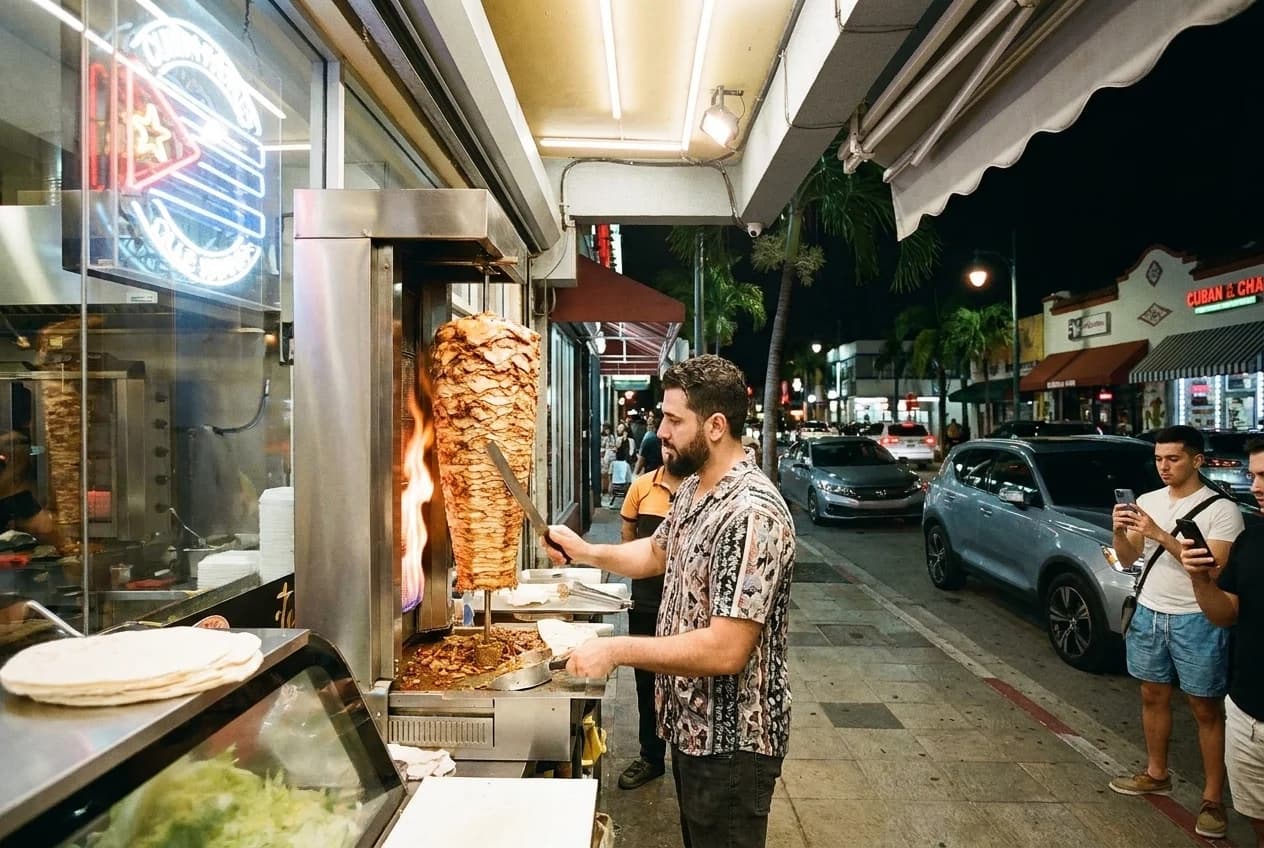
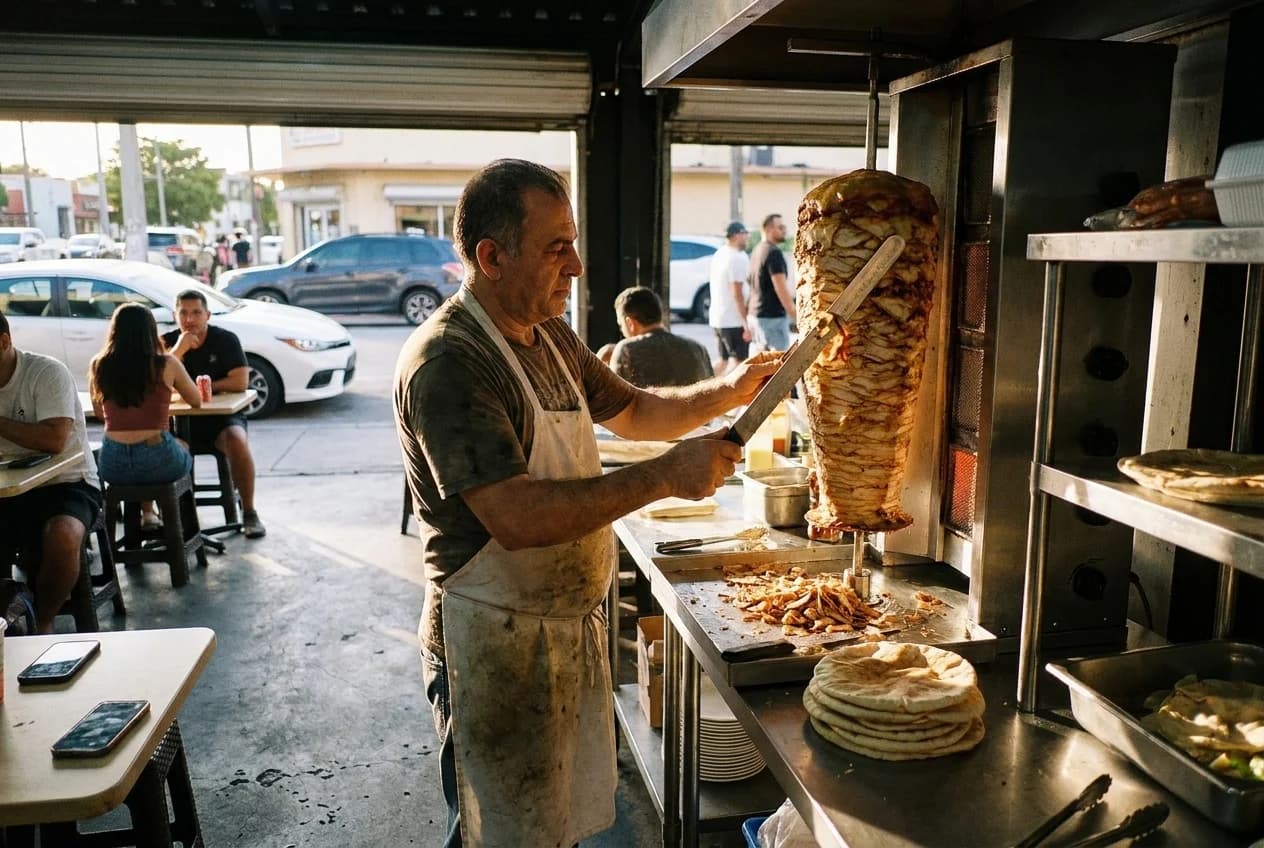
The shawarma cone is a time-sensitive piece of equipment. The stack of marinated meat on the vertical rotisserie needs hours to heat through and render its fat, and the outer layer only develops the charred, caramelized edges worth eating after sustained exposure to the flame. A cone loaded at opening will not be ready to carve until mid-afternoon, and a cone that has been carved down to its core by evening produces pale, under-seasoned slices that never saw the heat. The window when the spit is at its best is narrow, and it does not align with the posted hours.
In Little Havana, the Mediterranean counters that run a real vertical spit tend to load the cone in the morning and begin carving around noon, with the peak texture and char arriving between 1 p.m. and 6 p.m. After that, the outer meat is gone and what remains is either reheated from earlier carving or sliced from the interior, which has not crisped. A few spots load a second cone for the dinner shift, but most do not have the volume to justify it. If you are ordering shawarma after 7 p.m., ask whether they are carving fresh or reheating. The answer changes the meal.
Charcoal versus gas on the kebab grill and what it does to the crust
The kebab grill is the other heat source that defines Mediterranean cooking in the neighbourhood, and the fuel makes a visible difference. Charcoal burns hotter and less evenly than gas, which means the skewered meat develops a deeper crust and picks up smoke flavour, but it also requires constant attention to avoid flare-ups from dripping fat. Gas is cleaner, faster, and easier to control, which is why most high-volume counters use it, but the result is a more uniform char without the carbonized edges or the faint bitterness charcoal leaves behind.
A handful of Little Havana Mediterranean spots still use charcoal for their kebabs, and you can tell from across the counter: the smoke is visible, the meat comes off the grill with black-edged ridges, and the smell is sharper. Gas-grilled kebabs are milder, more consistent, and often juicier because the cook can dial the heat precisely, but they lack the texture contrast that makes a charcoal-grilled skewer worth the mess. If the menu does not specify, look at the grill itself. Charcoal grills have a visible bed of coals and a vent; gas grills have burners and knobs.
What a mixed grill actually includes and the portion weights that matter
The mixed grill is the test of what a Mediterranean counter does well, because it forces the kitchen to cook three or four different proteins to correct doneness at the same time and plate them together without one drying out while the others finish. The standard build is one skewer each of chicken, beef, and lamb, plus either a kebab or a piece of grilled vegetable, served over rice with a side of hummus or salad. The total weight should land between 14 and 18 ounces of meat, which is enough to feed one person fully or two people lightly.
In Little Havana, mixed grills vary by what the kitchen assumes you want. Some counters default to all beef and chicken with no lamb unless you ask. Others include a falafel patty or a piece of grilled halloumi as the fourth element, which is not traditional but fills the plate. The best version is the one where each protein is cooked separately to the right temperature and then plated immediately, rather than held under a heat lamp. Ask how long the plate takes. If the answer is less than eight minutes, the meat is probably pre-grilled and reheated. If the answer is fifteen to twenty minutes, they are cooking it to order.
Counters that carve to order versus counters that pre-slice and the texture gap
The difference between shawarma carved to order and shawarma carved ahead of service is the difference between a sandwich and a steam tray. Carving to order means the cook shaves the outer layer off the rotating cone as you wait, and the meat goes directly into the pita or onto the plate while it is still hot and crisp. Pre-sliced shawarma sits in a tray under a heat lamp, where it loses moisture and the edges turn leathery. The flavour is often the same, but the texture is not, and texture is half the point of shawarma.
Most Mediterranean spots in Little Havana carve to order during lunch and early dinner, when the volume justifies keeping someone at the spit. After 7 p.m., or on slower weekdays, many switch to pre-sliced meat to keep service fast. The only way to know is to watch the counter when you order. If the cook is standing at the spit with the long blade, you are getting fresh meat. If the cook is scooping from a tray, you are not. It is not a quality judgment on the restaurant, just a practical decision about labour and speed, but it is worth timing your visit around.
The lunch push and the hours when the grill is actually running hot
Mediterranean counters in Little Havana follow the lunch rush, and the grill is at its hottest between 11:30 a.m. and 2 p.m., when the volume forces the kitchen to keep the fire high and the orders moving. During that window, the meat is cooked fast and served immediately, which is the ideal state for kebabs and shawarma. By mid-afternoon, the pace slows, the grill cools, and the kitchen often switches to reheating pre-cooked portions rather than grilling fresh skewers. Dinner service picks up again around 6 p.m., but the second wave is smaller and some spots do not bother firing the grill back up to full heat.
If you want the best version of the food, go during the lunch push. The meat will be fresher, the grill will be hotter, and the kitchen will be in rhythm. If you go at 3 p.m. or 9 p.m., you are rolling the dice on whether they are still cooking to order or serving from the warmers.
Practical notes
Little Havana's Mediterranean counters cluster along Calle Ocho between SW 12th and SW 17th Avenues, with a few outliers on SW 8th Street farther west. Most open daily between 11 a.m. and 10 p.m., though a handful close on Mondays or cut Sunday hours short. Shawarma wraps run eight to twelve dollars, mixed grills fifteen to twenty-two dollars, and portion sizes are scaled for one full meal. Parking on Calle Ocho is metered street parking or paid lots; rideshare drop-off is straightforward. The lunch window between noon and 2 p.m. is when the spit and grill are running at peak capacity. After 7 p.m., call ahead to confirm they are still carving fresh rather than reheating. Most counters offer takeout and delivery, but the texture of shawarma does not survive the drive well, so eat in when possible.
Tags: #LittleHavana #MediterraneanFood #Shawarma #KebabGrill #CalleOcho #VerticalSpit #MixedGrill #FreshCarved #CharcoalGrill #MiamiDining #MiddleEasternFood #LunchRush #StreetFood
All trademarks are the property of their respective owners.
Ask Karpo first
Ask Karpo which Mediterranean counter on Calle Ocho is carving shawarma to order right now, which spots are running charcoal grills today, and what time the lunch push peaks at the place closest to you. It cross-references the spit schedules and the live grill status so you walk in when the meat is fresh off the flame, not reheated from the warmer.