There is a fact about Northern California that explains more about how people eat here than any restaurant list can. This is one of five Mediterranean climate zones on earth - wet mild winters, long dry summers - and it grows what the Mediterranean grows: olives, grapes, figs, stone fruit, almonds, artichokes, tomatoes. In the 1970s a group of cooks in Berkeley and San Francisco took that seriously, started buying from local growers and cooking simply in a broadly southern European register, and the result became what the rest of the country calls California cuisine. It is, in a real sense, Mediterranean food from here.
The Levantine rooms, the Greek ones and the California-Mediterranean restaurants keep different hours and cluster in different districts. Tell Karpo what you want and where you are.
The California branch
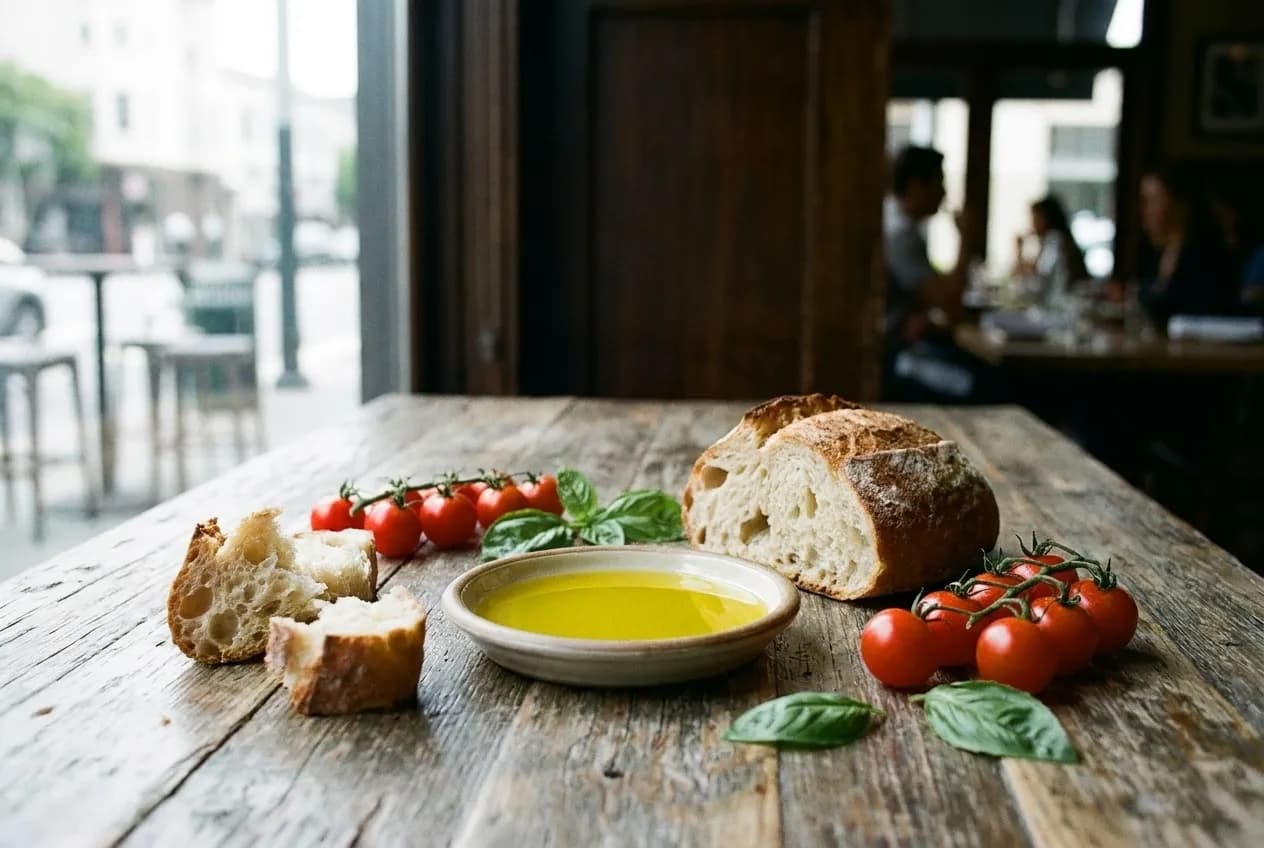
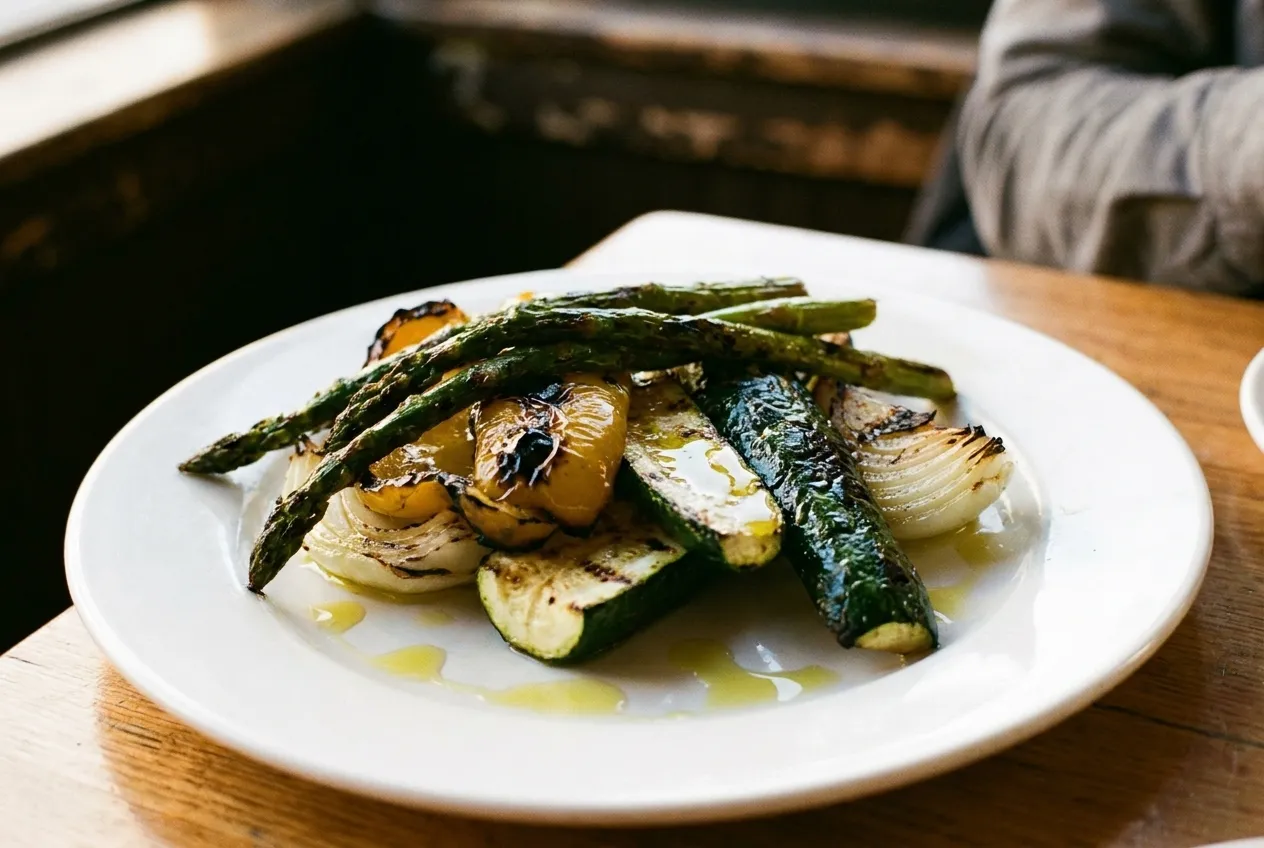
What distinguishes it is not a set of dishes but a set of decisions: buy from the market, cook it as simply as the ingredient permits, use olive oil rather than butter as the default fat, put a wood grill at the centre of the kitchen, and let the menu change constantly. A whole grilled fish with lemon and oil, a plate of charred vegetables, grilled bread rubbed with garlic, a bowl of olives, a fruit dessert with nothing much done to it.
That describes a Greek taverna and it also describes a certain kind of San Francisco restaurant, which is the point. If you order well in these rooms - the grilled things, the vegetables, the bread and oil - you are eating Mediterranean food. If you order the more elaborate composed plates, you are eating something else. The menu will not tell you which is which; the wood grill in the corner will.
The Levantine layer
The city also has a proper Levantine tradition - Lebanese, Syrian, Palestinian and Israeli - and it is the strongest actual-Mediterranean cooking here. The format is mezze: a table covered in small dishes eaten with flatbread. Hummus, baba ghanoush, muhammara, labneh, tabbouleh, fattoush, falafel, and the grilled meats arriving afterwards almost as an afterthought.
Judge these kitchens on two things. The hummus should be smooth to the point of being nearly liquid, warm rather than cold, heavy on tahini, and served with a pool of oil - cold, stiff hummus from a tub is the single clearest sign a kitchen is not making it. And the bread should arrive hot and puffed. Order the mezze first, decide about the grill later, and expect to over-order because the small dishes are not small.
The Greek and the eastern Mediterranean
Greek cooking in San Francisco is thinner on the ground than Levantine but the good rooms are seafood-led, which suits a coastal city with genuine supply. The structure is different from mezze - fewer, larger dishes, less spicing, and lemon, oregano, dill and olive oil rather than cumin, sumac and za'atar. Whole grilled fish with nothing on it is the order that tells you whether a Greek kitchen is serious.
Turkish is thinner still, and where it exists the thing to look for is the charcoal grill and the bread - a long grill with flat skewers, and bread arriving hot and enormous, means someone is doing it properly. Adana, minced lamb with pepper on a wide skewer, is the benchmark dish. North African is the rarest of all here; if you find a genuine Moroccan room, order a tagine with preserved lemon and olives.
Where they cluster
The California-Mediterranean restaurants are spread across the eastern half of the city - the Mission, Hayes Valley, the Divisadero corridor, North Beach and the waterfront - and they are the format most new San Francisco openings default to. They are sit-down restaurants with bookings and they mostly stop taking orders between half past eight and half past nine.
The Levantine and eastern Mediterranean rooms are more scattered and more neighbourhood-driven, with a meaningful concentration in the Richmond along and around Clement Street, where they sit alongside the Chinese, Burmese and Russian restaurants. That corridor is cheaper than anywhere east of Van Ness for equivalent cooking, and it is the answer if the food rather than the room is the point.
The market connection, which is worth using
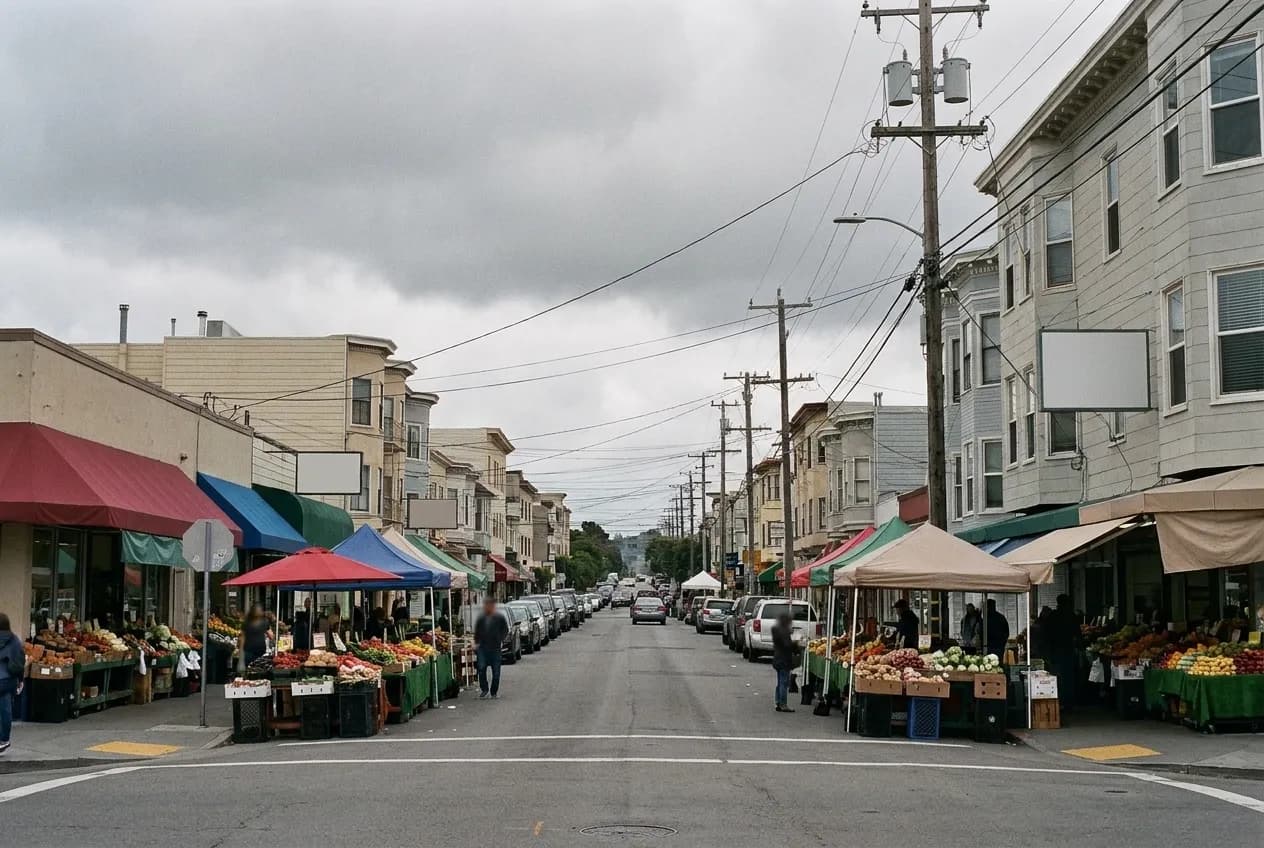
If the California-Mediterranean idea interests you at all, the Ferry Building farmers market is where it comes from and it is free to walk through. Going on a market morning and looking at what is actually in season - which in this climate means a genuinely different set of produce every six weeks - explains the restaurant menus better than any amount of reading.
It also makes the point about why these menus change constantly. A kitchen buying from that market in April and in September is cooking two different cuisines within the same idea. That is the tradition's central discipline and its main pleasure, and it is why asking what is good today is a better question here than asking what the restaurant is known for.
Practical notes
Judge a Levantine kitchen on warm hummus and hot bread; judge a Greek one on whole grilled fish; judge a California-Mediterranean room on the grilled vegetables and the bread and oil. Prices: mezze six to sixteen dollars a dish, grills twenty-four to thirty-eight, whole fish by weight, and the Richmond runs noticeably cheaper than the eastern neighbourhoods. Kitchens mostly stop between half past eight and half past nine; book Friday and Saturday. Sunday and Monday closures are common. The 38 Geary serves the Clement Street corridor. And ask what is good today rather than what the restaurant is known for - in this tradition the honest answer changes every few weeks.
Tags: #MediterraneanFoodNearMe #SanFrancisco #CaliforniaCuisine #Levantine #Mezze #Hummus #GreekFood #ClementStreet #InnerRichmond #FerryBuilding #HayesValley #MissionDistrict #SFEats #FarmersMarket
All trademarks are the property of their respective owners.
Ask Karpo first
Three overlapping traditions behind one menu word, spread across a city that closes its kitchens early. Ask Karpo which rooms near you are serving at the hour you want, which are Levantine rather than Californian, and whether the Richmond corridor is worth the ride tonight.