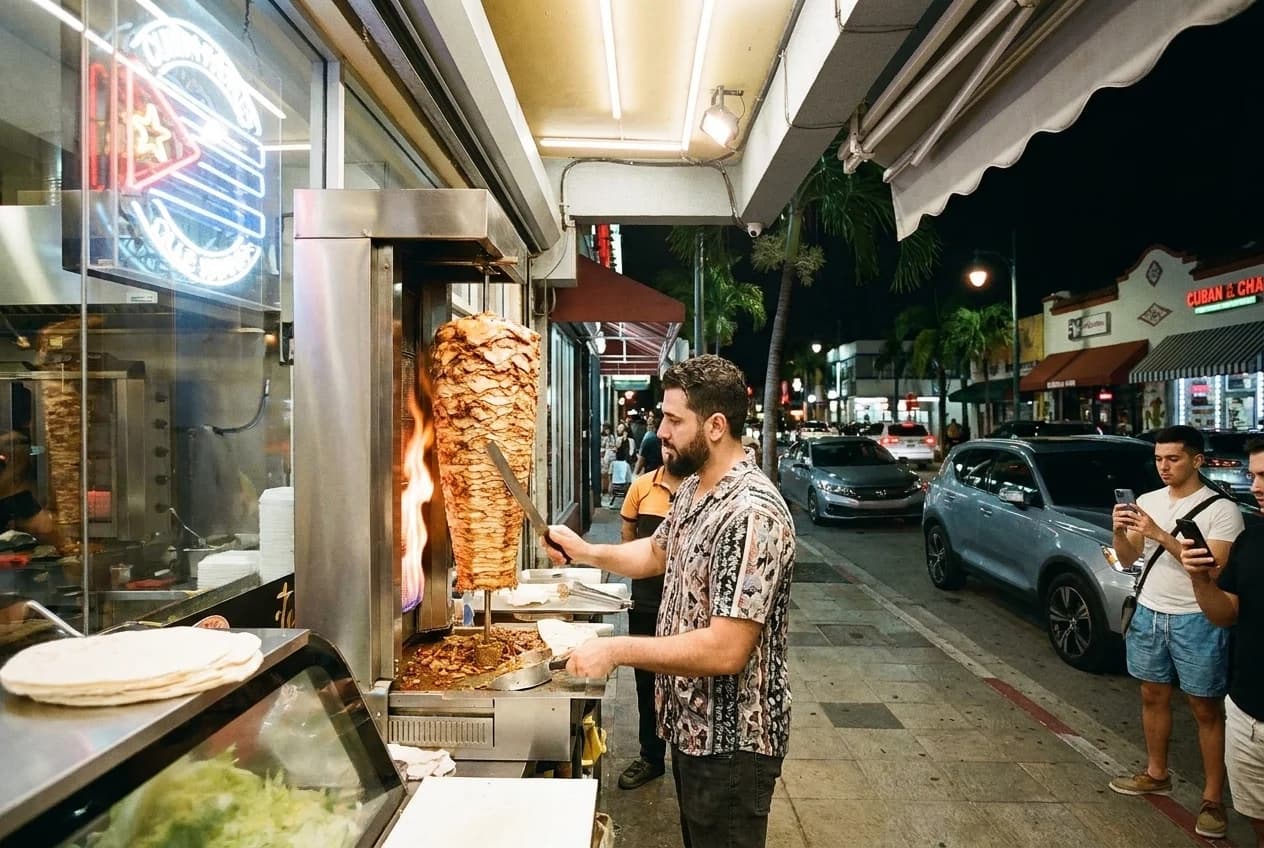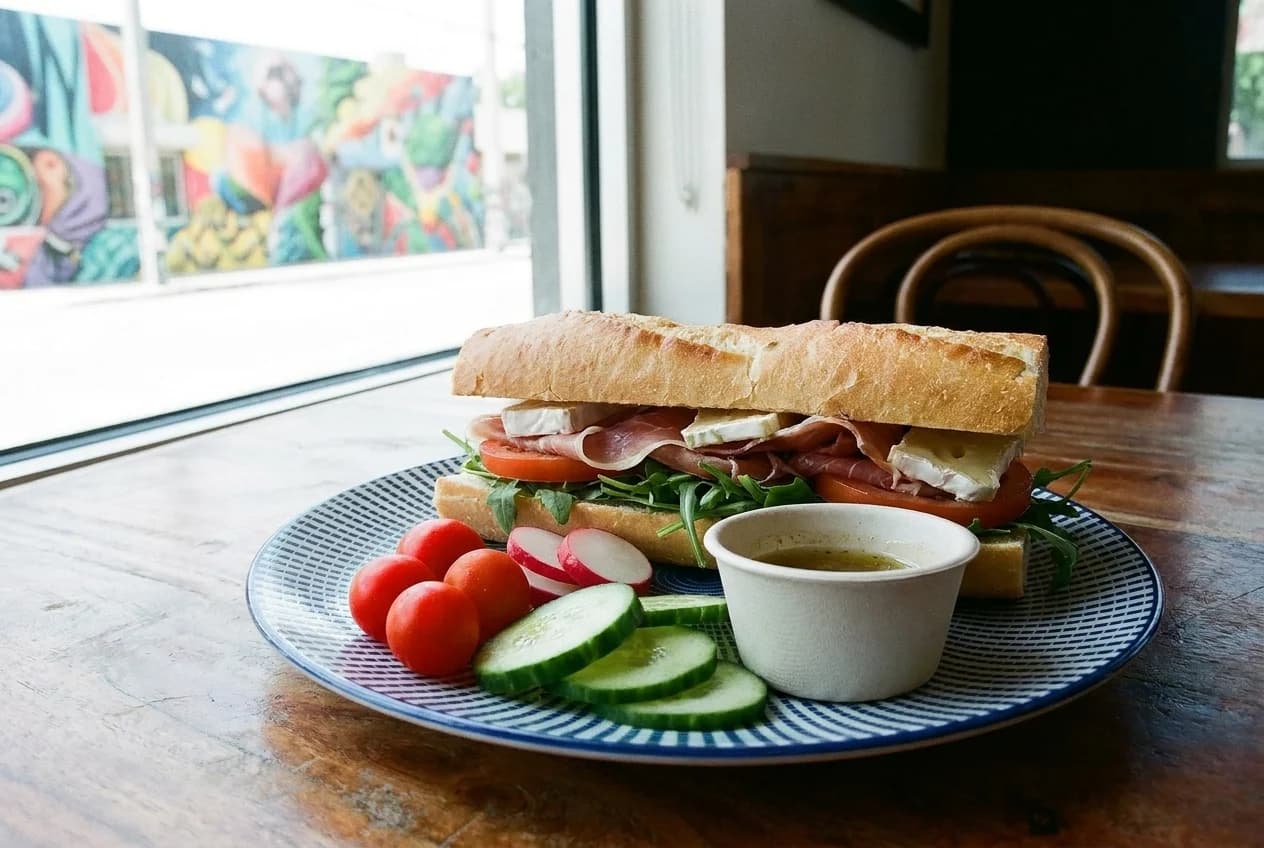
Mediterranean is one of the least informative words on any American menu. The sea it refers to touches three continents and roughly twenty countries whose cooking has almost nothing in common beyond olive oil and a shared coastline. In Miami the label covers at least four distinct traditions - Levantine, Greek, Turkish and North African - and the difference between them is not a nuance. Ordering shawarma in a Greek room or asking for a mezze spread in a Moroccan one produces the same mild disappointment as ordering ramen in a Cantonese restaurant.
These four cuisines cluster in different parts of the county and several of the best rooms keep short hours. Tell Karpo what you want to eat and where you are.
Levantine, which is what most people mean
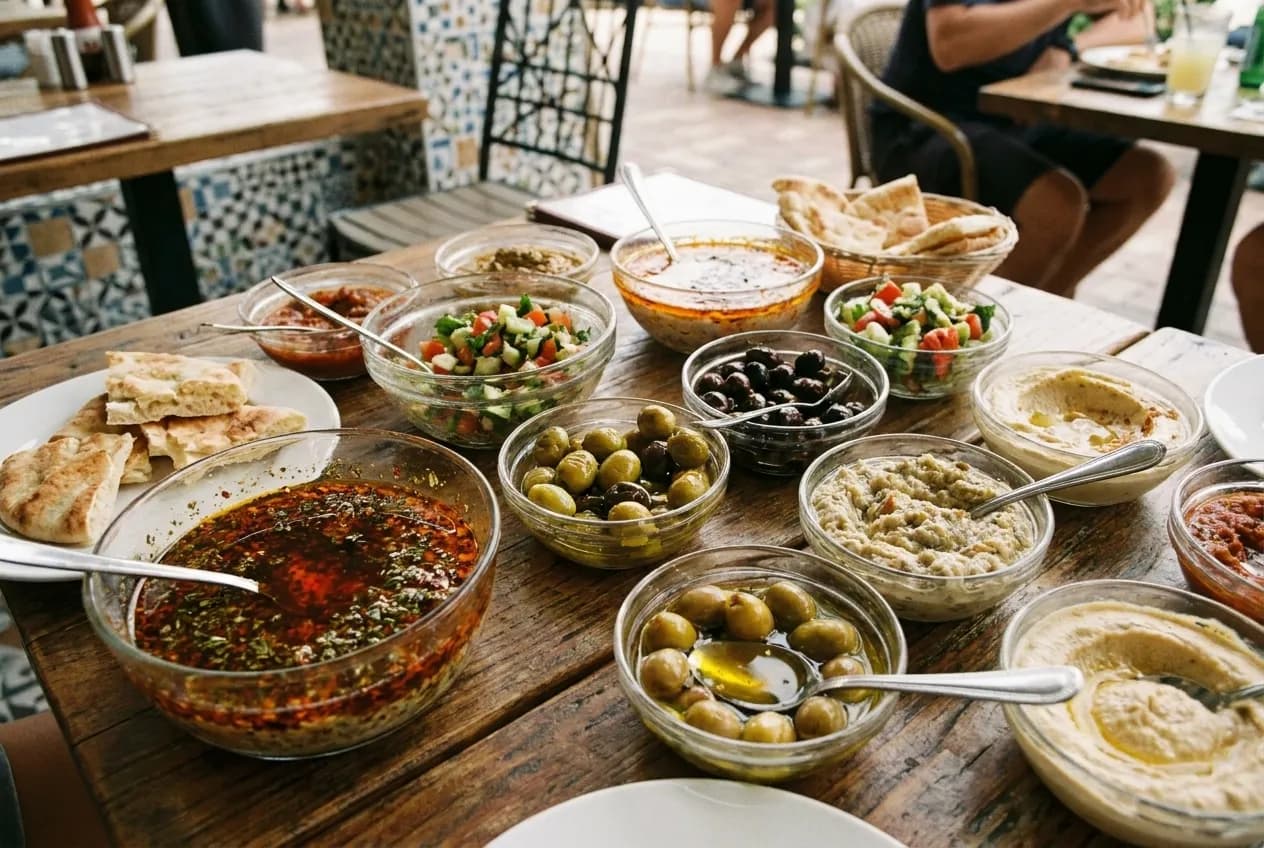
Lebanese, Syrian, Palestinian, Jordanian and Israeli cooking share a core repertoire and are the dominant Mediterranean tradition in Miami. This is the mezze culture: a table covered in small dishes, eaten with flatbread, shared. Hummus, baba ghanoush, muhammara, labneh, tabbouleh, fattoush, kibbeh, falafel. The grilled element - shish taouk, kafta, lamb - arrives after and is almost an afterthought.
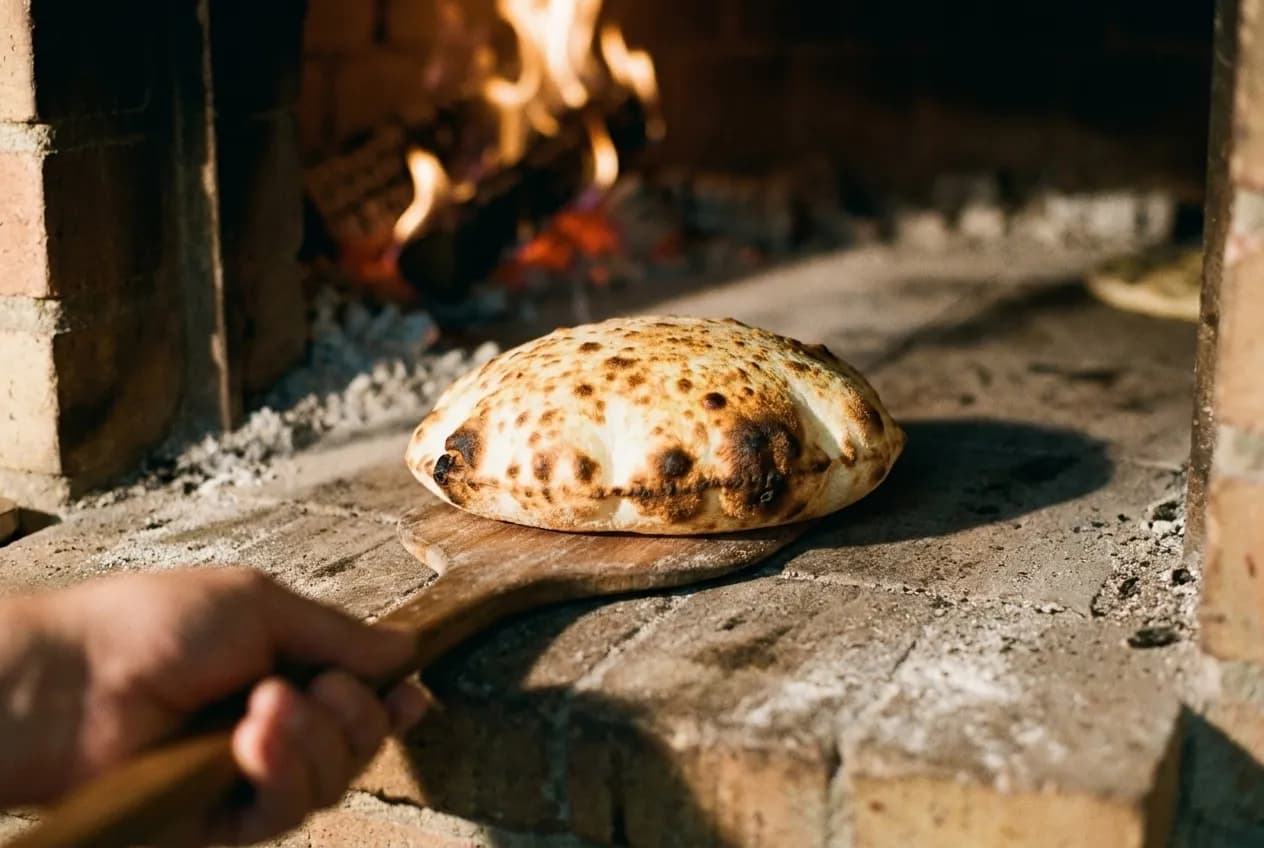
The way to judge a Levantine kitchen is the hummus and the bread. Good hummus is smooth to the point of being almost liquid, warm rather than cold, heavy on tahini, and served with a pool of olive oil - if it arrives cold, stiff and dense from a tub, the kitchen is not making it. The bread should be hot and puffed, made to order or close to it. Order mezze first, decide about the grill afterwards, and expect to over-order because the small dishes are large.
Greek, which is a different structure
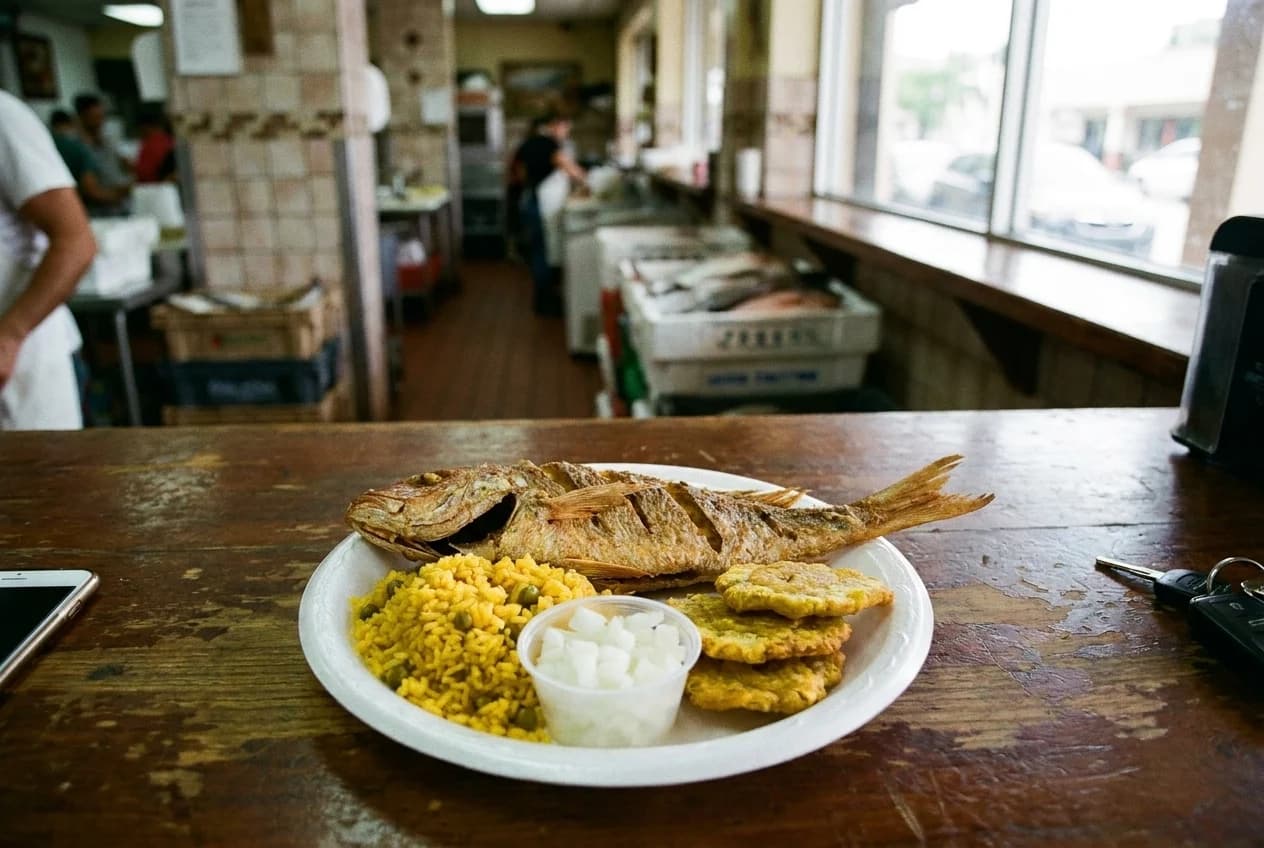
Greek cooking is built around fewer, larger dishes rather than a spread of small ones, and it is markedly less spiced than Levantine food. The defining flavours are lemon, oregano, dill and olive oil rather than cumin, sumac and za'atar. Whole grilled fish with nothing on it but lemon and oil is the emblem, and it is the order that tells you whether a Greek kitchen is serious.
The overlaps confuse people. Tzatziki and mezze-ish starters exist, but the meal shape is different: a couple of starters, then a main per person. Souvlaki and gyro are the street format; moussaka, pastitsio and grilled octopus are the restaurant one. Miami's Greek rooms concentrate on the beach and in the northern coastal suburbs, and the seafood-led ones are the better ones - this is a cuisine that suits a coastal city and the local supply is good.
Turkish, which sits between the two
Turkish cooking overlaps with Levantine at the mezze end and diverges sharply at the grill. The kebab tradition here is more developed and more varied than anywhere else on this list - adana, urfa, iskender, doner - and the bread culture is different, with pide and lahmacun functioning as dishes rather than as utensils. The yoghurt is everywhere and is used as a sauce rather than a dip.
The tell that you are in a properly Turkish kitchen rather than a generically Mediterranean one is the grill setup and the bread. A long charcoal grill with flat skewers, and bread that arrives hot and enormous, means someone is doing this seriously. Order adana - minced lamb with pepper on a wide skewer - as the benchmark dish, and a plate of pide to share. Turkish breakfast, if you find it, is one of the great weekend meals and almost nobody in Miami knows it is available.
North African, which is the least common
Moroccan, Tunisian and Algerian cooking is the thinnest layer in Miami and the most distinct. The flavour base is different again - preserved lemon, ras el hanout, harissa, cinnamon and cumin with sweetness alongside savoury - and the signature format is the tagine, a slow-cooked stew served in a conical earthenware dish, with couscous rather than rice or bread as the starch.
If you find a genuine Moroccan room, order a tagine with preserved lemon and olives, and a bastilla if it is on the menu - a pastry pie of pigeon or chicken with almonds, cinnamon and icing sugar, which is the single most surprising savoury dish in this whole article. Harissa should be offered separately rather than cooked into everything. This is the tradition most often approximated by rooms that are really Levantine with a couscous section, so ask.
Where they cluster in Miami
The strongest concentration of Levantine and Israeli cooking is in the northern coastal municipalities - Surfside, Bal Harbour, Sunny Isles and North Miami Beach - which have a large Israeli and Jewish population and a correspondingly deep supply, including a substantial kosher restaurant scene. That corridor is where to go if Levantine food is the specific objective, and it is genuinely excellent.
Greek is coastal too, on Miami Beach and in the northern suburbs. Turkish is scattered and thinner, with rooms in Brickell, the Design District and out west. North African is the rarest, mostly single independent restaurants rather than a cluster. Brickell and the Design District have polished pan-Mediterranean rooms that draw on all four traditions at once - these are frequently very good and are a different proposition from the community restaurants, which are cheaper and more specific.
Practical notes
Judge a Levantine kitchen on the hummus and whether the bread arrives hot. Judge a Greek one on whole grilled fish. Judge a Turkish one on the charcoal grill and the adana. Order mezze first and the grill second, and expect to over-order. Prices: mezze five to fourteen dollars a dish, grills eighteen to thirty-two, whole fish priced by weight. The kosher restaurants in the northern corridor close on Friday evening and Saturday for shabbat, which catches visitors out constantly - check before travelling. Turkish breakfast, where offered, is a weekend thing and worth planning for. And if a menu covers all four traditions at once, it is a pan-Mediterranean room rather than a community one, which is fine but is a different meal.
Tags: #MediterraneanFoodNearMe #Miami #Levantine #GreekFood #TurkishFood #NorthAfrican #Mezze #Shawarma #Adana #Tagine #Surfside #SunnyIsles #MiamiEats #Hummus
All trademarks are the property of their respective owners.
Ask Karpo first
Four cuisines behind one menu word, clustered in different parts of a very spread-out county. Ask Karpo which of them is nearest to you, which rooms are open at the hour you want, and whether the place you were considering is a community kitchen or a pan-Mediterranean one.