If you search for Mediterranean food in Harlem the results will confidently list a dozen restaurants, and about three of them will be Mediterranean in any sense a Greek or Lebanese person would recognise. This is not a failure of Harlem. It is a neighbourhood with one of the deepest food cultures in the country — Southern, Caribbean, West African, Puerto Rican, Italian on its eastern edge — and Levantine and Aegean cooking simply is not one of its traditions. So here is the honest map: what genuinely exists uptown, what it is good at, and where to go instead when what you want is a mezze table.
The uptown options are few enough that one closure changes your evening. Ask Karpo in iMessage what is open near you in Harlem tonight and whether it is worth staying local or taking the fifteen-minute ride south.
The Mediterranean Harlem Actually Has: Its Italian Edge
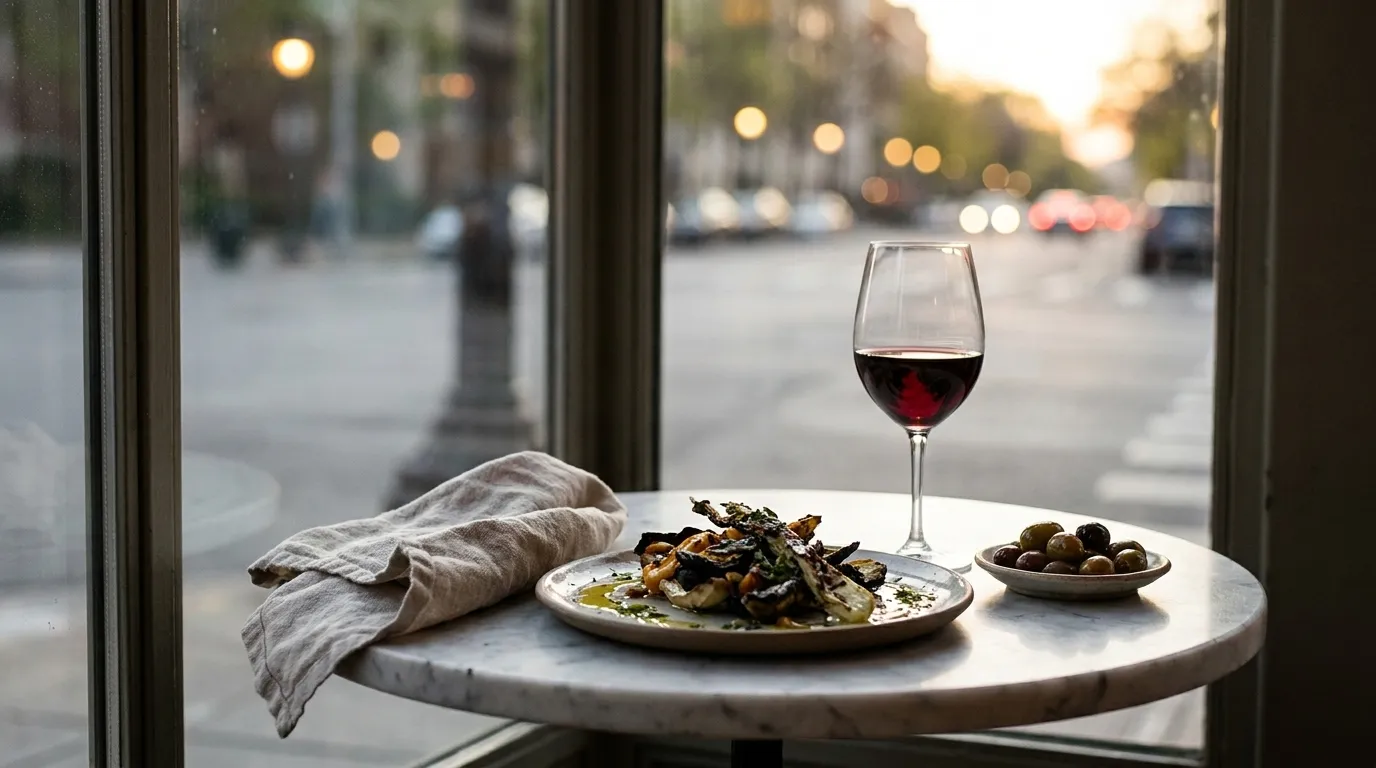
East Harlem is the oldest Italian neighbourhood in Manhattan that most visitors never think about, and Italian food is Mediterranean food. Patsy's Pizzeria on First Avenue at 117th has been baking coal-oven pies since 1933 and remains one of the very few places in the city where you can buy a single slice from a coal oven. Rao's, a few blocks away, is the most famous restaurant in New York that you will never eat in — its handful of tables are effectively held by the same families across generations, which is a piece of neighbourhood history worth knowing even though it is not a dinner plan. On the west side, Sottocasa on Malcolm X Boulevard does proper Neapolitan pizza in a small room, and Vinateria on Frederick Douglass Boulevard runs a Mediterranean-leaning Italian and Spanish menu that is the closest thing Harlem has to a mezze-style evening.
The 116th Street Corridor Is West African, and That Is the Point
Walk 116th Street west of Frederick Douglass Boulevard and you are in Little Senegal, one of the most important West African commercial strips in the United States. The cooking here shares more with the southern Mediterranean than the search results suggest — grilled fish with onion sauce, rice cooked in tomato and stock, lamb and mint and hot pepper — and the Senegalese restaurants along this stretch serve thieboudienne and yassa at prices no Manhattan Mediterranean restaurant can approach. If you came uptown wanting grilled fish and rice, this is your meal. It is not Greek. It is better than the Greek option within walking distance.
The Halal Carts and the Late Option
Harlem's most available Mediterranean-adjacent food is on wheels: the chicken-over-rice carts clustered near 125th Street and along Lenox, working the same format as Midtown at slightly lower prices and later hours. They are consistent rather than exceptional. The practical advice is the same as everywhere: choose the cart with turnover, ask for the white sauce on the side, and treat it as the reliable $10 answer at 11pm rather than a destination. There are also several Middle Eastern-run delis along Broadway near City College doing decent shawarma platters for the student trade, open late, cash-friendly, unremarkable in daylight and genuinely useful after midnight.
When to Just Take the Train
Be honest about the trade. From 125th Street, the 2 or 3 puts you in Chelsea in about twenty minutes for the loud laminated-bread mezze rooms; the 4, 5 or 6 puts you in NoMad in fifteen for small-plate Greek and Lebanese cooking in a room built for an occasion; and the N or W from 125th reaches Astoria's whole-grilled-fish tavernas in about the same time it takes to walk from one end of Harlem to the other. If the evening is specifically about Mediterranean food, the ride is the correct decision and nobody should feel bad about it. If the evening is about eating well near where you are standing, stay put and eat what Harlem is actually great at.
How to Use This Neighbourhood
Two practical notes. First, Sunday afternoons uptown are busy in a specific way — churches let out, the long-standing dining rooms fill, and waits stretch. Book, or eat at 3pm. Second, the good uptown rooms are small and family-operated, which means a Monday or Tuesday closure is common and rarely well advertised. Check before you walk over. And if you are choosing between an average version of a cuisine that is not from here and an extraordinary version of one that is, choose the second one. That is true in every neighbourhood, and it is especially true in this one.
A Practical Uptown Evening That Works
Here is a shape for the night that uses the neighbourhood honestly rather than fighting it. Start at six on Frederick Douglass Boulevard with a drink and a few small plates at one of the Mediterranean-leaning rooms — that is the closest thing uptown has to a mezze hour, and it is at its best early when the kitchens are unhurried. Walk twenty minutes north or east for the main meal, and make it something Harlem is genuinely great at: Senegalese on 116th, coal-oven pizza in East Harlem, or one of the long-standing dining rooms on Lenox. Finish with music, because that is the neighbourhood's real advantage over anywhere south of 96th Street — several rooms uptown run live sets most nights with no cover at all, and the first set starts earlier than downtown, usually between seven and eight. The whole evening costs less than one Manhattan tasting menu, involves no trains, and gives you a much better account of what this part of the city is than a narrow hunt for one cuisine would.
Tags: #Harlem #NYC #MediterraneanFood #EastHarlem #LittleSenegal #Manhattan #NeighborhoodGuide #Uptown #NYCEats #116thStreet #Italian #Levantine #Restaurants #WalkableCity
Sources consulted: nyctourism.com · vinaterianyc.com · sottocasanyc.com · patsyspizzeriaharlem.com
All trademarks are the property of their respective owners.
Ask Karpo first
Uptown closing days move and the small rooms fill early on weekends. Before you head to Harlem, ask Karpo in iMessage which of these are open tonight, how long the wait is, and whether the train south is the faster way to what you actually want to eat.