Pet food recalls hit like a 2 a.m. alarm clock: you're suddenly wide awake, rereading ingredient lists, watching your dog for any sign of trouble, and realizing your regular vet won't open for another seven hours. When Fromm and Oma's Pride announced voluntary recalls in 2025, the scramble for emergency veterinary care spiked across Los Angeles. Metropolitan Animal Specialty Hospital on Santa Monica Boulevard in Hollywood runs a 24-hour emergency room specifically for these middle-of-the-night crises—no appointment, no after-hours surcharge beyond the standard emergency fee, just walk in whenever your pet needs help. The hospital treats everything from recall-related poisoning to hit-by-car trauma, staffed around the clock by board-certified emergency veterinarians who've seen every worst-case scenario a panicked owner can imagine.
Karpo tracks real-time emergency vet availability and wait estimates at MASH and backup 24-hour clinics across LA when recalls or sudden illness strike.
When recall news breaks at midnight
The Fromm and Oma's Pride recalls sent hundreds of LA pet owners into panic mode in spring 2025, scrolling ingredient lists at 2 a.m. and watching their dogs for signs of trouble. Most primary-care vets don't open until 8 or 9, which leaves a long anxious window when symptoms like vomiting or lethargy show up in the middle of the night. Metropolitan Animal Specialty Hospital exists specifically for that window—the place operates every hour of every day with no appointment system, no after-hours answering service, just walk through the door at 6565 Santa Monica Boulevard whenever your pet needs help.
MASH runs a triage model borrowed from human emergency rooms. A veterinary technician evaluates every animal within minutes of arrival and assigns a color code: red for critical cases like seizures or bloat, yellow for urgent but stable issues, green for problems that can wait a bit longer. The color tags are visible on a board in the waiting area, which gives you a realistic sense of whether you'll be back in ten minutes or two hours. During major recall events the yellow queue fills fast with worried owners, but the triage nurse will escalate your pet immediately if symptoms worsen while you wait.
The hospital kept its doors open through a close call in early 2025. The previous corporate owner announced a permanent closure scheduled for June 22, but a coalition of MASH's own specialists—including internists Dr. Domenico Bianco and Dr. Jodi Kuntz, neurologist Dr. Jeremy O'Neill, and dermatologist Dr. Eva Ganz—partnered with San Francisco-based Curo Pet Care to buy the facility and maintain all services. That physician-led ownership structure is unusual in an era of consolidation, and it means the doctors making medical decisions also hold financial stakes in keeping standards high.
What the building actually looks like
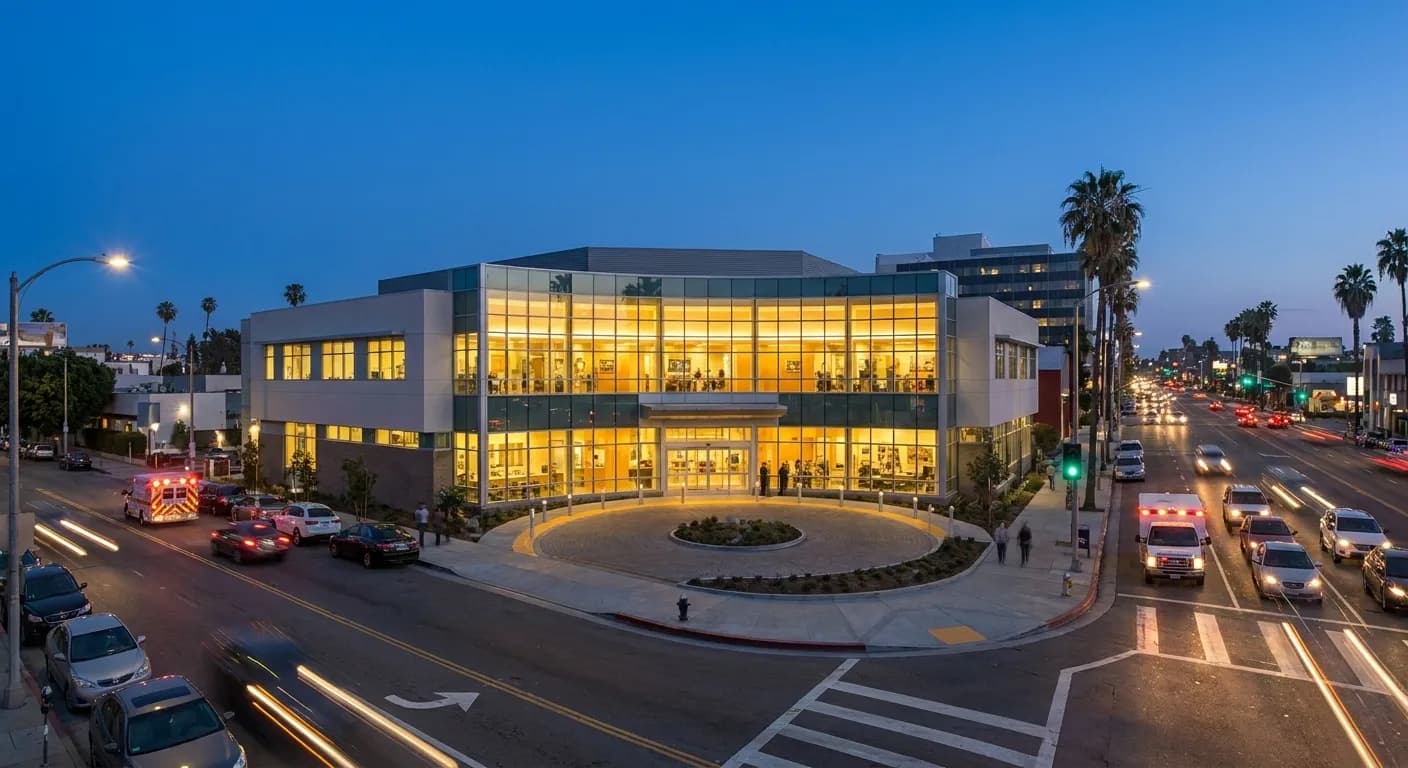
MASH occupies two adjacent addresses on Santa Monica Boulevard in the stretch between La Brea and Highland, a few blocks east of the Hollywood Forever cemetery. The emergency entrance sits at 6565, a modern concrete-and-glass building with a semicircular driveway that makes drop-offs easier when you're carrying a sick animal. Parking is tightest between 7 and 10 p.m. when the dinner-hour emergency rush overlaps with people leaving work; the small lot east of the main building fills first, but street parking on the residential blocks just north usually has space even on weekends.
Specialty appointments—dermatology, ophthalmology, oncology, dentistry—happen at 6611 across the street, but emergency cases always start at the 6565 building regardless of what department might eventually treat the pet. The waiting room holds about twenty people comfortably, with separate dog and cat areas to reduce stress. Overflow seating spills into a hallway during peak times, typically late evening and early morning when primary vets are closed. The front desk keeps a running estimate of wait times, though those estimates shift constantly based on triage severity.
The overnight shift and what it costs
Emergency veterinary care costs more than daytime appointments because of the staffing model—MASH keeps board-certified emergency doctors, technicians, and diagnostic imaging available around the clock. A basic emergency exam runs $200 to $250 before any diagnostics. Bloodwork to check for toxicity or organ stress adds $150 to $400 depending on the panel. If your dog ate recalled food but shows no symptoms yet, the vet will likely recommend baseline labs and possibly induced vomiting if ingestion was recent, which together might total $400 to $600. Serious cases requiring hospitalization, IV fluids, or surgery climb into the thousands fast.
The hospital provides written estimates before proceeding with treatment, and the front desk can discuss Care Credit or other payment plans if the bill exceeds what you budgeted. Yelp reviews mention cost complaints frequently—emergency vet care is expensive everywhere, not just at MASH—but the same reviews also note that the medical outcomes are generally strong and the doctors communicate thoroughly. One detail worth knowing: if your pet stabilizes overnight and needs follow-up specialty care, MASH's in-house specialists can often see the animal the next day without transferring to another facility, which saves time and avoids repeating diagnostics.
The busiest emergency hours fall between 6 p.m. and 2 a.m., when people get home from work and notice their pet acting off. If your situation is urgent but not immediately life-threatening—say, mild vomiting after possible recall-food exposure—arriving mid-morning or mid-afternoon usually means shorter waits. The triage system prioritizes medical need over arrival time, so a critical case will always jump the queue regardless of when anyone else checked in.
Navigating the recall information overload
When Fromm and Oma's Pride announced voluntary recalls in 2025 over potential Salmonella contamination, the FDA recall notices listed specific lot numbers and production dates, but translating that into "did my dog eat the bad batch" required digging through packaging most people had already thrown away. MASH's emergency vets see this confusion every time a major recall hits: owners arrive with a sick pet and a vague memory of what brand they bought last month. The doctors will treat symptoms regardless of whether you can confirm the recalled product, but bringing any packaging you still have—or photos of the bag label—helps them assess exposure risk.
Salmonella poisoning in dogs often presents as diarrhea, vomiting, fever, and lethargy, symptoms that overlap with dozens of other conditions. The vet will ask about recent diet changes, access to garbage or dead animals, and any new treats or chews. Bloodwork and fecal tests can identify bacterial infection, though Salmonella cultures take days to confirm. Treatment is usually supportive—IV fluids, anti-nausea medication, sometimes antibiotics—while the dog's immune system clears the bacteria. Most otherwise healthy dogs recover within a week, but puppies, senior pets, and animals with compromised immune systems face higher risk of severe illness.
The recall panic often brings in pets who never actually ate the contaminated food but whose owners are understandably scared. MASH's triage system handles this well: if your dog is acting completely normal, the triage nurse will reassure you and may recommend monitoring at home rather than running expensive tests on a healthy animal. If symptoms are present, even mild ones, the vet will take it seriously because early intervention prevents complications. The key is that you can walk in at 3 a.m. and get an actual veterinarian's assessment instead of spending the night googling symptoms and spiraling.
The specialty side when emergency stabilizes
MASH's structure as both an ER and a multi-specialty hospital means that complex cases don't require transfer to yet another facility. If your dog comes in overnight with acute vomiting and the bloodwork reveals underlying kidney disease or a gastric mass, the emergency vet can hand off directly to the internal medicine team the next morning. The specialty departments include neurology, oncology, ophthalmology, dermatology, cardiology, and advanced surgery, all operating out of the 6611 building with scheduled appointments.
Dr. Bianco, the internal medicine director and one of the new physician-owners, handles cases like chronic gastrointestinal disease, immune disorders, and complicated infections that don't resolve with standard treatment. Dr. O'Neill's neurology service sees seizure disorders, intervertebral disc disease, and brain tumors. These specialists work closely with referring primary-care vets across LA—your regular vet can send records ahead and receive detailed consult notes after the appointment. The collaboration model keeps your pet's primary doctor in the loop rather than creating information silos between emergency and specialty care.
Appointment availability for specialty consults varies by department. Dermatology and ophthalmology often book two to three weeks out for non-urgent cases, while neurology can sometimes fit in a seizure patient within a few days if the situation is deteriorating. Emergency cases that need immediate specialty intervention—like a dog with sudden blindness or a suspected spinal injury—get prioritized through the ER even during daytime hours when regular vets are open.
Practical notes
Metropolitan Animal Specialty Hospital operates 24/7 at 6565 Santa Monica Boulevard in Hollywood, with no appointment needed for emergency care. The hospital uses a medical triage system, so wait times depend on the severity of cases ahead of you—critical patients go first, stable cases may wait one to three hours during busy periods. Parking is available in the small lot east of the building or on nearby residential streets. Emergency exam fees start around $200 before diagnostics; bring any pet food packaging or recall information you have. The hospital accepts major credit cards and offers Care Credit payment plans. Specialty appointments for follow-up care happen at 6611 Santa Monica Boulevard across the street and require scheduling. Call [855-350-7387](tel:855-350-7387) for current wait estimates or specialty department hours. More information at [mash.vet](https://www.mash.vet).
Tags: #MASHHollywood #EmergencyVetLA #PetFoodRecall #FrommRecall #OmasPrideRecall #TwentyFourSevenVet #SantaMonicaBlvd #HollywoodPets #VetEmergency #LADogOwners #PetSafety #SpecialtyVet #WalkInVetCare #MetropolitanAnimal #LAVetCare
All trademarks are the property of their respective owners.
Ask Karpo first
Ask Karpo which LA emergency vets have the shortest current wait, what symptoms need immediate triage after a recall, or where to find Saturday specialty consults in Hollywood. I pull live status so you're not guessing when your dog needs help now.