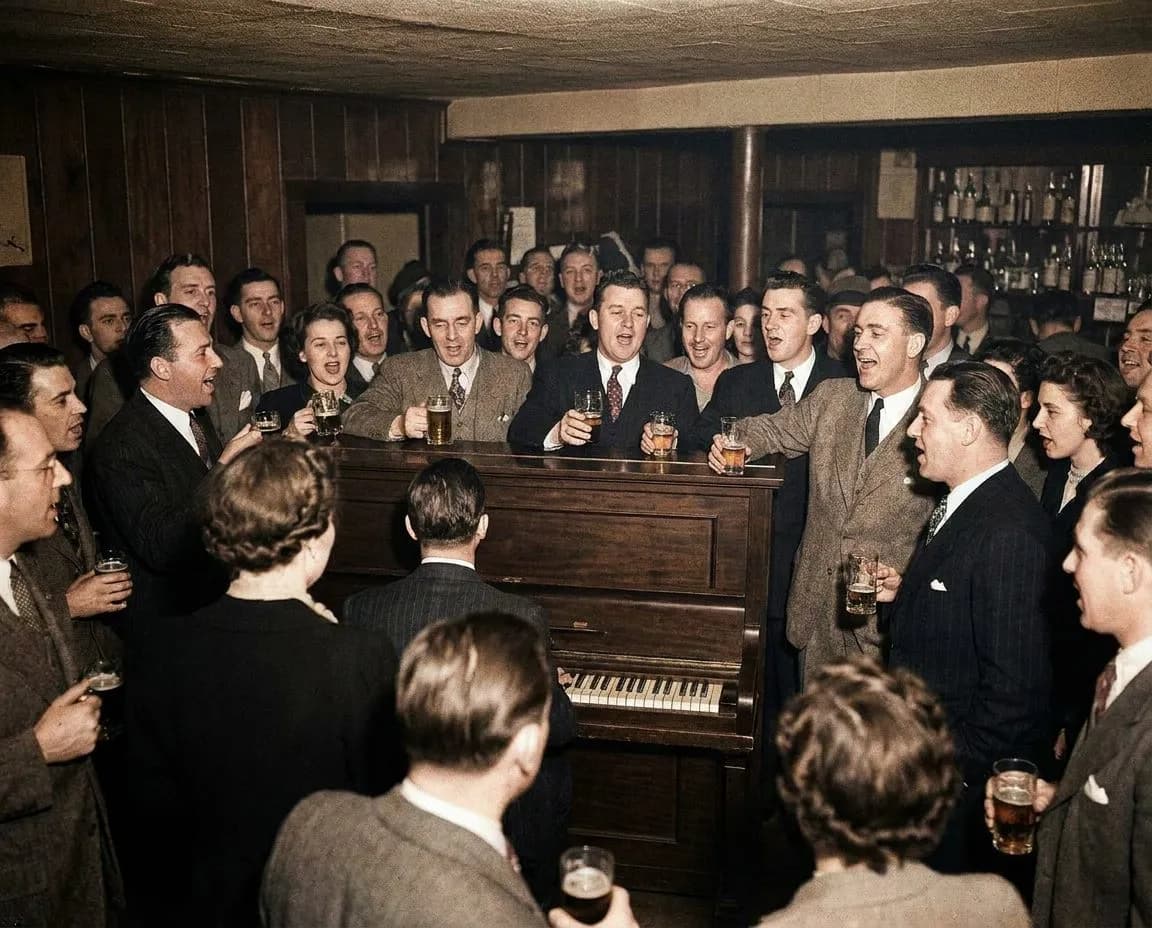
There are weekend plans, and then there's the Sunday evening ritual at Marie's Crisis—a basement piano bar in the West Village where the American songbook comes alive in four-part harmony, and strangers belt "Defying Gravity" like their lives depend on it. The room is dim, the drinks are strong, and the acoustics are surprisingly good for a space that feels like someone's eccentric grandmother's rec room. By eight o'clock the crowd is three-deep at the bar, and if you're lucky, you've already staked out a spot where you can see the pianist's hands fly across the keys. This is not a place for the self-conscious. This is church for theater people.
Updated August 2026: hours, prices, reservations, event dates, transit details, and venue policies can change. Use the linked official venue, city, or operator sources in the Sources section as the final reference before you go.
The geography of joy
Marie's Crisis is small—claustrophobically so when it's packed—and every square foot has its own microclimate. The bar runs along one wall, the piano anchors the room, and the rest is a fluid arrangement of bodies swaying, singing, and occasionally attempting choreography in two square feet of personal space. If you want to people-watch, claim a spot near the door. If you want to disappear into the music, press toward the piano.
But the true sweet spot is the corner adjacent to the piano bench itself. The acoustics here are extraordinary—you catch both the pianist's sotto voce patter between songs and the full-throated roar of the crowd behind you. It's where sound converges and the whole room feels like a single instrument. The catch: on Sundays, this corner fills up by eight in the evening, often earlier if word has spread about a particular pianist's shift. Arrive by seven-thirty if you want to plant yourself there for the night.
When the real performers arrive
Sunday evenings carry a particular electricity because of the matinee schedule. Broadway shows typically let out around six, and by six-thirty the first wave of performers starts trickling into Marie's—still in stage makeup if they've come straight from the theater, or scrubbed clean and anonymous in jeans and hoodies. They rarely announce themselves. They stand near the back, nursing a beer, watching the room with the quiet assessment of people who spend their lives reading audiences.
The magic happens when the pianist makes eye contact, nods, and gestures toward the bench. That's the invitation. A path clears. The performer steps forward, and suddenly the singalong transforms into a master class. These aren't karaoke vocals; these are voices that can fill a thousand-seat theater, now unleashed in a room the size of a living room. The crowd knows the difference. The energy shifts from rowdy to reverent, and even the most enthusiastic amateur steps back to let the professional take the solo. It's collaborative theater at its purest.
The unspoken rules of the singalong
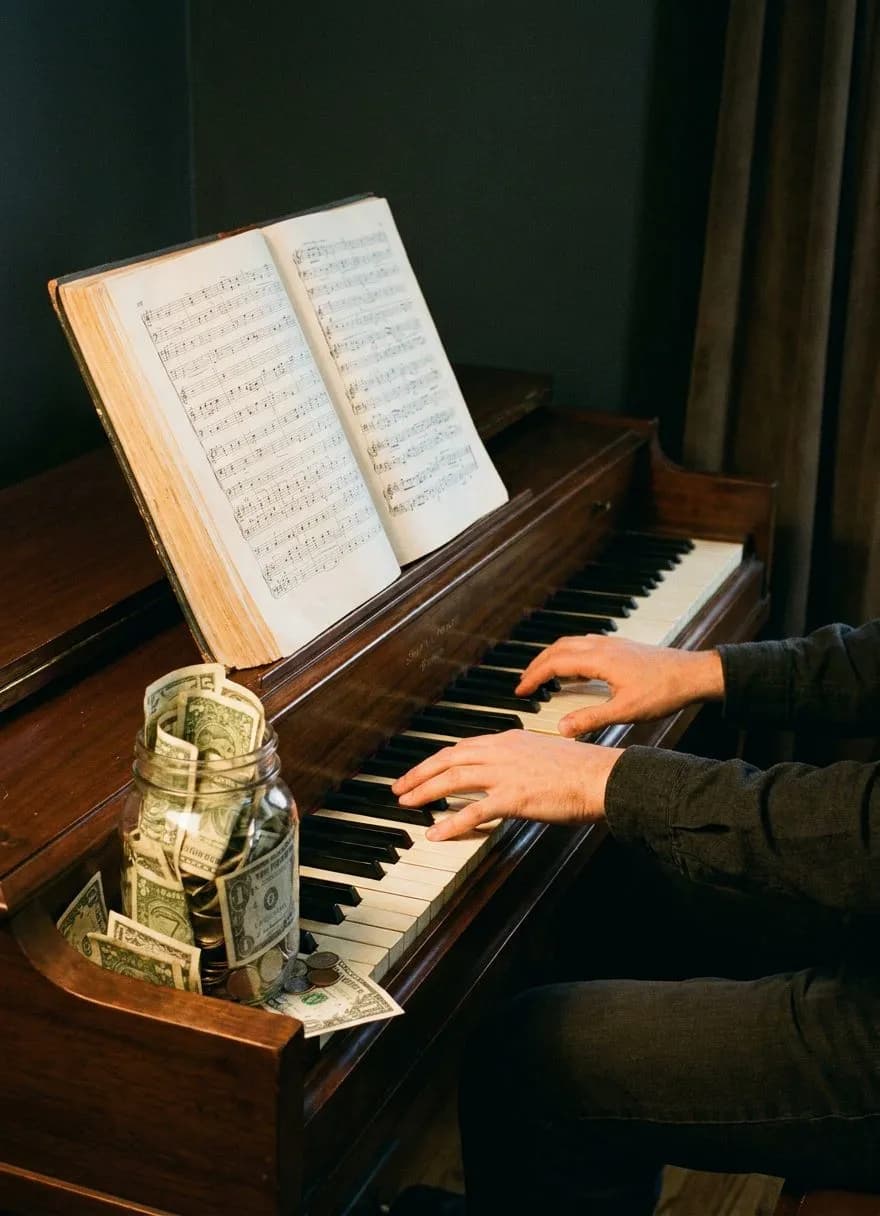
Marie's Crisis operates on an etiquette so ingrained that regulars enforce it with nothing more than a raised eyebrow. Rule one: you don't request a song by shouting over the music. You wait for the pianist to finish, make eye contact, and ask politely. Rule two: if you don't know all the lyrics, hum or mouth along. Faking your way through "Being Alive" with half-remembered words is an act of acoustic violence. Rule three: applaud the pianist generously and tip visibly. The bill jar lives on the piano, and it should be stuffed.
There's also the matter of song selection. Marie's is not the place to request deep cuts from obscure off-Broadway workshops unless you're certain the pianist knows them. Stick to the canon—Sondheim, Bernstein, Kander and Ebb, Jason Robert Brown if you're feeling contemporary. And if someone else has just sung your intended request, let it breathe. The room doesn't need three back-to-back renditions of "Tomorrow."
The changeover lull
On busy nights, pianists rotate around ten o'clock, and the transition brings a rare pause in the action. The outgoing player finishes a final song, accepts a round of applause, and vacuums up the tips. The incoming pianist settles onto the bench, adjusts the lighting, and flips through sheet music while the room hums with anticipation. This five-minute window is when regulars refresh their drinks, check their phones, and reclaim personal space they'd surrendered an hour earlier.
It's also when the crowd composition shifts. Some people leave; others arrive, drawn by the promise of a fresh set list. The newcomers haven't yet sung themselves hoarse, and their enthusiasm can feel almost aggressive compared to the mellowed-out voices of those who've been there since seven. The second act, if you will, often runs until last call, and by then the room has divided into the committed few and the smartly departed.
Why it still matters in 2026
In an era when most nightlife is algorithmically curated and frictionless, Marie's Crisis remains defiantly analog. There's no app, no reservation system, no VIP section. You show up, you squeeze in, you sing. The democracy of it is radical. A Tony winner might be standing next to a tourist from Ohio, both belting "One Day More," and for three minutes they're equals.
The bar has weathered decades of West Village gentrification, pandemic closures, and the steady erosion of the city's weirder, wilder corners. That it survives—and thrives—feels like a minor miracle. It's a reminder that some experiences can't be replicated on a screen, that community still forms around shared ritual, and that the best nights are often the ones you didn't plan. You just showed up, opened your mouth, and sang.
Practical notes
Marie's Crisis is located at 59 Grove St, New York, NY 10014, in the West Village. Nearest subway: 1 to Christopher Street–Sheridan Square or A/C/E/B/D/F/M to West 4th Street–Washington Square. Street parking is scarce; public transportation is strongly advised. The bar is generally open nightly, typically in the evening until late; verify hours directly as they can shift seasonally. Cash is king for tips; bring singles. The space is down a short flight of stairs and can be challenging for those with mobility limitations. No cover charge, but expect to buy drinks and tip the pianist generously.
Tags: #MariesCrisis #WestVillage #PianoBar #BroadwayNYC #NYCNightlife #PullUpAChair #ShowTunes #TheaterDistrict #VillageLife #SundayNightNYC #LiveMusicNYC #SingalongBar #NYCInsider #Spring2026 #WeekendPlansNYC
Please drink responsibly. Must be of legal drinking age.
Sources consulted: West Village · NYC Tourism West Village · MTA Subway Information · Time Out New York Bars
All trademarks are the property of their respective owners.