New York's largest events are expensive, well marketed and, in a surprising number of cases, attached to a free version that is barely advertised at all. Sometimes it is a preliminary week with the gates open; sometimes it is the fact that the event happens on a public street; sometimes it is a lottery. Getting this right is worth several hundred dollars a year, and it mostly requires knowing the mechanism rather than knowing somebody.
The free version of a big New York event usually needs something claimed in advance — a pass, a lottery entry, a spot on a kerb an hour early. Text Karpo which event you care about and get whether there is a free way in this year, what you need to register for, and the deadline you are working against.
The clearest example: US Open Fan Week
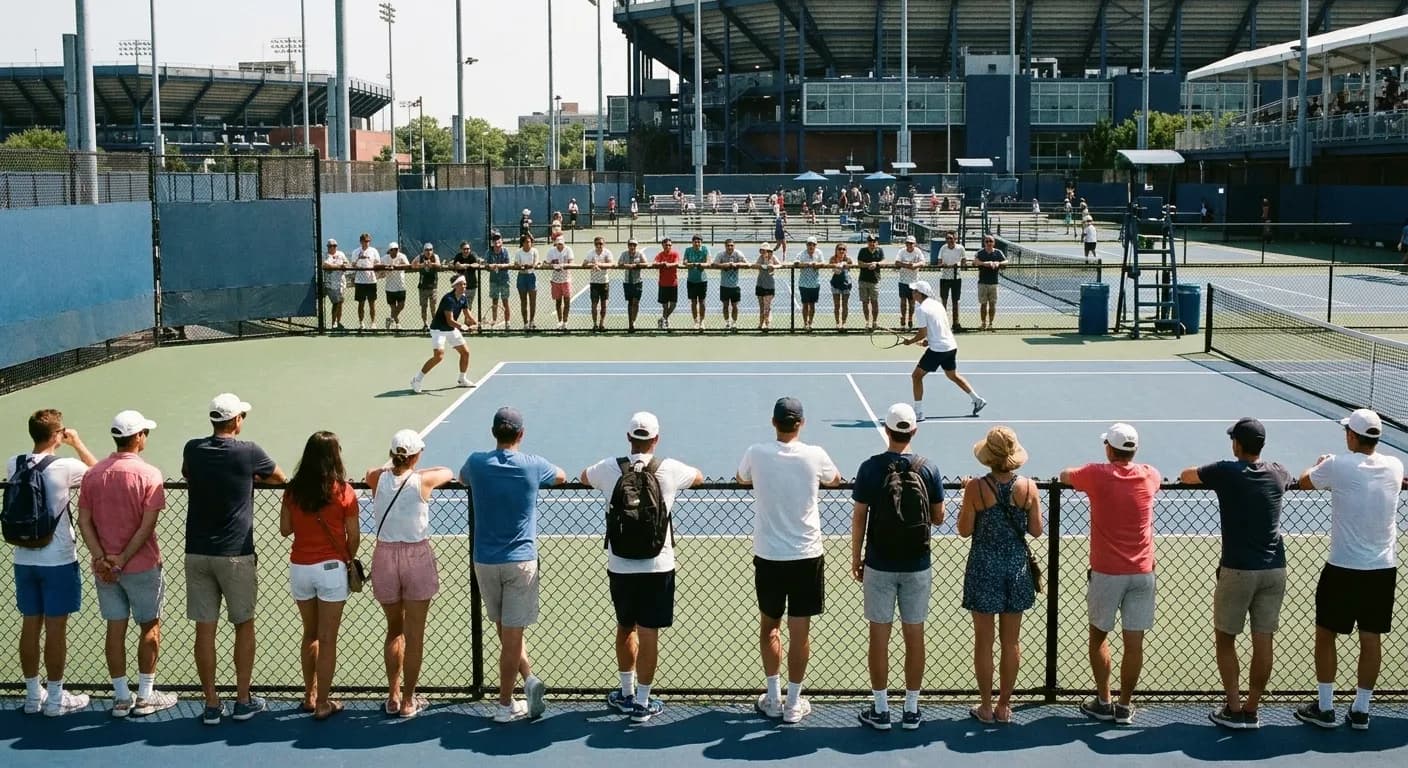
US Open Fan Week runs in the week before the main draw at the USTA Billie Jean King National Tennis Center in Flushing Meadows, and admission to the grounds is free. In 2026 it ran Sunday 23 to Saturday 29 August, covering the qualifying tournament, Arthur Ashe Kids' Day, mixed doubles qualifying, media day and a run of tennis, family and music programming.
The catch is a free Fan Access Pass, which is required to enter the grounds and has to be registered for. That is the entire barrier: a form. You get the same site, the same courts, professional tennis at close range on the outer courts, and none of the ticket price. For anybody who wants to see the venue and watch serious tennis rather than see a named player in a stadium, the free week is the better product.
Events that happen on public streets
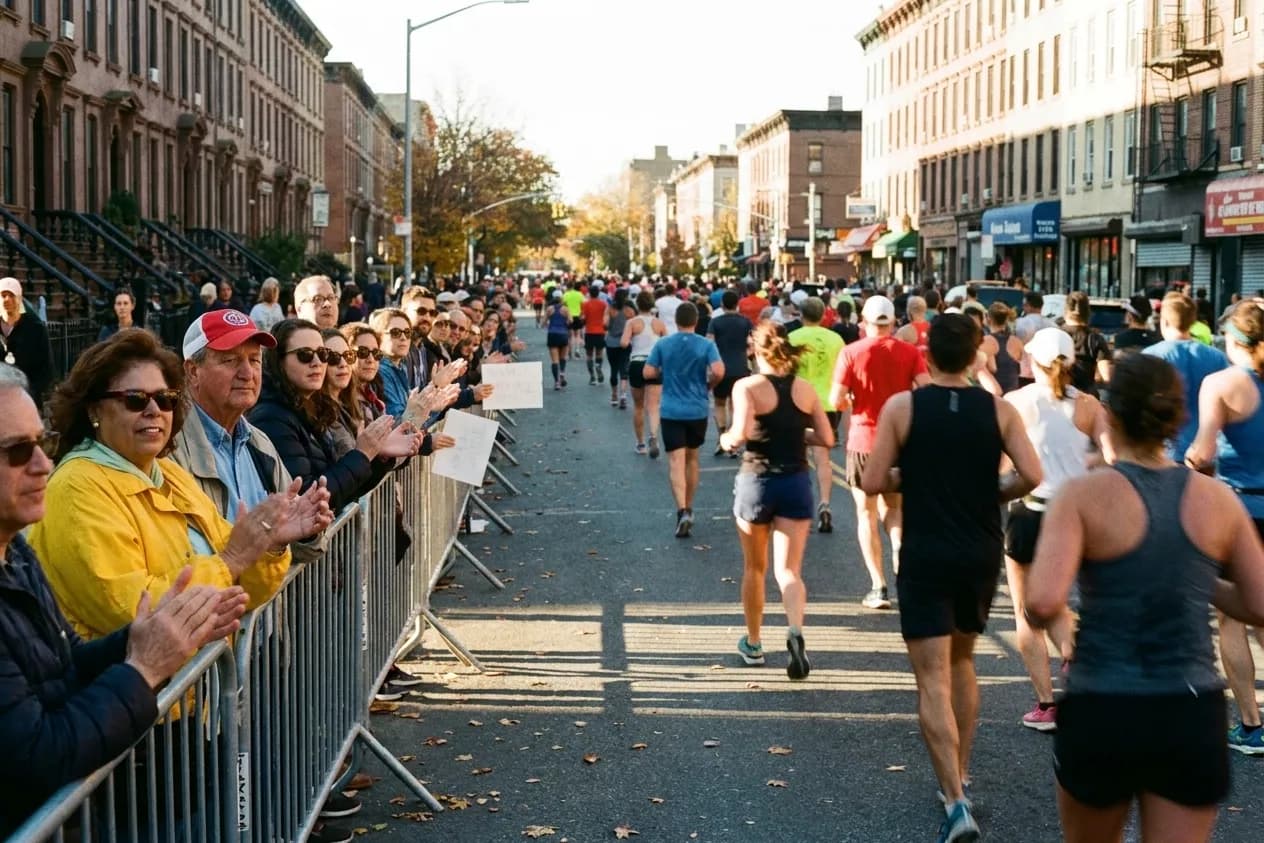
The New York City Marathon is free to watch from public viewing areas; only reserved grandstand seating near the finish requires a separate ticket. That is the general shape of any event that uses the street as its venue — the ticket buys a seat, not access, and the seat is usually not the best place to be.
For a marathon specifically, the good spots are nowhere near the finish. Miles ten to twenty in Brooklyn and Queens have space, atmosphere and runners who are still running rather than surviving, and you can move between two vantage points on the subway while the field covers the ground between them.
The lottery category
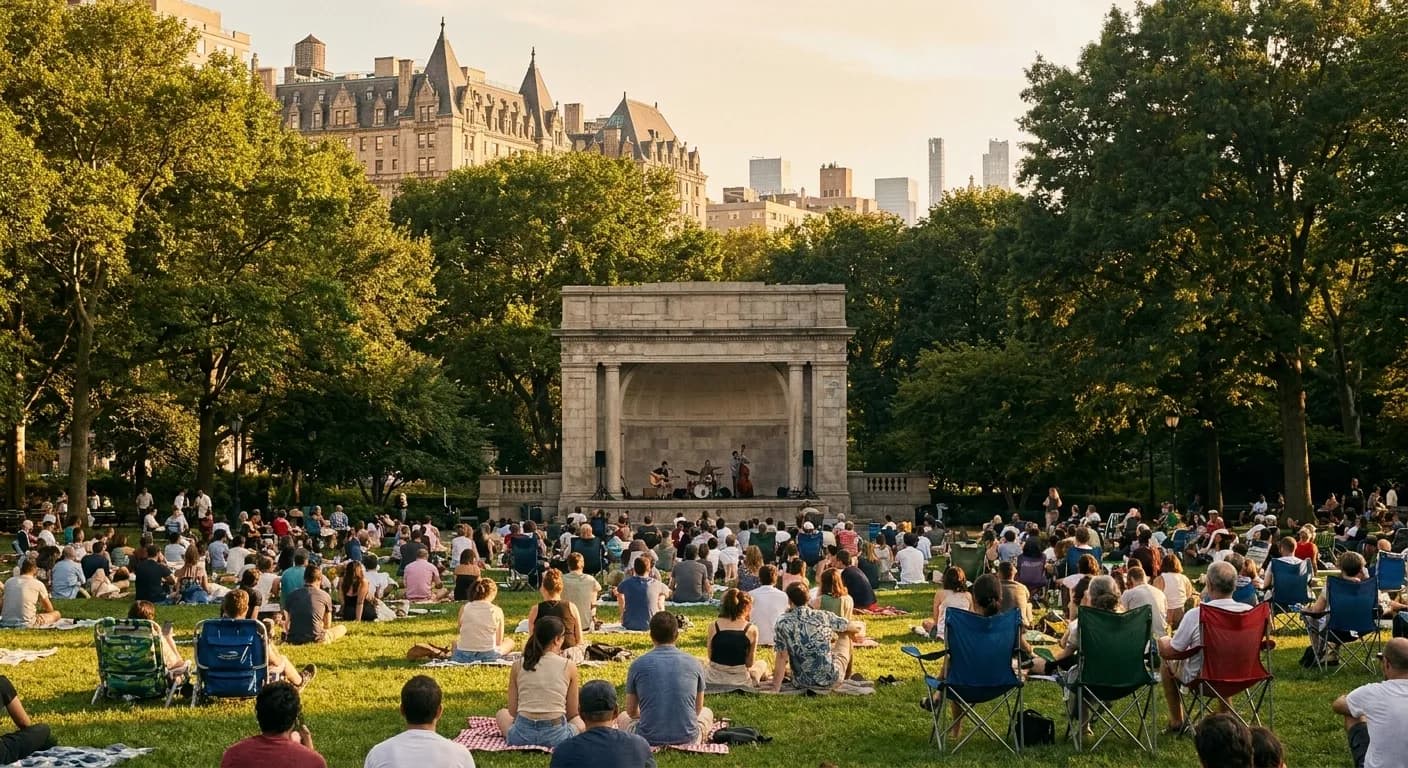
Some free access is rationed rather than open. New York has run large-scale free public viewings with admission distributed by lottery — the free public viewing of the FIFA World Cup final on Central Park's Great Lawn in July 2026 was administered that way, free to attend but with tickets allocated through a lottery run by Global Citizen.
The rule for anything of this type: enter early and enter once. Lotteries for major New York events close well before the event and the announcement of them travels much more slowly than the announcement of the event itself. If you hear about the event, look immediately for whether a free allocation exists, because that is the piece the coverage tends to bury.
The scheduled free days at paid institutions
Museum Mile is the annual version of this: several of the city's best museums open free during a car-free Upper East Side block party with live music, street performers and activities for children. It is one evening a year, and the queues reflect that.
The generalisable point is that most large paid institutions in New York have some free window — an evening, a day of the week, a pay-what-you-wish period, a residents' policy. None of them lead with it. Checking the admission page rather than the ticketing page is a habit worth having before you buy anything.
When paying is genuinely correct
The free version is worse in two specific situations. If you want to see one named performer or player, the free week and the public street will not deliver them — qualifying is not the final, and the marathon's elite field passes any given point in about forty seconds. And if you are bringing people who cannot stand for four hours, a seat is not a luxury.
Everywhere else, the free version gives you more of the actual thing. More courts, more time on site, more freedom to leave. The ticket buys proximity to a specific moment, and most events have far more atmosphere than moments.
The habit to build
When any big New York event is announced, ask three questions before looking at prices. Is there a preliminary or qualifying period with open gates? Does it take place on public land you can stand on? Is there a lottery or a pass being distributed? One of those is a yes more often than not.
And register for the free thing the day you hear about it. Free passes and lotteries in this city close on schedules set by whoever is administering them, not by the event date, and every year a large number of people discover the free option existed about a week after it stopped being available.
Tags: #majoreventsnyc #ticketsnyc #freeeventsnyc #usopen #fanweek #nycmarathon #museummile #flushingmeadows #centralpark #uppereastside #nycsports #freethingstodo #newyorkevents #lottery
All trademarks are the property of their respective owners.
Ask Karpo first
Nearly every big ticketed event in New York has a free counterpart, but each one is claimed differently — a pass, a lottery, a public viewing area, a specific week. Ask Karpo whether the event you are interested in has a free version this year, what you need to do to get in, and by when.