Los Angeles has never had a real Italian-American deli tradition the way the East Coast does, which is why the sandwich shops that do exist here get talked about with an intensity that surprises visitors. Ggiata arrived in 2020 built explicitly on New Jersey deli logic — three founders who grew up with it, a short menu of named sandwiches, house-roasted meat, and a hot pepper spread that does most of the heavy lifting.
Ggiata's sandwiches are built to be eaten within the hour and the lunch window moves fast on the popular ones. Ask Karpo which location is closest and what is still available.
What they are actually making
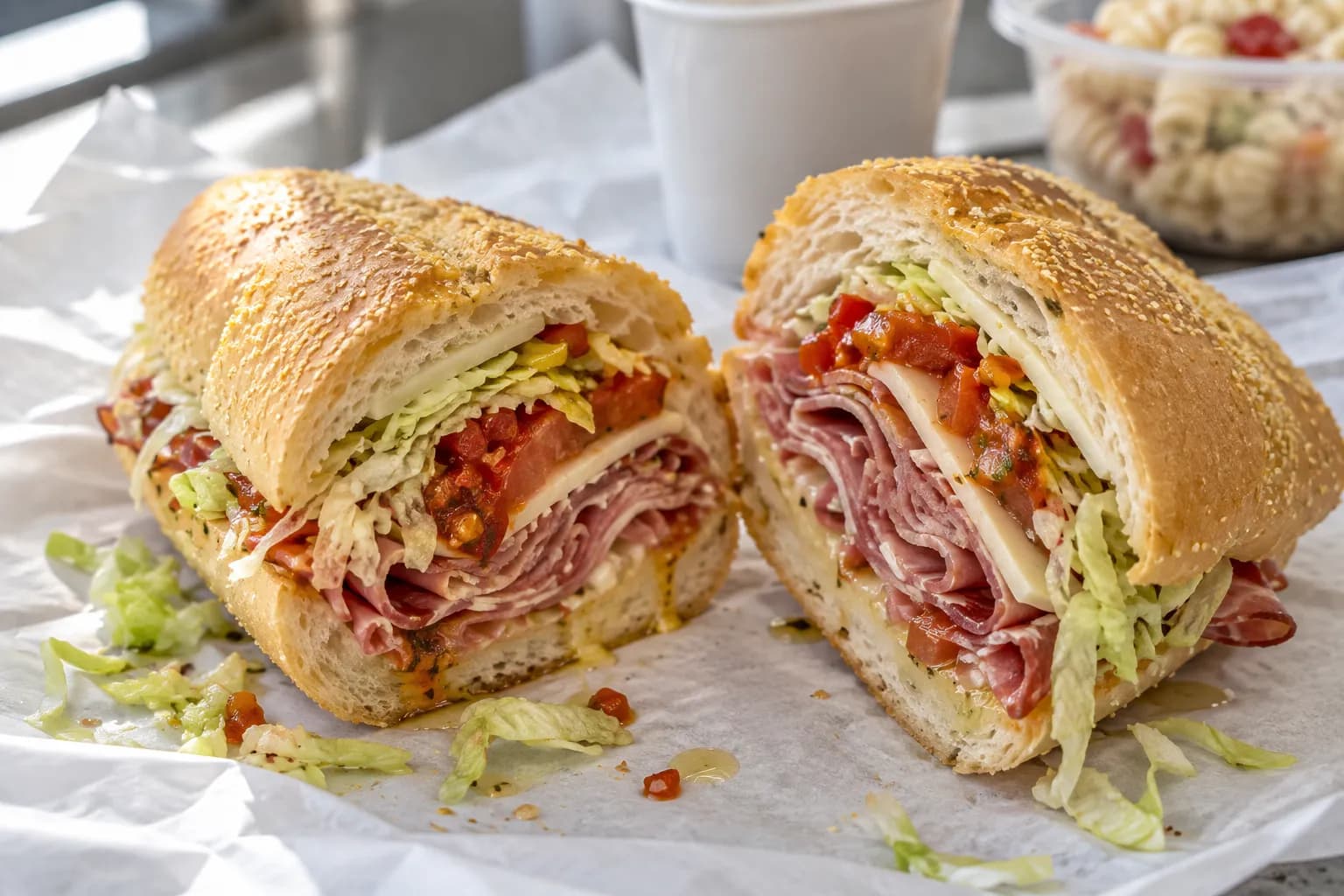
The reference point is the Italian sub as it exists in northern New Jersey and around New York: layered cured meats, sharp provolone, shredded lettuce, oil and vinegar, and a roll that can take the dressing. What Ggiata added is a Los Angeles-scale attention to the components — meat roasted in house rather than bought sliced, bread specified rather than accepted, and a house hot pepper relish that appears on almost everything.
The hot pepper spread is the signature and it is worth understanding as the whole thesis. A sandwich of cold cuts is fundamentally salt and fat; the thing that makes it a good sandwich rather than a heavy one is acid and heat cutting through. Ggiata puts that at the centre rather than treating it as an option.
What to order
The house Italian is the reference sandwich and the correct first order — it is the one everything else is a variation on, and it tells you immediately whether this style is for you. Beyond that, the chicken cutlet is the other pillar: pounded thin, breaded, fried, and stacked with cheese and greens, which is the second great New Jersey sandwich form and one that barely exists in Los Angeles.
There is usually a rotating or seasonal special, and the sides — a pasta salad, a chopped salad — are made in house and better than sides at a sandwich shop need to be. Get one to split rather than a bag of crisps.
Multiple locations, different neighbourhoods
The shop has grown from one site to several across the city, which for a sandwich business is the correct kind of growth: the product travels, the format is simple, and a neighbourhood location saves people a cross-town drive. The menu is consistent across them and the rooms are small — this is a counter-and-a-few-seats operation rather than a restaurant.
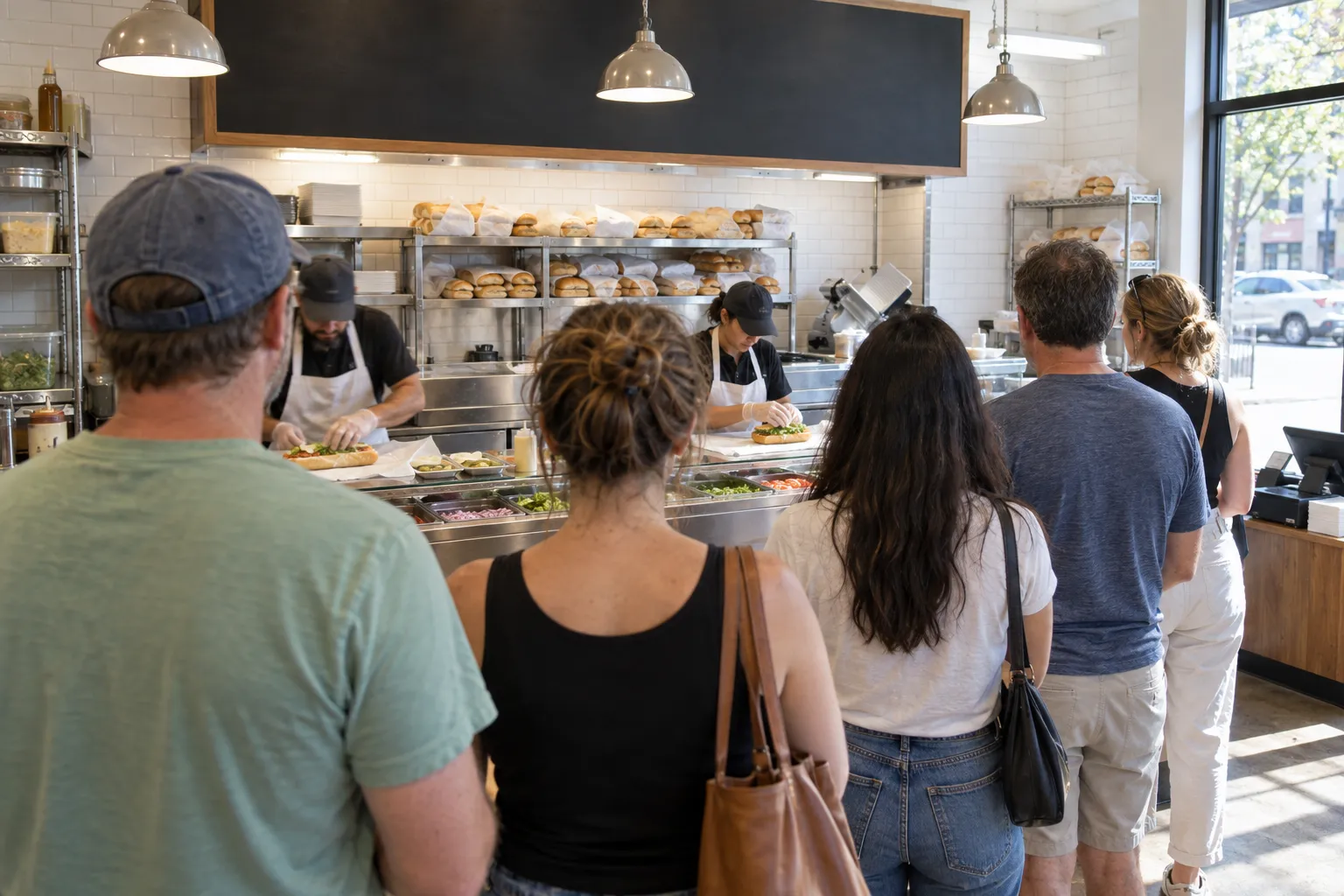
Practically, that means checking which one is nearest before you go, and expecting to take the sandwich away rather than sit. The queue at lunch is real at the busier sites and moves at the speed of the counter.
Eating it right
Two things. First, do not let it sit for more than about an hour — the dressing keeps moving into the bread and there is a point past which the roll gives up. Twenty to thirty minutes after collection is the sweet spot, which is roughly the time it takes to drive somewhere pleasant.
Second, these are large. One sandwich is a meal for most people and splitting one between two with a side is entirely reasonable. Ordering one each plus sides is how people end up with half a sandwich in the fridge, and a day-old dressed Italian sub is not a good object.
Why Los Angeles never had this
The Italian-American deli is a product of a specific migration pattern — southern Italian families arriving into northeastern port cities in the late nineteenth and early twentieth centuries and building neighbourhood food businesses that lasted generations. Los Angeles received a different set of migrations at different times, which is why the city's great cheap-food traditions are Mexican, Central American, Korean, Thai, Chinese and Armenian rather than Italian.
That absence is not a gap to be apologised for; it is the reason the food here is as good as it is. But it does mean that a good Italian sub genuinely was hard to find, and a shop opening explicitly to solve that was pushing against nothing rather than competing with fifty incumbents. It is why Ggiata landed as quickly as it did.
How it compares to the older option
The obvious comparison is the long-established Italian grocery on the Westside that has been making a famous sandwich since well before this shop existed. They are doing different things. The older one is a grocery with a counter, the sandwich is enormous, the bread is baked on site, and the queue is a genuine obstacle. Ggiata is a purpose-built sandwich shop with several locations, house-roasted meat and a much shorter wait.
If you want the landmark and are prepared to plan around it, go to the old one. If you want a very good sandwich within ten minutes of wherever you happen to be in the middle of the city, this is the answer. Most people should try both and stop asking which is better.
The vegetarian version
There is a build without meat and it is not a token. It leans on roasted vegetables, cheese and the same pepper spread and dressing that carry the rest of the menu, which is the right approach — the flaw in most vegetarian subs is that they remove the salt and fat without replacing the structure. This one keeps the acid and the heat, which is where the sandwich's character actually lives.
Practical notes
Ggiata is a Los Angeles delicatessen founded in 2020 on New Jersey Italian-deli lines, now with several locations across the city. Order the house Italian first, or the chicken cutlet; take the hot pepper spread, which is the point of the whole operation. Sides are made in house and worth splitting. The shops are counters with minimal seating, so plan to take it away, and eat it within about an hour before the dressing softens the roll. Sandwiches are large — one between two with a side is a sensible order. Check which branch is nearest before setting off; the menu is the same at all of them.
Tags: #LosAngeles #Ggiata #LunchNearMe #ItalianSub #LASandwiches #Delicatessen #LAEats #HotPeppers #NeighborhoodGuide #ChickenCutlet #LAFood #SandwichShop #WestHollywood #EchoPark
All trademarks are the property of their respective owners.
Ask Karpo first
Want to know which Ggiata is closest, how long the counter queue is and whether the special is still on? Ask Karpo for a live read on the nearest shop, the quietest window today, and somewhere good nearby to actually eat it.