Lunch is quietly the best meal in Los Angeles. The restaurants that are impossible at eight in the evening have tables at noon. The lunch sets at the Korean, Japanese and Thai rooms cost half what the same kitchen charges at dinner. The trucks are parked, the markets are open, and the roads are clear. Almost nobody plans around this, which is the main reason it stays true.
The rooms that are hard at night are easy at noon, and cheaper. Ask Karpo which are near you today.
The lunch-set economics
A restaurant's rent, insurance and salaried staff are paid whether or not anyone comes in at midday, so a lunch service that covers food and hourly labour is worth running at a price that would be a loss at dinner. The consequence is that the lunch-to-dinner price gap is widest at exactly the restaurants with the highest fixed costs — the serious rooms in expensive neighbourhoods — and narrowest at the counters that were already cheap.
In practice that means Japanese, Korean, Thai and Indian restaurants across the county serve a set lunch at a substantial discount, and a meaningful number of the city's better restaurants serve a shorter, cheaper midday menu from the same kitchen. It is the single largest unadvertised discount in Los Angeles dining.
Formats that only exist at lunch
Several things in Los Angeles are a midday proposition and effectively disappear after three. The taco truck lunch shift, which parks outside industrial and commercial areas and serves a completely different crowd from the evening trucks. The Salvadoran and Guatemalan comedor, which does its main business at lunch. The Hong Kong-style cafe in the San Gabriel Valley, which serves its set lunches until mid-afternoon and then changes menus entirely.
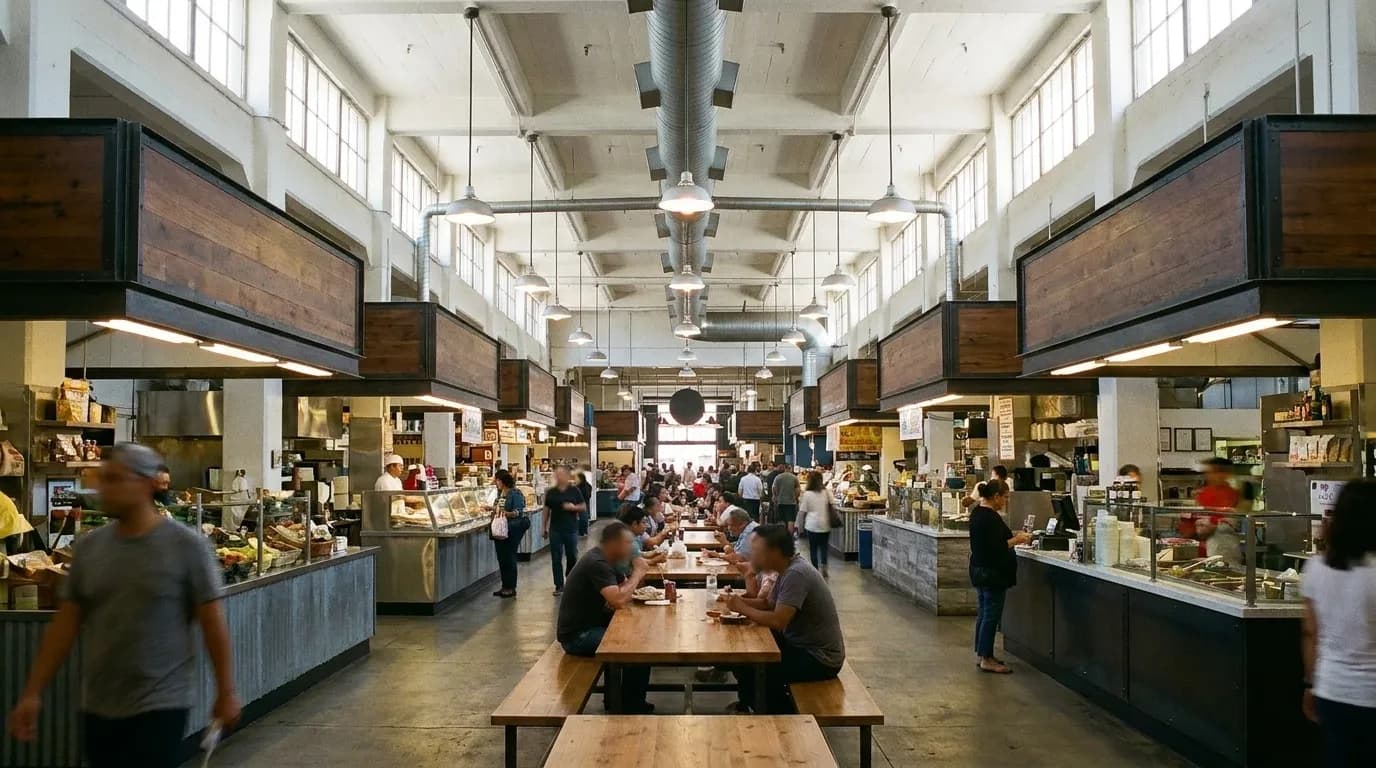
And the office-adjacent counters and food halls, several of which close entirely by three or by four. If you have never eaten downtown or in Century City at one o'clock, there is a whole layer of the city's food you have not seen.
The traffic argument
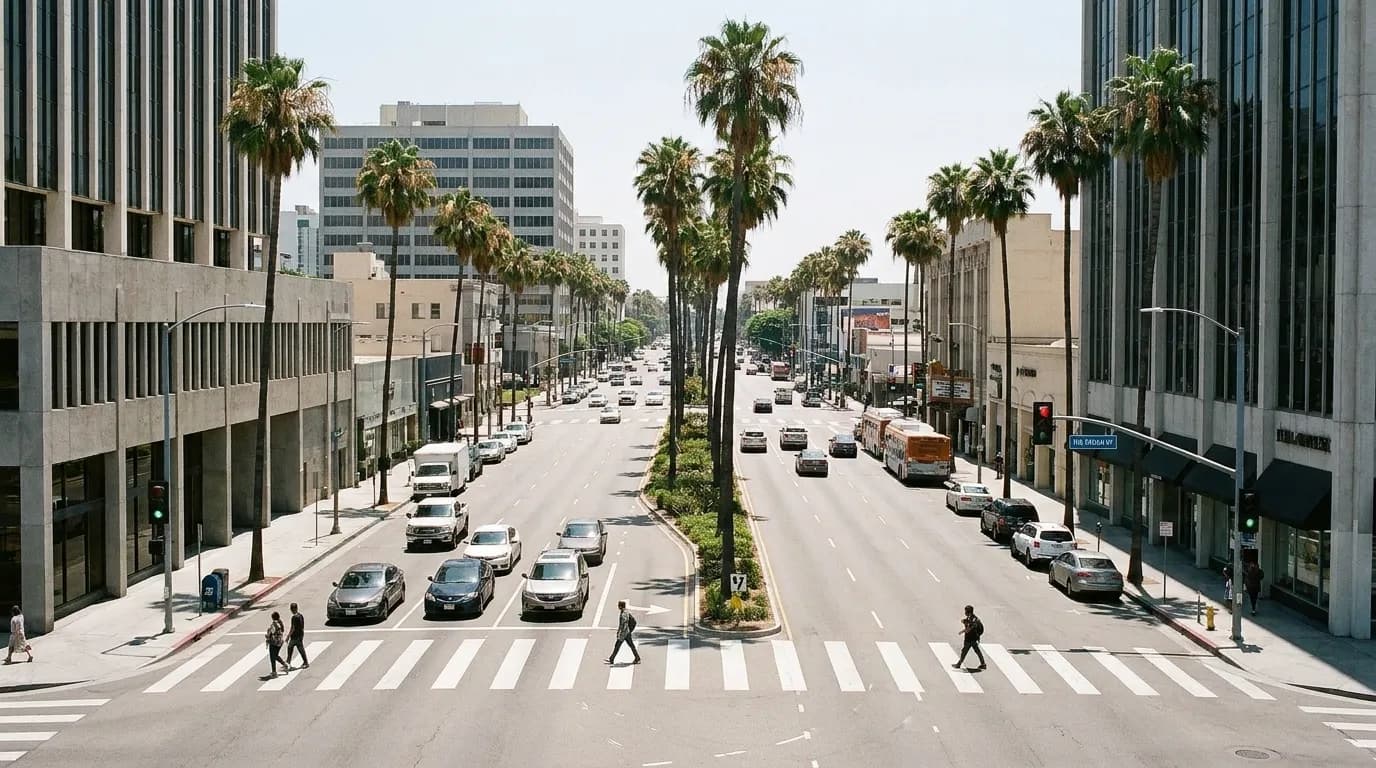
The practical case for lunch is that it is the only meal you can plan freely. Between about ten and two, the roads in Los Angeles are genuinely quick, which means a fifteen-minute drive is fifteen minutes rather than thirty-five. That opens up neighbourhoods that are effectively unreachable at seven in the evening — the San Gabriel Valley from the Westside, the South Bay from downtown, the Valley from anywhere.
The corollary is that a lunch trip is a legitimate way to eat somewhere you would never drive to for dinner. A Saturday lunch in Monterey Park, a weekday lunch in San Pedro, a Sunday lunch in Long Beach — all of these are twenty-five minutes when the roads are clear and an hour when they are not.
Markets and the midday city
Los Angeles farmers markets are a genuine part of the food culture rather than a visitor attraction, and most of them are middle-of-the-day events. The Wednesday and Saturday markets in Santa Monica are among the largest in the country and are where a substantial number of the county's restaurants buy. The Sunday Hollywood market is the other major one, and there are neighbourhood markets somewhere in the county almost every day.
The Original Farmers Market at Third and Fairfax, trading since 1934, and Grand Central Market downtown, since 1917, are the two permanent halls and both are best at lunch. Both are also genuinely used by locals rather than only visitors, which is a rarer thing than it sounds for landmarks of that age.
The truck shift
One thing worth knowing about the midday city: the lunch truck economy is entirely separate from the evening one. Trucks park outside industrial parks, construction sites, film lots and office campuses from around eleven to two, serving a completely different crowd and often a different menu from the same operators' evening service. These are some of the best-value hot meals in the county, they are almost never listed anywhere, and they are gone by mid-afternoon. If you work near an industrial or commercial area, there is very likely one within a few minutes that you have never noticed.
Building a habit
The version of this that works is to keep a short list of four or five places within a fifteen-minute radius of wherever you spend your days, chosen for variety rather than for ranking, and to use one lunch a week as an exploration — a neighbourhood you would not drive to at dinner, at an hour when the drive is nothing. Over a year that is fifty new places, which is more than most people manage in a decade of dinners.
The other habit is to eat at the peak at the steam-table and buffet places and off the peak everywhere else. Buffet food is freshest between twelve and one; every other kind of restaurant is calmer at eleven-forty-five or one-thirty.
A final argument for the midday meal: the kitchens are frequently better staffed at lunch than people assume, and in the smaller rooms the chef-owner is more likely to be cooking at noon than at nine. In a city where a great many restaurants are one person's project, that is not a small difference.
Practical notes
Lunch specials are almost universally weekday-only and typically run to around three. The Los Angeles lunch peak is roughly twelve to one; shifting fifteen minutes either side halves any queue. Many San Gabriel Valley and Koreatown kitchens close between three and five. Strip-mall parking is free and abundant, which makes midday eating easier than evening eating almost everywhere. And carry a little cash for trucks and market stalls.
Tags: #LosAngeles #LAFood #Lunch #LunchNearMe #GrandCentralMarket #FarmersMarket #Koreatown #SanGabrielValley #DowntownLA #SanFernandoValley #FoodNearMe #LAEats #MiddayGuide #EatLikeALocal
All trademarks are the property of their respective owners.
Ask Karpo first
Want to know which lunch sets are running near you today, what is reachable before the traffic starts, and which markets are on? Ask Karpo before noon.