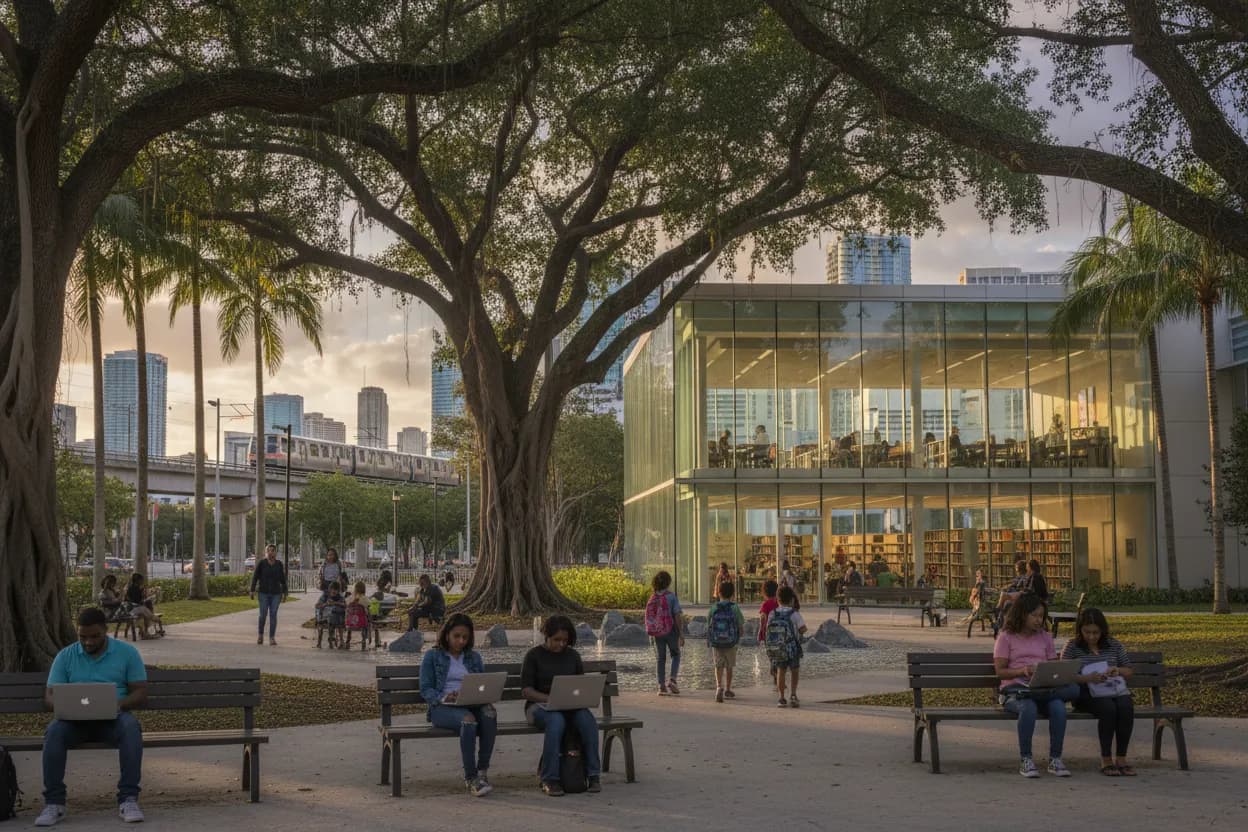
The locked headline is “louisiana vibrio vulnificus outbreak: How Miami Readers Can Verify the Headline,” but the useful Miami question is narrower: what should a student, parent, teacher, or commuter do before repeating a scary health phrase during back-to-school week? Treat the phrase louisiana vibrio vulnificus outbreak as a search hook, not as proof of a Miami event. The practical move is to slow down, compare primary public information before opinions, and choose a place where the work can actually get done. In Miami-Dade, that can mean using the public library system’s online newspapers and eContent, checking branch status before leaving, and using Miami-Dade Transit tools to avoid wasting an afternoon on a missed route, delayed train, or inaccessible station feature.
Want a quick pre-trip check before you send a student across town? Text Karpo with the branch, route, and deadline, and ask for a source-first plan.

Turn curiosity into a research question
Start by rewriting the headline as a question a student can answer: “What do official sources say, and does any public source connect this to Miami?” That wording matters. It keeps a viral phrase from becoming a local rumor. The phrase louisiana vibrio vulnificus outbreak may be timely, but timely is not the same as local, confirmed, or personally relevant.
For a back-to-school household, make the task concrete. Give the student three columns: original claim, source type, and what can be verified. A headline, screenshot, repost, or group chat message goes in the first column. A public library newspaper database, official agency page, or county service page goes in the second. The third column should contain only what the source actually says. If a source does not mention Miami, do not add Miami.
Set a time box before the search turns into panic scrolling. Twenty minutes is enough to identify whether the student has primary reporting, a public source, or only commentary. If the assignment needs more depth, move the work to a library or another quiet study stop rather than trying to settle it inside a noisy school pickup window.
Start with a reliable public resource
Miami-Dade Public Library System is the most practical first stop in the official extracts because it offers online newspapers and magazines, plus eContent that includes digital books, audiobooks, movies, music, and more with a library card. That does not mean every answer is waiting on one page. It means students have a public starting point that is less chaotic than a social feed.
Before leaving home, use the library site like a checklist. Look for “Open Now,” “Find a Branch,” “Get a Library Card,” “Online Newspapers & Magazines,” and account access. The same official page notes that the Miami Lakes Branch and South Dade Regional Libraries are closed for construction, renovations, and improvements, so those should not be treated as automatic options until the library posts a change.
A good school-night plan is simple: decide whether the task needs a quiet table, a newspaper article, or digital access from home. If the student only needs to compare articles, the online newspaper and magazine option may be enough. If the assignment needs focus, choose an open branch and confirm it directly on the library page before traveling.
Compare primary reporting before opinions
Once the student has access to newspapers or magazines, separate reporting from reaction. A reported article should identify who said what, when it was said, and where the information came from. An opinion post may be useful later, but it should not be the foundation for deciding whether a health-related phrase has local significance.
Use a two-source rule for the first pass. One source can explain the original claim; a second can confirm whether the claim is being repeated accurately. If the second source only repeats the same wording without new attribution, mark it as repetition, not confirmation. This is especially important with health headlines, because a dramatic phrase can travel faster than the verified details attached to it.
For Miami readers, the key sentence to look for is not “this sounds serious.” It is whether a public source makes a Miami-specific claim. If the source does not say Miami, Miami-Dade, a named local school, a public local facility, or an official local action, do not promote it as a Miami development.
Choose a study stop that fits the task
The right stop depends on the assignment. A quick headline check can happen at home with a library card and online newspapers. A longer research task may need an open library branch, a charged laptop, and enough time to read beyond the first paragraph. The Miami-Dade Public Library System site is the place to verify locations and branch status before committing.
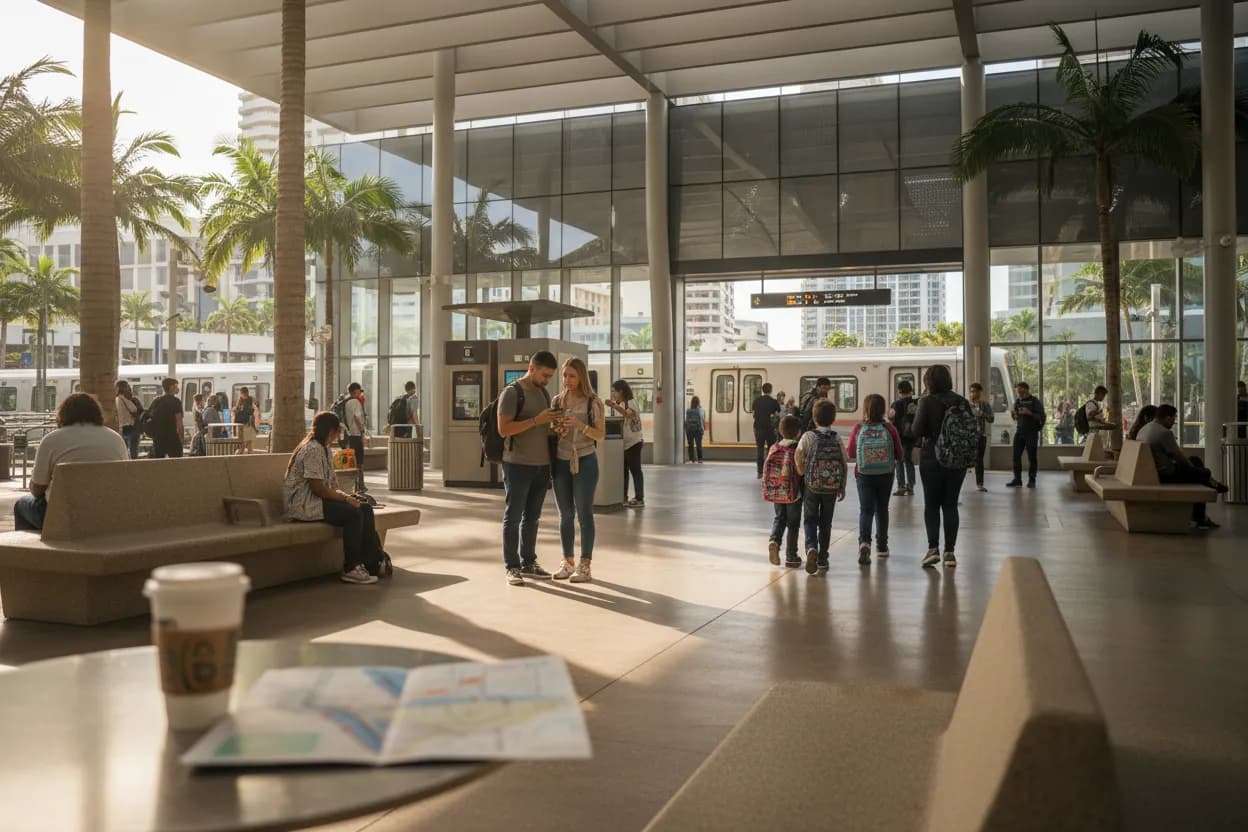
Build the route around the student’s real constraints. Miami-Dade Transportation and Public Works says riders can plan a trip, view rider alerts, read service updates, and track buses and trains in real time. Those tools matter after school, when a missed connection can turn a 40-minute study plan into a two-hour errand.
Full-time students should also check the transit page because it states that full-time students ride Metrobus and Metrorail for half the price. Do not assume eligibility, pass details, or the best fare for a specific student without checking the current official transit page or account requirements.
Add one low-cost reset nearby
Verification work is easier when the plan includes a reset that does not require a big spend. The library’s eContent is described as free with a library card, so a student who finishes the research early can download or stream approved material instead of drifting back into the same rumor thread. That is a practical back-to-school boundary: research first, reset second.
If the student is traveling by transit, keep the reset close to the study route. Use the transit trip planner and tracker before adding an extra stop. If a station feature matters, Miami-Dade Transit provides elevator and escalator status, and riders should check it before leaving. Accessibility is not a detail to improvise at the end of the day.
Crowd risk is mostly about timing and flexibility. After-school hours, weather, and service changes can make any plan feel tighter. Pick a primary branch or study location, then choose a backup that does not depend on the same closed branch, the same connection, or the same device battery. The simplest backup is often digital access from home through the library site.
Verify hours and access before leaving
The final check should happen the same day, not the night before. Confirm the library branch is open, confirm the account or library card access needed for online newspapers, and confirm that the chosen location is not listed among closures. The official library extract specifically flags Miami Lakes Branch and South Dade Regional Libraries as closed for construction, renovations, and improvements.
For transit, check rider alerts, service updates, the trip planner, and the transit tracker. Also note date-specific notices. The transportation page states that on Saturday, Aug. 15, Metromover service will begin operating at 2 p.m. while the Metromover system is being upgraded. That notice may or may not affect a Tuesday plan, but it shows why dates matter.
If the trip depends on Metromover, Metrorail, Metrobus, MetroConnect, or an accessible feature, verify it on the official Miami-Dade Transit page before departure. If something looks uncertain, switch to the backup: use library digital resources from home, pick another open branch, or postpone the nonessential reset. A careful plan beats a dramatic headline.
Tags: #AskKarpo #BeforeYouGo #Miami #MiamiDade #BackToSchool #back_to_school #StudentLife #LibraryResearch #TransitCheck #VerifyFirst #PublicSources #MiamiDadeTransit #MDPLS #LocalLife
Sources consulted: mdpls.org · miamidade.gov · miamidade.gov
All trademarks are the property of their respective owners.
Ask Karpo first
Ask Karpo first when a headline feels urgent but the local facts are unclear. Send the phrase, your Miami neighborhood, the student’s deadline, and whether transit or accessibility matters. Karpo can help turn the panic search into a source check, route check, and backup plan.