 Antique Mall Guide: Long Beach Antiques By Signal Hill
Hidden Gems & Odd Finds
Why Is Erewhon So Expensive? An LA Price Breakdown
Erewhon's prices reflect organic sourcing, small-batch production, and LA real estate—here's what you're actually paying for.
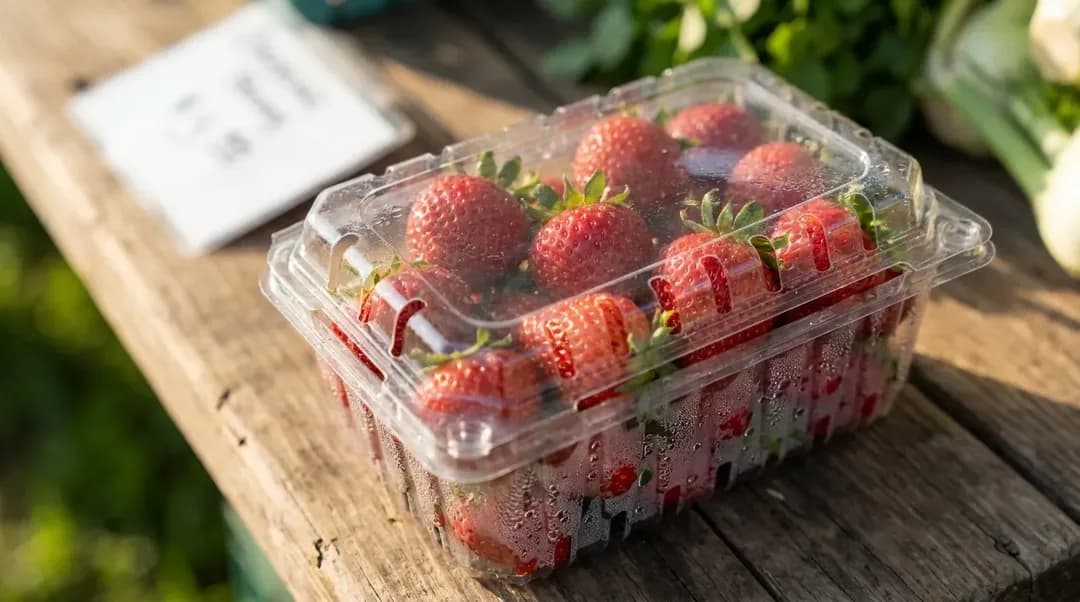
You pick up a carton of strawberries at the Venice Erewhon, glance at the price tag, and pause. Eighteen dollars. Not for a flat of berries from a farm stand, but for a single clamshell. The same ritual plays out across every aisle: almond butter that costs more than a dinner entrée, bottled water priced like wine, a smoothie that rivals your monthly streaming subscriptions. The question isn't whether Erewhon is expensive—it demonstrably is—but why is Erewhon so expensive when other high-end grocers in LA stock organic produce and specialty goods without quite reaching these heights.
Text Karpo before you drive across town. It'll check which Erewhon has the shortest line right now, map parking that won't eat your budget, and route you to a farmers market or co-op if you want the same quality for less.
The sticker shock isn't random markup
The answer starts with procurement. Erewhon sources from small farms and producers who meet standards stricter than USDA Organic: biodynamic certification, regenerative agriculture practices, specific harvest windows. That strawberry clamshell likely came from a coastal farm that hand-picks only fully ripe fruit, ships within hours, and grows without synthetic inputs on soil that's been tested for heavy metals. The volume is low, the labor is high, and there's no industrial packing facility spreading costs across millions of units. You're paying for a supply chain built around scarcity and quality verification, not commodity scale.
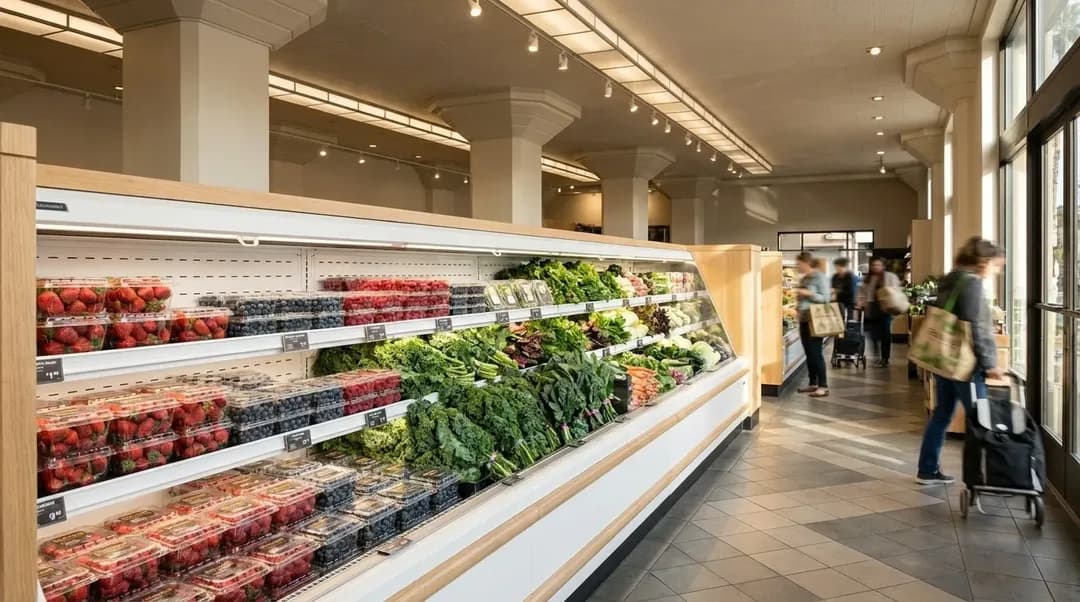
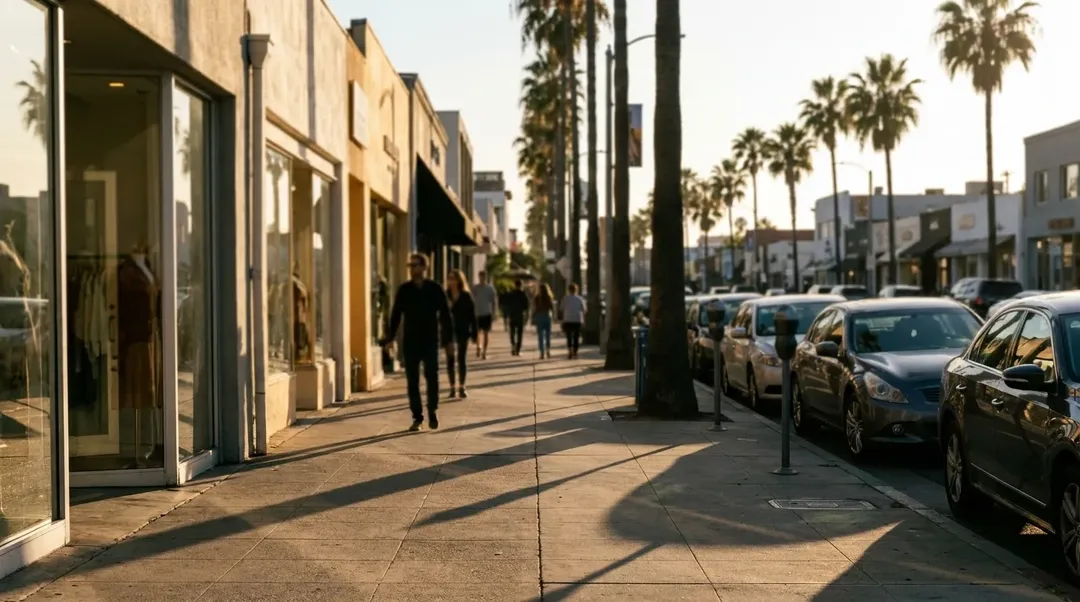
Then there's the LA real estate component. The Venice location sits two blocks from Abbot Kinney, where ground-floor retail rents rival those in Beverly Hills. The Silver Lake store anchors Sunset Junction, another high-rent node. Erewhon doesn't lease cheap warehouse space in Torrance and ask you to drive an hour—it puts itself in neighborhoods where walk-in traffic has disposable income and limited time. Rent per square foot shows up in every price tag, along with the cost of climate-controlled storage, staff trained to discuss adaptogens and omega ratios, and a prepared-foods kitchen that operates more like a restaurant than a grocery deli.
Labor is the third pillar. Erewhon employs wellness experts, in-house chefs, and a sourcing team that visits farms and negotiates directly with producers. The staff can tell you which collagen brand uses grass-fed bovine versus marine sources, or why one olive oil costs three times another. That knowledge base requires competitive wages in a city where service workers face some of the highest living costs in the country. When you ask why is Erewhon so expensive, part of the answer is that they're paying people to know their inventory in granular detail, not just to scan barcodes and restock shelves.
Where the dollar-per-ounce math actually plays out
Walk the perimeter of any Erewhon and you'll notice the price gaps aren't uniform. Produce and dairy swing wildest: organic Medjool dates might run twice the cost of similar dates at Whole Foods, but the gap narrows on shelf-stable goods like canned beans or rice. The prepared-foods bar—where grain bowls and rotisserie chicken live—operates on restaurant economics, not grocery margins. A $22 grain bowl with salmon, greens, and house-made dressing isn't outrageous compared to a sit-down lunch on Melrose, but it feels steep when you're standing in a grocery aisle holding a basket.
The smoothie program is where Erewhon's pricing becomes most visible and most debated. A $20 smoothie sounds absurd until you itemize it: raw almond milk made that morning, cold-pressed juice, a scoop of collagen ($3 of product), adaptogenic mushroom powder, raw honey from a single apiary, and house-made vanilla. You're drinking what amounts to a deconstructed supplement stack plus a juice bar visit, condensed into a cup. Whether that's worth the money depends entirely on whether you'd buy those ingredients separately. If you already spend $60 a week on supplements and cold-pressed juice, the smoothie starts to look efficient. If you don't, it's a luxury positioned as wellness infrastructure.
The cult-favorite products—Hailey Bieber's Strawberry Glaze Skin Smoothie, the $26 raw lasagna, the $18 bone broth—function as brand signaling as much as nutrition. You're not just buying food; you're buying proof you were there, proof you can afford it, proof you're inside a specific LA wellness conversation. That social currency has value in certain circles, and Erewhon prices accordingly. It's the same logic that makes a Supreme T-shirt cost $200: scarcity, aspiration, and the knowledge that someone will pay.
For context, the same pastured eggs that cost $14 at Erewhon might run $10 at a farmers market in Atwater Village, $8 at Co-opportunity in Santa Monica, and $6 at a conventional grocery. The chicken is genuinely higher-welfare, the farming practices genuinely more sustainable—but the markup isn't linear with quality. You're also paying for curation, convenience, and the fact that everything under one roof meets a single exacting standard. If you have the time and knowledge to source from multiple vendors, you can replicate the quality for less. Erewhon charges for collapsing that effort into one trip.
This model doesn't work for most shoppers
Erewhon isn't designed for families stocking a weekly cart or anyone on a fixed grocery budget. A household of four spending $200 a week on food will blow through that in two bags here. The store offers no bulk discounts, no loyalty pricing, no coupons. It's optimized for single professionals, influencers expensing content, and households where grocery spending is discretionary rather than budgeted. If you're comparing per-meal costs or tracking spending in a spreadsheet, why is Erewhon so expensive stops being an interesting question and becomes a disqualifying answer.
It's also a poor fit for anyone living east of Downtown or south of the 10. There are no Erewhon locations in Long Beach, Pasadena, or the San Fernando Valley. If you're driving from Glendale to the Silver Lake store, you're adding 40 minutes round-trip and $8 in gas to a grocery run, plus the likelihood of circling for street parking. The Venice location has a small lot that fills by 10 a.m. on weekends; after that, you're feeding meters on side streets or using a pay lot on Abbot Kinney. The friction of access—both geographic and financial—is part of the brand, but it's friction nonetheless.
The prepared-foods bar creates another mismatch: everything looks ready to eat, but there's no seating. You're encouraged to buy a $20 grain bowl and then figure out where to take it. The Venice location is two blocks from the beach, so that works in fair weather. Silver Lake has Sunset Junction's benches, but they're often full. If you're planning to eat in your car or take food back to an office, the packaging is excellent. If you expected a place to sit and eat, you'll be walking out onto the sidewalk with a compostable bowl, looking for a ledge.
What to verify before you make the drive
Erewhon's website lists current locations, but it doesn't publish real-time inventory or pricing. If you're driving across town for a specific product—say, a particular supplement or the house-made almond butter—call ahead. The Venice and Silver Lake stores have slightly different product mixes, and high-turnover items sell out by midday. The prepared-foods selection peaks between 11 a.m. and 1 p.m.; after 3 p.m., popular items are gone and won't be restocked until the next morning.
Parking is tightest at the Venice location on weekend mornings and weekday evenings. If you're coming from the Westside, the lot off Santa Monica Boulevard fills fast; street parking on the residential blocks north of Rose requires a two-hour limit check. The Silver Lake store has its own small lot, but Sunset Junction traffic between 5 and 7 p.m. makes the turn-in tricky. Factor an extra ten minutes to park, especially if you're arriving during peak hours.
If budget is a consideration, compare your list against farmers markets and co-ops first. The Hollywood Farmers Market on Sundays, the Santa Monica Wednesday market, and Co-opportunity in Santa Monica all carry organic produce, pastured eggs, and bulk goods at lower price points. You'll lose the one-stop convenience and the prepared-foods bar, but you'll keep more of your grocery budget intact. Erewhon works best as a supplement to other shopping, not a replacement—stock your staples elsewhere, then stop in for the specific items that justify the premium.
The smoothie menu rotates, and celebrity collaborations come and go. If you're planning a visit around a specific flavor, check Erewhon's Instagram or call the store to confirm it's still available. Limited-edition items sometimes sell out within days. The core menu—green smoothies, protein blends, the tonic bar—is stable, but the headline-grabbing specials are genuinely limited. If you miss it, it may not come back.
Practical notes
- Venice and Silver Lake locations are the most accessible; confirm hours and parking before you drive across town.
- Peak crowds hit between 11 a.m. and 1 p.m. on weekends; go early or after 3 p.m. for a calmer experience.
- Parking at Venice fills by 10 a.m. weekends; budget extra time or plan to use metered street spots.
- Prepared foods sell out by mid-afternoon and aren't restocked until the next morning.
- Compare your list against farmers markets and co-ops if you're sourcing similar organic staples for less.
- No seating inside; plan to take food to go or eat outside on nearby benches or at the beach.
Tags: #karpo #erewhon #whyiserewhonsexpensive #losangeles #lagrocery #venice #silverlake #organicla #lawellness #lagroceryprices #theoddedit #lapricebreakdown #erewhonprices #groceryla #westsidela
Sources consulted: Erewhon Market official site · USDA Organic Standards · Co-opportunity Market
All trademarks are the property of their respective owners.
Ask Karpo first
Text Karpo before you head out and ask which Erewhon location has the shortest wait right now, or where to find comparable organic produce and prepared foods for less. It'll map parking near the store, suggest a farmers market if one's running today, and build you a route that respects your budget and drive time.
Ask Karpo for more information.
Keep reading
- Antique Mall Guide: Long Beach Antiques By Signal Hill
 Antique Mall Guide: Torrance Street Faire Finds On Sartori
 Antique Mall Hunt: King Richard's Whittier Dealer Guide