The first mistake people make in LA is treating sunset as a single moment. In practice, you are planning for a window. The sun may disappear at a specific time, but the useful light before and after that point changes with season, cloud cover, and your location. In summer, the sky stays bright and warm longer. In winter, the angle drops faster and the usable color window can feel brief. Build your plan around arriving well before the listed sunset time, not at it. A good rule is to be in position with enough time to park, walk, and settle in before the color begins to shift.
Pick your LA sunset route with a live weather check.
Before you leave, check three live details: the sunset time for that date, the hourly cloud forecast, and the wind direction near your target neighborhood. If the coast shows a low cloud deck or marine layer, the horizon can vanish even when the inland sky looks clear. If haze is building inland, high points may give you a better view of the last direct light. Search recent photos or local webcams if you can, because LA can look different from one district to the next on the same evening. The goal is not to chase a perfect forecast; it is to pick a location that still works if conditions move a little.
2) Choose the neighborhood by how LA behaves
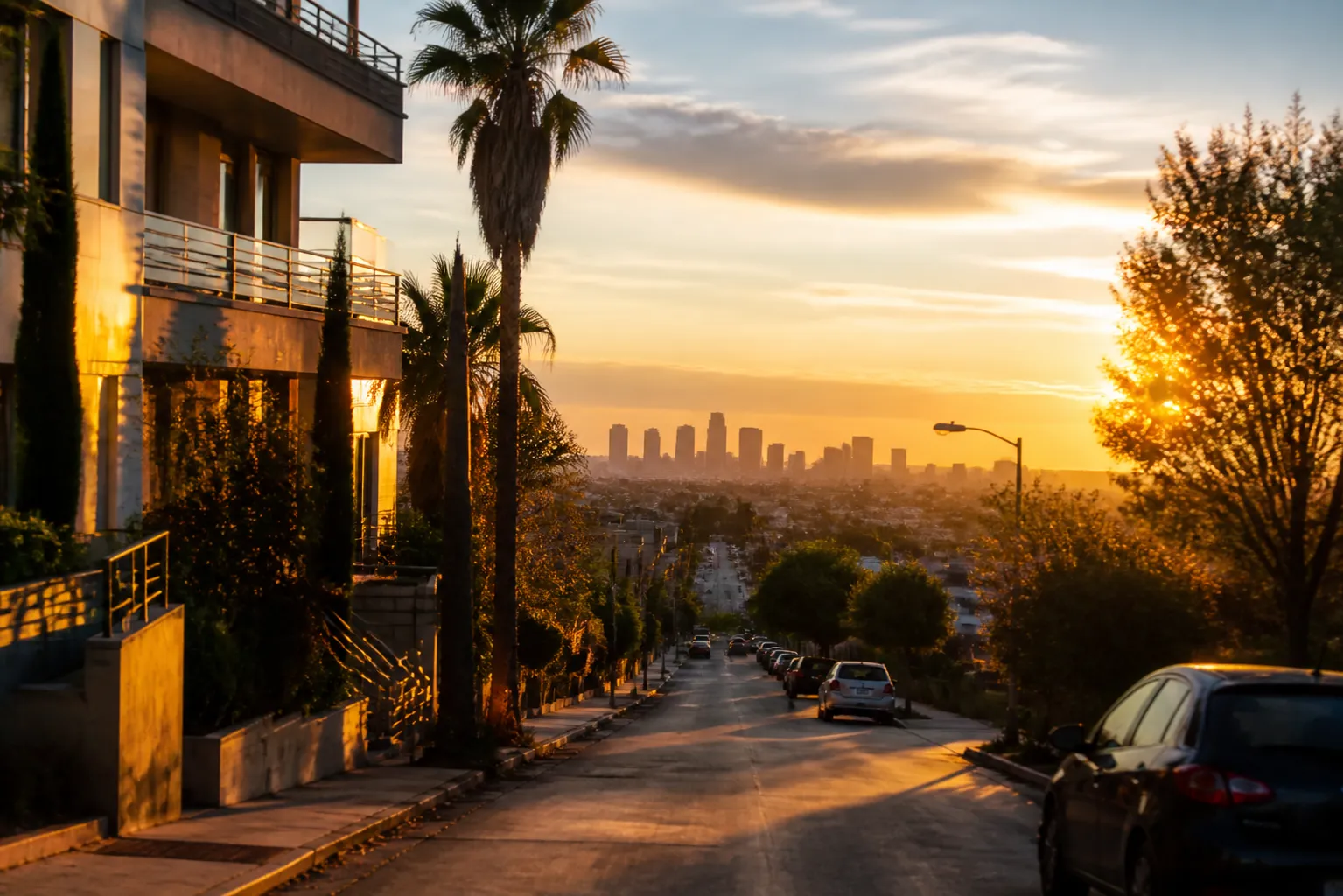
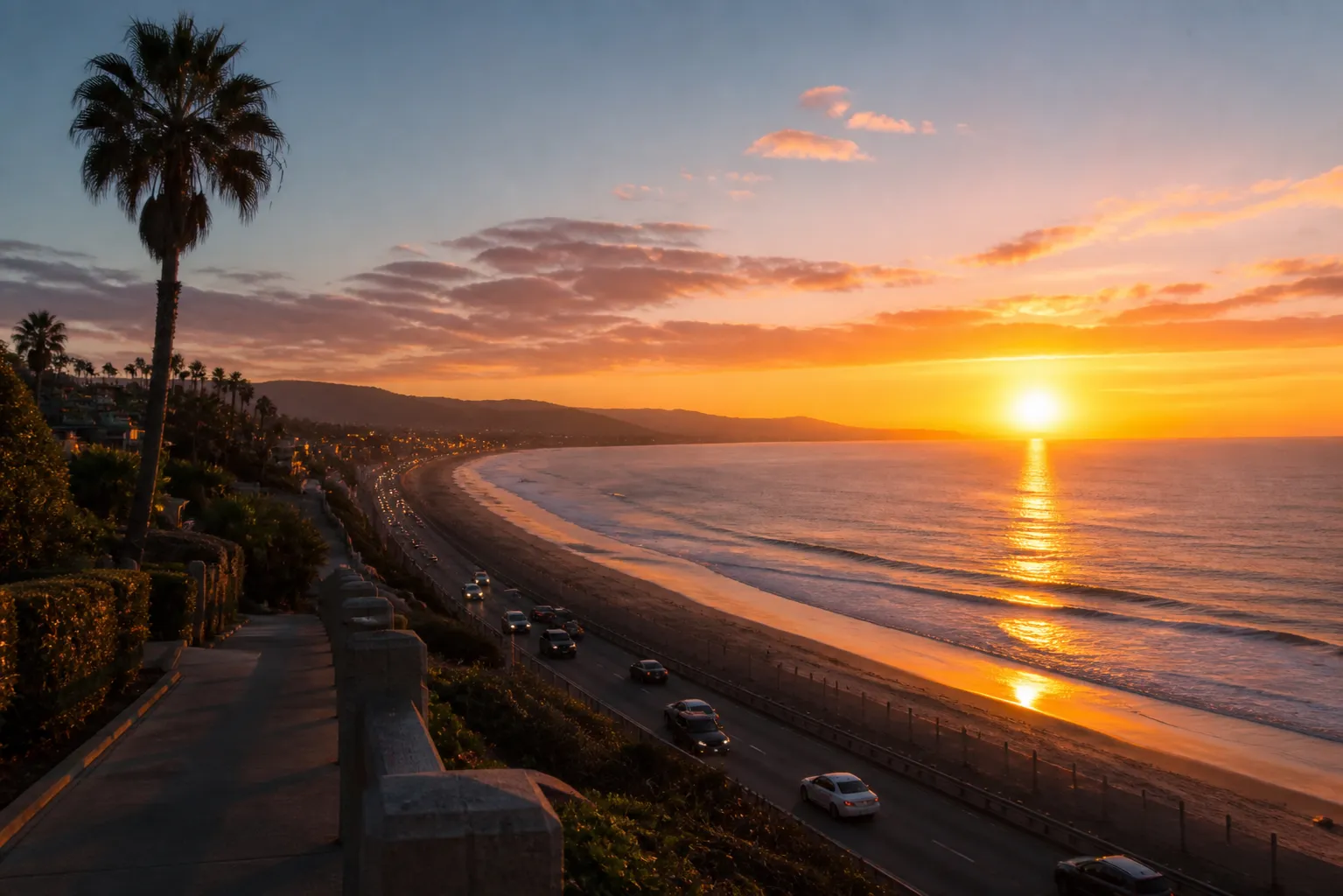
LA sunset logic is mostly about west-facing exposure and elevation. Beach neighborhoods give you open sky and a clean horizon, but they are also the first places to lose the sun when marine moisture rolls in. Higher ground can stay brighter longer and often gives you layered views of the basin, the hills, and the distant water. Flat inland districts can be good for color in the sky, but they are weaker if you want the sun itself touching the horizon line. Think in terms of what each area is good at rather than searching for one universal best view.
A simple way to choose is to match the day to the neighborhood. If the coast looks clear and the marine layer is thin, a westside beach area can give you the most classic sunset. If the coast is socked in but the inland sky is open, a hill or overlook farther east may be better. If the air is hazy over the whole basin, pick a higher point where you can at least see the gradient of light over the city. LA rewards flexibility. The best neighborhood is the one whose shape fits the weather you actually have, not the scene you hoped for.
3) Use a simple route, not a complicated chase
For one evening, keep the route simple: start inland, move west only if the live conditions support it, and end where you can stay after the sun drops. That logic saves time because LA traffic punishes indecision. A useful pattern is to pick a primary location and one backup within the same general corridor. For example, if your first choice is a hill or park overlook, keep a lower westside option in mind. If your first choice is the coast, keep an inland ridge or park as a backup in case the marine layer hangs low. The point is to avoid cross-city zigzags during the last hour before sunset.
A route should also account for the light after sunset. The best color often comes 10 to 20 minutes after the sun is gone, and in some evenings the softest sky appears even later. That means your stop should have enough legal, comfortable space for you to linger without rushing. If you need to move between neighborhoods, do it early. If you are already close to your target, do not overthink it and waste the best light in traffic. In LA, a good sunset plan is less about the perfect spot and more about arriving early enough to keep your options open.
4) Build around transit, walking, and accessibility
A strong sunset plan in LA should work even if you do not want to drive the whole way. Check whether your route can be done by rail, bus, rideshare, or a short walk from a transit stop. Evening traffic can be heavy in almost any direction, so the best route is the one that reduces the number of decisions once you are close. If you are choosing between two similar overlooks, pick the one with easier arrival and departure. That matters more than squeezing out one extra degree of view. Also check sidewalk conditions, lighting, and grade if anyone in your group prefers a flatter route or needs step-free access.
Accessibility is part of sunset timing because it affects how early you need to leave and how far you can comfortably move once you arrive. A site that looks great on a map may require a steep climb, limited parking, or a walk across busy streets. In LA, those details shape the experience more than they would in a smaller city. If you are using transit, build in extra time for the final segment and make sure the return trip is still workable after dark. If you are walking, carry water and a light layer, since coastal air can cool quickly after sunset and hilltop wind can feel sharper than expected.
5) Always have a backup for clouds, haze, and traffic
The smartest LA sunset plan includes a fallback that still feels intentional. If the coast goes gray, switch to elevation. If the whole basin feels washed out, choose a place with a stronger skyline or waterline so the fading light has something to outline. If traffic slows your arrival, do not keep chasing a far-off horizon. Pull into the nearest safe overlook, park, or open public edge and watch the last color from there. LA is large enough that the best backup is often not a second destination across town. It is a nearby location that still gives you space, sky, and a clear line of sight.
You can also protect the evening by planning for the hour after sunset. The city often looks better in blue hour than people expect, especially if the weather is clean and the street grid is glowing below. That gives you a reason to stay even if the sun itself was hidden. If the sky disappoints, you still get the transition of light over buildings, hills, or water, which is the real LA reward. The backup mindset turns a maybe-good sunset into a reliable evening plan, and it keeps you from judging the whole outing by a single cloud bank or a late arrival.
A simple plan before you go
- Check sunset time, hourly cloud cover, and wind before leaving.
- Choose coast for open horizon, hills for haze, inland for flexibility.
- Build a backup within the same corridor to avoid cross-city traffic.
- Plan to stay 10 to 20 minutes after sunset for the best color.

Tags: #creative_workshops #la
Sources consulted: Official city information · Google Maps · Karpo local search
All trademarks are the property of their respective owners.