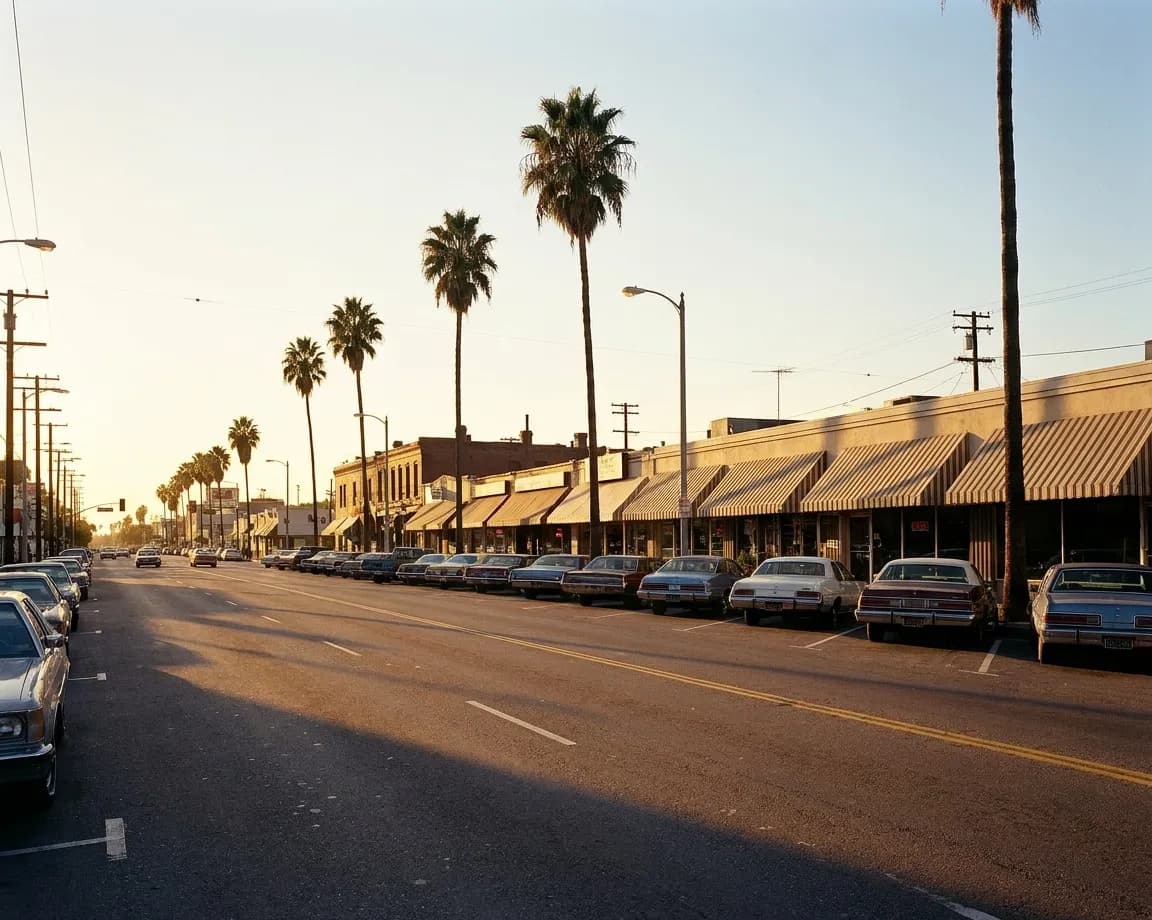
Los Angeles is eighty-eight cities pretending to be one, and the practical consequence is that the best restaurants in Los Angeles are almost never near where a visitor is staying. This is not a story about hidden gems. It is a story about a metropolitan area forty miles across, in which the food a local would drive an hour for sits in a strip mall in Alhambra, a converted garage in Boyle Heights, or a second-floor unit in a Koreatown plaza with no street presence at all.
Distance and parking are the real filters here, not secrecy. Ask Karpo which neighbourhood restaurants near you are worth the drive tonight.
The strip mall is the format, not an accident
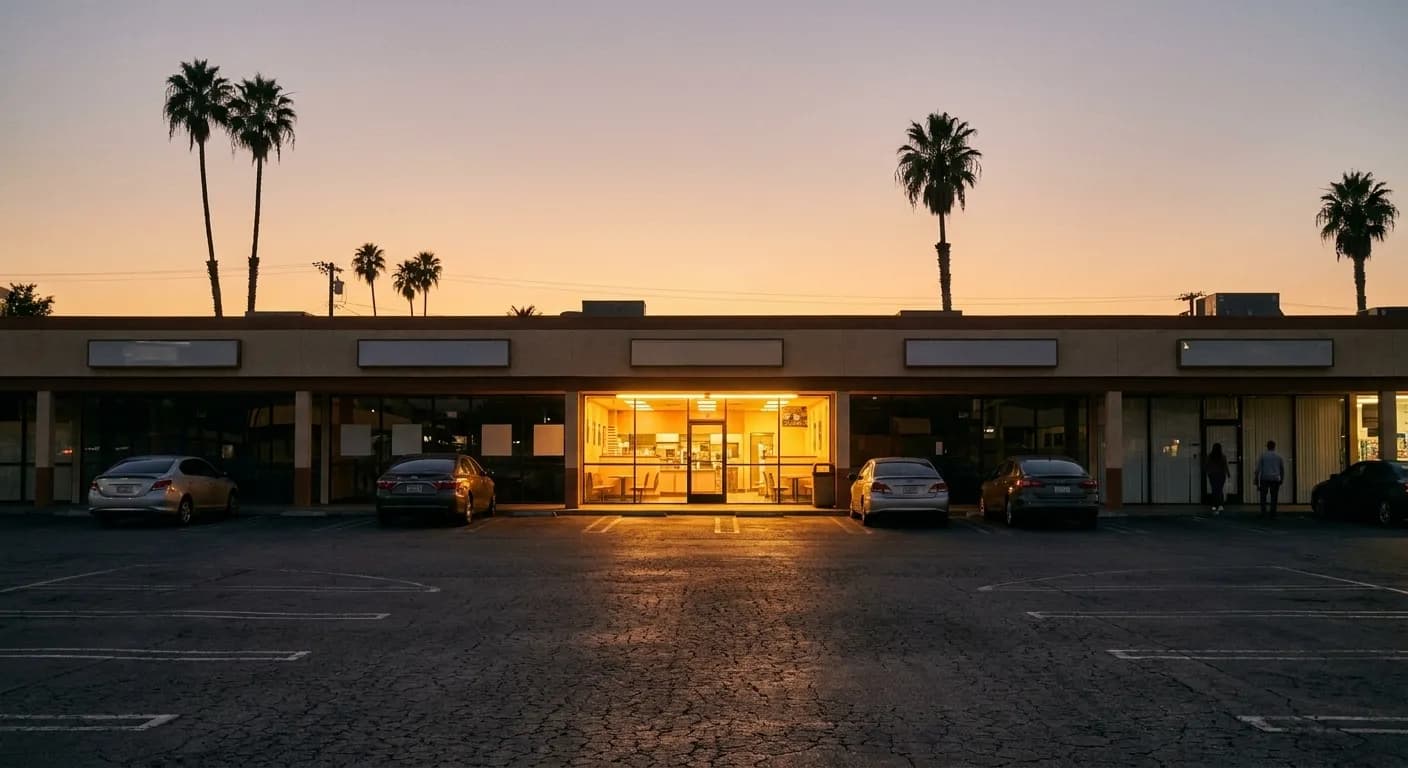
The single most important thing to understand about eating in this city is that the strip mall is where the good food is. Low rent, no build-out costs, ample parking and a landlord who does not care what you cook — those conditions produced the best Thai, Sichuan, Oaxacan, Armenian, Filipino and Korean cooking in the country, and they produced it in buildings that look like nothing from the road.
A visitor drives past these at forty miles an hour and sees a nail salon, a laundromat and a restaurant with a plastic sign. A local sees the restaurant. The whole gap between the two lists comes down to knowing that the building type is not a signal about the food, which in most American cities it would be.
The San Gabriel Valley is the answer to most questions
East of downtown, the string of cities running from Alhambra through Monterey Park, San Gabriel, Rowland Heights and beyond holds the densest concentration of regional Chinese cooking outside Asia — Sichuan, Shaanxi, Hunan, Dongbei, Taiwanese, Cantonese seafood, hand-pulled noodles, soup dumplings, all of it at prices that have barely moved in a decade.
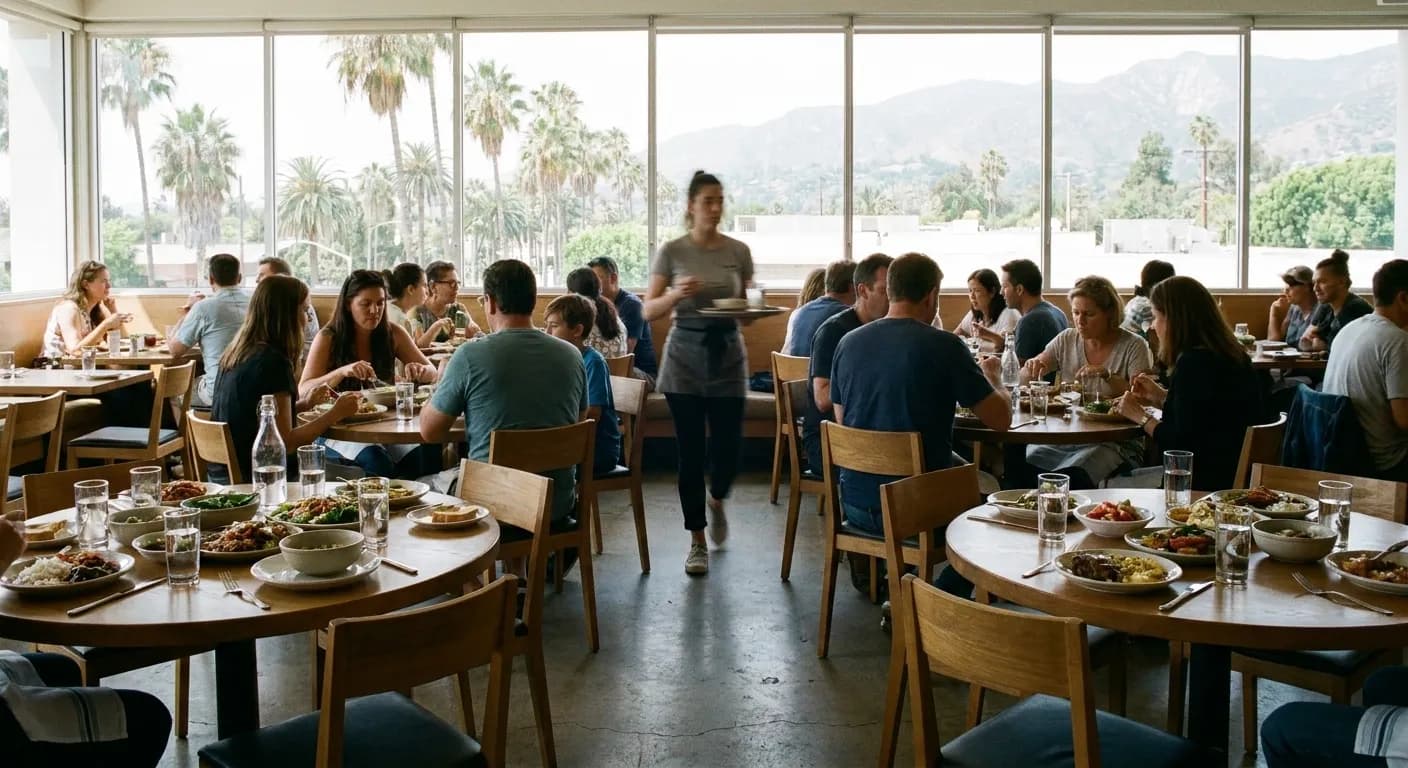
It is thirty to fifty minutes from the Westside depending on traffic, which is exactly why visitors never go and exactly why locals do. If you eat one meal in Los Angeles that you could not eat anywhere else, this is where it is, and the correct approach is to pick a single city in the valley and eat two meals there rather than crossing it for individual restaurants.
The other clusters
Koreatown for Korean, obviously, but specifically for the late hours and the fact that a serious meal there costs half what the equivalent does in a hyped neighbourhood. Thai Town along Hollywood Boulevard for a level of Thai cooking that is genuinely unusual outside Thailand. Boyle Heights and East LA for Mexican regional cooking with no concessions made. Little Armenia and Glendale for Armenian and Persian. The South Bay for Japanese, particularly along the Torrance corridor.
Each of those is a real cuisine community rather than a restaurant district, which is why the food holds up: these are restaurants serving people who grew up eating this and would notice immediately if it slipped.
What locals actually order
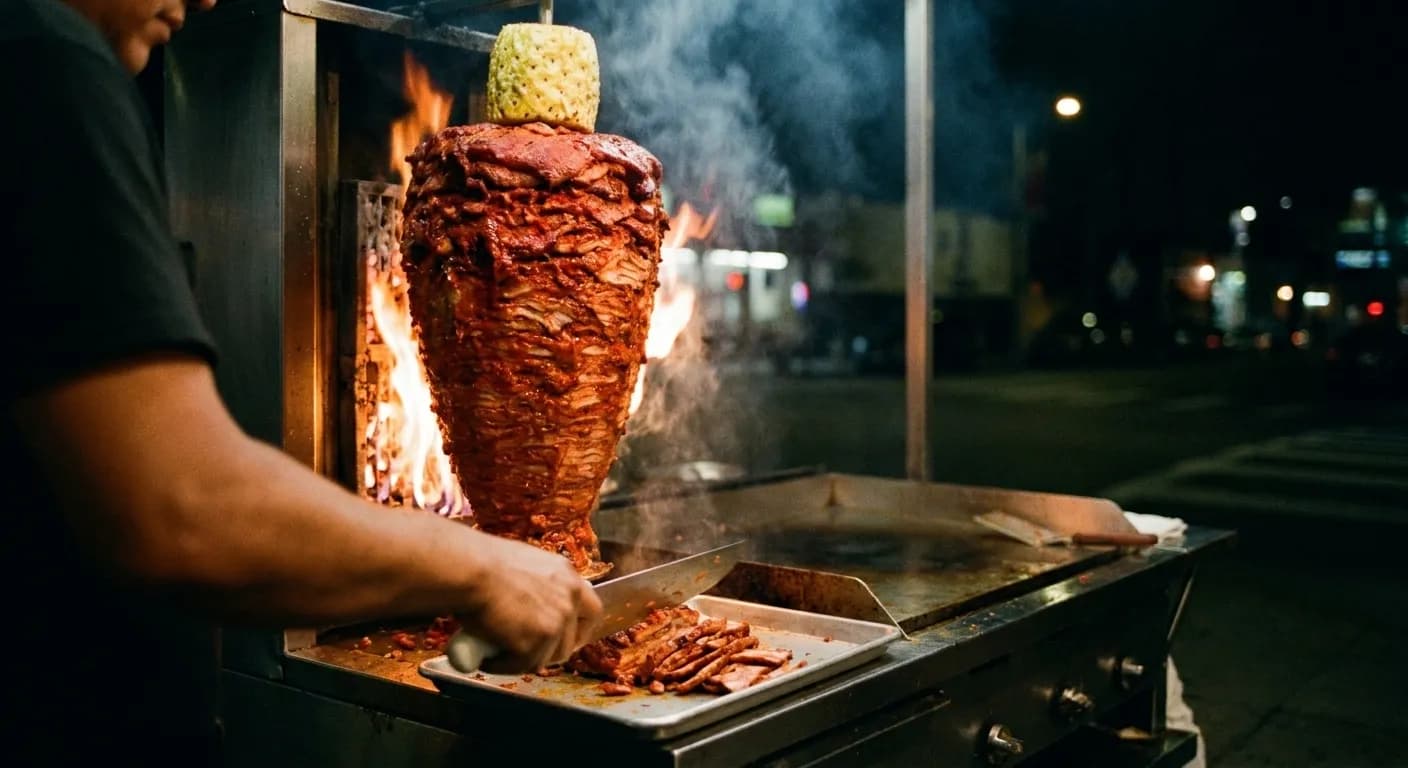
At a strip-mall restaurant, the interesting menu is often not the one handed to you. Many of these places keep a second menu — sometimes a laminated card, sometimes a wall of paper strips, sometimes just a set of specials in another language — aimed at regulars. Asking what the kitchen is known for, or what the table next to you is eating, is a legitimate and welcome question.
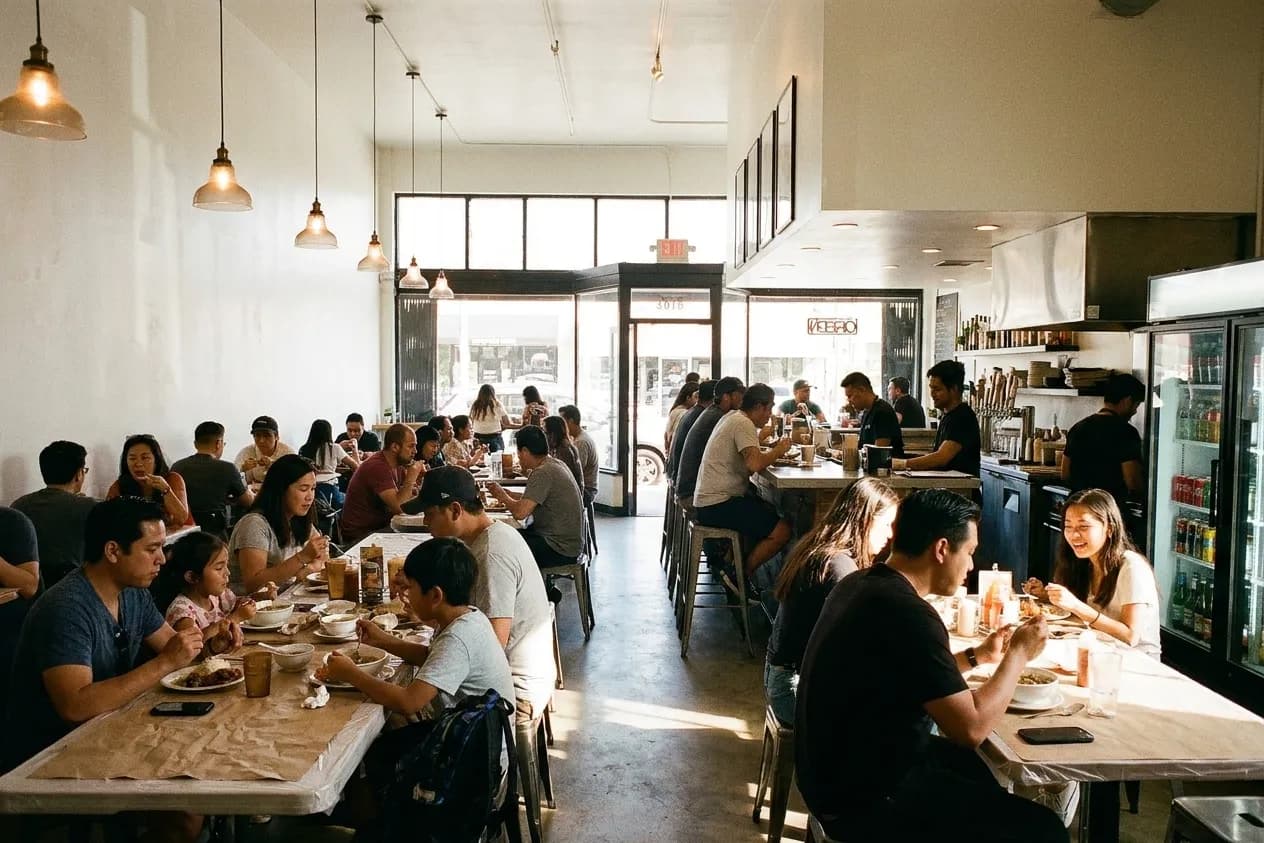
The other habit is ordering family style and ordering too much. Most of these cuisines are built around a table sharing four or five dishes, and a party of two ordering one dish each gets a worse meal than a party of four ordering six. This is a genuine argument for going out in groups here in a way that it is not in other cities.
Parking, which is the actual barrier
It is worth saying plainly: the reason people do not do this is not that they cannot find the restaurants. It is that eating in Los Angeles requires driving, and driving requires parking, and both of those are more effort than walking into whatever is near the hotel. Strip malls solve the parking problem, which is another reason they dominate.
The workable approach is to accept the drive as the cost of the meal and to make it worth it: go somewhere for a specific dish, go with enough people to order properly, and go at a time that avoids the freeway at its worst. Eating in this city rewards planning far more than spontaneity, which is the opposite of how food writing usually frames it.
Price, and what it does not tell you
The relationship between price and quality in Los Angeles is weaker than in almost any comparable city. A fifteen-dollar plate in a San Gabriel Valley strip mall and a fifty-dollar plate on the Westside are frequently not separated by skill, ingredients or effort — they are separated by rent, service model and the demographics of who is expected to walk in. That is worth knowing before you assume the expensive room is the better meal.
Where the money does buy something real is in fixed costs the customer experiences directly: comfortable seating, a wine list with depth, a room that is quiet enough to talk in, and staff who have time for your table. Those are genuine goods and they are what a hundred-dollar dinner in this city delivers. What it does not reliably deliver is better cooking than a family-run restaurant thirty minutes east.
The one rule that generalises
Eat where the community that cooks the food actually lives. Not as a matter of authenticity politics, but because those restaurants have a customer base that returns weekly and holds them to a standard. Every cluster on this list works for that reason, and it predicts quality in Los Angeles better than any rating, list or review — including this one.
Tags: #LosAngeles #LAEats #BestRestaurantsLA #SanGabrielValley #Koreatown #ThaiTown #BoyleHeights #StripMallFood #WhereLocalsEat #LAFood #SoCal #FoodieLA #NeighbourhoodDining
All trademarks are the property of their respective owners.
Ask Karpo first
Ask Karpo which local restaurants near you in Los Angeles are open now, what they are known for, and how bad the drive is right now.