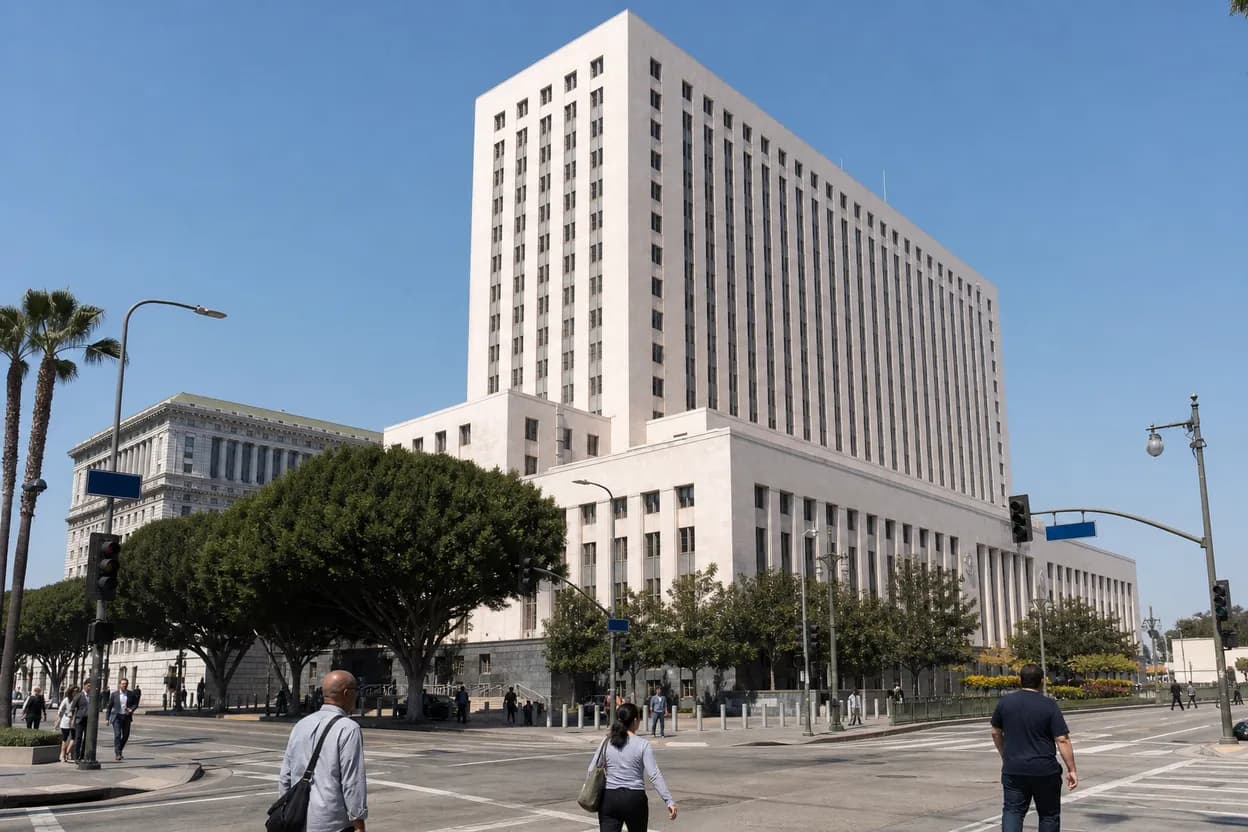
Los Angeles readers following the Lindsay Clancy trial are not looking for spectacle; they are trying to understand how a serious criminal case moves through court, what can be verified, and where public information ends. The case itself is in Massachusetts, with recent Associated Press and People reporting placing proceedings in early August 2026, but Angelenos can use local public resources to learn trial vocabulary, records access limits, and courtroom rules. This guide treats the trend as a public-learning plan for a clear, warm mid-day in Los Angeles: what to check online, where to go downtown, what not to assume, and how to leave space for facts that are still developing.
Want a tighter Los Angeles plan before you click through court sites? Text Karpo for nearby courthouse, library, and transit options that fit this trial-process question.

Stanley Mosk Courthouse at 111 North Hill Street
Start with the Los Angeles Superior Court website, then use Stanley Mosk Courthouse as your local orientation point, not as the trial venue. The Clancy criminal case is being heard in Massachusetts, so a visit downtown will not show that courtroom. What it can do is make California trial-court structure tangible: public counters, courtroom directories, records windows, and the difference between civil, family, probate, and criminal calendars.
The tradeoff is time. Downtown court buildings are useful when you need staff direction or public-access terminals, but they are slower than checking official pages first. If you go mid-day from central Los Angeles, allow security screening time and bring only necessary items. If access rules, department locations, or counter availability matter to your plan, verify them on the Los Angeles Superior Court site the same morning.
LA Court Public Access Online Services Search
For Los Angeles records practice, Public Access Online Services is the practical object to understand. The court says the system supports criminal name searches, civil name searches, and online document-image purchases, with some criminal index information updated daily. It also warns that online information is not the official court record. That distinction matters when a viral case makes people treat screenshots as settled proof.
Use the service as a model for how records systems work, not as a place to find the Massachusetts file. Name searches and downloaded documents may involve fees, card requirements, missing images, or sealed material. Failure mode: you search the wrong jurisdiction, pay for a result, and still learn nothing about the case you meant to study. The backup is to identify the actual court first, then use that court’s docket or clerk guidance.
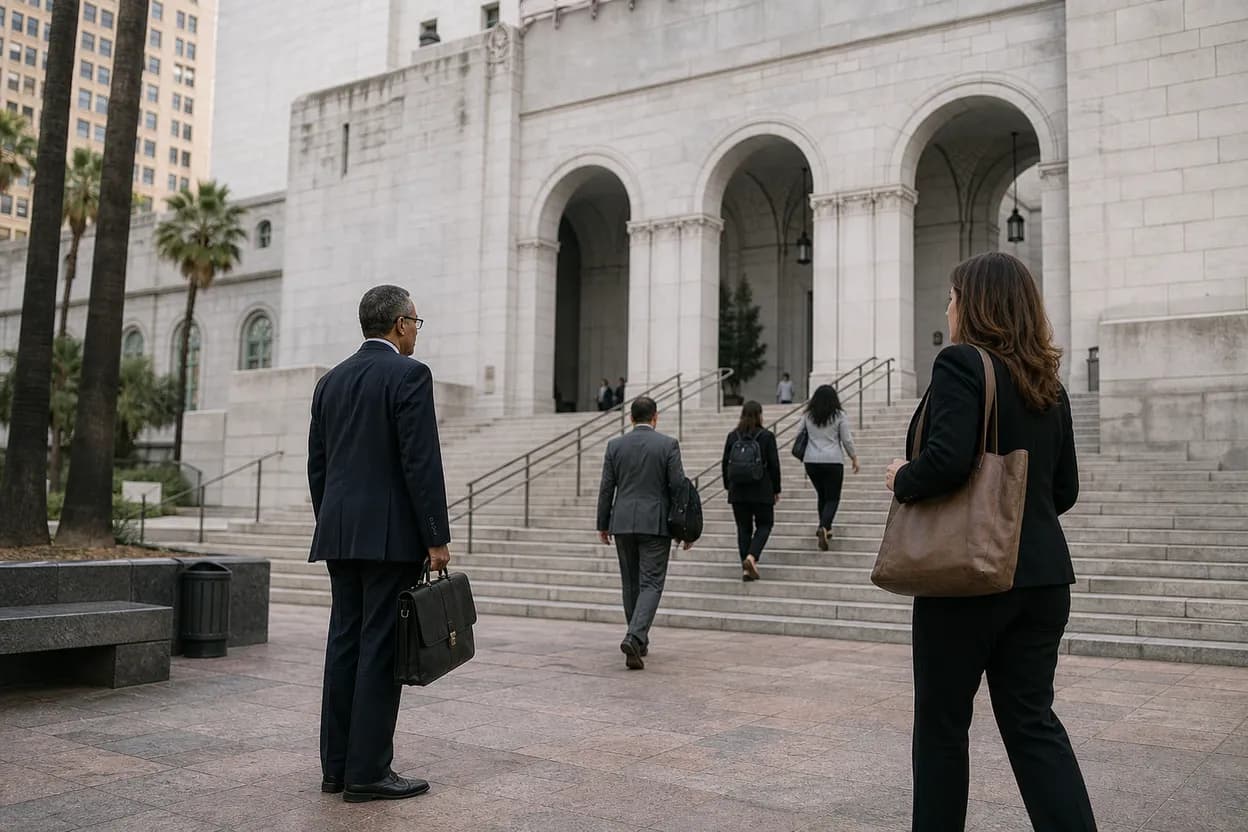
California Courts Criminal Court Overview Page
The California Courts Self-Help Guide gives Angelenos a plain-language map of criminal procedure, including charges, arraignment, pretrial activity, trial, sentencing, and options after sentencing. That sequence helps decode why a high-profile trial may pause for motions, witness scheduling, stipulations, or evidentiary questions. It also keeps attention on process instead of trying to predict a verdict from isolated testimony, short clips, or secondhand social posts.
This page is best for readers who are alone, seeking information, and trying to pace themselves through a difficult subject. It is not legal advice, and it does not explain Massachusetts criminal responsibility law. Its value is vocabulary. If a report mentions discovery, jury trial, plea, sentencing, or appeal, check the overview before sharing an interpretation. If a term still seems jurisdiction-specific, verify it with the court hearing the case.
LA Law Library at 301 West First Street
LA Law Library’s downtown main library is a strong next stop because it is built for public legal research, not entertainment coverage. Its eBranch lists court basics, criminal law, researching the law, legal help, mediation resources, and California court links. The library’s public-facing materials describe it as a gateway to legal information, a navigator for the courts and legal system, and a downtown resource near Stanley Mosk Courthouse.
The practical fit is different from a courthouse visit. A law library is better for definitions, procedural background, and finding reputable secondary explanations; a courthouse is better for case-specific local records and official counter direction. If you need quiet reading, confirm current hours and branch availability before leaving. If you need legal advice about your own matter, ask for referral resources rather than expecting librarians to evaluate your facts.
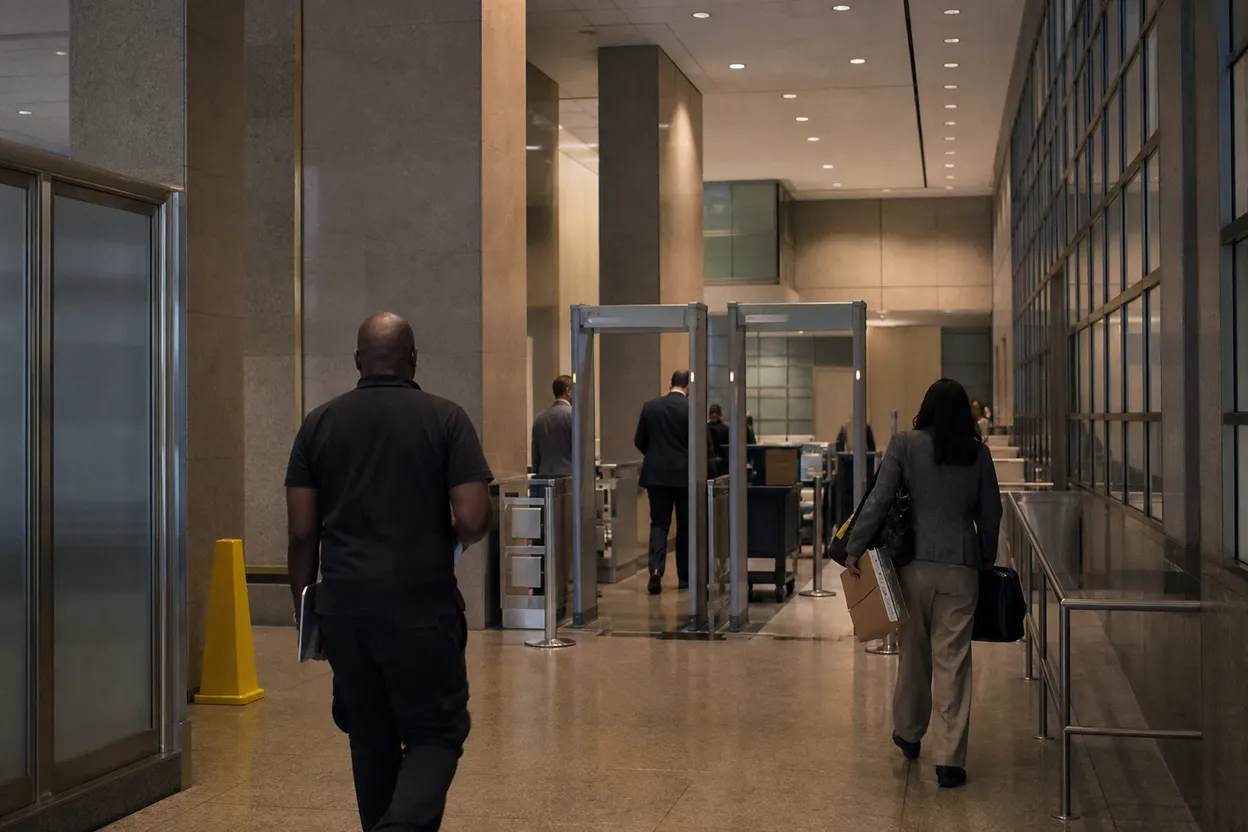
LA County Library Computer and Printing Desk
If you do not have a printer, stable Wi-Fi, or a quiet browser setup, LA County Library can be the lower-friction option. Its Superior Court customer resource page says county libraries offer public computers, Wi-Fi, printing, photocopying, online resources, and basic directional technology help. That makes it useful for reading official court pages, saving PDFs, or comparing reputable reports without doing everything on a phone.
The limits are ordinary but important. Public computers may be first-come, first-served, session-limited, and unsuitable for sensitive account work. Printing policies can change by branch, and some databases may require a library card. Bring headphones only if you are watching publicly posted proceedings or explanatory videos, and avoid disturbing nearby readers. The backup is to use Wi-Fi on your own device, then print only the pages you have already verified.
Metro B Line to Civic Center/Grand Park
For a mid-day downtown plan, Metro’s Civic Center/Grand Park station is the transit choice to evaluate before driving. It places you near the civic core, including courts, government buildings, and legal-resource destinations. Because Los Angeles traffic and parking costs can turn a short research errand into a long one, transit may make sense when your goal is reading, asking directions, or checking public terminals.
The accessibility tradeoff is personal. Transit reduces parking uncertainty, but it can add walking, transfers, elevator dependence, and weather exposure on a clear warm day. Check Metro service status, station elevator alerts, and your return route before committing. If you need step-free access, a shorter walking route, or guaranteed arrival time for an appointment, rideshare or a planned parking garage may be the more reliable backup.
Reader Action: Check the Massachusetts Court Source
Before repeating a claim about the lindsay clancy trial, separate three layers: what reputable news reported, what the trial court docket or livestream source confirms, and what commentators infer. Associated Press reported on August 8, 2026 that the trial was focusing on psychiatric care and criminal responsibility. People reported that Clancy spoke in court on August 4, 2026 and agreed to stipulate to certain facts.
Your final verification action is simple: search for the Massachusetts court or clerk source tied to the case, compare it with one reputable current news account, and note the date you checked. If the docket, livestream schedule, or next hearing cannot be confirmed, say that directly. For Los Angeles readers, the most responsible takeaway is process literacy: learn how courts work locally, then verify case facts at the source jurisdiction.
Tags: #LosAngeles #LindsayClancyTrial #LACourt #SuperiorCourt #StanleyMoskCourthouse #LALawLibrary #CourtRecords #LegalResources #CivicCenterLA #PublicAccess #TrialProcess #AskKarpo #BeforeYouGo #NeighborhoodGuides
Sources consulted: Source 1: lacourt.ca.gov · Source 2: lacourt.ca.gov · Source 3: selfhelp.courts.ca.gov · Source 4: ebranch2.lalawlibrary.org · Source 5: lacountylibrary.org · Source 6: apnews.com
All trademarks are the property of their respective owners.
Ask Karpo first
Tell Karpo your date, group size, budget, and starting point. We’ll check current access, timing, transit, and the cleanest Los Angeles plan for Los Angeles County Superior Court before you head out.


