Ask ten people in this city for the best pizza in Los Angeles and you will get ten answers and four distinct arguments underneath them, none of which is about which pizza tastes better. They are arguments about what pizza is for. Laying them out is more useful than another ranked list, and it explains why two people who both know a lot about pizza can disagree completely and both be right.
Everyone's list is answering a different question. Ask Karpo which places near you fit what you actually want tonight.
Argument one: hype versus quality
The rooms with two-hour waits are good. They are not two hours better than the rooms with no wait, and in a city this large the fifth-best pizza within a ten-minute drive beats the best pizza forty minutes away and cooling in a car. The honest position is that the celebrated places have earned their reputations and that reputation is now a poor guide to the marginal decision.
The counter-argument is real too: a few kitchens here are doing things nobody else is, and if you have never eaten it, the wait is worth it once. The mistake is treating a once-a-year pilgrimage as a template for how to eat pizza in general. Both of those can be true, and most of the shouting comes from people asserting one and hearing the other.
Argument two: slices versus whole pies
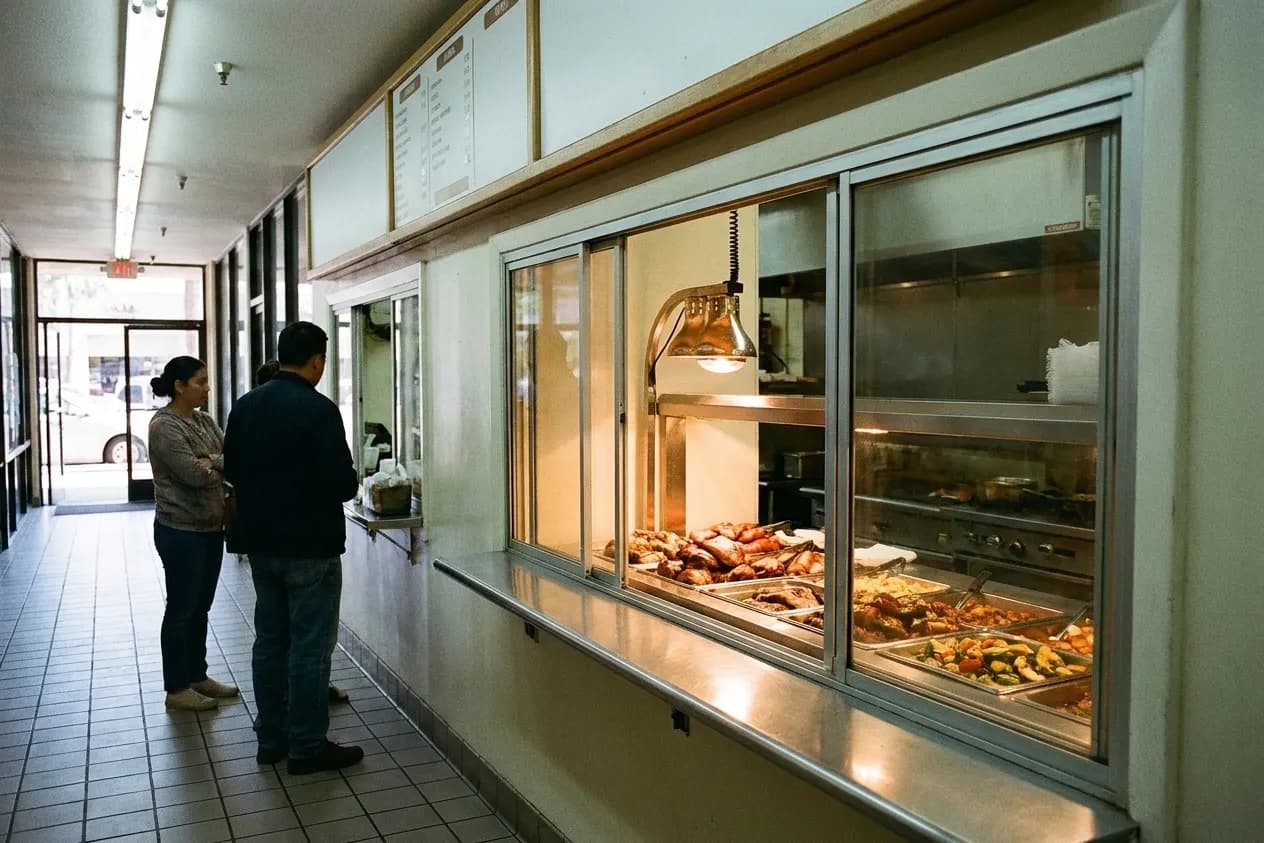
The slice partisans point out that pizza is street food, that it should cost five dollars, and that a format requiring a booking and a thirty-dollar minimum has lost the plot. The whole-pie partisans point out that a slice sitting under a lamp for twenty minutes is a compromise no serious kitchen would accept.
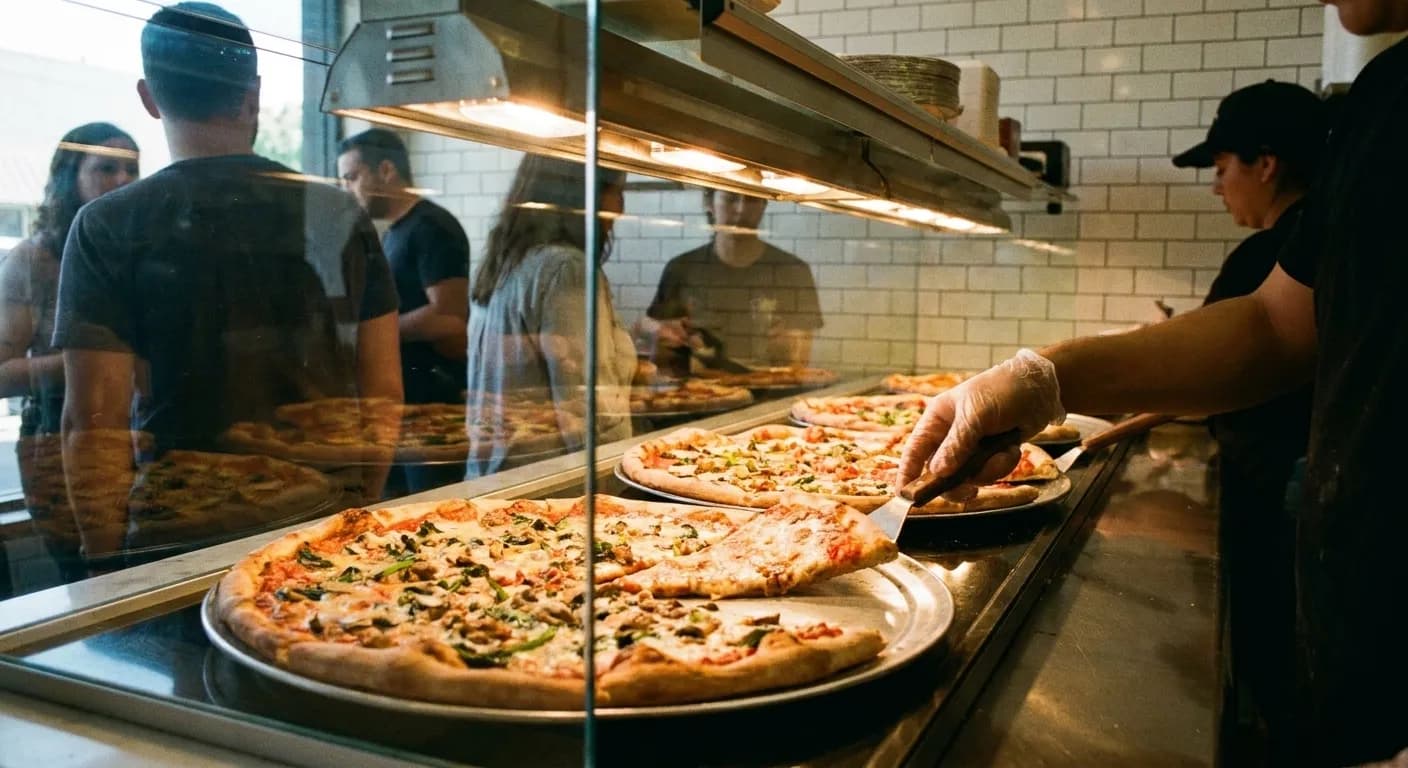
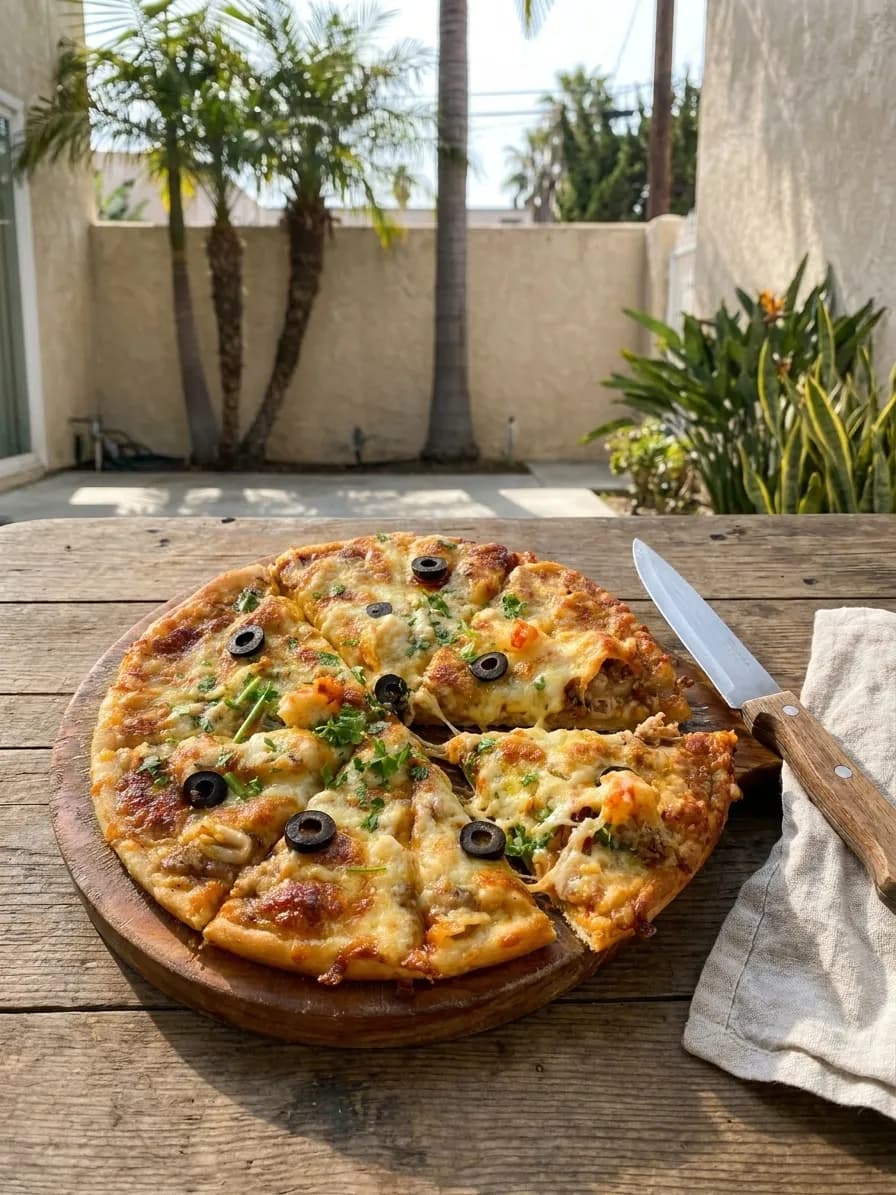
Both are correct about their own format and wrong about the other. The resolution is that they are different foods for different occasions — a slice is lunch, a pie is dinner with people — and the city is now good at both, which was not the case ten years ago. Ranking them against each other is a category error that generates a great deal of heat.
Argument three: produce style versus tradition
This is the most interesting one. The dominant local style puts market vegetables on a sourdough base and changes monthly. The traditionalist objection is that this is not pizza but an open-faced vegetable tart, and that a discipline with rules is being diluted by a city that cannot resist adding things.
The defence is that the produce here is genuinely exceptional for half the year, that the tradition was itself a local response to local ingredients, and that reproducing Naples in a place with completely different agriculture is the less interesting choice. The ranking implication: judge each on its own terms, and be suspicious of anyone who claims one is objectively superior.
Argument four: geography as destiny
Everyone's ranking is heavily weighted by where they live, and nobody admits it. A person in Highland Park and a person in Santa Monica have essentially non-overlapping pizza lists, not because their palates differ but because a forty-minute drive is a real cost that quietly reshapes preference. This is the single largest hidden variable in every pizza conversation here.
It is also the most useful thing to be honest about. A ranking that ignores distance is a ranking of pizzas you will eat twice a year. A ranking that includes it is a ranking of what you will actually eat, and it should include the very good neighbourhood place that no publication has ever mentioned.
What is genuinely overrated and underrated
Overrated, as a category rather than a name: any room where the wait exceeds forty minutes for a style that does not require it, and any pizza that arrives so heavily topped that the base has given up. Also overrated is the assumption that a wood oven guarantees anything — there are excellent gas-deck pizzas in this city and mediocre wood-fired ones.
Underrated: the slice shops, which have improved dramatically and are still spoken about as though it were 2012. The valley, which has several rooms that would have queues if they were on the eastside. And the pizzerias attached to Italian-American restaurants that have been open for forty years, which are unfashionable and frequently very good.
A ranking method that survives contact
Rank within style and within twenty minutes of where you are, and refuse to produce a single ordered list. That sounds like an evasion and it is actually the only ranking that answers the question anyone is really asking, which is where should I eat tonight rather than which pizza is theoretically supreme.
The other rule worth adopting: judge a place on a Tuesday. Any kitchen can be good on a Friday when it is full and the oven has been running for four hours. The rooms that are still good on a quiet Tuesday at six, when they made your dough that morning for a service that may not come, are the ones worth arguing for.
Why nobody will ever settle this
Because pizza is the food people are most sentimental about, and sentiment does not respond to evidence. A person's favourite pizza is frequently the one they ate at fifteen, or after a specific night, or with a specific person, and no amount of superior fermentation will dislodge it. That is not a flaw in their judgement; it is what the food is for.
Which is a reasonable place to land. Have the argument, enjoy it, and then go to the place ten minutes from your house that has been quietly making a very good pizza for eight years while everyone queued elsewhere. That is what most of the people arguing actually do on a weeknight, and they will admit it if pressed.
Tags: #LosAngeles #PizzaLA #BestPizzaLA #PizzaDebate #SliceShop #HighlandPark #TheValley #LAEats #HiddenGems #Underrated #LARestaurants #SoCal #FoodArguments
All trademarks are the property of their respective owners.
Ask Karpo first
Ask Karpo which pizzerias near you in Los Angeles are worth it tonight, in the style you actually want, without the drive across town.