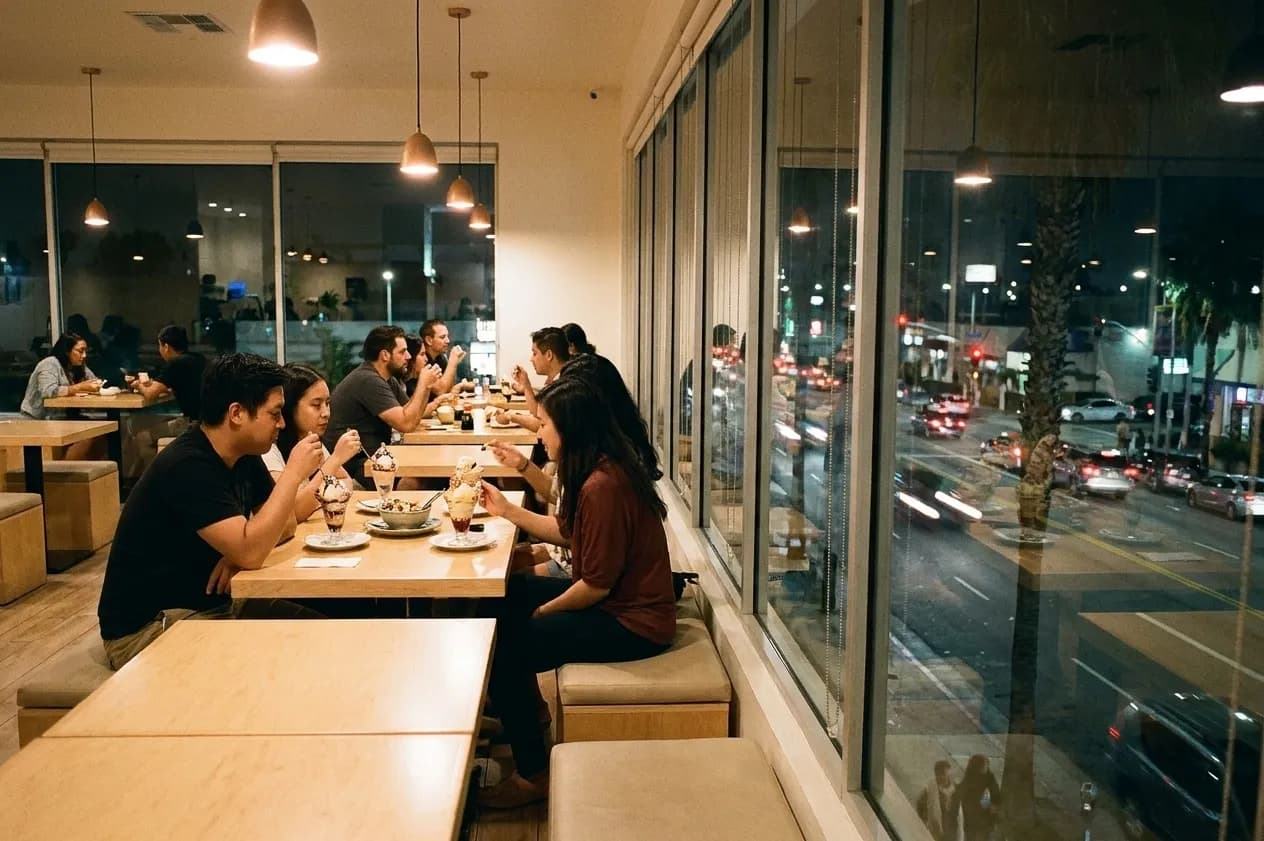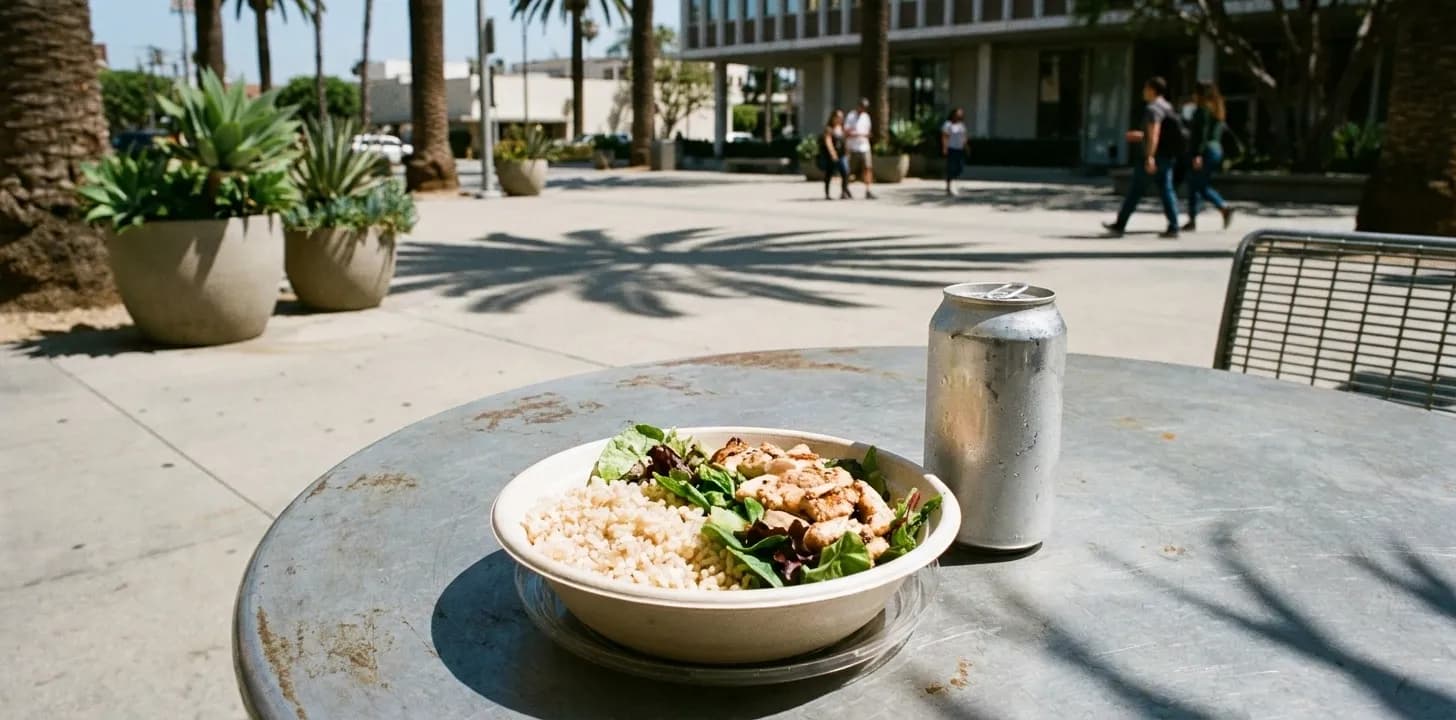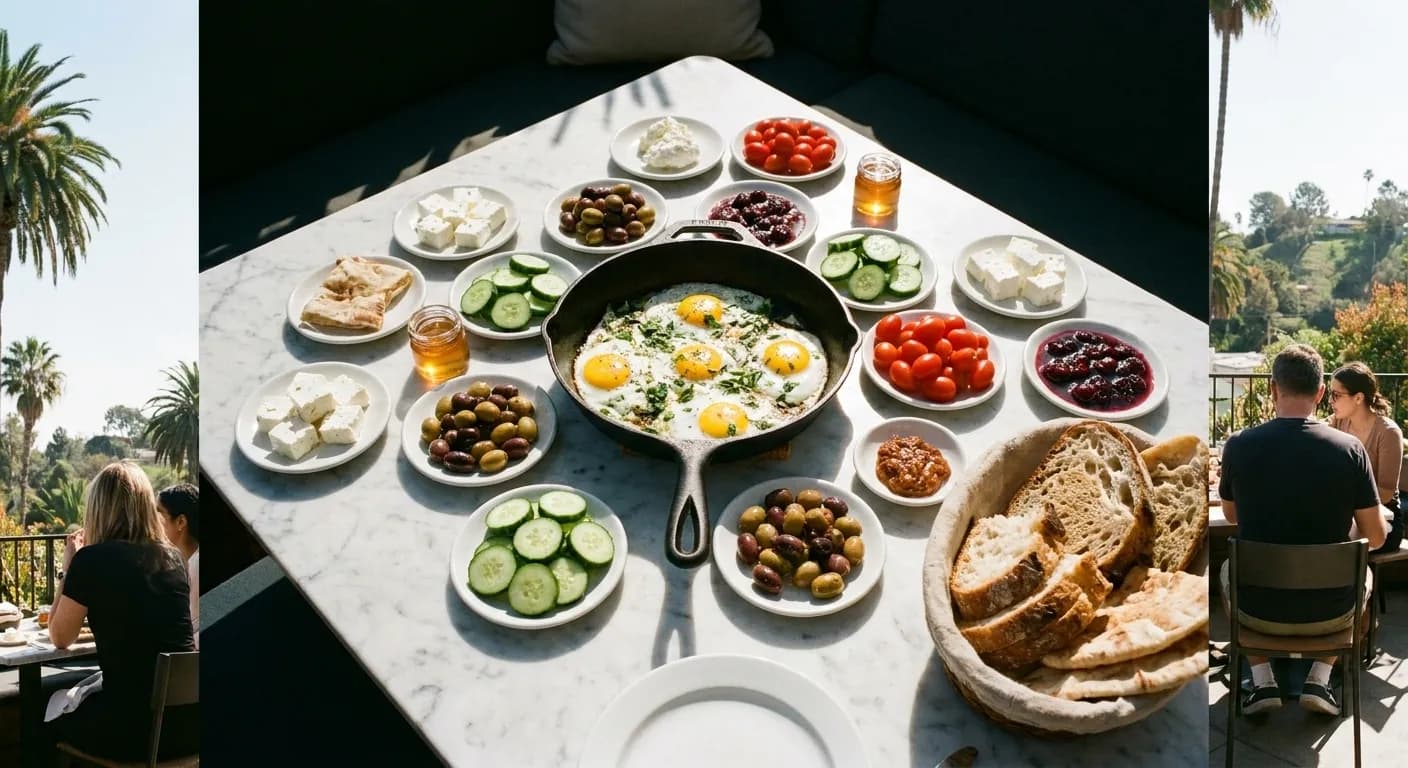
A queue outside a Los Angeles lunch counter tells you almost nothing on its own. Thirty people waiting for a place that serves one composed bowl at a time is a forty-minute wait. Thirty people waiting for a place that assembles a burrito in ninety seconds is eight minutes. Learning to distinguish these two is the single most useful skill for eating well in this city on a working day, and it is entirely learnable from the sidewalk.
Peak windows differ by twenty minutes across the same street. Ask Karpo when the rush hits at the counters near you.
How to read a line before you join it
Count the people and watch the front for thirty seconds. If two people are served in that time, the line moves at four a minute and thirty people is under eight minutes. If nobody moves, the bottleneck is in the kitchen rather than at the register and the visible queue is only half the wait — there is a second, invisible queue of people already holding a number.
The other signal is what the staff are doing. A counter with a dedicated person on the register, another on assembly and a third on the line is engineered for throughput. A counter where one person takes the order, makes the food and handles payment is going to be slow no matter how short the line looks, and that is frequently where the best food is.
The formats that clear fast
Burrito and torta counters are the fastest good food in the city, because the components are all held hot and the assembly is linear. Banh mi shops are the same and often faster. Chinese and Vietnamese noodle counters with a boiling station clear people quickly because the cook time is ninety seconds and the pots are always going. Rotisserie chicken counters, where the food is already cooked and being portioned, are among the quickest of all.
What is slow: anything grilled to order, anything assembled from a long list of customisable components, and anywhere with a single espresso machine also serving the food queue. None of these are bad. They just require a different amount of your lunch hour than the line length suggests.
Grand Central Market and the food halls
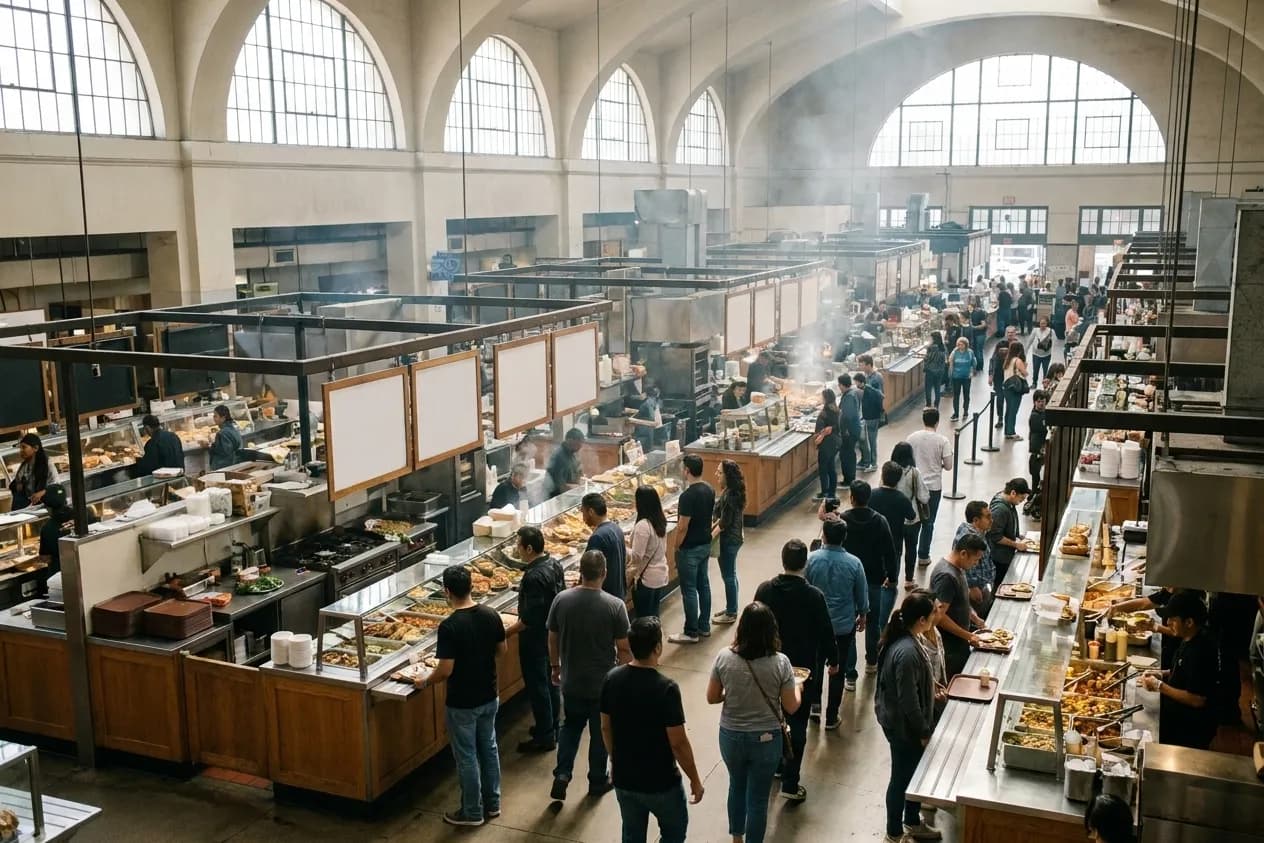
Downtown's Grand Central Market has been operating in the same building for over a century and is the clearest demonstration of all of this in one room. Some stalls have twenty-minute lines that move continuously; others have five people waiting and take just as long. Walking the whole hall once before choosing is worth the three minutes it costs, because the throughput differences between adjacent stalls are enormous.
The general food-hall rule is that the queue at the most photographed stall is the worst value for your time, and the counter two along doing something less fashionable is frequently better food with no wait at all. This is not contrarianism. It is just that attention and capacity are unrelated.
The counters where waiting is correct
There is a small category where a genuinely long wait is worth it, and it is defined by food that cannot be made faster. Barbecue, which is finished when it is finished and sells out. Handmade noodles pulled to order. Anything where the queue is the rationing mechanism for a fixed daily quantity rather than a symptom of bad workflow.
For these, the strategy is timing rather than patience. Arriving fifteen minutes before opening usually costs less total time than arriving at one o'clock, and for the sell-out places it is the difference between eating and not. Weekday visits are dramatically easier than weekend ones across this entire category.
When the wait is a pricing signal
Most guides to the best lunch spots in Los Angeles rank by food and ignore the clock entirely, which is why they send you to a forty-minute queue for a twelve-dollar sandwich without mentioning it. Time is a real cost and it should be priced in. A twelve-dollar lunch with a forty-minute wait is not cheaper than an eighteen-dollar lunch with no wait if you are on a break, and being explicit about that changes a lot of decisions.
The counters that manage to be both good and fast are doing something genuinely difficult, and they deserve more credit than they get. Throughput is a craft. A kitchen that can put out four hundred good lunches between eleven and two has solved a harder problem than one that puts out sixty, and it has done it while keeping the food at the same standard.
The old counters that still work
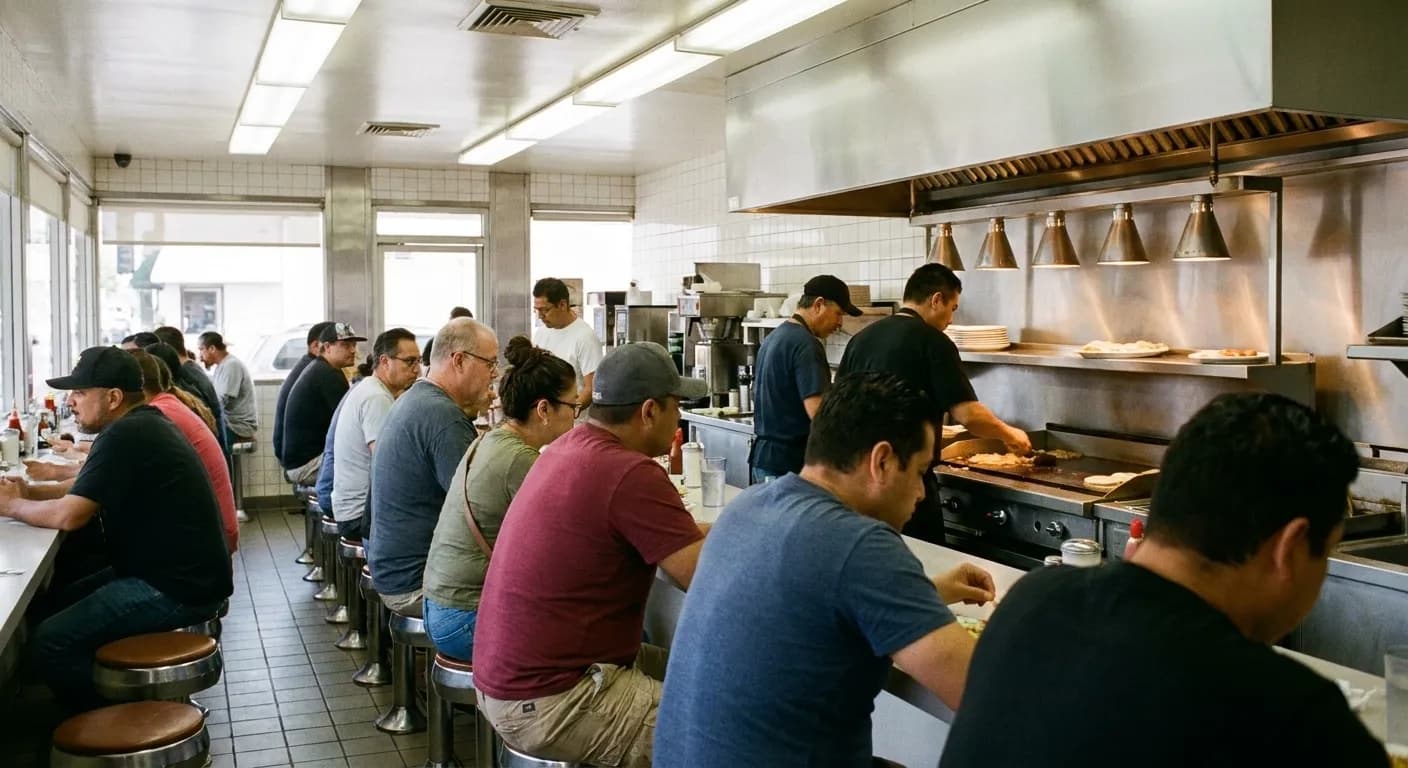
Los Angeles retains a real lunch-counter tradition that predates the current food-hall era — diner counters, deli counters, and the drive-through and walk-up windows that the city essentially invented. These are fast by design, because they were built for people on a break with a fixed amount of time, and that engineering has not stopped working.
They are also, notably, the places where you can eat alone comfortably. A counter stool is the most sociable form of solo dining there is, and Los Angeles has more of them per capita than it gets credit for. If you are eating by yourself and want to be somewhere with a bit of life in it, skip the table and take the stool. You will also be served faster, because a counter seat turns over and the staff know it.
Tags: #LosAngeles #LALunch #LunchCounter #GrandCentralMarket #FoodHall #FastLunch #Burritos #BanhMi #Downtown #SoloDining #LAEats #SoCal #CheapEatsLA
All trademarks are the property of their respective owners.
Ask Karpo first
Ask Karpo which lunch counters near you in Los Angeles are open, how fast the queue is moving, and whether anything nearby sells out before the afternoon.