 Ramen Near Me: What Little Tokyo Searches Actually Turn Up
Back To School
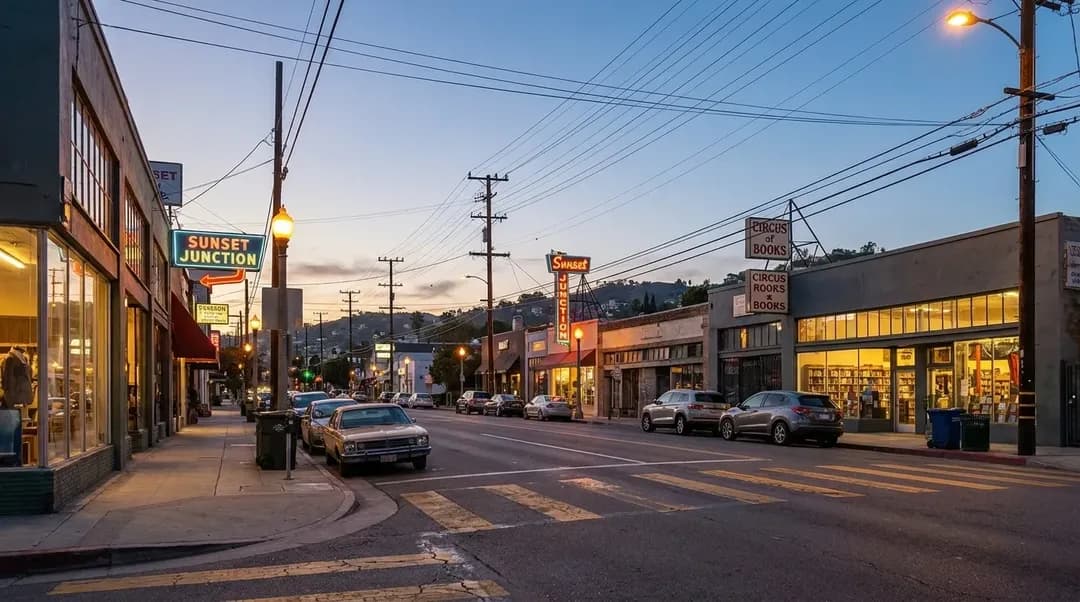
LA Book Clubs Worth Joining: Silver Lake to Venice
Most book clubs meet on weeknights at cafés that close parking at seven; here's how to find one that matches your schedule and commute.
You want to read more and talk about books with people who aren't algorithm-fed strangers. The issue isn't finding book clubs in Los Angeles—it's finding one that meets when you can actually get there, in a neighborhood where parking doesn't eat thirty minutes of your evening, with a group that's accepting new members this month. Most book clubs list themselves as open but haven't updated their status since before the pandemic, or they meet at seven-thirty on a Tuesday in Los Feliz when you're still sitting in traffic on the 10 from Culver City.
Text Karpo now for real-time drive routes to tonight's meetings, parking options near each venue, and backup clubs if your first choice is full or on hiatus.
The scheduling reality of LA book clubs
The best book clubs in this city operate more like informal salons than structured reading groups. They anchor themselves to a café, bookstore, or bar that tolerates a cluster of people nursing one drink for two hours. Silver Lake and Venice have the densest concentration, but the drive between them—even off-peak—is forty minutes if you're lucky. Leimert Park has a smaller, deeply rooted scene that skews toward literary fiction and poetry, often meeting at Eso Won Books or in the back room at a coffee shop on Degnan. The challenge is matching your available evening to a group's cadence: some meet monthly, some every six weeks, some only when the organizer isn't traveling.
Book clubs here are not advertised the way fitness classes are. You find them through bookstore bulletin boards, Eventbrite searches that yield three-year-old listings, or by asking a bookseller directly. The Last Bookstore downtown keeps a binder at the register with contact info for half a dozen groups, but you have to know to ask for it. Stories Books & Cafe in Echo Park hosts a rotating set of genre-specific clubs—science fiction one week, memoir the next—and those tend to welcome drop-ins. Chevalier's Books in Larchmont runs a longstanding general-fiction club that meets the first Wednesday of each month; it's one of the few that maintains a current email list you can join without showing up first.
Two meeting models, very different logistics

Book clubs in Los Angeles fall into two operational styles. The first is the bookstore-hosted club: structured, predictable, usually free, and open to anyone who bought or plans to buy the book. These meet at a fixed time—often seven or seven-thirty on a weeknight—and the bookstore provides chairs, sometimes wine, and a staff member to moderate if the group is new. The upside is reliability; the downside is that if the meeting runs past nine, you're racing the store's closing routine and the staff starts stacking chairs around you. Parking at these spots varies wildly. Chevalier's has its own small lot that fills by six-forty-five; you'll end up on a side street. The Last Bookstore is downtown, so you're paying for a lot or fighting for metered spots on Spring Street that stop enforcement at six but fill with dinner traffic by seven.
The second style is the café or bar club, usually organized by a member rather than the venue. These groups text a location the week before and rotate between a few reliable spots. In Silver Lake, that might mean Intelligentsia one month, then a booth at the back of a wine bar on Sunset the next. In Venice, clubs favor Abbot Kinney spots where you can sit outside—important in summer, when indoor noise makes conversation impossible after eight. These clubs are harder to join cold because there's no public listing, but once you're in the text chain, they're more flexible: if you can't make this month, you just show up next time. The trade-off is inconsistency. A café might close early for a private event, or the organizer gets sick and the meeting evaporates with six hours' notice.
Cross-town logistics matter more than the book selection. If you live east of La Brea and the club meets in Venice, you're looking at an hour drive each way on a weeknight. The Expo Line gets you to Venice but not to most meeting spots; you're still walking twelve minutes from the station, often after dark on residential streets with no sidewalk lighting past Washington. If you're driving, Venice parking after seven costs you nothing on side streets, but good luck finding a spot within three blocks of Abbot Kinney. Silver Lake is easier if you're coming from the Eastside—Sunset Boulevard is a straight shot—but the neighborhood's permit zones are aggressive, and you'll end up on a hill a quarter-mile away, walking down in the dark with no street lighting past Micheltorena.
What joining actually costs
Most book clubs are free to attend, but the book itself runs fifteen to thirty-five dollars new, or you're hunting used copies on eBay three weeks before the meeting. Some groups coordinate library holds, which works if your branch has enough copies and you remember to place the hold six weeks out. Los Angeles Public Library lets you request holds online, but popular titles can have a waitlist of forty people, and the book arrives the week after the meeting. Buying from the hosting bookstore is the polite move and sometimes gets you a ten percent club discount, but not always—ask when you arrive.
If the club meets at a bar or café, expect to spend another twelve to eighteen dollars on a drink or two. Most venues tolerate people nursing one coffee for ninety minutes, but if it's a bar with table service, you're tipping on at least two rounds. Parking downtown or in metered areas adds another five to twelve dollars. Valet at some Westside spots is eighteen to twenty-five dollars, which makes a Tuesday book club feel like an expensive outing. The real cost is time: if the meeting runs two hours and you're driving forty minutes each way, you've spent three hours and twenty minutes on a book you may not have liked.
Some clubs do a annual-dues model—twenty to sixty dollars a year—to cover venue fees or to rent a private room at a library branch. The Westwood library has meeting rooms you can reserve for free if you're a resident, and a few clubs operate there on weeknights. Those meetings are quieter and more focused, but they also feel more formal, which changes the tone. If you're deciding between a dues-paying club and a drop-in café group, consider how often you'll actually attend. Missing three meetings in a dues club means you paid fifteen dollars per session you did make it to.
What to confirm before you commit
Before you drive thirty-five minutes to join a book club, verify that it's actually meeting this month. Check the bookstore's event page the day of, or text the organizer if you have a contact. Groups go on hiatus in December, July, and August without always updating their listings. If the club is hosted at a café, confirm the venue is open that night—summer hours and private events can close spots early. Ask if the group is currently accepting new members; some cap attendance at twelve to keep discussion manageable, and you don't want to arrive and sit awkwardly on the periphery.
Find out what the parking situation is, specifically. Don't rely on Google Maps' generic parking icon; ask someone who's been there on a meeting night. If the club is in Leimert Park, know that most street parking is residential-permit after six, but the lot behind Eso Won Books has space and is free. If you're going to Silver Lake, ask which side of Sunset the venue is on—southside parking is easier. For Venice, assume you're walking six blocks unless you arrive forty-five minutes early, and bring a jacket because the evening wind off the ocean is cold even in September.
Ask what the reading pace is like. Some clubs assign a book a month, some do one every six weeks, some pick shorter works—essays, novellas—so people can keep up. If you're coming off a long workday and don't love the genre, a club that assigns five-hundred-page literary fiction every four weeks will become a source of guilt, not pleasure. Ask if discussion is moderated or free-form; some groups need a moderator to keep one person from dominating, others work fine with an open conversation. And confirm the last move home: if the meeting ends at nine-fifteen and you're taking Metro, check when the last train runs from your transfer station. The Red Line is reliable, but if you're connecting to a bus, the schedule thins out fast after nine-thirty.
Practical notes
- Most bookstore-hosted book clubs meet 7–9 p.m. on weeknights; arrive fifteen minutes early for parking.
- Café and bar clubs often rotate locations—confirm the venue the day of the meeting.
- Downtown and Venice parking costs $5–12 after 6 p.m.; Silver Lake side streets are free but scarce.
- Library holds for popular titles can have 30+ person waitlists; place holds six weeks ahead.
- Many clubs pause in July, August, and December—check current status before driving across town.
- If you're taking Metro, verify the last train from your connection; some lines thin out after 9:30 p.m.
Tags: #karpo #losangeles #labookclubs #bookclubs #silverlake #venice #leimertpark #labooks #readinggroups #backtoschool #laevents #losangelesreaders #bookstoresla #lareads #echopark
Sources consulted: Los Angeles Public Library – Meeting Rooms · The Last Bookstore · Chevalier's Books · Eso Won Books
All trademarks are the property of their respective owners.
Ask Karpo first
Text Karpo for live routes to tonight's book club meetings, real-time parking availability near the venue, and Metro connections with the last train home from your neighborhood. Karpo will also confirm which clubs are currently meeting and accepting new members this month.
Ask Karpo for more information.
Keep reading
- Ramen Near Me: What Little Tokyo Searches Actually Turn Up
 Ramen Near Me: Tsujita's Tsukemen Wins the Sawtelle Line
 Places to Eat Near Me in University Park: Mercado La Paloma Is a Nonprofit