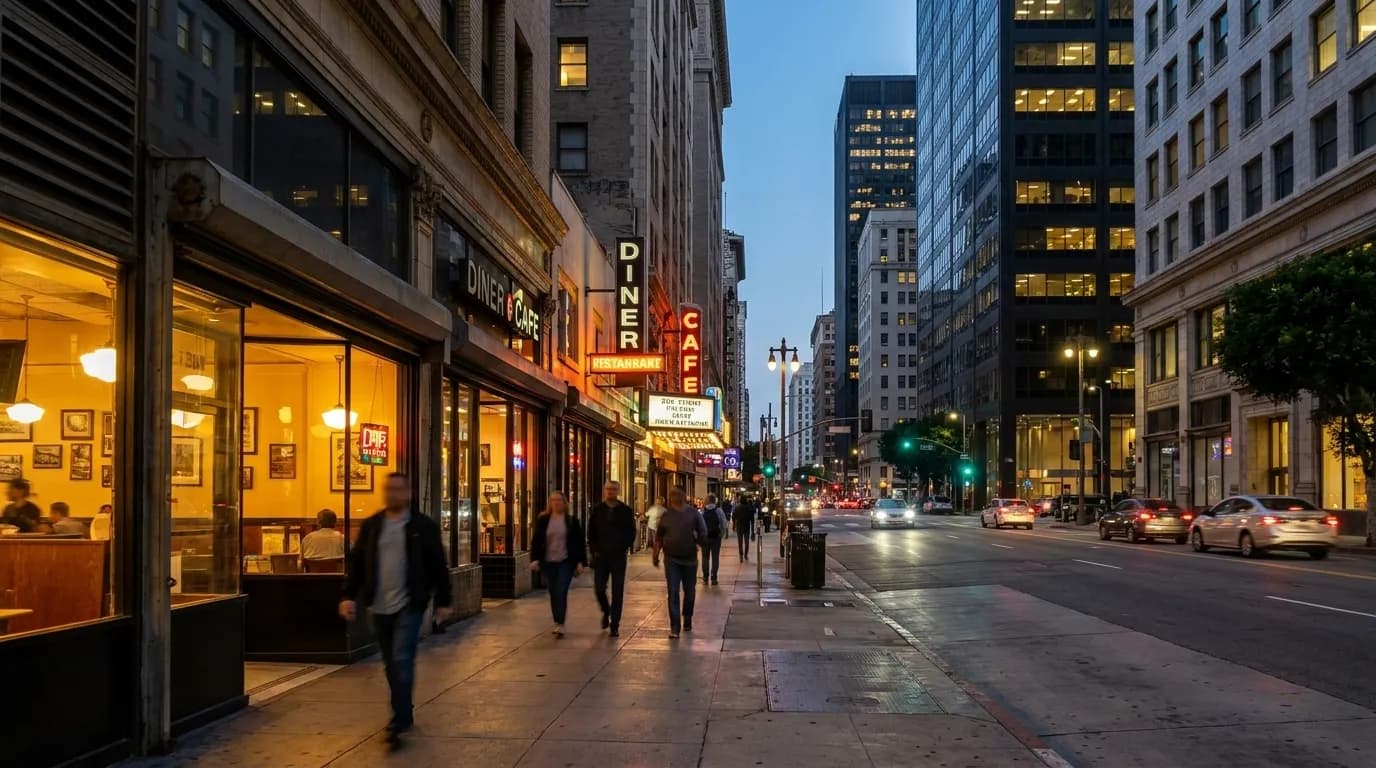
The first Jinya Ramen Bar opened on South Flower Street in 2010, wedged into a narrow storefront in the Financial District where lunch crowds used to thin out by two o'clock. Fourteen years later, that original location still draws lines at dinner, even though the chain has spread to dozens of cities. The bowl that started it all—the Tonkotsu Black with garlic oil and pork belly—hasn't changed, and neither has the way the kitchen ladles broth from steel pots you can see through the pass.
Text Karpo before you head out and it'll check current wait times at the original Jinya Ramen, map parking within two blocks, and route you to a backup ramen spot if the line stretches past forty minutes.

The original Jinya sits in a tight corner of Downtown
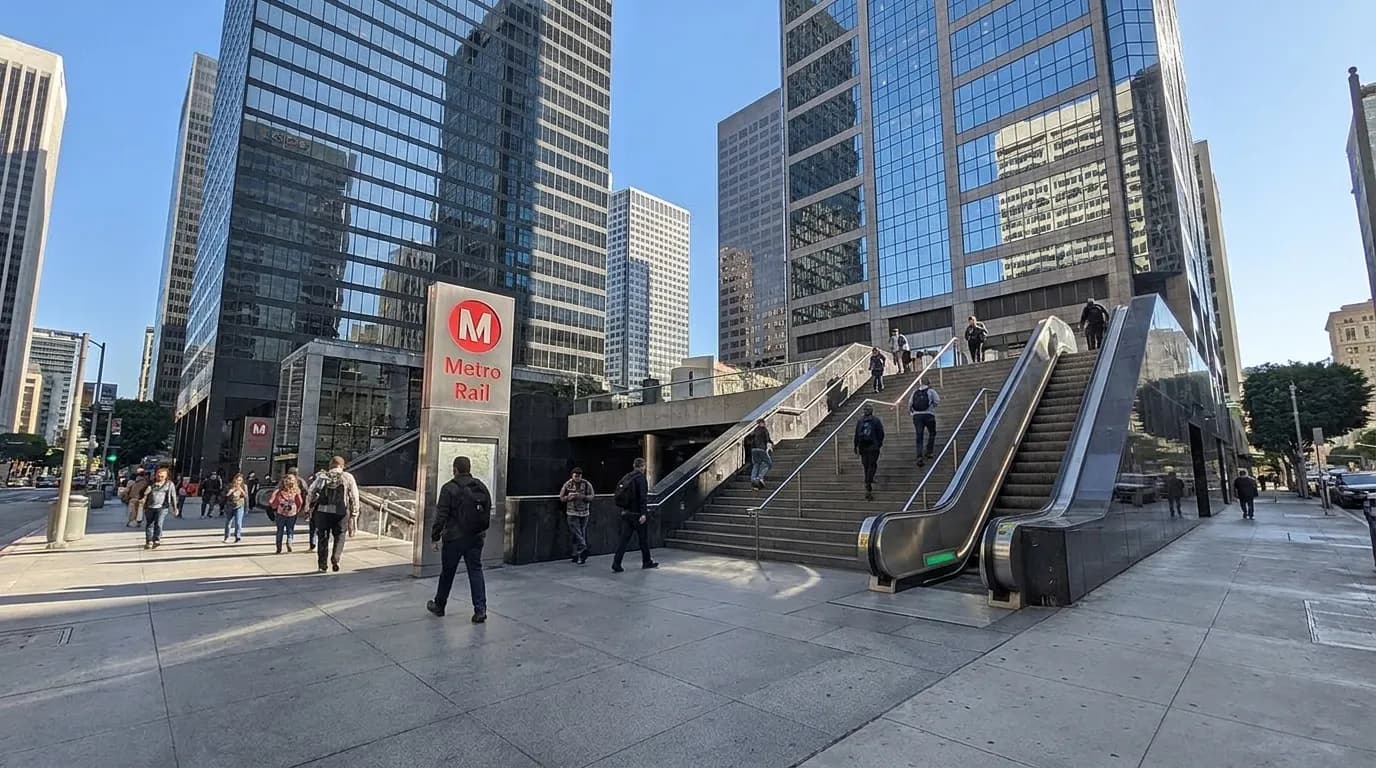
Downtown parking after six is a negotiation. The lot on Flower between 8th and 9th runs about twelve dollars for three hours, but the entrance is easy to miss if you're coming north. Street meters along Hope switch to free after 8 p.m., which helps if you're willing to walk three blocks west. The 7th Street Metro station puts you two blocks away; take the west exit and walk south on Flower. The dining room is narrow, with a counter along one wall and a handful of four-tops. If you arrive after seven on a weeknight, expect a twenty-minute wait, longer on weekends.
Start with the Tonkotsu Black if it's your first visit
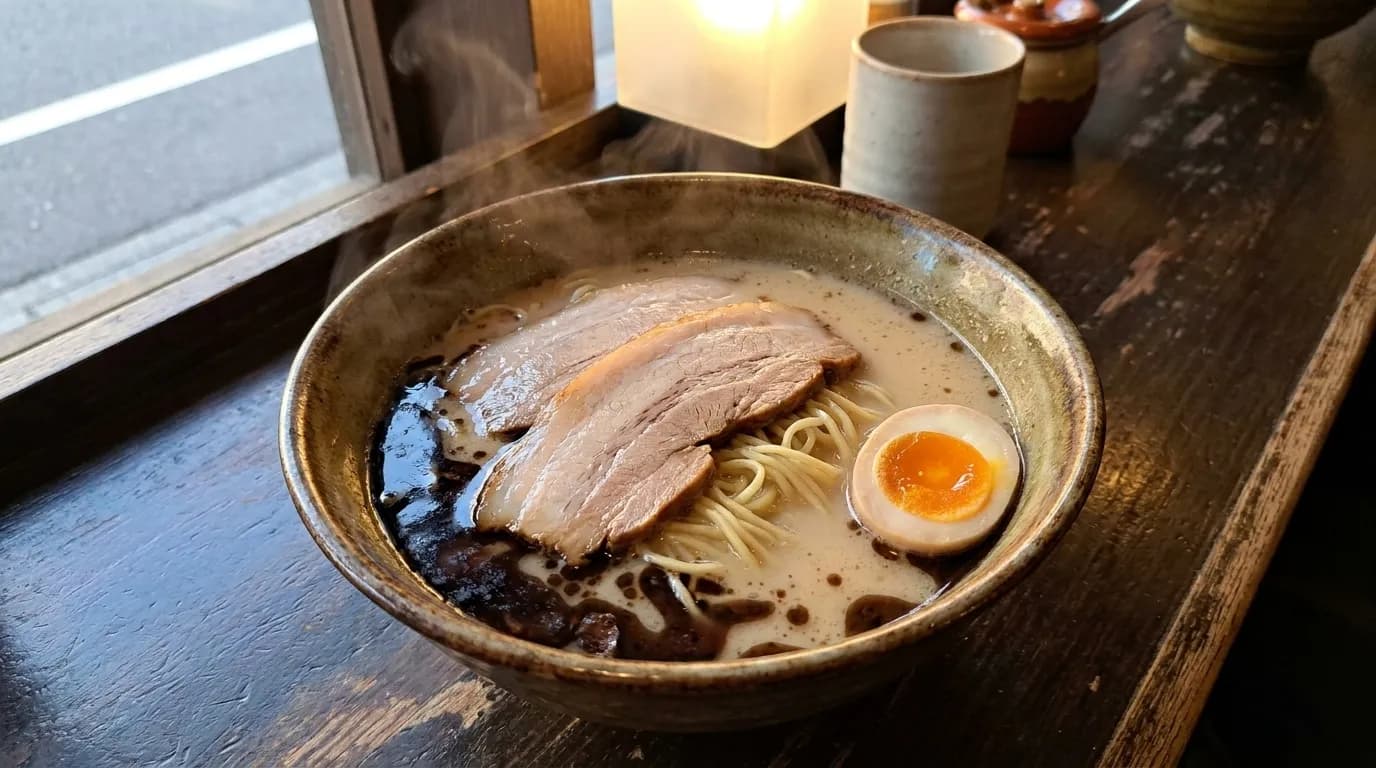
The Tonkotsu Black is the bowl that built Jinya Ramen's reputation. The broth is milky-thick from pork bones simmered for hours, with a slick of garlic oil that catches the overhead light. Two slices of char siu—one lean, one marbled—sit across the top, and the noodles are firm enough to hold their shape through the last spoonful. The egg comes with a jammy yolk, and the kitchen doesn't oversalt the way some ramen chains do when they're trying to mask a thin broth.
If you want something sharper, the Spicy Creamy Vegan Ramen uses a sesame-and-miso base with chili oil that builds slowly. It's not a fallback bowl—the kitchen treats it with the same attention as the pork versions. The Brussels sprouts and fried tofu hold up better than you'd expect in hot broth. For a lighter option, the Jinya Ramen LA original also serves a Chicken Ramen with a clear shoyu broth and yuzu zest, though it's the tonkotsu that most tables order.
Portions are generous. A regular bowl is enough for most appetites, and the add-ons—extra noodles, another egg, more char siu—push it into two-sitting territory. The kitchen moves quickly once you're seated; bowls arrive within ten minutes even when the dining room is full.
The Culver City location offers easier parking and the same kitchen discipline
If the drive downtown feels like too much, the Culver City Jinya Ramen sits on Washington Boulevard near the Expo Line's Culver City stop, with a parking structure across the street that charges six dollars for the first two hours. The space is bigger—more tables, a longer counter—and the wait times tend to run ten minutes shorter than Downtown, even on Friday nights. The menu is identical, and the broth tastes the same because the chain keeps its recipes tight across locations.
Culver City draws a different crowd: families with kids before seven, industry people after eight who spill over from the studios a mile east. The noise level climbs after 8:30 p.m., especially near the counter. If you prefer a quieter meal, aim for six or just after nine when the second wave clears. The drive from Downtown takes about twenty-five minutes without traffic, closer to forty-five during evening rush. The Expo Line runs every twelve minutes and drops you a block south of the restaurant; the walk is flat and well-lit.
Pair your bowl with a stop at Cognoscenti on South Spring
After a heavy ramen dinner, the walk to Cognoscenti Coffee on South Spring takes about eight minutes north from the original Jinya. The café stays open until 7 p.m. on weekdays, so you'll need to reverse the order—coffee first, then ramen—if you're planning an evening visit. Cognoscenti roasts its own beans, and the espresso is clean and bright, a good palate reset before the richness of tonkotsu broth. The pastry case usually holds a few almond croissants and seasonal tarts; the lemon bars are tart enough to cut through the lingering garlic oil from your bowl.
If you're near the Culver City location instead, Destroyer on Culver Boulevard serves inventive desserts until 8 p.m., though the menu changes weekly and you'll want to check what's current before you go. The space leans minimal—concrete floors, white walls—and the plating is careful. It's a ten-minute walk west from Jinya Ramen Bar, mostly along Washington and then south on Culver. The neighborhood quiets down after dark, but the sidewalks stay lit.
Leave before the late-night bar rush if you're parked on the street
Downtown's bar scene picks up after ten, and the blocks around 8th and Flower get louder as people spill out of venues on Broadway and Hill. If you've parked on the street, plan to be back at your car by 9:30 p.m. to avoid the congestion. The garage on Flower clears out faster because it's priced for short stays, and the attendants start waving people toward the exit around ten.
The Metro runs every twenty minutes after 9 p.m., and the last Red Line train toward North Hollywood leaves 7th Street station just after midnight. If you're taking the Expo Line back toward Culver City or Santa Monica, the final westbound train departs around 12:15 a.m. Check the posted schedule on the platform; service sometimes shifts on weekends or during maintenance windows. The walk from Jinya Ramen to the station is two blocks east on 7th—stay on the north side of the street where the storefronts stay lit.
Confirm the wait and check today's specials before you go
Jinya Ramen Bar posts its current wait times on its website and through its app, though the estimates can lag by fifteen minutes during peak hours. Call ahead if you're coming with a group larger than four; the original Downtown location doesn't take reservations, but the host can note your party size and give you a realistic window. The kitchen occasionally runs specials—a limited tsukemen with thicker noodles for dipping, or a seasonal broth with yuzu and shrimp—but they're not advertised widely. Ask when you're seated, or check the chalkboard near the register.
If the line at the original Jinya stretches out the door and you don't want to wait, Daikokuya on 1st Street in Little Tokyo is a ten-minute drive northeast and usually seats people faster. The broth there is lighter, more shoyu-forward, and the space is louder and more chaotic, but the noodles are excellent. Silverlake Ramen on Sunset offers another fallback with a thicker tonkotsu and a quieter room, though parking in that neighborhood after dark is harder to predict. Both are worth knowing if your schedule is tight or if you're traveling with someone who gets impatient in lines.
Practical notes
- Downtown parking runs $10-15 in nearby lots; street meters on Hope are free after 8 p.m.
- The 7th Street Metro station (Red/Purple/Expo lines) is two blocks east; last trains leave after midnight.
- Wait times peak between 7-8:30 p.m. on weekends; call ahead for parties larger than four.
- Cognoscenti Coffee closes at 7 p.m. weekdays, earlier on weekends—verify hours before planning a post-ramen stop.
- Bowls run $14-18; add-ons (extra noodles, egg, pork) are $2-4 each.
- Check Jinya's website or app for current wait estimates and any limited-time specials.
Tags: #karpo #jinyaramen #losangelesramen #downtownla #ramenla #tonkotsu #lafoodie #ramenbar #culvercity #littletokyo #ladiners #coffeeanddessertsla #cognoscenticoffee #metrola #southflowerstreet
Sources consulted: Jinya Ramen Bar official site · LA Metro schedules and maps · Cognoscenti Coffee
All trademarks are the property of their respective owners.
Ask Karpo first
Text Karpo before you leave and ask for the current wait at the original Jinya Ramen on South Flower, plus parking options within three blocks. If the line is long, Karpo can route you to Daikokuya or another nearby ramen spot with live ETAs and confirm what's open tonight.