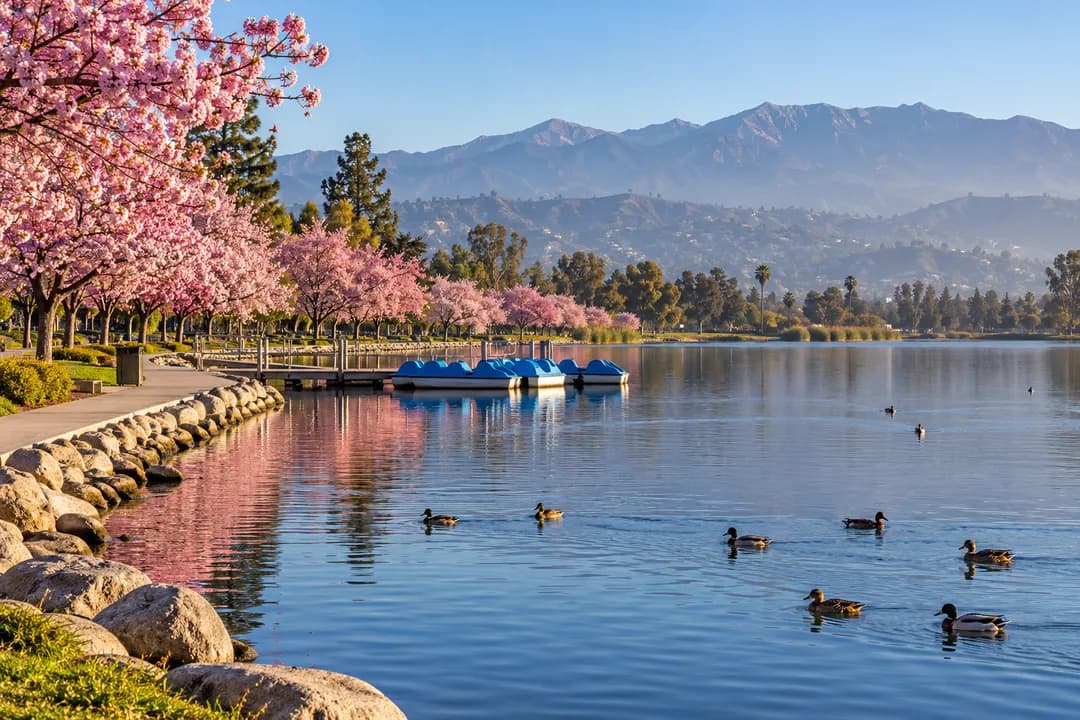
 Waterfront Park Near Me: Swan Boats and Cherry Trees at Lake Balboa
Free Things to Do
Free Events in LA: Museums, Markets, and Movie Nights
Museums waive admission on certain evenings, farmers markets run year-round, and parks screen films after dark—if you know when to go.
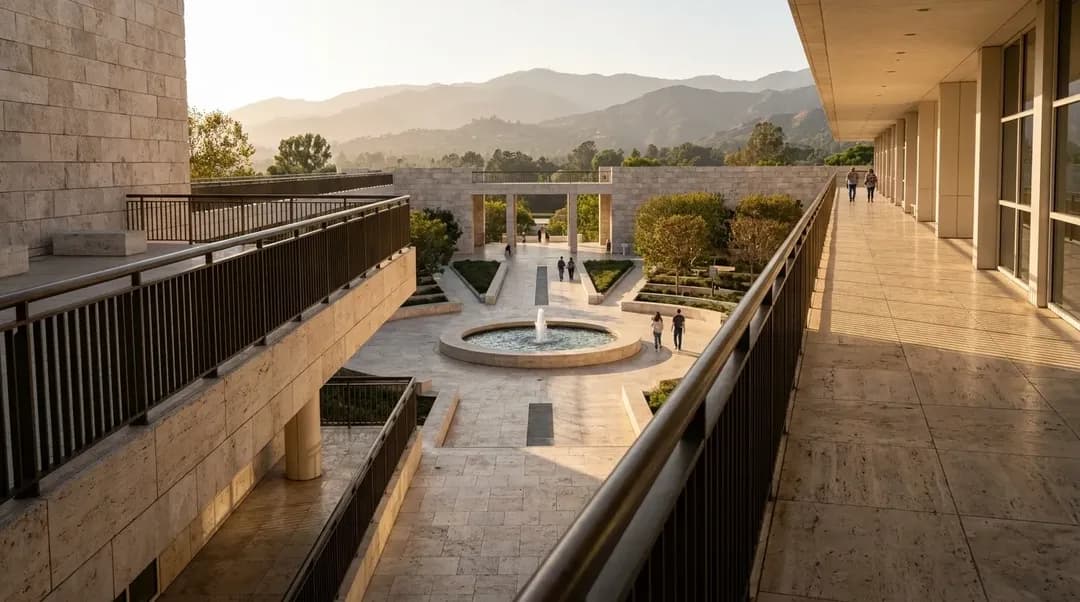
A Tuesday night at the Getty Center costs nothing to enter after 5 p.m., but the tram ride up from the parking structure below Sepulveda still requires a timed reservation, and if you arrive without one during peak months, you'll wait in the lot while the sun sets over the Pacific without you. Free events in LA come with their own friction: the museum waives admission but charges $20 to park, the farmers market is open to the public but closes vendor by vendor starting at noon, and the movie night in the park is free but the good sight lines fill two hours before the opening credits roll. Understanding what free costs you—in time, in planning, in the drive across town—is the difference between a workable Tuesday and a wasted evening.
Text Karpo right now for tonight's free events across LA, live parking intel near the venue, and a backup plan if your first choice is at capacity.
What free actually means in this city
Los Angeles runs hundreds of free events every month, and the best ones require no advance ticket, no waitlist, no proof of residency. The Natural History Museum in Exposition Park opens free to California residents on certain weekdays; LACMA offers free general admission to LA County residents with ID after 3 p.m. on weekdays. The Original Farmers Market at Third and Fairfax has been free to walk since 1934, and it still operates seven days a week with no gate, no cover, no suggested donation. Outdoor movie screenings happen in parks from Griffith to the beach, organized by neighborhood councils, the city's recreation department, and private groups that set up a projector and a PA in public space. But free does not mean easy. The events that draw the most people—Cinespia at Hollywood Forever, free days at the Broad—require strategy, and if you show up at the moment you feel like going, you will spend your evening hunting parking or turned away at the door.
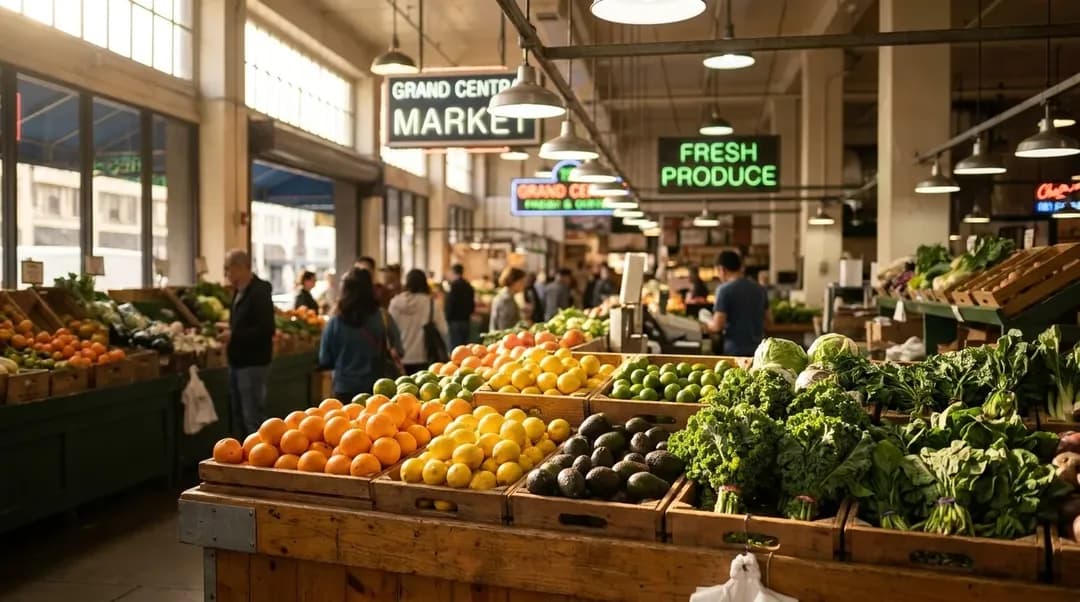
The city's free events—its recurring, reliable anchors—are the ones that have run long enough to develop a rhythm. The Grand Central Market downtown is free to enter every day, and it absorbs crowds without reservation because it is a marketplace, not a ticketed venue. Street Food Cinema runs free and ticketed screenings; the free ones are typically in smaller parks and require you to check their schedule weekly. Museums like the Hammer in Westwood offer free admission always, while the Getty Villa in Pacific Palisades is free but requires a timed-entry ticket booked online in advance. Markets, from the Hollywood Farmers Market on Sunday mornings to the Melrose Trading Post on Sundays in the Fairfax High parking lot, charge no entry fee but operate on fixed hours that end earlier than you expect. Movie nights are organized by dozens of groups across dozens of parks, and the only way to know which one is screening this week is to follow the recreation department's online calendar or check neighborhood council websites one by one.
Two routes through the same Saturday
Start in Culver City on a Saturday morning and you have two ways to spend a day on free events without crossing the same freeway twice. Route one: the Culver City Farmers Market runs until 2 p.m. in the parking lot behind City Hall on Main Street, and it is smaller and less tourist-heavy than the Santa Monica market, which means you can walk the perimeter in twenty minutes and still have time to sit on the low concrete wall near the taco stand and watch the line build. From there, drive west on Washington to the Venice Boardwalk, where street performers work for tips but the beach itself costs nothing, and parking on the residential streets north of Rose is free after you circle long enough to find it. Late afternoon, double back east to the Los Angeles County Museum of Art on Wilshire; if you are an LA County resident, entry after 3 p.m. on weekdays is free, but on weekends you will need to check for free community days posted on their site. End the evening at a park screening—Griffith Park's outdoor cinema events or the summer series in Grand Park downtown—and plan to arrive ninety minutes early with a blanket and something to eat, because the front half of the lawn fills fast and the back half puts you too far from the speaker towers to hear dialogue clearly.
Route two starts at the Hammer Museum in Westwood, which is always free and closes at 5 p.m. on weekends, giving you a narrow window if you sleep past ten. The galleries are small enough to see in an hour, and the courtyard is a decent place to sit if the indoor spaces feel crowded. From Westwood, take Sepulveda south to the 10 and go east to Exposition Park, where the California Science Center and the Natural History Museum both offer free general admission, though the Science Center's special exhibits often carry a separate ticket price. Parking in the Exposition Park lots costs $15 on event days, less on weekdays, but the Metro E Line stops at Expo Park/USC and drops you a five-minute walk from the museum entrances, and if you are coming from Culver City, the train is slower than driving but eliminates the parking cost entirely. Late afternoon, head north to Grand Central Market for the vendor crawl—free to walk, pay only for what you eat—then stay downtown for a free evening concert or film event in Grand Park if one is scheduled, or take the Red Line to Hollywood and walk the boulevard, which costs nothing and delivers exactly the scenery you expect.
What it costs you
Free admission does not mean zero cost. The Getty Center charges $20 for parking, and the structure fills on weekends; arriving after 11 a.m. in summer often means a wait or a turn-away. The Natural History Museum is free to California residents on select weekdays, but the Exposition Park lots still charge, and if you park on the surrounding streets, you will walk fifteen minutes in full sun from the nearest legal spot. Street Food Cinema's free movie nights in parks do not charge for entry, but they encourage you to buy from their food trucks, and if you bring your own food and sit on the outer edge of the crowd, you are within your rights but slightly outside the social script of the event. The Melrose Trading Post at Fairfax High is free to enter, but parking near the school on a Sunday morning requires either early arrival or a willingness to park in a residential zone ten blocks east and walk back along Melrose, which is flat and walkable but adds twenty minutes to your arrival time.
Drive time is the other cost. A free museum evening in Malibu saves you $20 in admission but costs you ninety minutes round-trip from Culver City if you leave after work, and PCH southbound at dusk can stop dead when a fender-bender blocks the right lane near Topanga. A farmers market in Pasadena on a Sunday morning is free to attend but means a 45-minute drive each way from the Westside, and if you arrive at 10 a.m. instead of 8 a.m., half the produce vendors have sold out and started packing up. Grand Park's free evening events downtown are easy to reach by Metro, but the Red Line northbound after 9 p.m. runs every twelve minutes, and if you just miss a train, you will stand on the platform long enough to second-guess the evening.
The best free events are the ones that fit between other tasks. The Hammer Museum is free and two blocks from Westwood Village, so you can see an exhibition and eat lunch on the same trip without the visit feeling like a separate expedition. The Original Farmers Market at Third and Fairfax is free and next to the Grove, so you can walk both and park once, though the Grove's structure charges by the hour and the market's adjacent lots fill early. Grand Central Market is free and walkable from the Broad, which is also free but requires an advance ticket on busy days, so you can plan both and have the market as a fallback if the museum is at capacity. Any event that requires you to drive across town solely for that event costs you two hours minimum, and if parking is scarce or the event is shorter than expected, the ratio of effort to reward tips against you.
Before you leave
Check the venue's own website the day of, not the aggregator listing you found two weeks ago. Museums change their free-admission days, markets close for holidays without advance notice, and park movie screenings get canceled for weather or permit issues that do not always make it onto social media in time. The Getty Center requires online reservations even when admission is free, and if you show up without one, the staff at the entry pavilion will turn you away. The Broad offers same-day tickets released online each morning, but they vanish within minutes on weekends, and the standby line is long enough that you should consider it a backup plan, not a primary route.
Pack for the conditions of the event, not the weather forecast. Park movie nights in LA happen after sunset, and even in July the temperature drops twenty degrees once the sun is gone, especially near the coast. Bring a blanket thick enough to sit on grass that has been watered that afternoon and may still be damp. Farmers markets are mostly outdoors, and the stalls that face east get full sun until ten in the morning, so a hat and water bottle are not optional. Museums are air-conditioned to archive standards, which means they run cold, and if you arrive in shorts and a tank top after a hot walk from the parking lot, you will be uncomfortable within ten minutes of entering the galleries.
Plan your last move home before you go. Grand Park events downtown end late, and the Red Line runs until midnight, but the train frequency drops after 10 p.m., and if you are coming from the Westside, you will need to transfer at 7th Street/Metro Center, which is busy but not crowded late at night, and the walk through the tunnel to the E Line platform is longer than the map suggests. Park screenings in Griffith or Exposition Park end after dark, and the parking lots empty slowly because everyone leaves at once; if you parked in the back of the lot, expect a twenty-minute wait before you reach the exit. Street parking near popular farmers markets gets ticketed aggressively after the posted limit expires, and the meter readers in neighborhoods like Fairfax and Silver Lake know the market schedules and start checking cars the minute the grace period ends.
Practical notes
- The Getty Center and Getty Villa both require advance reservations even when admission is free; book online before you leave.
- Exposition Park museum lots charge $15–$20 on weekends; the Metro E Line to Expo Park/USC is slower but eliminates the parking cost.
- Park movie screenings fill early; arrive 90 minutes before showtime for a sight line close enough to hear dialogue.
- Most farmers markets start packing up by 1 p.m. even if posted hours say 2 p.m.; arrive before 11 a.m. for full vendor selection.
- Free museum days often exclude special exhibitions; confirm what is included in general admission on the venue's website the day of.
- Grand Central Market and the Original Farmers Market are always free to walk, but adjacent parking structures charge hourly and fill by mid-morning on weekends.
Tags: #karpo #losangeles #freeeventsla #lamuse #freethingstodo #culvercity #farmersmarkets #movienightla #gettymuseum #grandcentralmarket #expositionpark #hammermuseum #laonthecheap #discoverla #thingstodola
Sources consulted: The Getty · Natural History Museum of Los Angeles County · LACMA · Hammer Museum · Grand Central Market · LA Parks Movie Nights
All trademarks are the property of their respective owners.
Ask Karpo first
Text Karpo before you leave and ask what free events are actually open tonight, whether the museum you are targeting still has same-day availability, and which parking lots near the venue have space right now. Karpo will also build you a live route that accounts for current drive time and suggest a backup event nearby if your first choice is full.
Ask Karpo for more information.
Keep reading
- Waterfront Park Near Me: Swan Boats and Cherry Trees at Lake Balboa
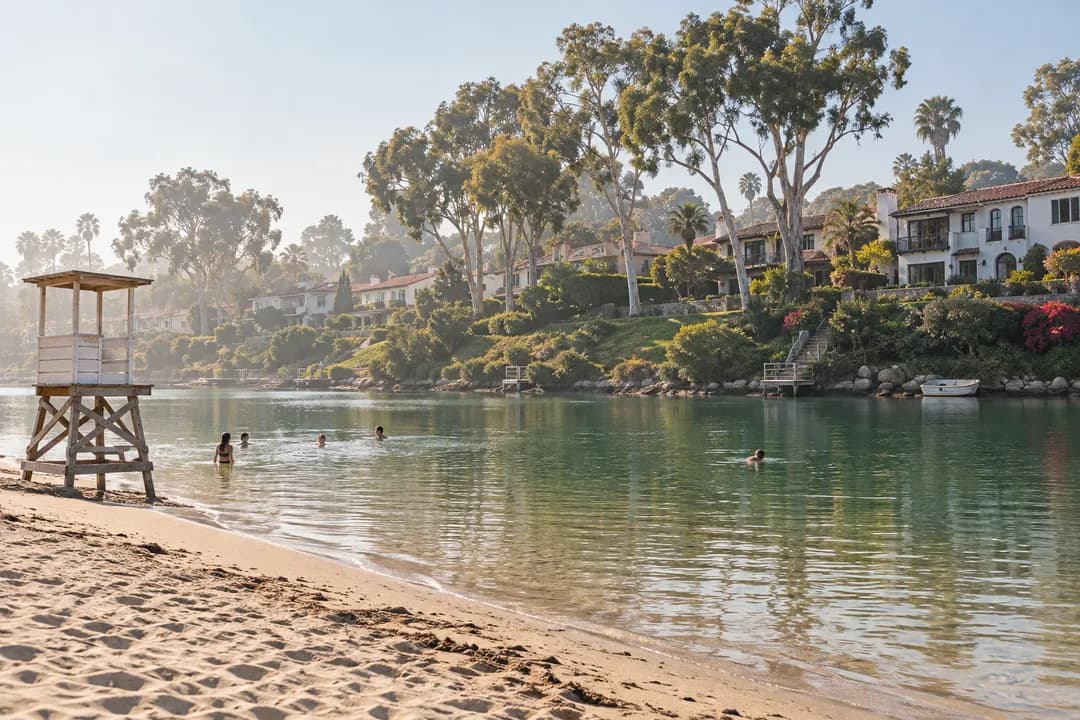 Waterfront Park Near Me: Tidal Swimming Beach at Long Beach's Colorado Lagoon
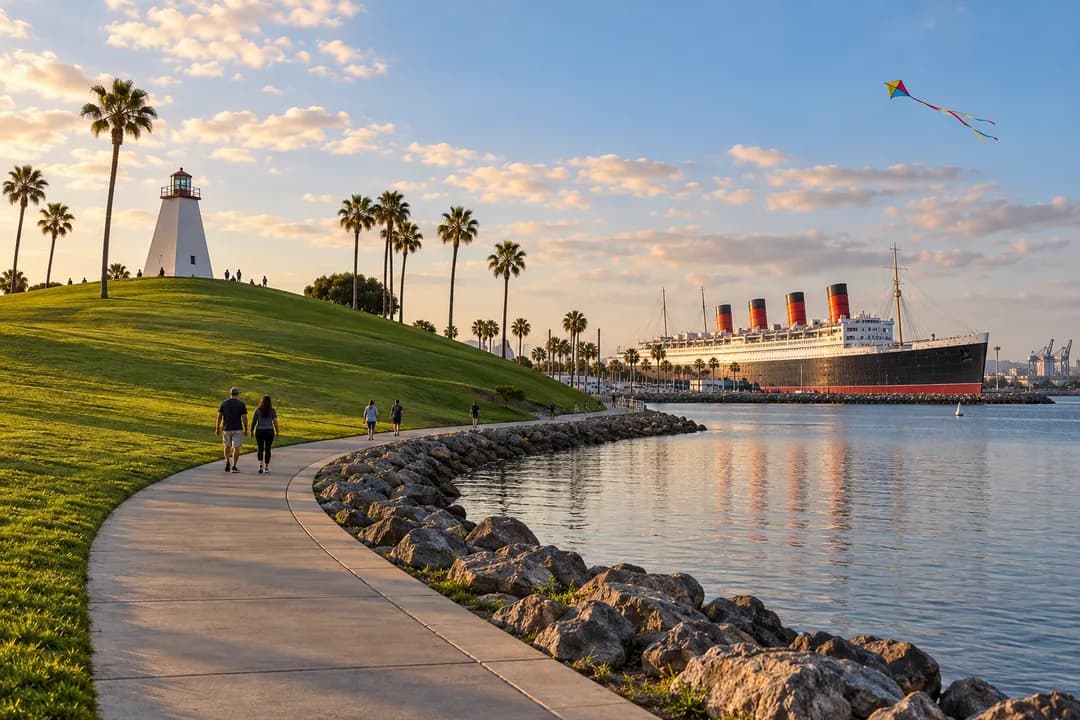 Waterfront Park Near Me: Lighthouse Hill at Shoreline Aquatic Park