
# Article
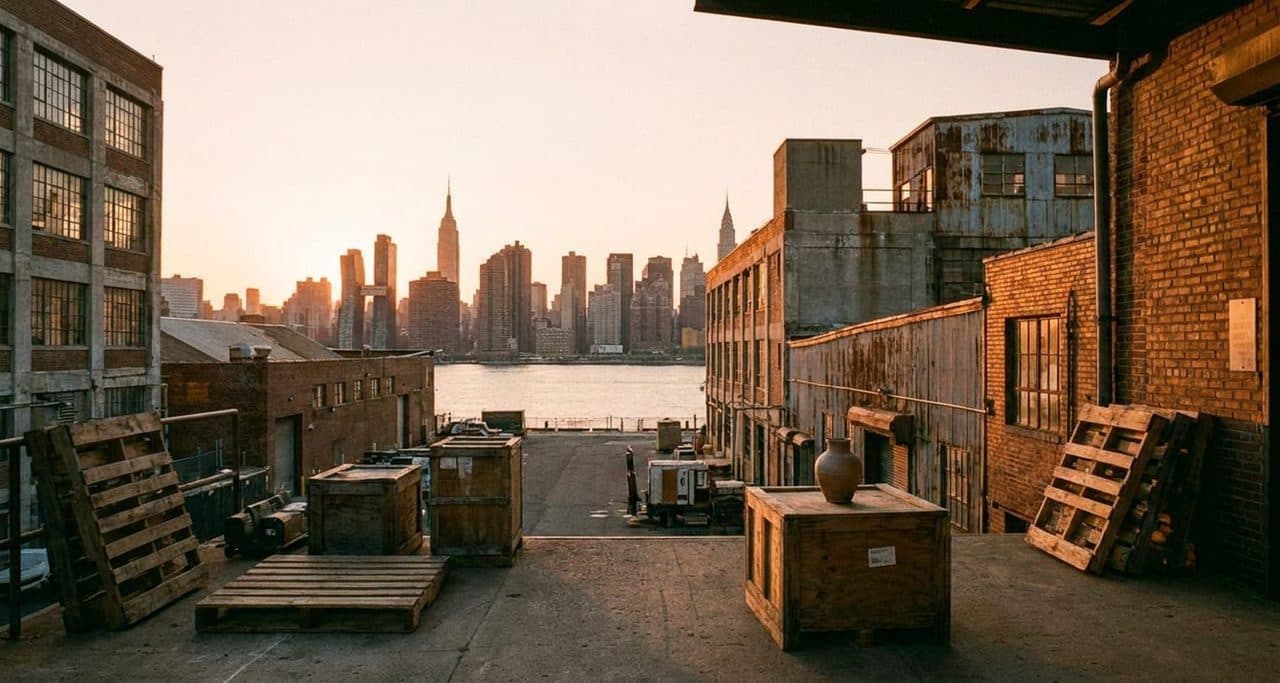
The studio sits on a quiet block where the loading docks still outnumber the coffee shops, and the afternoon light through the industrial windows lands differently than it does across the river. Shelves of bisqueware catch the glow, and beyond the roll-up door, the Midtown skyline stacks itself in neat parallels. This is where weekend drop-in sessions run on kiln schedules and the clay dust settles into the rhythm of a working ceramics studio that doesn't pretend to be anything else.
The Approach Through the Warehouse District
Long Island City's western edge still reads industrial if the light hits right. The walk from the subway involves crossing under the expressway, past freight entrances and the occasional art supply wholesaler that's been there since before the neighborhood had a marketing name. The studio occupies part of a converted warehouse, the kind with loading dock bays and concrete floors that were never meant to be polished. First-timers usually walk past it once—the signage is minimal, a small placard near a side entrance that shares space with a furniture fabricator and a lighting design shop. The door opens to a vestibule that smells faintly of wet clay and the electric heat of kilns in various stages of cooling.
The Main Floor and the Kiln Corner

The studio sprawls across a single open floor, sectioned by function rather than walls. Throwing wheels cluster near the windows where the natural light is strongest, a dozen Shimpo and Brent models on rolling tables that get repositioned depending on class size. The kiln corner occupies the far end, three electric kilns in different sizes plus a small gas kiln that fires once a month for those working in reduction. Between firings, the area functions as a staging ground—greenware waits on wire racks, glaze buckets line the wall in labeled rows, and a chalkboard tracks kiln schedules in shorthand that regulars decode without asking. The loading dock door stays open when weather permits, framing the skyline view that nobody mentions in the first ten minutes but everyone photographs eventually.
Drop-In Hours and the Weekend Crowd
Weekend sessions run in four-hour blocks, and the crowd skews toward people who've taken a foundations class somewhere and want bench time without committing to a membership. The Saturday morning slot attracts the disciplined ones—retirees working through a series, graphic designers treating it like a gym routine, the occasional MFA dropout who still needs to touch clay. Afternoons bring the experimenters, first-daters hedging their bets, and the category of person who shows up with a tote bag full of tools they ordered online and haven't quite learned to use yet. The studio provides house clay, basic glazes, and access to all equipment for a flat session fee that covers firing. Those working on larger projects or multiples negotiate storage on the open shelving that runs along the north wall, pieces tagged with masking tape and initials.
The Technical Setup and Glaze Library
The studio stocks mid-range stoneware and porcelain, both sold by the bag for those who want to take clay home or prefer a specific body. The glaze library leans functional—reliable cone 6 bases, a rotating selection of test batches that instructors develop and occasionally abandon, and a small collection of underglazes for those who paint rather than dip. The mixing station occupies a corner near the sinks, 5-gallon buckets on a wire rack with printed recipes taped to the wall above. Regulars know which glazes run, which need three coats, and which combinations produce the kind of surface that looks unimpressive in the test tile but transforms on a vertical form. The studio manager updates the glaze notes quarterly, a binder on the counter that includes firing curves and the occasional troubleshooting annotation in the margins.
The Skyline View and the Loading Dock Ritual
The Midtown view works best in late afternoon when the sun backlights the buildings and the East River catches the same angle. The loading dock becomes informal break space—people step out between throwing sessions, check their phones, or just stand there watching the 7 train cross the trestle in the middle distance. The ritual develops naturally: finish a form, wash hands, walk to the dock, look at the city for a minute, go back to the wheel. The studio doesn't advertise the view, but the Instagram geotag tells the story in sunset-hour ceramics photography and skyline backdrops that make the work look better than it might in harsher light. Those who find the studio through those posts sometimes seem surprised by how much of the experience involves staring at wet clay under fluorescent tubes, but the ones who return are the ones who figured out the view is the bonus, not the point.
The Instructor Presence and the Unspoken Mentorship
The studio employs three part-time instructors who rotate through weekend shifts, each with a different tolerance for intervention. One circulates constantly, offering adjustments before they're asked for. Another works on personal projects at a corner wheel and answers questions only when flagged down. The third splits the difference, doing demos at the communal wedging table that anyone can watch or ignore. The unspoken mentorship happens in the margins—a comment about wall thickness while reaching for a sponge, a glaze recommendation delivered as casual observation, the way an instructor will casually fix a wobbling bat without making it a teaching moment. First-timers get more attention by default, but the studio culture rewards figuring things out through watching rather than asking. The best education happens when someone three wheels over is solving the same problem at a higher skill level.
Practical Notes
The studio sits a ten-minute walk from Court Square station, accessible via the E, M, and G trains, or fifteen minutes from Hunters Point Avenue on the 7. Weekend drop-in sessions typically run Saturday and Sunday in morning and afternoon blocks, with evening sessions added during fall and spring. Walk-ins are welcome when space allows, but weekend slots fill quickly—checking the online schedule or calling ahead prevents wasted trips. The session fee includes clay, firing, and equipment access, with additional charges for extra clay or specialized materials. Street parking exists but requires patience; the nearby lot charges standard rates. The studio keeps irregular summer hours when kiln schedules shift and instructors take teaching breaks, so confirming availability before a first visit saves disappointment.
Tags: #CeramicsStudio #LongIslandCity #QueensArts #PotteryClass #DropInSessions #NYCMakers #CeramicArts #StudioAccess #KilnFired #MidtownViews #CreativeSpaces #HandmadeNYC #ArtisanCraft #StonewarePottery #UrbanCeramics
Sources consulted: timeout.com · secretnyc.co · thrillist.com
All trademarks are the property of their respective owners.
Ask Karpo first
Want to know which Long Island City studios take drop-ins and what experience level they require?
Ask Karpo for LIC creative workshop options and booking details before you head out.