When an American Airlines flight from Dallas reported smoke in the cabin and diverted to Phoenix in late August 2026, the incident made national news—not because anyone was seriously hurt, but because it crystallized every traveler's low-grade dread about what happens when things go wrong at a major airport. Rebooking chaos, cascading delays, endless concourses. Long Beach Airport, a single-terminal operation thirty kilometers south of downtown Los Angeles, offers a different model: eleven gates, one security checkpoint, and a curb-to-gate walk that takes less than ten minutes. It's the anti-LAX, a boutique airport where you board from the tarmac, the concourse is partly outdoors, and the historic terminal features a 1.6-million-tile WPA mosaic that spent decades hidden under carpet. For travelers in the South Bay, Long Beach, or northern Orange County flying Southwest or JetBlue, it's not a compromise—it's an upgrade.
Karpo tracks live departure boards, parking rates, and security wait estimates at Long Beach Airport so you know exactly when to leave and which gate is yours.
Why Long Beach feels like a different era of flying
Long Beach Airport moves roughly 3.8 million passengers a year. LAX processes that volume in two weeks. The entire operation unfolds in a single terminal with eleven gates, one security checkpoint, and a footprint you can cross in five minutes. There are no people-movers, no inter-terminal shuttles, no half-mile death marches dragging a roller bag. You park across the street, check in, clear security, and you're at your gate before the adrenaline from finding a spot has worn off.
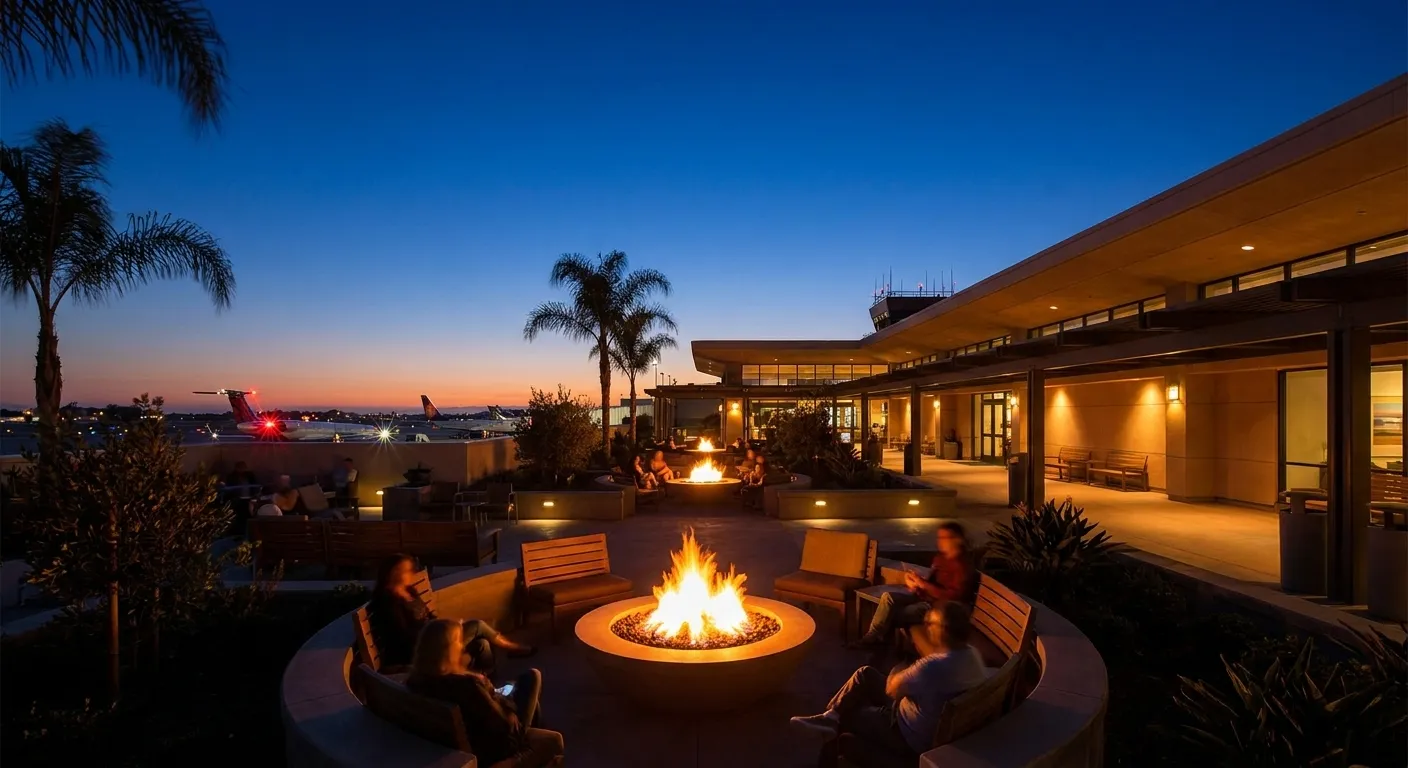
The airport's signature feature is its open-air concourse, completed in 2012 and still rare in American aviation. Around a landscaped courtyard of twenty thousand square feet, you'll find local Long Beach eateries, a wine bar, fire pits, and outdoor seating—all under the California sky. Most gates lead directly to the tarmac, where you walk across the apron and up a set of stairs to board. It's a choreography that disappeared from big hubs decades ago, and on a clear morning or warm evening it's a reminder that air travel used to be less about endurance and more about the journey.
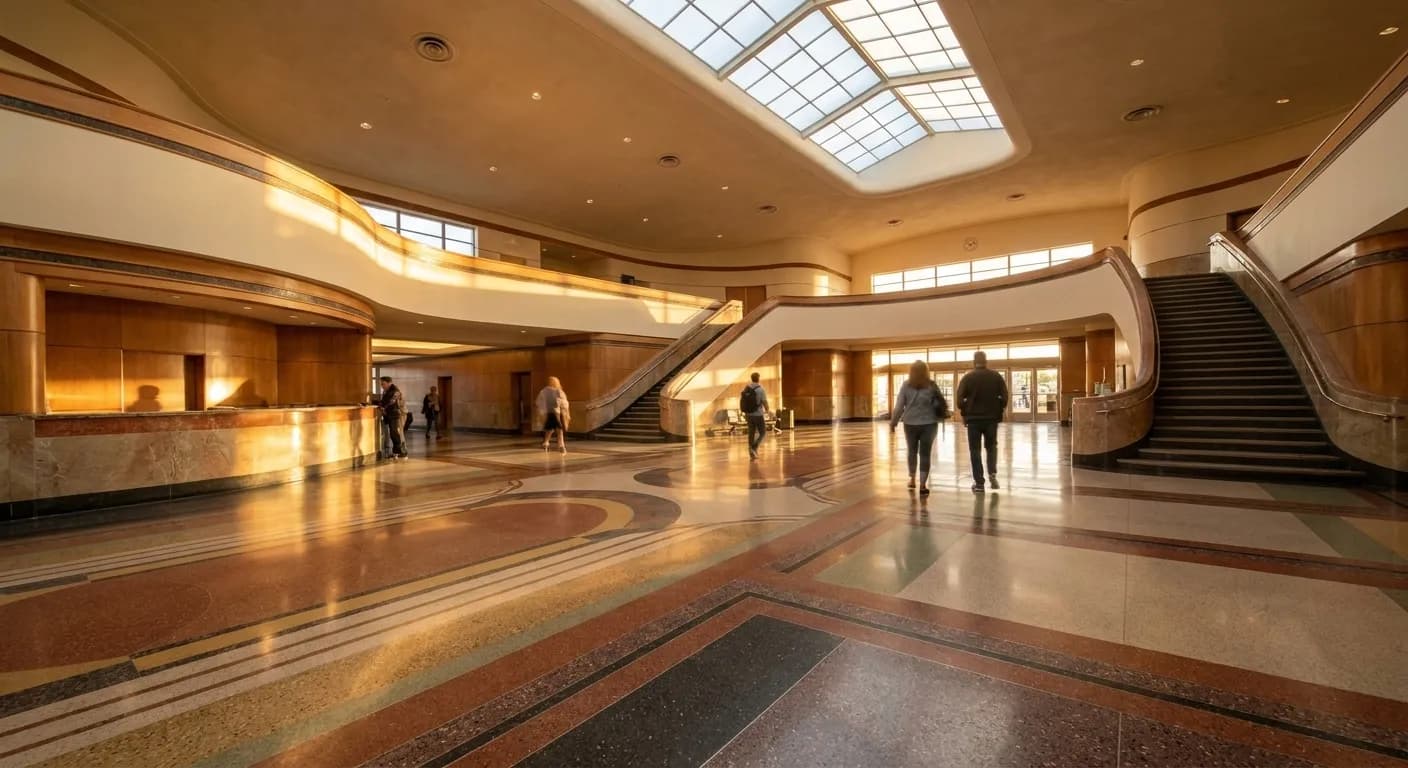
The bones of the place date to 1941. William Horace Austin and Kenneth Smith Wing designed the Historic Terminal in full Streamline Moderne style: aerodynamic curves, long horizontal lines, and a mosaic floor by WPA artist Grace Clements that spent years hidden under carpet and false ceilings. A seismic retrofit and restoration brought the building back in July 2024, uncovering mosaic panels and reopening the original west entrance. The terminal now houses rental-car desks and dining, so you walk through it rather than past it. Aviation nerds make the trip for the tile work alone; it's considered one of the finest surviving WPA mosaics in the country.
The American Airlines smoke scare and why small airports matter
On August 21, 2026, American Airlines flight 2393 from Dallas to Los Angeles declared an emergency after reports of smoke in the cabin, diverting to Phoenix. Passengers were evacuated, fire crews responded, and the incident dominated headlines for two days. No one was seriously hurt, but the episode underscored what anyone who flies regularly already knows: when things go sideways at a major hub, the ripple effects are enormous. Delays cascade, rebooking queues snake through concourses, and stress compounds.
Long Beach doesn't eliminate mechanical issues or weather delays—physics still applies—but it does eliminate the logistical nightmare that comes with scale. If your Southwest flight is delayed two hours, you're not trapped in a miles-long terminal with ten thousand other people. You're in an outdoor courtyard with a glass of wine and a fire pit. If you need to rebook, the gate agent is fifty feet away, not in a different ZIP code. The airport's compact footprint and limited schedule—Southwest and JetBlue are the dominant carriers, with a handful of other airlines filling out the roster—mean fewer cascading failures and faster recovery times.
For travelers in the South Bay, Long Beach, or northern Orange County, the choice between LAX and Long Beach often isn't close. LAX is a marvel of throughput engineering, but Long Beach is a marvel of human-scale design. If your destination is on the Southwest or JetBlue route map, the extra twenty minutes of drive time to Long Beach saves you an hour of airport stress on each end of the trip.
Tarmac boarding and the outdoor concourse
At most gates, you walk out a door, cross a few yards of tarmac, and climb a set of stairs into the plane. It's the opposite of the enclosed jet bridge experience that defines modern air travel, and it changes the sensory texture of departure. You feel the temperature, smell the jet fuel, hear the engines spooling up on the taxiway. If you're on an early flight, bring a layer—the concourse is partly outdoors by design, and a 6 a.m. departure in January can be brisk.
The outdoor courtyard is the airport's centerpiece. Local Long Beach restaurants ring the space: 4th Street Vine pours wine and serves small plates, Robert Earl's BBQ does pulled pork and ribs, and a handful of coffee and pastry vendors handle the breakfast shift. Fire pits anchor seating areas, and the whole setup feels closer to a resort patio than an airport hold room. Device charging stations are scattered throughout, and the open layout means you can keep an eye on the departure board without craning your neck around a column.
There's one pay-in lounge near Gate 5—compact, with showers, Wi-Fi, and light refreshments—but the day-pass price hovers around forty-five dollars and the space is small. Priority Pass access comes and goes; confirm current agreements before counting on it. For most travelers, the courtyard is the better move. On a warm afternoon with a glass of wine and a window of time before boarding, it beats most airport lounges anyway.
Getting there and parking without the LAX tax
Long Beach sits about five kilometers northeast of downtown Long Beach and thirty kilometers south of downtown Los Angeles. Rideshare pickup is at the outer curb in front of the terminal, clearly signed, and you're never more than a minute's walk from baggage claim. Taxis queue at a stand outside; the base fare is $3.10 plus roughly $2.97 per mile, with flat rates of around eighty-five dollars to downtown LA and seventy-five to LAX if you're connecting.
Parking is straightforward and cheaper than LAX. Garage A sits directly across from the terminal—twenty-five dollars a day—and Garage B is a slightly longer walk at twenty dollars a day. Valet starts around twenty-nine dollars. Online reservations are available, and independent off-airport lots nearby undercut those rates if you're leaving the car for a week or more. A free cell phone waiting lot handles pickups.
Long Beach Transit bus route 102 connects the airport to the Downtown Long Beach Transit Gallery, where you can transfer to other buses or catch the Metro A Line (formerly Blue Line) to central Los Angeles. It's inexpensive but time-consuming—not recommended if you're hauling luggage or working against a tight connection. Car rental desks occupy the historic terminal building, a two-minute walk from baggage claim, making the rental and return process the easiest you'll find at any California airport.
What to expect on a typical departure
Arrive ninety minutes before a domestic flight and you'll likely have time to spare. The single security checkpoint rarely has the kind of queues that plague LAX or SFO; TSA PreCheck is available and moves quickly. Once you're airside, the gate is a short walk—no trains, no escalators, no disorientation. The concourse layout is intuitive: gates ring the courtyard, food and shopping are in plain sight, and the departure board is visible from nearly every seat.
Food leans local rather than chain: Long Beach vendors dominate the lineup, and the quality is a notch above typical airport fare. Shopping is limited—a few newsstands and gift shops—but the airport's philosophy is convenience and local flavor, not sprawling retail. If you need electronics, medication, or forgotten travel essentials, you're better off stopping before you arrive.
The lack of jet bridges means airlines provide assistance for passengers with mobility issues, but the tarmac walk and stairs are part of the experience. If that's a concern, check with your airline in advance. Otherwise, embrace the throwback: you're walking to your plane the way passengers did in the 1950s, and on a clear Southern California day it's a small pleasure that most airports engineered out decades ago.
Practical notes
Long Beach Airport (LGB) is at 4100 Donald Douglas Drive, Long Beach, CA 90808. Southwest Airlines and JetBlue anchor the schedule; check current routes before booking. Parking reservations are available online at the airport's website. Garage A is $25/day, Garage B $20/day, valet around $29/day. Rideshare pickup is at the signed zone on the outer curb. The outdoor concourse means layers are smart for early or evening flights. TSA PreCheck is available. Arrive ninety minutes early for domestic flights. The historic terminal mosaic is accessible pre-security in the rental-car and dining area. Long Beach Transit route 102 connects to downtown; taxis and rideshare are faster. If you're drinking wine at 4th Street Vine before your flight, pace yourself—altitude and dehydration amplify alcohol's effects, and you'll want to stay sharp for tarmac boarding. Always drink responsibly.
Tags: #LongBeachAirport #LGBAirport #StressFreeTravel #StreamlineModerne #TarmacBoarding #SouthwestAirlines #JetBlueAirways #LosAngelesTravel #AirportDesign #HistoricTerminal #CaliforniaTravel #AviationHistory #OpenAirTerminal #LongBeachCA #SmallAirportLife
Please drink responsibly. Must be of legal drinking age.
All trademarks are the property of their respective owners.
Ask Karpo first
Next time you're weighing LAX against Long Beach, ask me which gates have the shortest walks, when Garage B fills up on holiday weekends, or whether your inbound Southwest connection from Phoenix is running on time. I'll pull live data so you can skip the guesswork and get to the fire pit with a glass of wine before boarding.