 Brixton Vintage Thrift Shop Finder: South London Retro Gems
Hidden Gems & Odd Finds
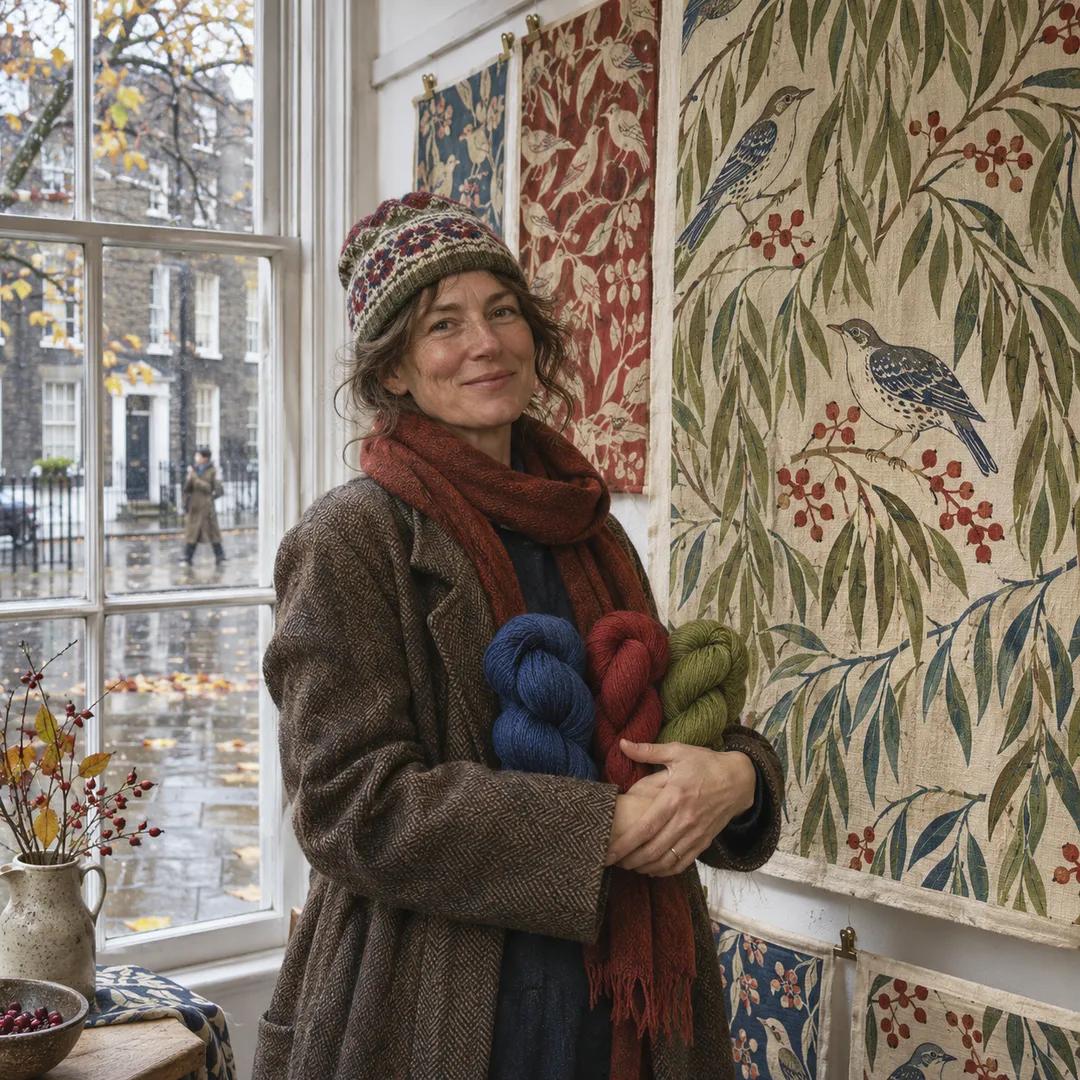
Walthamstow Yarn Shop Crawl Planner for Morris Colourwork
Colourwork knitters can plan a Walthamstow yarn shop crawl in one afternoon: take a palette from William Morris designs, shop the market and chart a motif.
William Morris grew up in Walthamstow, and his patterns of twisting willow, berries and birds still shape how many people think about colour and repetition. For knitters who love stranded colourwork, the kind where two or more colours travel across each row to build a motif, that history is a gift. Morris designs are made of exactly the things colourwork does well: strong outlines, limited palettes and small repeating shapes. A Walthamstow crawl can join the two, starting with an hour among his designs, moving through the market and quieter village streets, and ending with a rough chart of your own motif sketched on a park bench.
Why Morris and Colourwork Belong Together
Morris built many of his designs from a small set of colours, often drawn from natural dyes such as indigo blues, madder reds and weld yellows, combined with deep greens and warm neutrals. He was fascinated by dyeing and by how pattern repeats across a surface. Stranded colourwork knitting works on similar principles. You choose a handful of colours, then build a repeating motif that flows across the whole garment.
That makes Morris an ideal teacher for knitters who struggle to choose colours. Rather than starting from a blank wall of yarn, you start from a palette that has already been tested by one of the great designers. The crawl becomes a hunt to translate those colours into wool, and to simplify his flowing shapes into the small grid that knitting stitches demand.
Start With an Hour Among the Designs
The William Morris Gallery sits in Water House, a handsome Georgian building that was the Morris family home during his youth, at the edge of Lloyd Park. Its rooms tell the story of his life, his workshops and his politics, and they show wallpapers, textiles and design work in rich detail. Spending an hour here before you shop changes the way you look at yarn afterwards.
Carry a small notebook and coloured pencils rather than relying on photos alone. Note which colours sit next to each other, which shades provide the dark outline and which glow in the background. Pay attention to scale, too. Many Morris designs use a few bold shapes supported by small, busy fillers, which is a useful trick for colourwork, where large plain areas can be tricky to knit.
Translating a Palette Into Yarn
Choose three to five colours for your first piece. A classic Morris palette might be a deep indigo, a soft madder red, a leaf green, a warm yellow and a cream background. In colourwork, contrast matters more than hue. If your background and motif colours are too similar in lightness, the pattern disappears. A quick trick is to photograph your chosen skeins in black and white. You want clear differences in grey.
Look for wool with a little grip, such as a traditional woollen spun or a smooth wool with some texture, because slightly sticky fibres hold stranded fabric together and hide small tension wobbles. Ask at the counter which yarns colourwork knitters favour, and whether they come in a wide range of shades from the same line. That makes it far easier to build a balanced palette that knits up evenly.

Walthamstow Market and the High Street
Walthamstow Market runs along the long high street, with stalls selling everything from fruit and household goods to fabric, haberdashery oddments and cheap tools. It is not a specialist yarn market, but it is a lively, unpretentious place to look for fabric for a project bag, buttons, ribbons and the odd surprising find. Arrive in the morning on a market day, when the stalls are full and the energy is high.
Use the high street and the roads around it for a wider search: craft counters, haberdashery corners and charity shops, where donated wool and vintage knitting patterns appear more often than you might expect. Old Fair Isle and Scandinavian style patterns from charity shop boxes can be wonderful inspiration, and some show colour charts that work beautifully with a Morris-inspired palette.
A Detour Through Walthamstow Village
A short walk from the high street, Walthamstow Village is a pocket of older streets around a church, almshouses and the Vestry House Museum, with small cafés and independent shops along Orford Road. It feels calm and almost rural compared with the market, and it makes a gentle middle section to the crawl. Wander the lanes, look in at any craft or gift shop, and enjoy the slower pace.
Many visitors find that the weathered brick, ivy and old timber here suggest their own palette: soft browns, faded greens and brick reds that sit naturally beside Morris colours. If one catches your eye, add it to your notebook. A neutral drawn from the local streets can make a refined background for a bright motif, and gives your project a personal link to the place.
Charting a Motif in Lloyd Park
Return to Lloyd Park to finish the afternoon. The park wraps around the gallery and includes a moat, gardens and open lawns, and in November its trees turn bronze against the grey sky. Find a bench with good light, take out squared graph paper and start sketching a simple motif. A willow leaf, a berry cluster or a small bird are all good beginnings.
Keep the design small, perhaps a repeat of a dozen or so stitches wide, because short repeats are easier to memorise and knit. Avoid long runs of a single colour, which leave loose strands, known as floats, across the back of the work. Colour in the squares with your pencils, then hold your new skeins over the chart to see how the palette reads. You will be surprised how quickly a Morris shape emerges.
Knitting the First Swatch
Before committing to a hat or a jumper, knit a small swatch in the round or flat with your new colours and the chart. It shows how the colours interact, whether your floats are loose enough, and whether your tension stays even across the colour changes. Many knitters find their colourwork tighter than their plain knitting, so going up a needle size is common.
Pin the swatch somewhere you will see it often, perhaps beside your notebook sketches from the gallery. Live with it for a few days. If a colour feels too loud or too dull, swap it before you start the full project. This small pause is one of the habits that separate satisfying colourwork from projects that end up abandoned halfway.
Making It an Annual Pilgrimage
Walthamstow rewards return visits. Each trip to the gallery can inspire a different motif, and the market and village shops change with the seasons. Some knitters make an autumn visit a small tradition, choosing a palette for the winter's big project and finishing with a bench session in the park. Over the years, the swatches become a quiet record of colour and place.
When you want to find yarn shops, haberdashery counters or a cosy café for colourwork around Walthamstow, the Karpo APP can help you search the area and shortlist places that suit your afternoon, so you spend less time comparing tabs and more time choosing colours. Bring coloured pencils, pick a dry day and let Morris set your palette.
Ask Karpo for more information.
Keep reading
- Brixton Vintage Thrift Shop Finder: South London Retro Gems
 Notting Hill Vintage Thrift Shop Finder: Preloved Rails
 Soho Vintage Thrift Shop Finder: West End Designer Archives