 Brixton Vintage Thrift Shop Finder: South London Retro Gems
Hidden Gems & Odd Finds

Clapham Yarn Shop Crawl Planner for Mending Old Jumpers
Anyone mending a loved jumper can plan a Clapham yarn shop crawl in one afternoon: match the wool weight, choose a bold darning colour and stitch on the Common.
Somewhere in most wardrobes there is a jumper that is too precious to throw away and too damaged to wear. Perhaps it belonged to a grandparent, perhaps it has been on every winter walk for a decade, and now the elbows are thin and a moth has had a quiet meal near the hem. Visible mending, the practice of repairing knitwear in a way that shows rather than hides the repair, gives that jumper a second life. Clapham is a pleasant place to gather what you need. The Common sits at the heart of the area, the old village streets are full of small shops, and a slow afternoon here can end with the first stitches of the repair.
Why Mending Turns Shopping Into a Mission
Most yarn shop visits start with a project you want to make. A mending crawl starts with an object you want to save, and that changes everything. Instead of browsing for inspiration, you are matching a specific weight, fibre and feel, and choosing a colour that will live alongside years of wear. It is focused, satisfying and surprisingly emotional, especially when the jumper carries memories.
Bring the garment with you, folded in a tote bag. Shop staff and fellow crafters can give far better advice when they can see and touch the damage. You will also be able to hold small skeins and darning wools directly against the knit, which is the only reliable way to judge whether a repair will sit comfortably in the fabric or pucker and pull.
Reading Your Jumper Before You Buy
Look closely at the knit. Is it fine and smooth, like a machine-knit merino, or thick and textured, like a hand-knitted aran? The thickness of the original yarn decides the weight of your mending yarn. As a rule, choose something the same thickness or slightly thinner, because a heavy darning wool on a fine jumper creates a stiff, lumpy patch that wears through the fabric around it.
Check the label if it survives, since it tells you the fibre. Wool jumpers mend best with wool, which shrinks and softens in the wash at the same rate as the garment. Cotton knits pair with cotton. If the label has long gone, feel the fabric against your wrist and compare it with skeins in the shop. People at the counter can often tell the fibre at a glance.
Choosing a Colour That Tells a Story
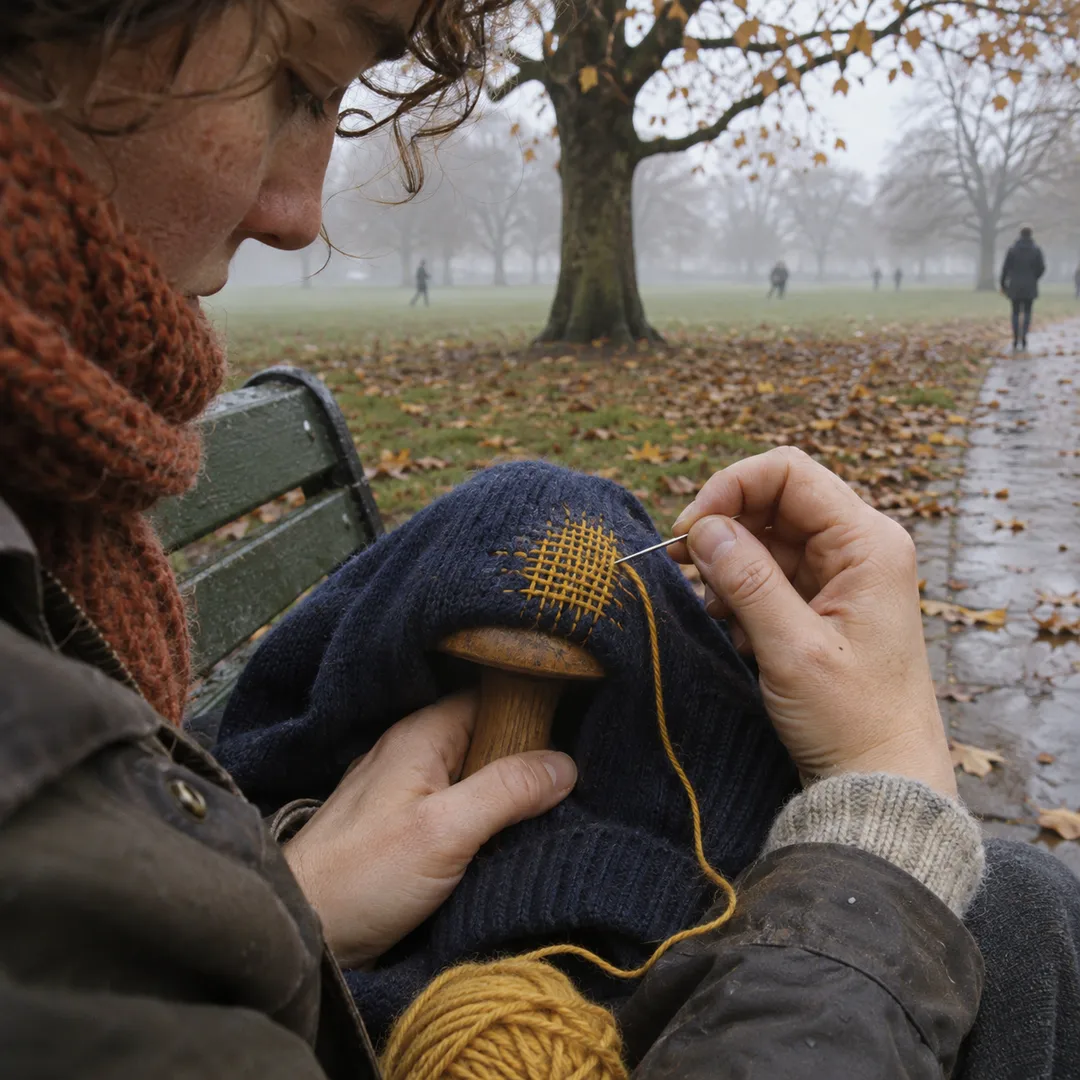
The joy of visible mending is that the repair becomes a feature. Some people choose a bright contrast, such as mustard on navy or coral on grey, so the patch looks deliberate and cheerful. Others choose a tone close to the original, a shade lighter or darker, for a softer effect that still shows the hand of the mender. There is no wrong answer, only the story you want the jumper to tell.
If the jumper belonged to someone you loved, consider a colour linked to them: their favourite football team, the colour of their front door, or a shade from a scarf they always wore with it. Small mini skeins, darning wool cards and leftover oddments are perfect, since a repair needs only a few metres. Buy two or three options so you can test them at home before you commit.
Walking Through Clapham Old Town
Start in Clapham Old Town, the older heart of the area near the north side of the Common, where Georgian houses, small shops and pubs cluster around a little square. It has a village feel quite different from the busy high street nearby. Wander the lanes, look in at any craft, haberdashery or gift shop that catches the eye, and keep the jumper handy for comparison.
From there, the walk across the Common to the streets on its south side, including the shops around Abbeville Road and towards Northcote Road, gives you a wider spread of independent stores, cafés and charity shops. Charity shops are useful for menders: cast-off knitwear in the right colour can be unravelled for matching yarn, and boxes of old wool sometimes hide darning cards and wooden mushrooms.
The Tools Worth Picking Up
Visible mending needs very little equipment. A blunt darning needle with a large eye is essential, because a sharp needle splits the existing stitches. A darning mushroom or egg, a smooth wooden shape that sits inside the garment, keeps the fabric taut while you work. In a pinch, a small round orange or a smooth jar works, but a proper mushroom is a lovely object to own.
Ask at the counter about the two most common techniques. Darning weaves a small grid of yarn over a hole, a little like a tiny piece of fabric. Swiss darning, sometimes called duplicate stitch, traces over the existing knit stitches and is ideal for thinning patches before they become holes. Many shop staff are happy to show you the first few stitches on a scrap.
Stitching on Clapham Common
Clapham Common is a wide expanse of grass, trees and ponds with a bandstand at its centre, and on a dry November afternoon it is a calm place to sit and work. Find a bench near the ponds or under the big trees, slip the darning mushroom inside the sleeve and make the first few passes with your chosen colour. The daylight makes it easy to see whether the shade really works.
Start with the smallest repair, so you learn the rhythm before tackling the main hole. Work slightly beyond the edges of the damage, into healthy fabric, so the repair is anchored. Keep tension gentle. If the patch puckers, you are pulling too hard. Even twenty minutes outdoors will show you whether the yarn and colour are right before you spend an evening on the full mend.
A Warm Corner to Keep Going
As the light fades, which it does early in November, move indoors. Clapham has plenty of cafés and pubs where someone quietly darning a jumper by the window will be met with friendly curiosity rather than stares. Choose a table near good light, order something warm and carry on. Mending is slow work, and an hour in good company makes it fly.
Bring a small pair of scissors in a case, a few safety pins to mark the areas you still need to repair, and a cloth bag for the jumper. If the café is busy, keep your materials compact so you are not spreading across a shared table. Some people find a weekday afternoon quieter and easier for this kind of focused, relaxed work.
Making Mending a Winter Habit
Once you have repaired one jumper, you will start noticing thin elbows and moth holes everywhere. Many menders keep a small kit of darning needles, a mushroom and a box of colourful oddments ready for the winter, and return to Clapham's shops when they need a new shade. Some even start mending for friends and family, turning a single rescue into a small, generous habit.
When you want to find yarn shops, haberdashery counters or a cosy café for mending around Clapham, the Karpo APP can help you search the area and shortlist places that suit your afternoon, so you spend less time comparing tabs and more time matching wool. Pack the jumper, pick a dry afternoon and let the Common be your workshop.
Ask Karpo for more information.
Keep reading
- Brixton Vintage Thrift Shop Finder: South London Retro Gems
 Notting Hill Vintage Thrift Shop Finder: Preloved Rails
 Soho Vintage Thrift Shop Finder: West End Designer Archives