 Greenwich Blues Bar Night Picker: River Stages After Dusk
Bars & Nights Out
Shoreditch Wine Bar Night Picker for Natural Wine Sceptics
Try natural wine in Shoreditch even if you doubt it: start with clean, bright glasses, move to funkier pours and pick bars where staff guide without preaching.
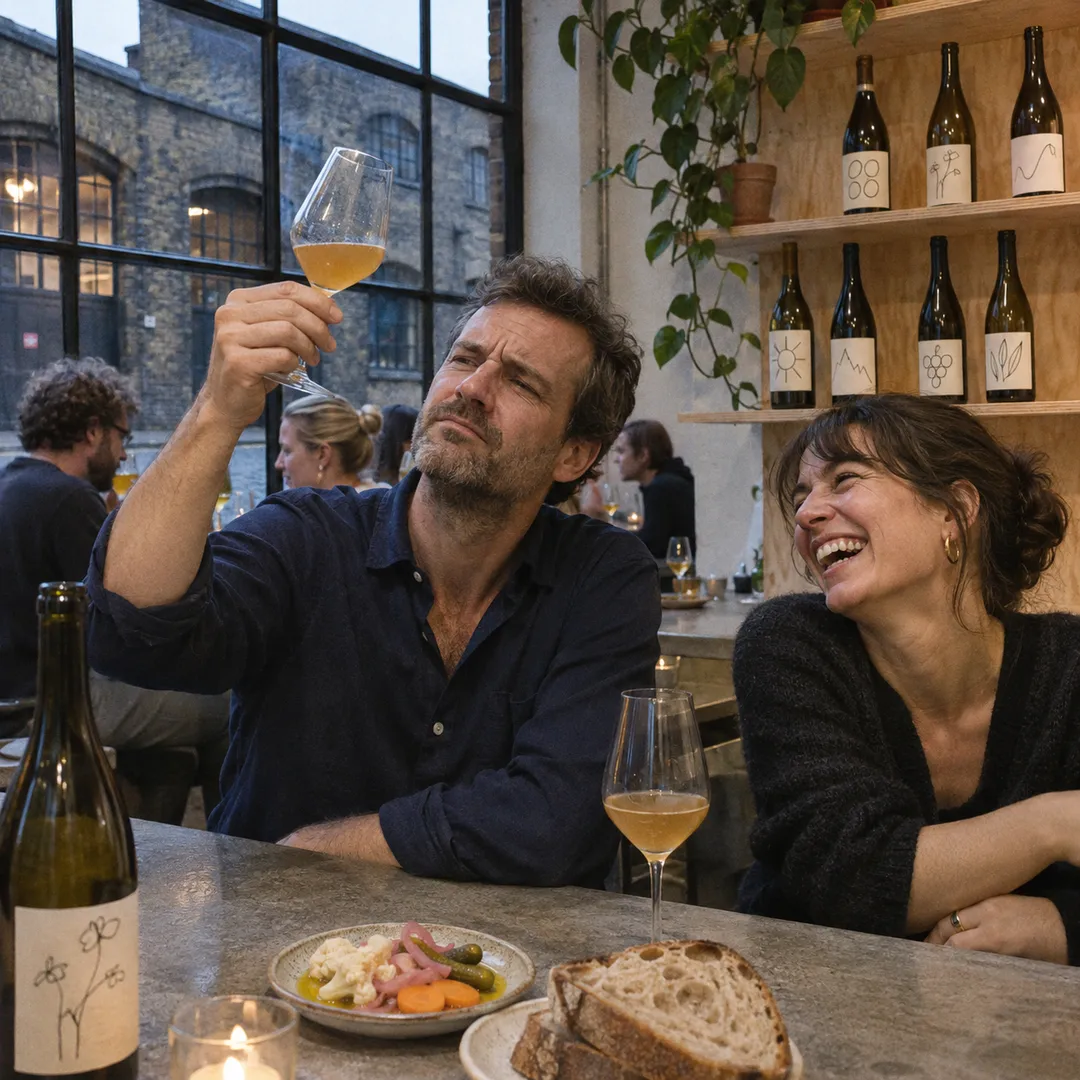
Every office has one: the colleague who orders a classic Bordeaux and rolls his eyes at anything cloudy in a glass. In a design studio near Old Street, that colleague finally agreed to a challenge. One Thursday evening his teammate would take him to Shoreditch, the heart of the London natural wine scene, and he would taste with an open mind. If he still hated it by the end, she would never mention it again. This wine bar night picker follows their evening and shares how to introduce natural wine to a sceptic without turning the night into a lecture. It works just as well if the sceptic is you.
Why Shoreditch Is the Place to Test Natural Wine
Shoreditch and the streets toward Hackney became London's natural wine hub for a simple reason. The old warehouses and workshops gave young bar owners cheap space to open small rooms with short lists of low-intervention wines, often bought directly from small growers in France, Italy, Spain and beyond. The scene grew from a handful of counters into one of the liveliest in Europe.
For a sceptic, that density is useful. Within a short walk you can find bars with very different takes on the style, from clean and precise to wild and experimental. If one room does not suit you, the next one might. The teammate planned a route of three stops, each with a different mood, so her colleague would see that natural wine is a broad category rather than a single taste.
Start Clean, Not Funky
The biggest mistake when introducing someone to natural wine is to start with the strangest bottle on the shelf. The teammate began at a calm, well-lit bar where the list leans toward clean, bright wines. She asked the staff for a natural white that tasted close to a classic Chablis or Sancerre, and a light red that would not shock a Bordeaux fan.
That first glass did its job. Her colleague admitted it tasted like wine, not like cider, and that it was lighter and fresher than he expected. Starting this way builds trust. Once a sceptic has had one glass that feels familiar, they are much more willing to try something different at the next stop.
Moving On to Orange and Pét-Nat
The second bar was louder and more playful, with records spinning behind the counter and a younger after-work crowd. Here she introduced two styles that define the natural wine scene. Orange wine is white wine made with the grape skins left in, which gives it colour, texture and a slightly bitter edge that fans of tea or craft beer often enjoy. Pét-nat is a lightly sparkling wine bottled before fermentation finishes, often cloudy and fruity.
Her colleague found the orange wine interesting rather than delicious, which counts as progress. The pét-nat surprised him. He compared it to a dry cider at first, then laughed and admitted that maybe that was not such a bad thing on a Thursday evening. The key at this stop is to order by the glass and share, so nobody is stuck with a full glass of something they dislike.
How to Talk to the Staff
Natural wine bars have a reputation for preachy staff, but most people behind the counter in Shoreditch are friendly and practical. The trick is to give them clear information. Tell them what you usually like, whether it is a big Malbec, a crisp Pinot Grigio or a bold Rioja, and ask for the natural wine that comes closest. Ask for a small taste before committing to a glass.
It also helps to be honest. If something tastes too sour or too funky, say so. Good staff will not take it personally and will steer you toward something cleaner. The teammate told her colleague that his doubts were useful information, not rudeness, and the staff at each bar seemed to enjoy the challenge of winning him over.
Food That Helps the Wine Make Sense
Natural wines often taste better with food, and many Shoreditch bars have small kitchens that cook seasonal plates designed to go with them. The pair shared sourdough with good butter, a plate of pickled vegetables, a few slices of cured meat and a warm dish of beans with greens. The salty, sour flavours made the wines taste rounder and less sharp.
For a sceptic, this is often the turning point. A wine that seems odd on its own can make perfect sense next to a plate of anchovies or a piece of hard cheese. If your companion is unsure about a glass, order something to eat before you give up on it.
The Third Stop and the Verdict
The last bar was the most relaxed, a small room with a long communal table and candles. Here the teammate let her colleague choose the bottle himself, with help from the staff. He picked a light red from the Loire, served slightly cool, and declared it the best wine of the night. Whether it counted as a natural wine conversion or just a good red did not matter much by then.
The verdict was mixed but fair. He still prefers a classic Bordeaux with Sunday lunch. But he now orders orange wine with spicy food, and he has started suggesting the second bar for team drinks. That is about as much as anyone can ask from a sceptic.
A Walk Through the Neighbourhood
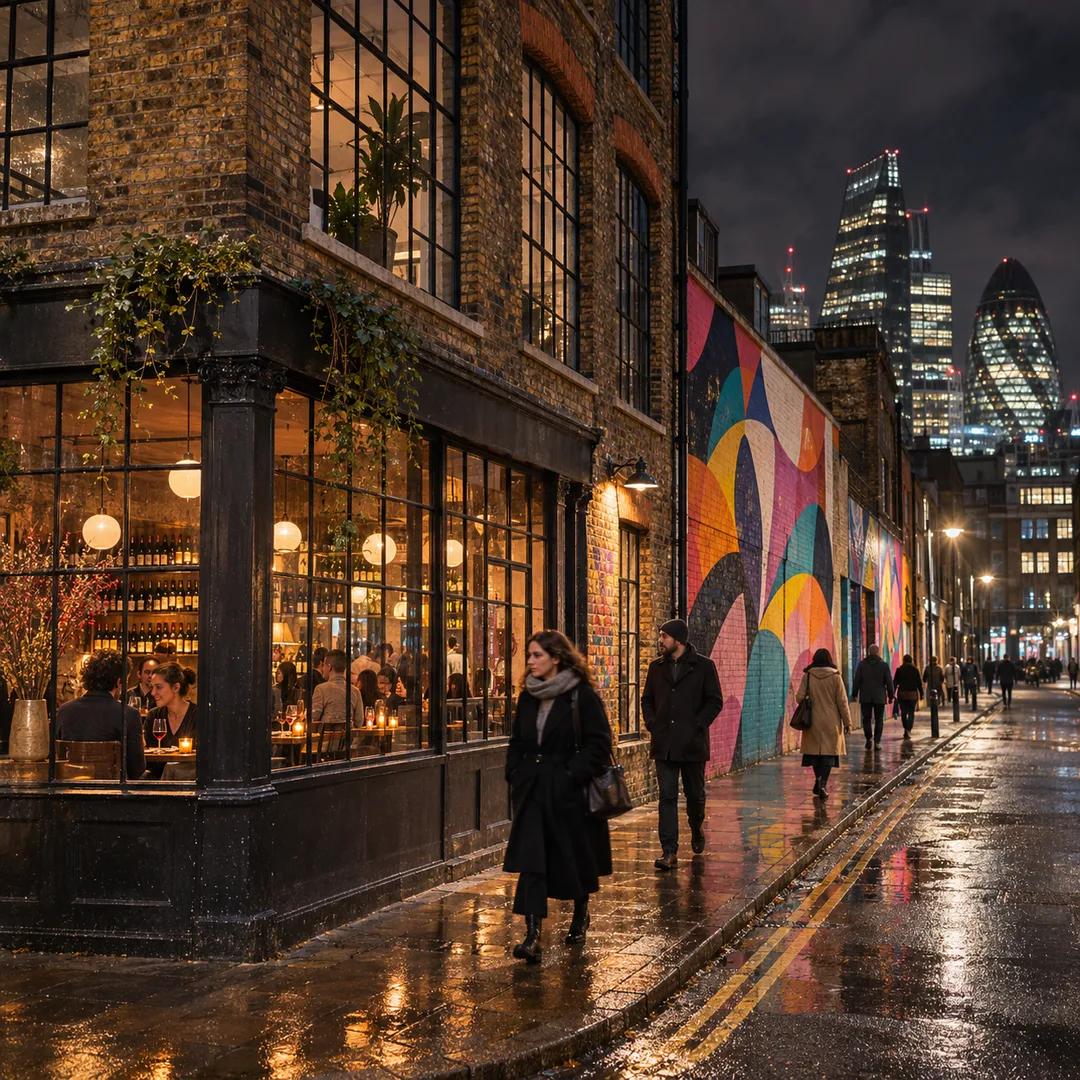
Between the stops, the pair walked through the side streets rather than along the main roads. Redchurch Street and the lanes around it have a mix of shops, galleries and old warehouse fronts. The murals on the walls change regularly, so there is always something new to see. Arnold Circus, a raised garden with a bandstand surrounded by red brick housing, is a quiet place to stop for a moment in the middle of the evening.
At the end of the night, they walked south toward Liverpool Street, watching the City towers light up over the old brick roofs. It is a good walk for talking over the wines, and the station has trains in all directions.
Practical Notes
Arrive early on Thursdays and Fridays, when after-work crowds fill the small bars. Earlier in the week is calmer and gives staff more time to chat.
Order by the glass, share sips and drink water between stops. Eat something at every bar, since natural wines often taste better with food. Keep the route to three stops so the night stays relaxed.
If someone in the group would rather not drink, many natural wine bars offer house sodas, kombucha or alcohol-free wines. And when you want to plan your own taste test, use the Karpo app to find natural wine bars near your office.
Ask Karpo for more information.
Keep reading
- Greenwich Blues Bar Night Picker: River Stages After Dusk
 Shoreditch Blues Bar Night Picker: East End Brick Stages
 Brixton Blues Bar Night Picker: Soulful South Stage Sets