 Greenwich Blues Bar Night Picker: River Stages After Dusk
Bars & Nights Out
Clerkenwell Wine Bar Night Picker: Pairing Small Plates
Clerkenwell wine bars are built for food lovers: pour crisp whites with seafood, light reds with charcuterie, and finish at Smithfield with something sweet.
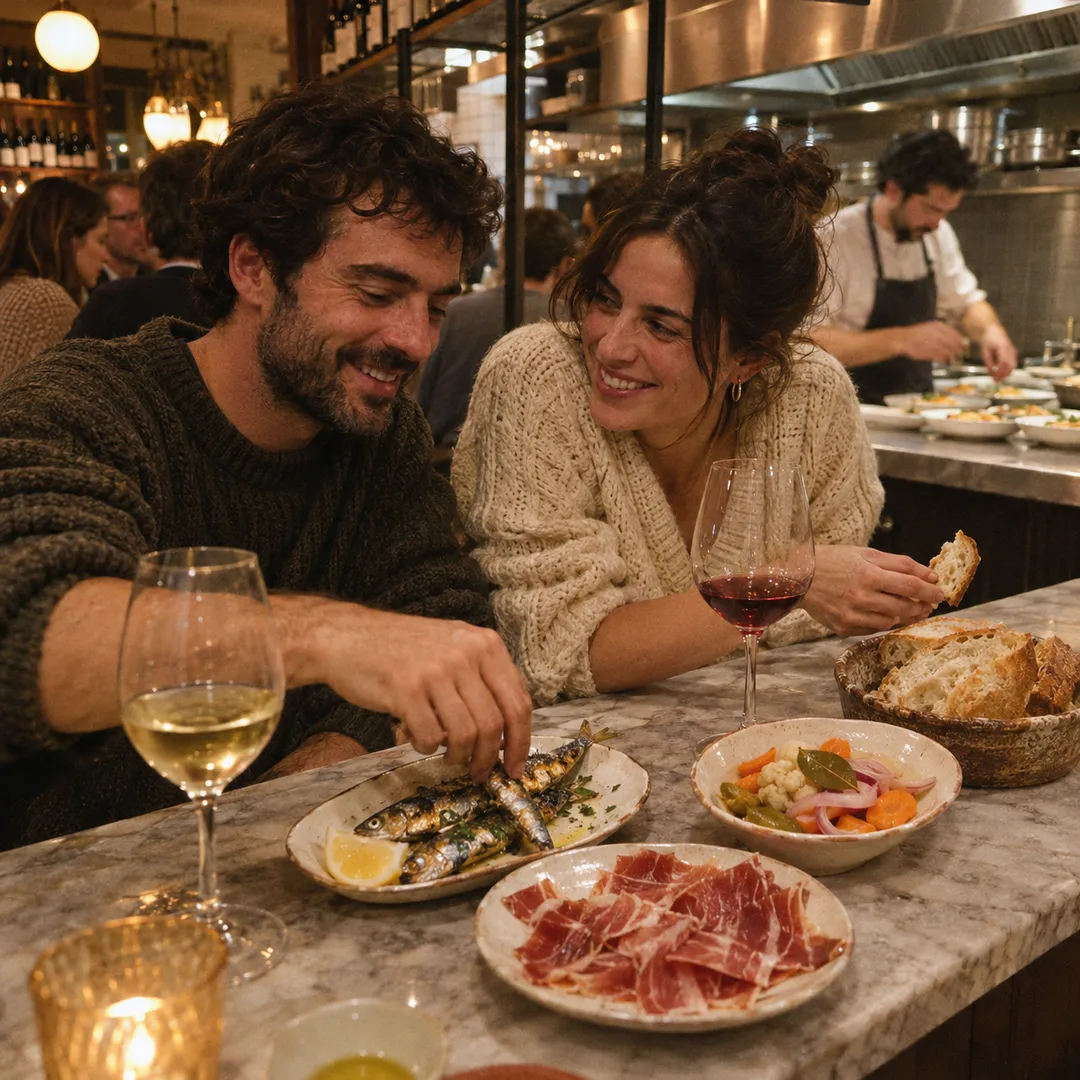
In Clerkenwell, the wine list and the menu are written by people who sit at the same table. The neighbourhood's best wine bars are really small kitchens with excellent bottles, and the fun of a night here is in the matching: which glass goes with the grilled fish, which red stands up to the cured meats, what to pour when the cheese arrives. This wine bar night picker is for food lovers who want to eat well and learn a little about pairing along the way, ending with a walk past the old meat market.
Why Clerkenwell Is a Food Lover's Wine District
Clerkenwell sits on the edge of the City, a former neighbourhood of watchmakers, printers and craftsmen that has become one of London's most respected places to eat. Its pedestrian market street, its lanes of old workshops and the great Victorian meat market at Smithfield all shaped a food culture built on good ingredients and honest cooking. Wine bars here grew out of that culture, with kitchens that matter as much as the cellar.
The crowd reflects it. On any evening you see chefs off duty, architects from the nearby studios, couples on a food-focused date and friends who plan their week around a new menu. People here talk about dishes as much as wines, and staff are used to guests asking what goes with what. It is one of the easiest neighbourhoods in London to have a serious conversation about pairing without anyone feeling out of their depth.
Starting With Crisp Whites and Seafood
Begin light. Many Clerkenwell kitchens cook simple seafood plates, things like grilled sardines, cured fish, clams or oysters in season, and nothing suits them better than a sharp, fresh white. Look for wines from coastal regions: Galician albariño, Portuguese vinho verde, Muscadet from the Loire or a dry Greek white. These wines have a salty, citrus quality that lifts fish and makes you want another bite.
If you are unsure, ask the staff which white they would drink with the fish of the day. They usually have a firm opinion. A glass each is plenty for the first course, and it gives you a chance to compare if you pick two different whites. One honest piece of advice: skip heavily oaked whites with delicate seafood. They overwhelm the dish and leave the palate tired before the meal has really started.
Light Reds With Charcuterie and Grilled Plates
Smithfield's long history as a meat market still echoes through the neighbourhood's kitchens, and many wine bars serve excellent cured meats, terrines and grilled dishes. These want a red, but not necessarily a heavy one. A chilled gamay from Beaujolais, a Loire cabernet franc or a fresh Italian red has enough acidity to cut through fat without smothering it. Served slightly cool, they are very easy to drink with food.
As the plates get richer, the reds can grow with them. A slow-cooked dish or grilled lamb can carry something deeper from Spain, the Rhône or southern Italy. Rather than ordering a whole bottle at the start, move glass by glass and let the food guide you. Most food-led wine bars in the area pour a good range by the glass for exactly this reason, so a pairing night can change direction as each plate arrives.
Cheese, Sweet Wine and the Last Course
When the cheese arrives, the rules loosen. Hard, aged cheeses love a nutty sherry or a rich red. Blue cheese and sweet wine are a classic match, and a small glass of Sauternes, late-harvest riesling or tawny port turns a simple plate into a dessert. Soft goat's cheese goes surprisingly well with a crisp sauvignon blanc, which is a nice way to bring the evening full circle back to the whites you started with.
Do not skip dessert wine out of habit. It is sold in small glasses for a reason, and it is often the most memorable pour of the night. If your group is full, share one glass of something sweet and one plate between two or three. A spoonful of a rich pudding with a sip of sweet wine is one of the great small pleasures of a London evening, especially on a cold night.
Counter Seats Versus Tables
Many Clerkenwell wine bars have a counter facing the open kitchen, and for a pair it is often the best seat in the house. You watch the cooks work, ask about dishes as they are plated and get advice on what to drink next. Counter seats also tend to turn over more quickly, which helps if you arrive without a booking. For a group of four or more, a table is better, since sharing small plates across a counter is awkward.
If a place is full when you arrive, ask how long the wait for the counter is likely to be. Anything under twenty minutes is worth it, especially if you can stand with a glass while you wait. Longer than that, and it is time to walk on. Clerkenwell is compact, and there are other food-led wine bars within a few minutes of each other, so a full room rarely means a ruined evening.
A Short Walk From the Market Lane to Smithfield
Clerkenwell rewards an evening walk between courses or after dinner. Start on the pedestrian market street, lively with diners at outdoor tables even in cooler weather, then wander south through lanes of old workshops and converted warehouses. You pass the medieval gatehouse of the old Priory of St John, one of the few remaining traces of the religious order that once owned much of the area, and quiet squares with plane trees and gas-lamp style lights.
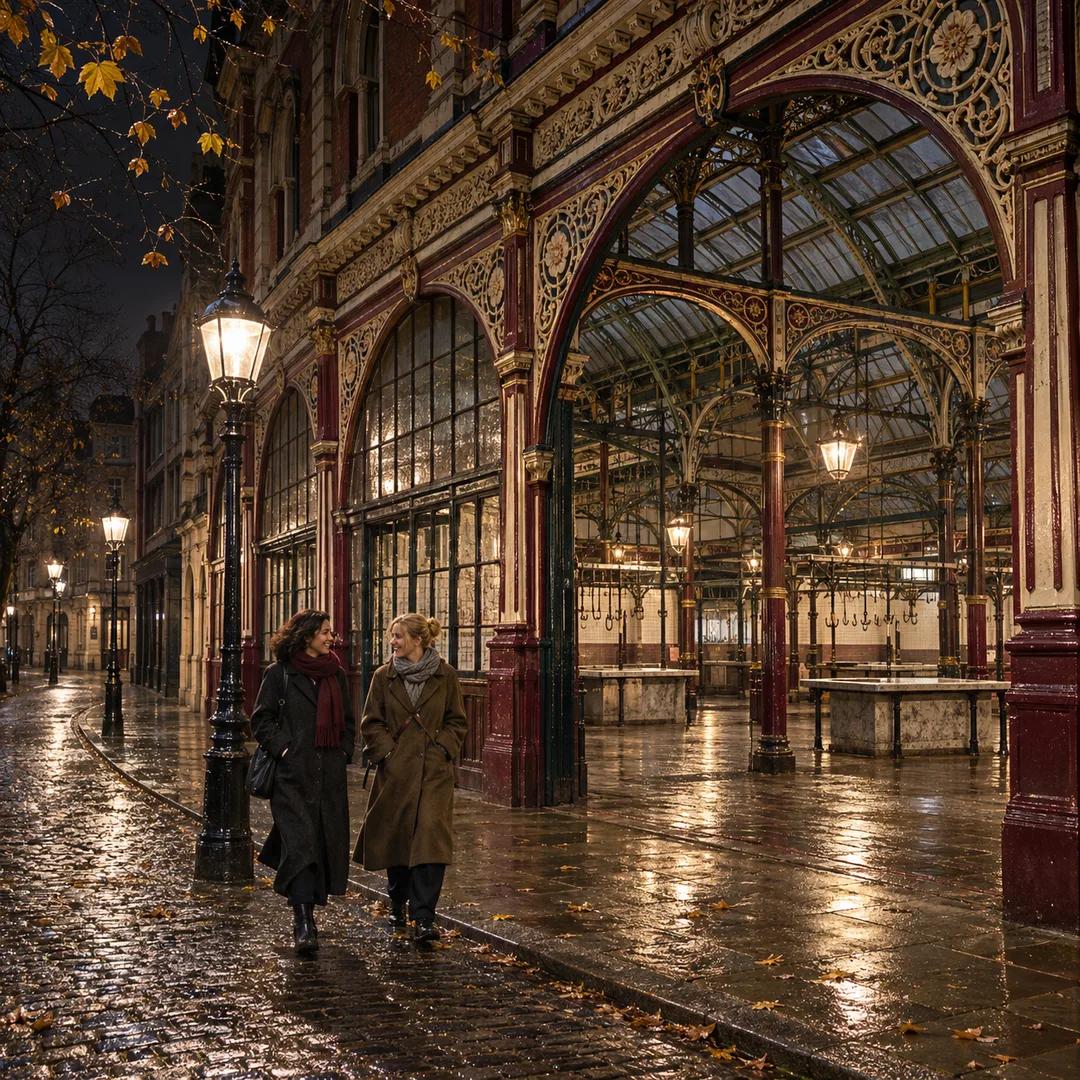
End at Smithfield, where the vast Victorian market halls with their painted ironwork and arches still dominate the streets. At night the area is calm and slightly mysterious, and it is a fitting finish for a food-focused evening. If you want one more glass, there are wine bars around the market's edges, often quieter than the ones on the main market street. Open the Karpo APP to find one along your route home.
Planning a Pairing Night for Friends
A pairing evening works well as a small group event. Pick one wine bar with a strong kitchen, ask the staff to guide you through a short sequence of plates and glasses, and share everything. Four people can try four different wines with each course, passing glasses around the table. It turns a dinner into a tasting without the formality of a guided session, and everyone leaves with a few favourite matches.
Keep notes, even simple ones on your phone. Write down the dish, the wine and whether the pair worked. Over a few visits you build a personal guide to what you like, and you will start to recognise the patterns that good pairings share: salt with acid, fat with tannin, sweet with blue cheese. That knowledge goes home with you and makes every future dinner a little better.
Practical Notes for a Clerkenwell Wine Night
Booking ahead helps for a group, especially later in the week when the area fills with after-work diners. For a pair, a walk-in at the counter is often easy earlier in the evening. Bring an appetite rather than a fixed plan, and let the kitchen and the wine team steer you. The best evenings here come from saying yes to a suggestion you did not expect.
Pace the glasses to the plates. Small pours across several courses add up, so drink water between rounds and keep food on the table. If you are celebrating, mention it when you sit down, since the staff often like to suggest something special. And save room for the walk to Smithfield at the end. Those quiet streets beside the old market are the perfect way to digest a good meal and remember the matches that worked.
Ask Karpo for more information.
Keep reading
- Greenwich Blues Bar Night Picker: River Stages After Dusk
 Shoreditch Blues Bar Night Picker: East End Brick Stages
 Brixton Blues Bar Night Picker: Soulful South Stage Sets