 Richmond Roasted Chestnut Winter Walk Planner: Towpath Loop
Free Things to Do
Richmond Riverside Waterfront Boardwalk: Free Thames Trail
Richmond Riverside at Heron Square, London TW9 1EP offers a free terraced waterfront boardwalk accessible at all times. Relax on open lawns beside the bridge.
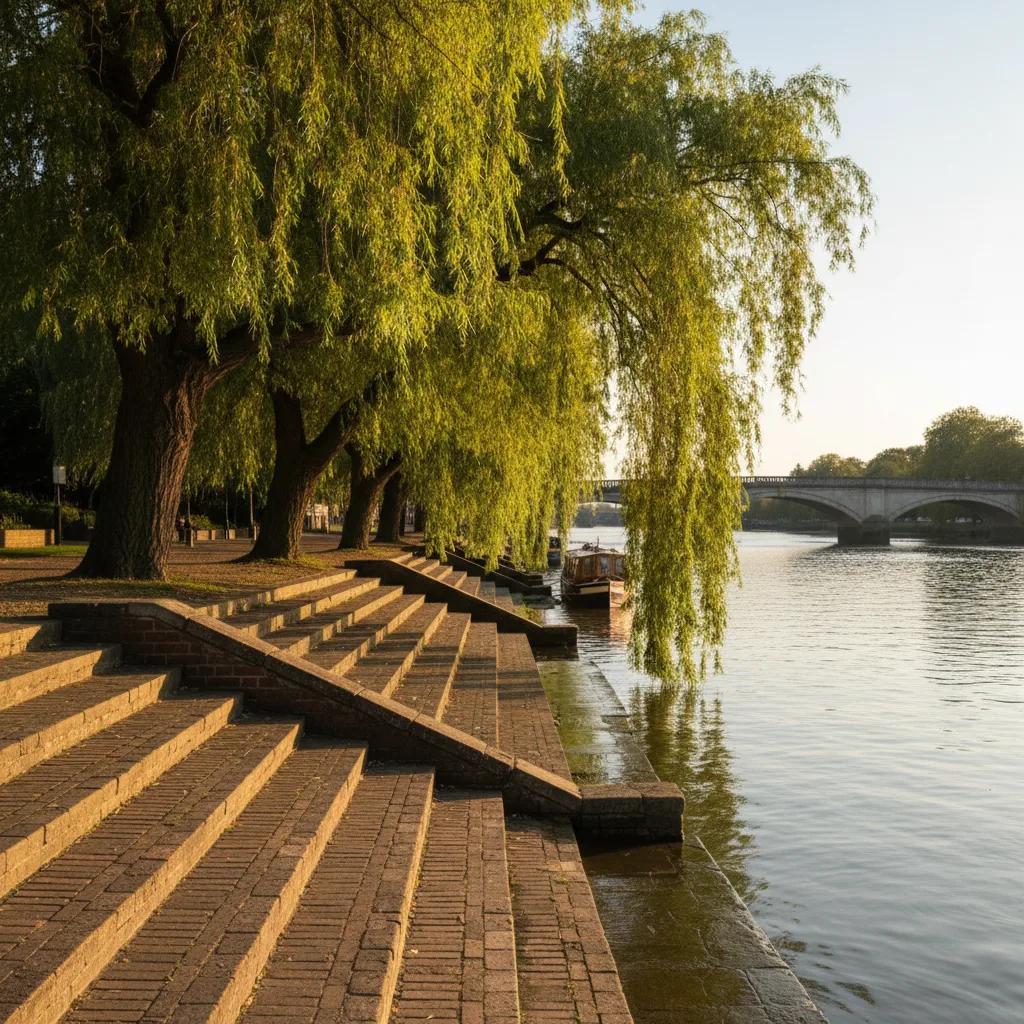
Richmond Riverside, registered officially at Heron Square, Richmond, London TW9 1EP and extending along Riverside by Richmond Bridge, London TW9 1TH, is widely celebrated as one of the most picturesque waterfront boardwalk and promenade destinations along the Upper River Thames. Positioned in southwest London where the river meanders past royal parklands and historic Georgian estates, this riverside public open space welcomes visitors with free admission throughout the year. According to the London Borough of Richmond upon Thames council (richmond.gov.uk), Richmond Riverside is accessible at all times, offering public access to its tiered grassy lawns, paved pedestrian terraces, and scenic river viewpoints without admission charges or booking requirements. Featuring broad paved walkways, stepped red-brick viewing terraces, and timber boat landings framed by weeping willows, Richmond Riverside delivers an authentic English riverside experience.

Georgian Architectural Heritage and Richmond Bridge
The enduring appeal of Richmond Riverside is deeply anchored in its eighteenth-century architectural pedigree. Spanning gracefully across the river at the southern edge of the promenade is Richmond Bridge, a magnificent Grade I listed five-arch stone bridge constructed between 1774 and 1777 to designs by James Paine and Kenton Couse. Today, it stands proud as the oldest surviving bridge over the River Thames within Greater London, its elegant Portland stone balustrades and curving arches providing a distinguished historic backdrop that has inspired landscape artists from J.M.W. Turner to modern British painters. The Portland stone fabric of Richmond Bridge was restored with painstaking craftsmanship, maintaining the gentle camber and classical proportions that have framed the Upper Thames since the reign of King George III.
Directly facing the riverfront walkway is the Richmond Riverside development, a landmark neo-classical architectural ensemble designed by classical architect Quinlan Terry and completed in 1987. Terry meticulously incorporated Georgian, Palladian, and Baroque decorative facades, complete with stone pediments, rusticated brick arcades, and classical colonnades that blend seamlessly with surviving eighteenth-century river villas. This heritage design created expansive stepped public terraces that step gently down toward the water, inviting generations of visitors to gather beside the Thames to enjoy the open scenery, leafy riverbanks, and passing rivercraft.
River Life, Waterside Lawns, and Terraced Seating
The riverside boardwalk at Richmond is alive with traditional British river culture and thriving riparian wildlife. Moored floating pontoons and stone quaysides along the lower walkway serve as historic boat landings where river rowers and pleasure skiffs drift peacefully through calm waters toward Twickenham and Teddington. Traditional wooden boathouses along the banks preserve classic timber skiff traditions that have enlivened the Upper Thames for centuries. Elegant mute swans, Canadian geese, and tufted ducks drift lazily along the riverbanks, while weeping willow branches dip their foliage directly into the fresh tidal currents.
During clear afternoons and mild summer evenings, the broad brick and stone steps of the riverside terrace transform into a relaxed open-air gathering spot. As described in the official Richmond Council parks directory, the open space features terraced lawns and numerous benches overlooking the River Thames, situated in close proximity to local eateries, cafes, and historic waterside taverns such as the White Cross. Visitors gather across the grassy tiers and paved esplanades to enjoy takeaway treats or watch rowers glide by, creating an unhurried, friendly waterside ambiance that contrasts delightfully with the fast-paced rush of central London.
Seasonal Light, Sunset Watching, and Quiet Hours
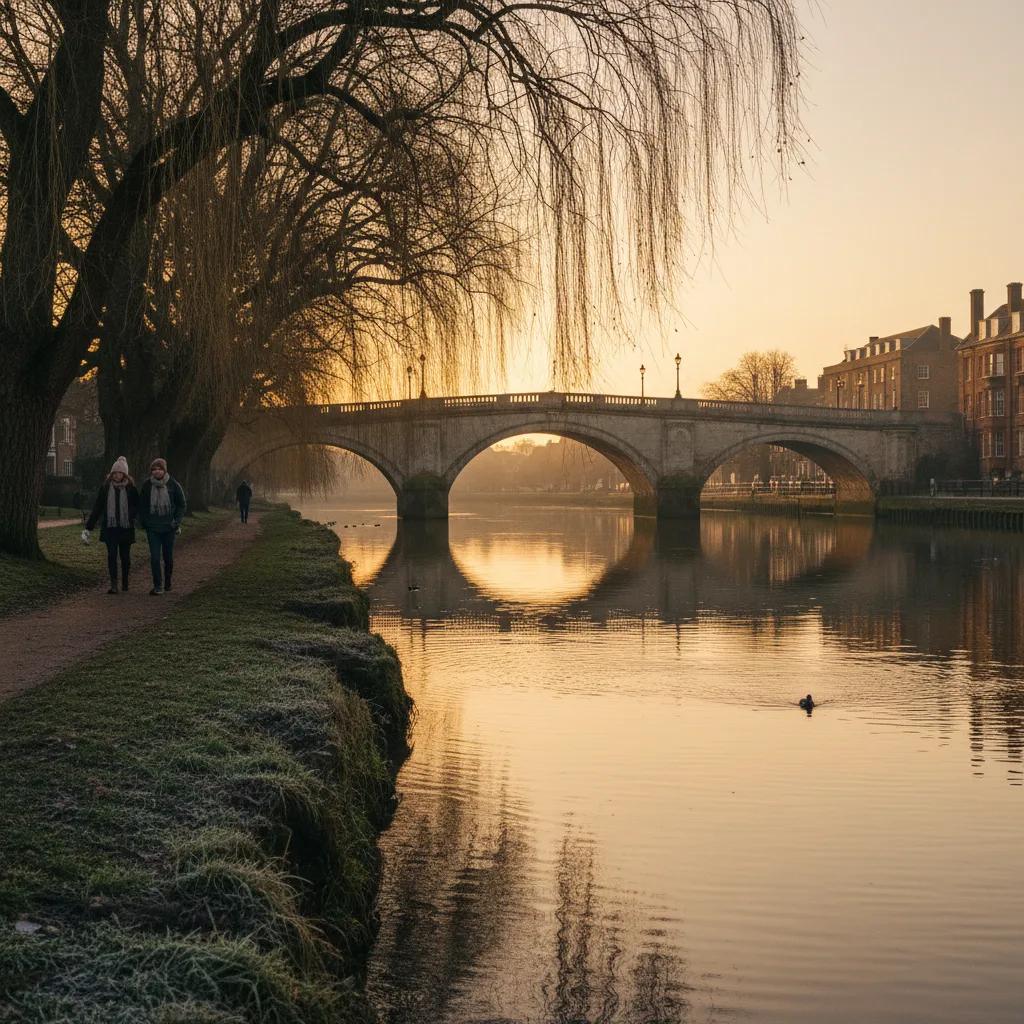
Richmond Riverside is renowned among walkers and photographers for its sweeping sunset vistas. Because this reach of the Thames curves gently toward the southwest, late afternoon and early evening light washes directly across the stone arches of Richmond Bridge, reflecting brilliant shimmering ribbons of gold and amber across the broad water surface. Watching the sun dip slowly behind the wooded silhouette of the Twickenham riverbank while rowing crews glide through the golden reflections is one of London's most cherished free evening pastimes.
For those who value peace and solitude, early morning strolls between 7:00am and 9:00am reveal the riverside in its most tranquil state. River mist often rises gently from the cool water as local scullers from the Richmond Amateur Regatta glide quietly through the morning stillness. The fresh river air, scented with willow bark and damp meadow grasses, makes a morning coffee stroll along the paved esplanade a deeply restorative ritual before town center shops and neighborhood markets open for daily trade.
Extending Your Walk to Petersham Meadows and Richmond Hill
A walk along Richmond Riverside easily expands into an unforgettable countryside excursion along protected Thames trails. Heading upstream to the south leads directly onto the riverside towpath skirting Petersham Meadows, where heritage cattle graze peacefully in pastoral water meadows protected by a historic 1902 Act of Parliament that preserves the pastoral view in perpetuity. From here, a gentle woodland path ascends Richmond Hill to Terrace Gardens, revealing the legendary Turner's View across the Thames valley, the only landscape vista in Britain explicitly protected by an Act of Parliament.
Alternatively, walking downstream to the north leads past Richmond Lock and Weir—the furthest downstream lock on the Thames, opened in 1894 by the Duke and Duchess of York—toward the expansive green spaces of Old Deer Park and the Royal Botanic Gardens at Kew. Historic riverside landmarks, including Marble Hill House across the water and Ham House further upstream, are also accessible via continuous riverside pathways and historic foot ferries, offering a wealth of cultural discoveries within a single walking excursion along the river.
Transport Connections, Route Guidelines, and Practical Notes
Traveling to Richmond Riverside is straightforward and efficient via public transit. The official Richmond Council parks guide notes that the nearest railway hub is Richmond station, situated just an eight-minute walk through the paved pedestrian streets of historic Richmond town center. Richmond station is a major transport interchange served by the London Underground District line, the London Overground North London line, and fast South Western Railway mainline services reaching London Waterloo in under twenty minutes.
According to Richmond Council public transit advisories, the riverside area is also directly served by extensive London bus routes including routes 190, 371, 391, 419, 493, H22, H37, R68, R70, 33, 337, and 65. The riverside promenade features wide, flat paved paths accessible to pushchairs and wheelchair users, though visitors should note that tidal fluctuations occasionally cause the lowest riverside walkway and pub apron to flood briefly during extreme spring high tides. The promenade connects smoothly with the national Thames Path on both banks, allowing walkers to cross over Richmond Bridge and explore the quiet tree-lined towpaths of the Twickenham riverside toward Marble Hill Park. Public amenities and dining spots are readily available in the adjacent town center, making Richmond Riverside an exceptionally accessible waterside escape for all visitors.
Ask Karpo for more information.
Keep reading
- Richmond Roasted Chestnut Winter Walk Planner: Towpath Loop
 Borough Roasted Chestnut Winter Walk Planner: Arch Route
 Hampstead Roasted Chestnut Winter Walk Planner: Ridge Loop