 Brixton Christmas Light Up Walk Planner: Rainy Arcades
Free Things to Do
Queens Walk Waterfront Boardwalk: Free Thames River Views
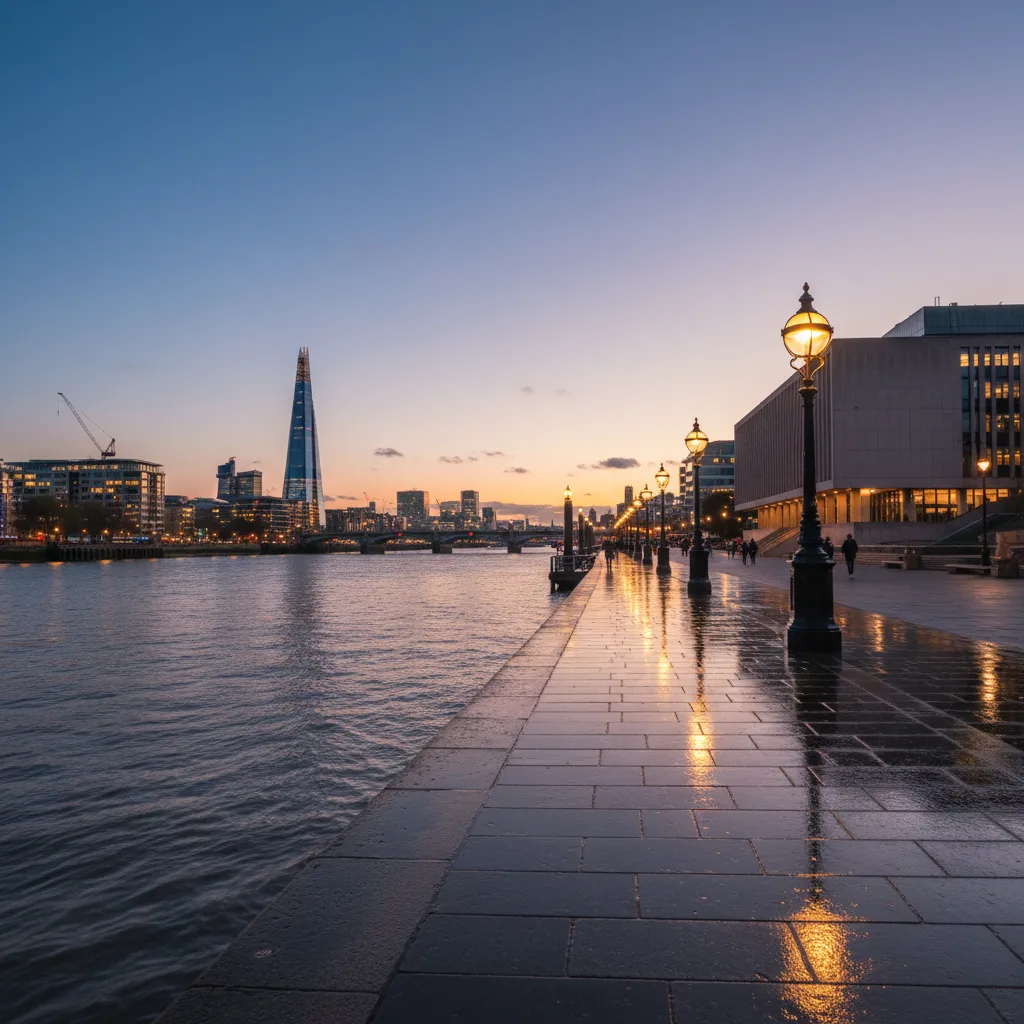
The Queen's Walk along Belvedere Road, London SE1 8XX is a free riverside path open daily 24 hours. Enjoy sweeping Thames panoramas and lively arts venues.
The Queen's Walk, stretching along the Riverside Walkway outside Royal Festival Hall, Belvedere Road, South Bank, London SE1 8XX, stands as one of the capital's most celebrated waterfront boardwalk and riverside promenade routes, tracing the southern curve of the River Thames through central London's cultural district. According to official visitor information from South Bank London (southbanklondon.com), The Queen's Walk pedestrian promenade is a public right of way open 24 hours daily from Monday to Sunday throughout the year, with free public admission at all times. Spanning continuously between Westminster Bridge and Tower Bridge, this wide, vehicle-free riverside terrace welcomes visitors day and night without entry fees or admission gates. Whether you arrive in the serene calm of early dawn when rowers glide across the tidal river surface or during the vibrant evening hours when city illumination reflects across the water, the promenade provides unobstructed panoramas across London's historic embankment landmarks.
Postwar Cultural Vision and the 1951 Festival Heritage
The expansive, pedestrian-first character of The Queen's Walk directly reflects the urban redevelopment that took shape following the Second World War. Before the mid-twentieth century, the South Bank waterfront was dominated by commercial wharves, industrial warehouses, and private barge moorings that blocked public access to the river edge. That historic separation shifted dramatically in 1951 when the Festival of Britain selected the riverbank between County Hall and Waterloo Bridge as the national platform for cultural renewal and forward-thinking civic architecture. The riverside redevelopment prioritized open pedestrian promenades, allowing residents and international visitors alike to walk along the Thames freely.
The architectural anchor of that festival era remains the Royal Festival Hall on Belvedere Road, which opened in May 1951 as a permanent home for orchestral performances and community arts. Later expanded with the Queen Elizabeth Hall, Purcell Room, and Hayward Gallery, the complex formed a world-class arts quarter directly adjacent to the riverside promenade. In 1977, in celebration of Queen Elizabeth II's Silver Jubilee, the waterfront path was formally named The Queen's Walk. Today, the route forms a vital section of the 184-mile national Thames Path, maintaining its democratic public mandate as an open civic promenade where cultural institutions, riverside terraces, and open-air public plazas remain accessible to all.
Strolling from Waterloo Bridge to Blackfriars Riverwalk
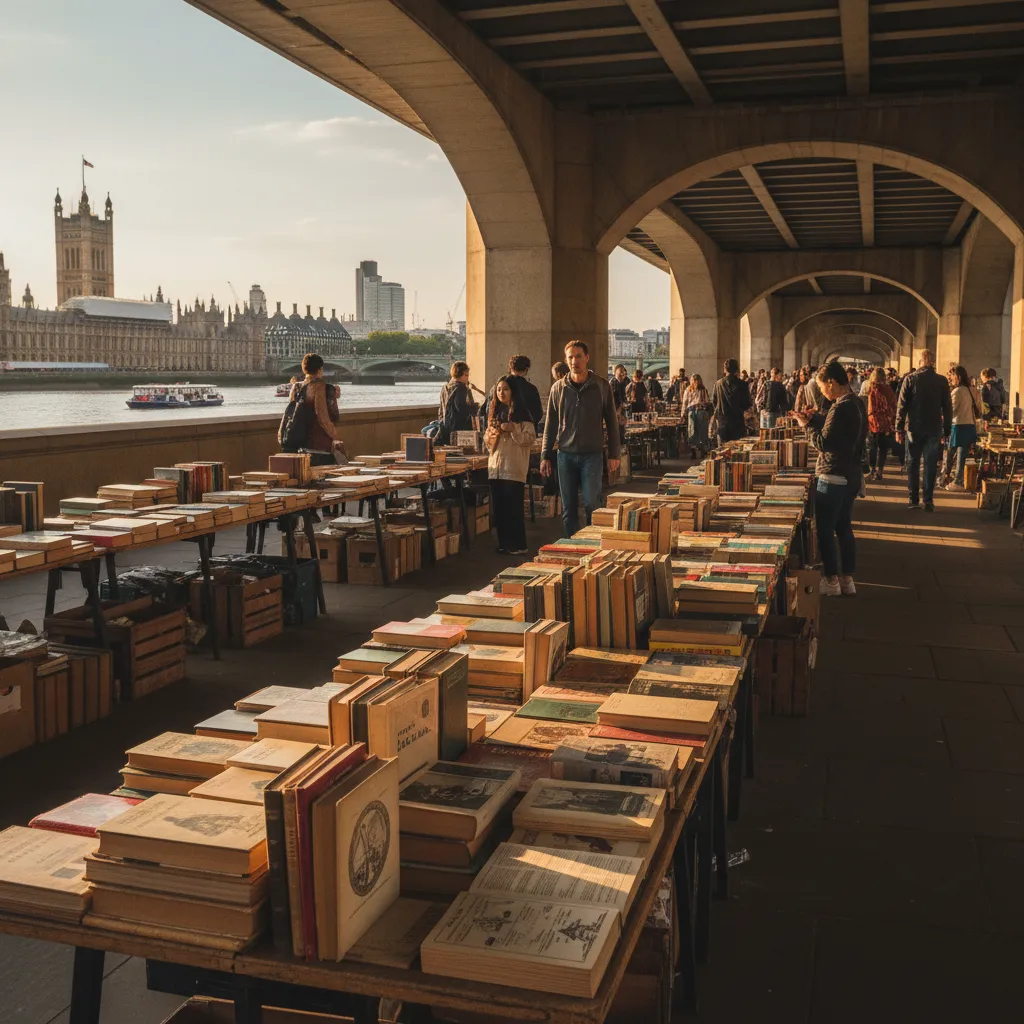
Beginning a riverside stroll beneath the soaring stone arches of Waterloo Bridge introduces visitors to an enduring South Bank literary tradition. Tucked directly beneath the bridge roadway sits the South Bank Secondhand Book Market, operating daily from late morning until dusk. Here, open timber trestle tables overflow with thousands of vintage paperbacks, antiquarian maps, classic art prints, and collectible poetry editions. Browsing through the weathered book stalls while listening to the gentle wash of the tidal Thames against stone riverwalls creates an evocative London ritual where street-level culture and maritime currents intertwine seamlessly.
Continuing east past the National Theatre, the river promenade widens into a generous public esplanade framing panoramic vistas across the river to Somerset House and the distant dome of Saint Paul's Cathedral. Passenger catamarans, historic tugboats, and sailing barges frequently navigate the river fairway, adding lively nautical movement to the waterside scenery. Broad granite benches and tiered wooden river steps allow walkers to pause and observe the tidal rise and fall against the historic iron dolphin lamp standards that have decorated the South Bank parapet since the Victorian era, offering peaceful spaces to absorb the changing daylight.
Golden Hour Photography and Sunrise Thames Perspectives
Because The Queen's Walk operates with continuous public access throughout the day and night, timing your visit can tailor the experience to your preferences. Photography enthusiasts and early morning walkers often favor sunrise, when golden morning light illuminates the stone facades of Victoria Embankment and casts delicate reflections beneath the steel arches of Blackfriars Railway Bridge. At this quiet hour, the boardwalk belongs primarily to morning joggers, commuting cyclists on designated paths, and walking commuters, ensuring clear perspectives along the river railing.
In contrast, the late afternoon and dusk hours bring a festive, communal energy to the riverside. Buskers and classical street musicians often perform along the river terrace outside the Southbank Centre, filling the open air with acoustic melodies as twilight deepens. On crisp autumn evenings, the setting sun casts warm amber rays across the gothic towers of the Palace of Westminster to the west, before the glittering city lights across the river illuminate the northern bank, creating an unforgettable urban evening backdrop.
Seamless Walks to Bankside and Maritime Bermondsey
One of the standout advantages of The Queen's Walk is its continuous pedestrian link to surrounding historic riverside quarters. Continuing eastward past the landmark Oxo Tower and the former Bankside Power Station, now home to Tate Modern, the path leads directly past Shakespeare's Globe, where handcrafted English oak beams and traditional water-reed thatch recreate an authentic Elizabethan theatrical arena. Nearby, the pedestrian route passes beneath Southwark Bridge toward the replica galleon Golden Hinde resting in Saint Mary Overie Dock, evoking London's Renaissance seafaring past.
Just a short detour inland from the river path lies Borough Market, London's historic wholesale and retail food market situated beneath Victorian railway viaducts, where visitors can sample freshly baked sourdough breads, artisanal cheeses, and hot coffees. Returning to the riverfront and continuing past London Bridge brings walkers into the landscaped riverside plaza of More London, where direct, low-angle vistas of Tower Bridge provide a dramatic climax to an extended Thames riverside promenade as historic bascules rise for tall ships.
Transit Connections and Step-Free Accessibility Advice
Arriving at The Queen's Walk is simple thanks to extensive public transportation links surrounding the South Bank. Waterloo station serves as the central transport hub, offering step-free access to London Underground services on the Bakerloo, Northern, Jubilee, and Waterloo and City lines, alongside mainline rail routes across southern England. Visitors arriving from the north bank can also travel via Westminster or Embankment stations and cross the Thames on foot using the Golden Jubilee footbridges or Westminster Bridge.
The entire length of The Queen's Walk from Westminster Bridge to London Bridge, accessed directly via Riverside Walkway at Royal Festival Hall on Belvedere Road, is broad, flat, and paved, featuring gentle incline ramps alongside occasional steps to ensure complete step-free accessibility for wheelchair users, visitors with mobility aids, and families with pushchairs. Accessible public restrooms are available within Southbank Centre venues during daily building opening hours. For travelers seeking a scenic river arrival, Uber Boat by Thames Clippers operates scheduled services calling at London Eye Waterloo Pier and Festival Pier situated directly along the riverside boardwalk.
Ask Karpo for more information.
Keep reading
- Brixton Christmas Light Up Walk Planner: Rainy Arcades
 Hackney Christmas Light Up Walk Planner: Canal Boats
 Islington Christmas Light Up Walk Planner: Square Dates