 Shoreditch Comic Shop Crawl Planner: Murals to Manga
Hidden Gems & Odd Finds
Marylebone Watercolour Mops Quill Brush Picker: Point First
For Marylebone's botanical and portrait painters, a quill mop that snaps back to a fine tip can replace three brushes. Here is how to judge the point.
Point retention is the quality that separates a quill mop you use for everything from one you only reach for when painting skies. A mop that gathers into a fine wet tip after every stroke can lay a petal, then switch to a vein or a stem without a change of brush. For painters drawn to Marylebone, with its Georgian terraces, garden squares and the green expanse of Regent's Park close by, that versatility suits the botanical studies and small portraits the area seems to invite.
What Point Retention Really Means
A brush holds its point when the hairs return to a single tip after being bent, pressed and lifted. On a round sable this is expected. On a quill mop it is harder, because the bundle is wide, the hair is softer and the belly is designed to swell. Squirrel hair, the classic mop fibre, has very fine tips but little spring, so the point depends heavily on how the brush was shaped and tied. Some mops form a beautiful point when dry yet split into two or three tails once wet, which is the version you want to avoid.
Ignore the Dry Point on the Shelf
New brushes are usually sold with a starch or gum coating that sets the hair into a crisp needle. It looks perfect and tells you almost nothing. The real test begins after the coating is rinsed out. If a shop permits trying a sample, wet the brush thoroughly, flick it once over the water pot and look closely at the tip. A good mop gathers into one clean point. A weaker one may show a curl, a stray hair sticking out sideways or a blunt, rounded end.
The Snap Test
Lay the wet brush on a scrap of paper at a low angle and press until the belly flattens. Lift it slowly and watch. A brush with good retention draws itself back into its point within a moment. A brush with poor retention stays bent or reforms with a hook at the tip. Repeat three or four times, because some brushes recover well once and then tire. Synthetic blends usually snap back faster than pure squirrel. If your work is mostly fine botanical detail, that extra snap may matter more than maximum water capacity.
The Stain Test for Fine Lines
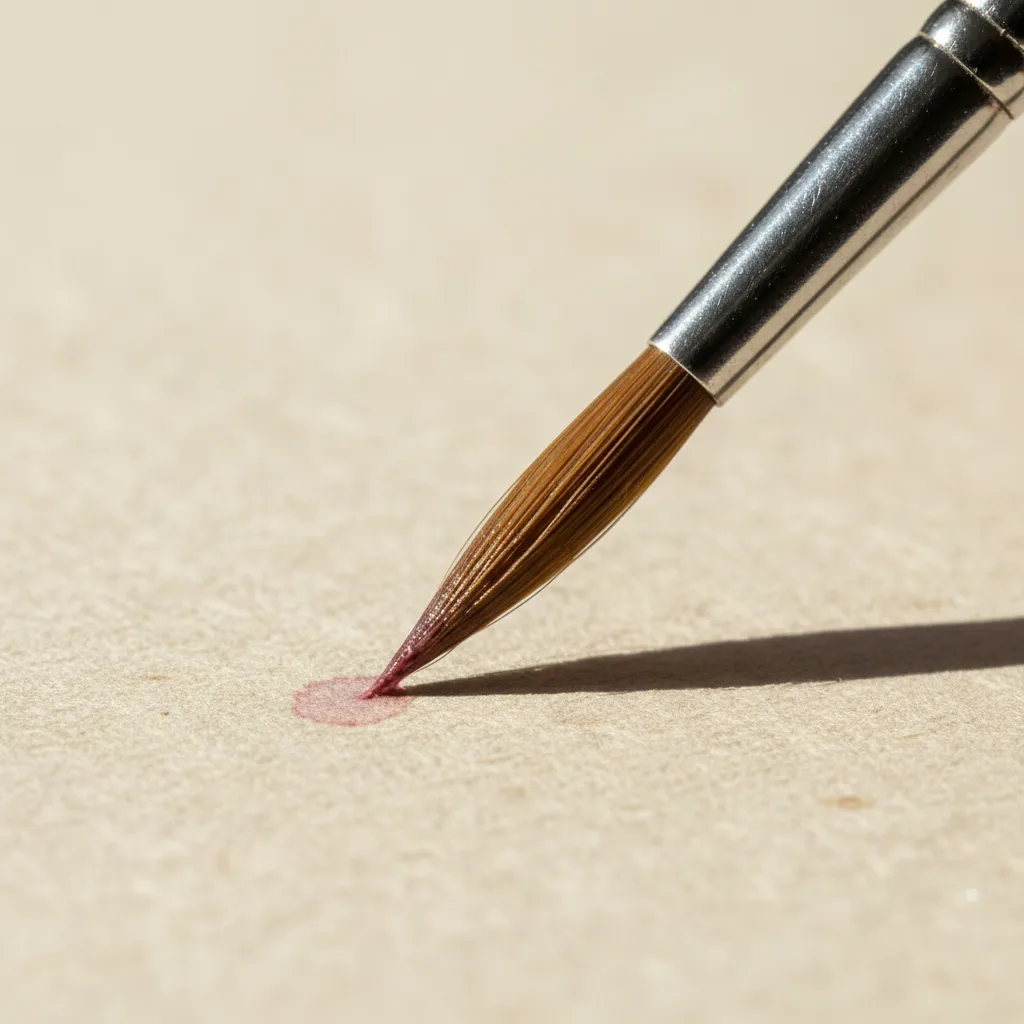
Load a little diluted pigment, ideally something that stains such as a rose or a phthalo blue, and draw the thinnest line you can. Then press gradually to widen the stroke into a leaf shape and taper it again. The line should start fine, swell smoothly and return to fine without a ragged tail. This single stroke shows the full range of the brush. Compare two candidates using the same pigment and paper, because results change noticeably between hot-pressed and cold-pressed surfaces.
Marylebone as a Setting for Detailed Work
Marylebone carries a slower, more residential rhythm than the busy streets just to its south. The high street, the mews tucked behind it and the garden squares make it easy to stop, sit and look closely at architecture, window boxes or the planting in a square. Regent's Park, at the northern edge, offers formal rose beds and wide lawns for longer studies. That attention to small detail fits naturally with choosing a brush for its point rather than its sheer size.
Matching Point to Subject
Consider what you actually paint. Botanical illustrators need a point that can draw a stamen and a belly that can float colour across a petal. Portrait painters want a tip for eyelids and a soft mass for cheeks. Architectural sketchers often care less about the finest point and more about a crisp edge for window frames. Write down the three marks you make most often, and test those marks in the shop rather than generic strokes. The right brush will feel natural for your own vocabulary.
Size Changes the Point
Larger mops rarely hold as fine a point as smaller ones of the same model. That is physics rather than poor quality, because more hair gathers into the tip. If point retention is your priority, consider a mid-sized mop as your main brush, and keep a small round for the finest work. Trying two sizes side by side, with the same stroke and pigment, quickly shows where the point begins to soften and whether that trade-off suits the paintings you plan to make.
An Honest Skip
Skip any mop that shows split tails after two or three snap tests, however lovely the handle or the quill. A split point rarely improves with use, and it tends to worsen as the brush ages. Pretty packaging, decorative wire and carved handles do not affect how the tip behaves on paper. If none of the brushes you try gathers cleanly, it is wiser to leave empty-handed and look again elsewhere than to bring home a tool that frustrates every fine line.
Karpo APP Suggestions in Marylebone
Karpo APP gives nearby recommendations for art supply shops, small galleries and peaceful places to paint around Marylebone. You can ask it for watercolour suppliers close by, or a garden square where sitting with a sketchbook feels comfortable. From the suggestions it shares, you choose which places to visit and how you get to them. The decisions about timing, order and transport stay with you, so treat each suggestion as a starting point for your own afternoon.
Practical Notes on Caring for the Point
Point retention depends as much on care as on manufacture. Never leave a mop standing tip-down in water, since the bend can become permanent. Rinse gently, reshape the hair between your lips or fingers, and let it dry lying flat or hanging downward. Avoid scrubbing dried paint with the tip, which frays the finest hairs first. Store brushes where the tips cannot be crushed. A protective sleeve or a rolled cloth keeps the point intact when you carry the brush across town.
Leaving With the Right Brush
The mop to bring home is the one that drew your thinnest line, widened smoothly into a leaf and snapped back cleanly every time you pressed it. Capacity still matters, yet for detailed painting a reliable point gives you far more freedom. Once home, paint a single flower or a small face using only that brush. If you never reach for a second brush, the point is doing its job, and the choice was the right one for your work.
Ask Karpo for more information.
Keep reading
- Shoreditch Comic Shop Crawl Planner: Murals to Manga
 Bermondsey Comic Shop Crawl Planner: Zines Under the Arches
 Clapham Comic Shop Crawl Planner: Charity Shelves and Common