 Brixton Vintage Thrift Shop Finder: South London Retro Gems
Hidden Gems & Odd Finds

Spitalfields Vinyl Record Crawl Planner: Your First Five LPs
Plan a Spitalfields vinyl crawl for your first five LPs: market stalls first, a simple condition check, then a quiet Georgian street walk to Brick Lane.
Buying your first turntable is exciting for about an hour. Then you look at the empty shelf beside it and realise you have no idea where to start. Spitalfields is a gentle place to fix that. The old covered market, the Georgian streets around it and the lanes leading toward Brick Lane form a compact loop where traders, collectors and curious beginners mix easily. This vinyl record crawl planner is built for a first-timer with one clear goal: come home with five records you will genuinely play, in good enough condition to sound right on a new deck, without feeling rushed, judged or overspent.
Five Records, Not Fifty
New collectors often try to rebuild their entire streaming library on vinyl in the first month. It is an expensive way to discover that half those albums do not get played. Five is a better number. It is enough to give you variety on a quiet evening, small enough to choose carefully, and it leaves room for the records you will discover once your taste on vinyl starts to form.
Think of the five as roles rather than titles. One album you already love from start to finish. One record from your parents' or grandparents' era that you want to understand better. One instrumental record for reading or cooking. One wildcard chosen because the seller recommended it. And one record you buy only after hearing it in the shop. That mix teaches you more about your own listening than five favourites ever could.
Why Spitalfields Works for Beginners
Spitalfields has been a trading place for centuries, from the silk weavers who built many of its houses to the fruit and vegetable market that once filled the great covered hall. Today the hall hosts a rotating mix of food, fashion, antiques and vintage traders, and records appear regularly among them. The space is bright, sheltered and easy to navigate, which matters when you are learning how to browse.
The streets around it add depth. Brick Lane and the lanes off it have long been a home for second-hand shops and stalls, and on busy days there are crates on tables, in doorways and at the back of clothing shops. Everything is walkable in a small loop, so you can go back to a crate you passed earlier without planning a whole new journey.
Learn the Simple Condition Check
Before you buy anything, practise one routine until it feels natural. Slide the record halfway out of its inner sleeve, holding it by the edges. Tilt it under the light and look along the surface. Fine hairline marks are usually harmless. Deep scratches that you can catch with a fingernail often click when played. Dull, cloudy patches can mean heavy wear, and a wavy edge suggests a warp that may make the needle jump.
Then look at the label and the sleeve. A label that is clean and centred is a good sign. A sleeve with water damage can smell musty, and that mould can spread to the disc. Finally, check that the record inside matches the cover. It sounds obvious, but in busy market crates the wrong disc in the right sleeve is surprisingly common.
Your new stylus deserves care, so start with records in good condition. A heavily worn disc can sound poor on any deck, and as a beginner you will not know whether the problem is the record or your setup.
Start in the Covered Market
Begin under the market roof, where you can browse slowly without worrying about weather. Walk a full lap first and note any record stalls. Then return to the friendliest looking one and say you are just starting out. That single sentence changes the conversation. Many traders love helping a new collector and will point you toward clean copies, good reissues and sensible starting points rather than rare pressings.
Use this stop for your first two roles: the album you already love and the record from an older generation. Ask whether the seller has a copy they can play for a minute. Hearing how an album sounds on a proper system, compared with your phone, often settles the question of whether a particular pressing is worth taking home.
Do not feel pressure to buy at the first stall. Write down what you liked, keep walking and return later if it still stands out in your memory. Good sellers expect that and will not mind.
Walk the Georgian Streets to Reset
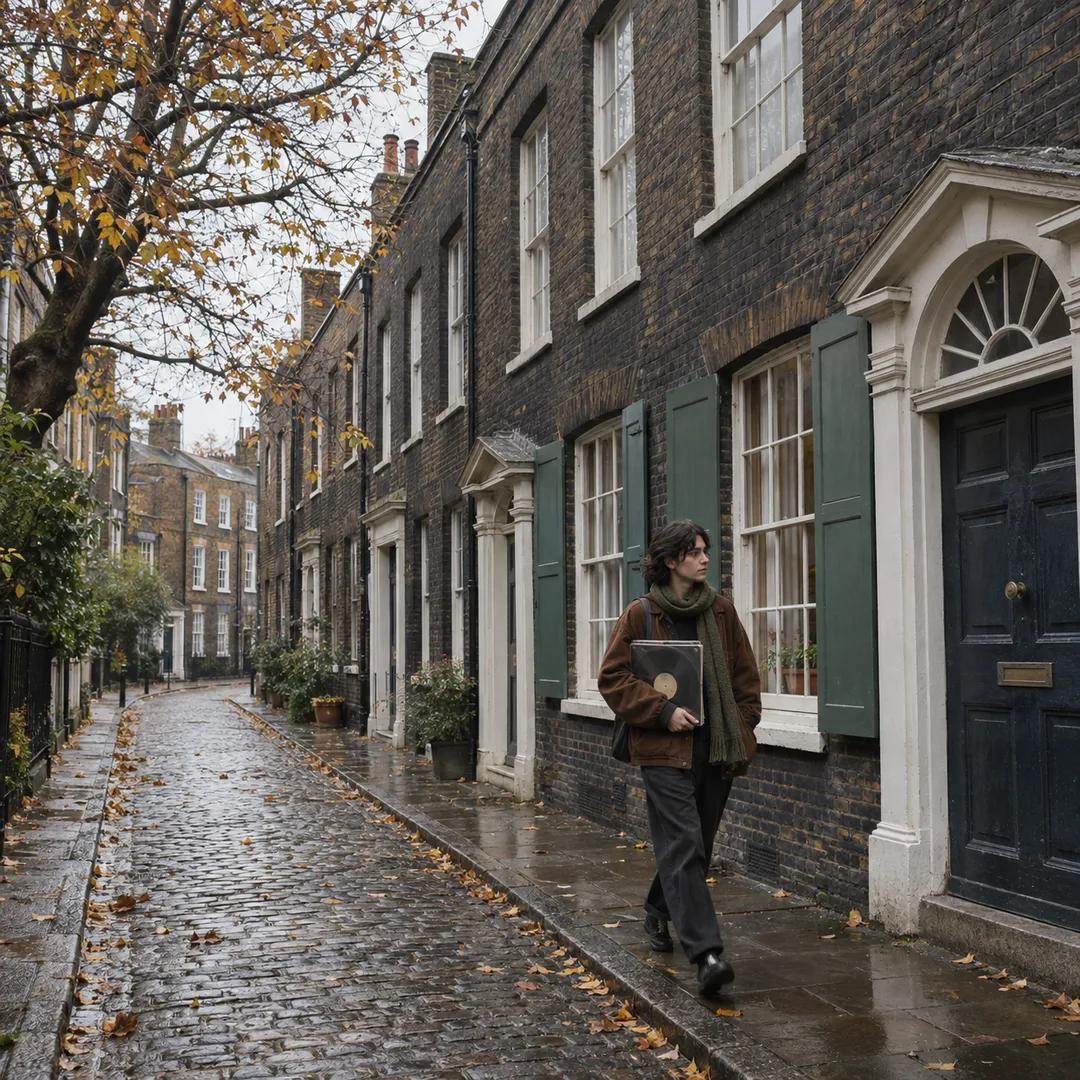
After an hour in the market, step out into the old streets just to the east. Tall brick houses with wooden shutters, worn doorsteps and weavers' attic windows line the narrow lanes, and the quiet is a welcome contrast with the busy hall. Walk them slowly without looking at records at all. Your ears and eyes need a short break before the next round of browsing.
Use the pause to think about the instrumental slot. Jazz, ambient, classical piano and film scores all work well for reading or cooking. Pick one direction now, so that when you reach the next crate you know which section to check first instead of drifting.
Finish the Five Toward Brick Lane
From the quiet streets, head to Brick Lane and its side streets. On weekends the area is lively, with food stalls, vintage clothing and second-hand traders, and crates of records appear in shops that sell much more than music. This is the place for your wildcard. Ask a seller what they have been enjoying lately and buy the record they recommend if it passes your condition check.
Leave the fifth slot for the end of the day. By now you will have heard several records played in shops and stalls. Choose the one that stuck in your head most, even if you cannot name the artist. That is your listening pick, and it is often the one you end up playing most at home.
If the lane gets too crowded, step into one of the quieter yards or side streets to sort your bag. Keep the records upright, sleeves closed and away from drinks.
Setting Up Your First Listening Evening
At home, clean each record with a soft brush before its first play. Check that your turntable sits on a stable, level surface away from speakers, so the needle does not pick up vibrations. Play your five in a single evening, in any order, and notice which one makes you want to flip it over straight away. That reaction tells you where your vinyl taste is heading.
Store the records upright, never stacked flat, and keep them away from radiators and sunny windows. A simple shelf or crate is enough for now. As the collection grows, you can add outer sleeves and a proper storage unit, but five good records on a clear shelf already look like the start of something.
Planning Your Next Spitalfields Dig With Karpo
Once your first five are home, the next trip becomes easier. Open the Karpo APP and describe what you want next, such as a calm Spitalfields and Brick Lane loop for jazz records, with a break in a quiet street and a food stop. Karpo can help you plan the order of the walk, suggest nearby streets worth exploring and keep notes on the stalls you enjoyed most.
Come back with the same simple routine: a short list of roles, a careful condition check and the patience to listen before you buy. That habit will build a collection you love far more reliably than any list of essential albums.
Ask Karpo for more information.
Keep reading
- Brixton Vintage Thrift Shop Finder: South London Retro Gems
 Notting Hill Vintage Thrift Shop Finder: Preloved Rails
 Soho Vintage Thrift Shop Finder: West End Designer Archives