 Shoreditch Comic Shop Crawl Planner: Murals to Manga
Hidden Gems & Odd Finds
Bermondsey Vintage Map Print Browsing Walk: Market Day Loop
Browse maritime dockland charts and rolled canvas prints around Bermondsey railway arches. Find nearby ideas on Karpo APP and select your own print stops.
Bermondsey provides an authentic, industrial-tinged backdrop for vintage cartography enthusiasts, characterized by monumental Victorian railway viaducts, converted dockside warehouses, and thriving artisan workshops. Long associated with maritime commerce, leather tanning, and river trade, this South London district has transformed into a dynamic haven for printmakers, independent framers, and architectural salvage dealers. Exploring Bermondsey on a dedicated map-browsing circuit offers a refreshingly grounded alternative to traditional West End galleries. Here, beneath soaring brick arches and beside historic wharves, the hunt for vintage nautical charts, dockland surveys, and industrial plans reveals the working heritage that propelled London into a global trading capital.
Dockland Surveys and River Thames Navigation Charts
Given Bermondsey's deep historical ties to the Pool of London and maritime commerce, local print purveyors frequently showcase exceptional navigational charts of the River Thames and nineteenth-century dock expansion surveys. These remarkable documents record the construction of the Surrey Commercial Docks, the Bermondsey riverside wharves, and the engineered channels that welcomed trading vessels from every corner of the globe. Studying the precise copperplate soundings, tidal notations, and waterfront warehouse footprints on these historic sheets offers an intimate window into London's maritime identity.
Alongside commercial river charts, collectors can uncover large-format engineering schematics and Victorian railway surveys detailing the expansion of the London and Greenwich Railway, the world's first elevated suburban train line whose brick arches still dominate the district. These functional working prints celebrate bold industrial typography, hand-drafted engineering cross-sections, and crisp linen backings designed to withstand daily field use. Their muscular graphic sensibility makes them particularly well-suited for industrial loft interiors and contemporary office walls.
Exploring Railway Arch Ateliers and Salvage Yards
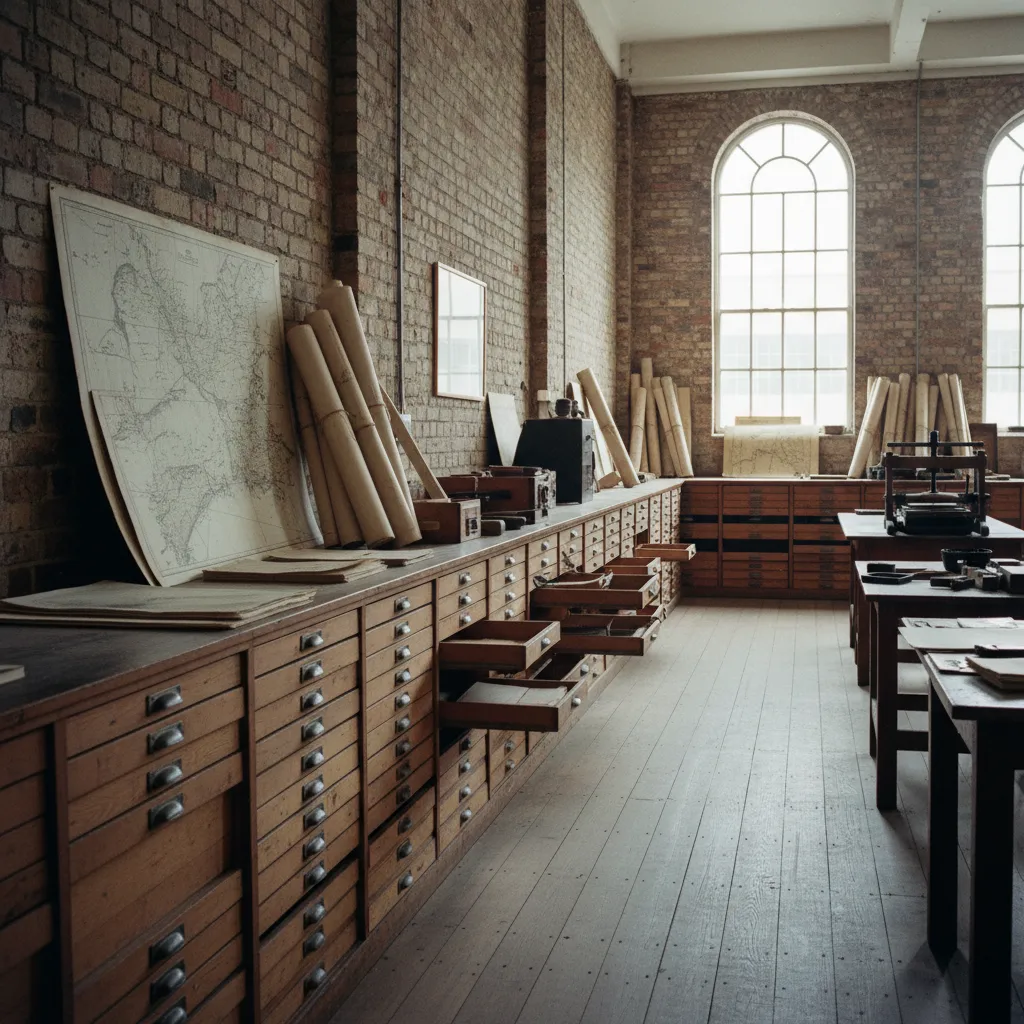
A significant portion of Bermondsey's creative commerce takes place within converted Victorian railway arches, where high curved brick ceilings and generous industrial daylight create ideal workshop settings. Wandering down these sheltered lanes reveals independent printmakers, antique paper restorers, and ephemera dealers who display vintage maps in expansive plan chests and rustic timber racks. The unpretentious, workshop-focused atmosphere invites unhurried exploration and candid conversations about print history, paper provenance, and restoration techniques.
Take your time inspecting large-format maps that may have originally been rolled on wooden rods or folded into linen-backed traveler cases. Many Bermondsey dealers specialize in restoring neglected commercial school wall maps and municipal survey sheets, carefully cleaning surface dirt, reinforcing brittle creases with archival Japanese tissue, and re-stretching canvas backings. Engaging with these skilled craftspeople provides invaluable insight into how damaged vintage documents can be stabilized and repurposed as striking decorative wall art.

Riverside Wharves and Green Pocket Sanctuaries
Weaving your way through Bermondsey's cartographic circuit offers ample opportunities to experience evocative riverside scenery and peaceful neighborhood green spaces. Walking along cobblestone riverside paths past former spice warehouses and maritime granaries, with sweeping views of the historic river and skyline, provides a powerful physical counterpart to the antique nautical charts you have been inspecting. The brisk river breeze and tidal scents connect you tangibly to the maritime heritage documented on historic cartographic sheets.
When you seek a tranquil spot to pause and examine your gallery notes, head inland toward leafy sanctuaries such as Tanner Street Park or the peaceful churchyard gardens scattered throughout the quarter. Relaxing on a park bench surrounded by mature plane trees offers a quiet moment to reflect on your discoveries, compare pricing notes, and sketch out prospective gallery wall arrangements away from pedestrian traffic.
Conservation and Framing for Industrial Cartography
Large-format industrial and nautical maps present distinctive framing considerations due to their substantial dimensions and working history. Unlike delicate atlas sheets preserved in clean book bindings, vintage maritime charts and engineer surveys often exhibit stains, damp wrinkles, and handling wear from real-world usage on ships and construction sites. Rather than viewing these marks as flaws, thoughtful collectors celebrate them as authentic battle scars that tell the story of the map's practical working life.
To frame these substantial works successfully, consider pairing them with raw steel, patinated bronze, or reclaimed oak mouldings that complement their industrial graphic character. Ensuring that your framer uses museum-grade acrylic glazing rather than heavy traditional glass is crucial for oversized pieces, reducing overall weight and eliminating the risk of shattering during transportation. Furthermore, incorporating spacers to keep the glazing separated from the paper surface prevents condensation build-up and protects historic ink finishes over the long term.
Handling unbacked architectural prints or canvas-mounted charts also requires specialized care when unrolling for inspection. Always place clean weighted leather beanbags at opposing sheet corners to keep the map flat without creasing brittle fibers. Taking these sensible precautions safeguards rare technical draughtsmanship and ensures that your industrial cartography finds enduring visual life in contemporary living spaces.
Craft Breweries and Artisan Food Pauses
Bermondsey is renowned across the capital for its exceptional artisan food and beverage scene, providing outstanding dining options to complement your walking tour. The district is home to famous railway arch roasteries, craft bakeries, and independent taprooms where you can stop for an energizing lunch between print browsing sessions. Enjoy a warm flat white paired with a sourdough sandwich, or savor a restorative pour-over coffee while reviewing the condition and history of the map prints you have evaluated.
The vibrant, maker-centric energy of these culinary spaces mirrors the artisan craftsmanship found in the neighborhood's framing studios and print workshops. Mingling with local woodworkers, coffee roasters, and fellow collectors creates a warm, community-minded atmosphere that enriches your overall cultural excursion, making Bermondsey an unforgettable destination for an inspiring weekend walk.
Finding Nearby Places Around Bermondsey
A Bermondsey print hunt benefits from a little thought about your own visual interests before you set off. Perhaps you want the geometry of dockland charts or the texture of a canvas-mounted reproduction. Tell the Karpo APP what kinds of nearby places interest you and use its recommendations as ideas for your outing. From there, choose the counters you want to browse and decide your own walking sequence. Bring a clean notebook to record dimensions and display possibilities. Take a break when you need one, especially before deciding whether a large rolled sheet will suit the room you have in mind.
You might want a bakery break after examining a large maritime sheet or a restful place to read your collecting notes. Ask the Karpo APP for recommendations for nearby places and choose whichever suggestion appeals to you. You decide the order of your stops and how to reach each one. Record a favorite print source in your own journal rather than relying on an app feature. Leaving room for a pause helps you consider the paper calmly before making a purchase.
Ask Karpo for more information.
Keep reading
- Shoreditch Comic Shop Crawl Planner: Murals to Manga
 Bermondsey Comic Shop Crawl Planner: Zines Under the Arches
 Clapham Comic Shop Crawl Planner: Charity Shelves and Common