 Camden Korean BBQ Group Dinner Picker: Lockside Feasts
Restaurants

Spitalfields Vegetarian Dinner Picker for Brick Lane Curry
Pick a Spitalfields vegetarian dinner on Brick Lane by reading curry menus like a regular: which dals to trust, where ghee hides, and when to walk away.
This Spitalfields vegetarian dinner picker is really a lesson in reading one street. Brick Lane runs north from Whitechapel past the old brewery and the market, and for decades it has been London's best-known curry strip, shaped by the Bangladeshi families who settled here from the Sylhet region. A vegetarian can eat very well on this street. The trick is knowing which dishes are naturally meat-free, which ones only look it, and how to tell a kitchen that cooks with care from one that reheats the same sauce for every plate.
A Street With Layers of History
Spitalfields has always been a neighbourhood of arrivals. French Huguenot silk weavers built many of the tall houses with large attic windows. Later came Irish and Jewish families, and in the twentieth century Bangladeshi workers and their families made Brick Lane their home. The mosque near the middle of the street was once a Protestant chapel and then a synagogue, a single building that tells the whole story.
That history matters for dinner. The best Bangladeshi home cooking is rich in vegetables, lentils and fish, while the curry-house menu many visitors know was built for British tastes in the 1970s. Understanding the difference helps you order better, because the vegetable dishes closest to home cooking are often the most rewarding on the menu.
Dishes That Are Usually Meat-Free
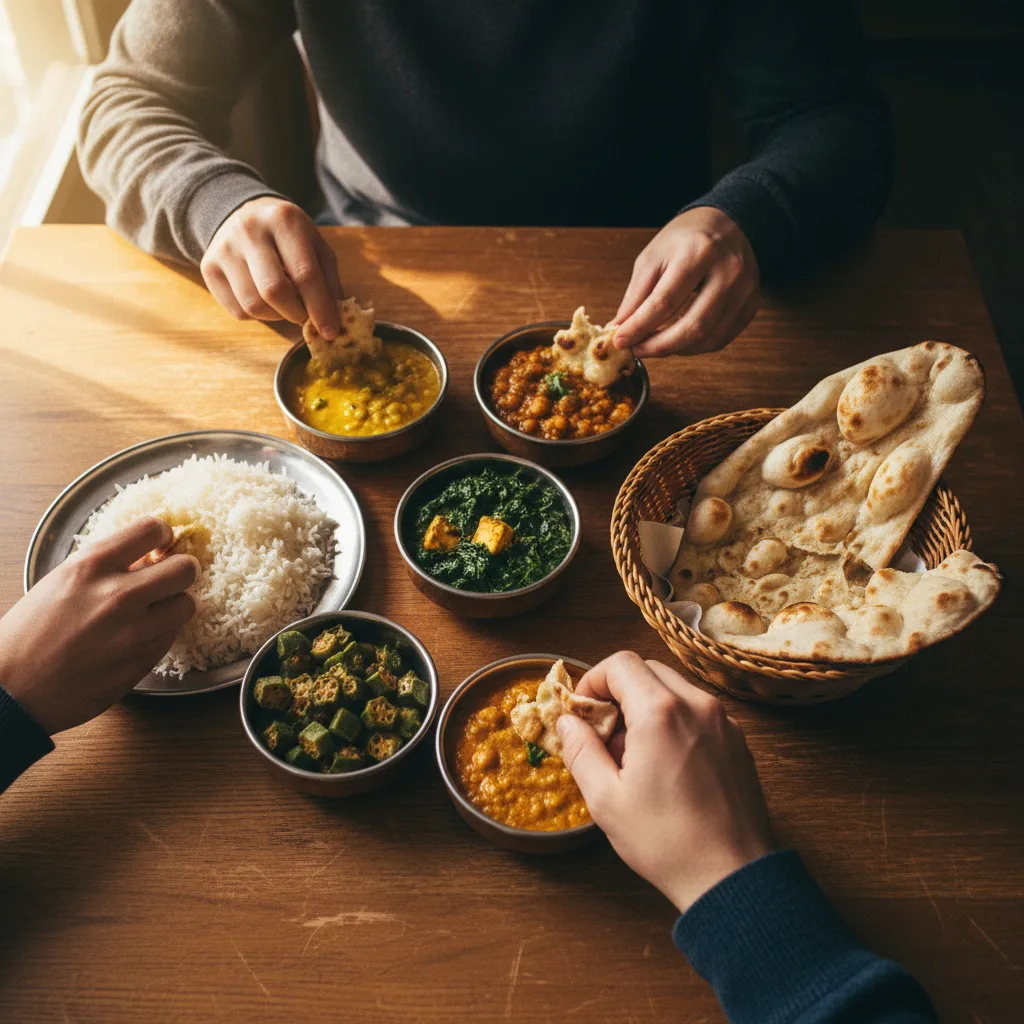
Start with the easy wins. Tarka dal, a yellow lentil dish finished with fried garlic, is almost always vegetarian and is a good test of a kitchen. Chana masala with chickpeas, saag aloo with spinach and potato, bhindi bhaji with okra and brinjal bhaji with aubergine are classic choices. Paneer dishes give vegetarians the creamy, rich plate that meat eaters get from tikka masala.
Look also for dishes that rarely appear on tourist menus but show the Bangladeshi kitchen: mixed vegetable bhaji, shatkora with vegetables, or a simple potato and cauliflower dish. When you see them, ask the server which ones the family itself eats. That question often brings a smile and a better recommendation than anything printed in the window.
Where Meat and Dairy Hide
Not every dish that looks vegetarian is. Some dals are finished with ghee, which is clarified butter and fine for most vegetarians but not for vegans. Some vegetable curries start from a shared base sauce, and in a few kitchens that base can include stock. Pakoras and bhajis are usually safe, but the frying oil may be shared with fish or meat. If you are strict, ask directly.
A clear way to ask is: does this dish have any meat, fish, stock or egg in it? Servers on Brick Lane hear this every night and will usually check with the kitchen. If the answer comes back vague or rushed, take that as a sign to order the simplest dishes or move on to another room down the street.
How to Pick a Good Room
Brick Lane is famous for the people standing outside restaurants trying to bring you in with offers. You do not need to stop. Instead, walk the full length of the curry stretch once, look in through the windows and pick a room where people are eating rather than just sitting with drinks. A table of families or older Bangladeshi men eating quietly is a better sign than a loud deal on the door.
Also read the menu length. A menu with a hundred dishes, each with a choice of chicken, lamb, prawn or vegetable, usually means one sauce with different fillings. A shorter menu with named vegetable dishes and a few regional specials usually means more cooking from scratch. This is the single most useful filter for a vegetarian on this street.
Ordering for a Table
Curry is best shared. For two people, order one dal, one dry vegetable dish, one richer paneer or chickpea curry, plain rice and one bread. For four, add a second vegetable dish and a starter like onion bhaji. Mixing textures, from soupy dal to crisp okra, makes the meal feel much more generous than four similar curries in red sauce.
Ask for the heat level you want. Many kitchens will adjust a dish for you if you ask for medium or extra spicy. If someone at the table cannot handle spice, a raita or a mild korma keeps them happy. Some restaurants on the street let you bring your own drinks, so check that at the door rather than assuming.
When the Curry Houses Are Not Right
Sometimes you want something lighter or more modern. The covered market at Spitalfields and the yard of the old brewery have food stalls and counters serving everything from falafel to vegan burgers and noodles. On weekends, food traders around the Truman Brewery and the side streets add more choice. This is a good plan for a group where one person wants curry and another does not.
Karpo APP can help you look for vegetarian or vegan places within a short walk of the market, which is handy when your first choice has a queue. The area is compact, so moving on rarely costs more than five minutes of walking.
An Honest Judgment
Skip the restaurant that pushes hardest on the street. The deal you are offered is rarely the best food, and a vegetarian plate in those rooms is often the least loved thing on the menu. Instead, choose the quieter dining room that is busy for the right reasons. If a restaurant has a vegetable thali or a set of small vegetable dishes, order it.
Also skip the chicken-shaped mock dishes that some places offer for vegans. The traditional vegetable dishes are almost always better, because they are what the cooks grew up eating, and they show you the kitchen's real skill.
A Walk to Frame the Meal
Before dinner, walk the quiet Georgian streets west of Brick Lane, such as Fournier Street and Princelet Street. The tall brick houses with their wooden shutters and painted doors show the silk weavers' world. In the early evening, the light on these houses is lovely, and the streets are much calmer than the market.
After dinner, walk north to the street art around the old brewery and the side streets toward Shoreditch, or loop back past the market roof. If you want something sweet, Bengali sweet shops in the area sell rasgulla, mishti and other milk sweets, a better finish than most dessert menus.
Who This Plan Suits
This plan suits curious vegetarians who want to understand what they are eating, couples looking for a casual shared meal and groups of friends who want a lively street with plenty of choice. It also suits visitors who have only eaten British curry-house food and want to try something closer to home cooking.
It does not suit someone who wants a calm, formal dining room or a tasting menu. For that, look elsewhere in the City or in Shoreditch.
Practical Notes
Aldgate East, Shoreditch High Street and Liverpool Street stations are all within walking distance. Weekends are busy with market crowds and night-time visitors, so weeknights are calmer for a relaxed dinner. Tell the server you are vegetarian or vegan when you order, and ask about ghee, stock and shared frying oil if those matter to you.
Bring some cash in case a smaller place prefers it, and walk the whole street once before choosing. Ten minutes of looking will lead you to a much better meal.
Ask Karpo for more information.
Keep reading
- Camden Korean BBQ Group Dinner Picker: Lockside Feasts
 Holborn Korean BBQ Group Dinner Picker: Midtown Feasts
 Covent Garden Korean BBQ Group Dinner Picker: Shared Tables