 Brixton Vintage Thrift Shop Finder: South London Retro Gems
Hidden Gems & Odd Finds
Mayfair Umbrella Shop Browsing Guide: 4 Frame Details
Follow this Mayfair umbrella shop browsing guide along Piccadilly arcades for 4 frame details. Compare malacca handles, silk drapes, and arcade etiquette.
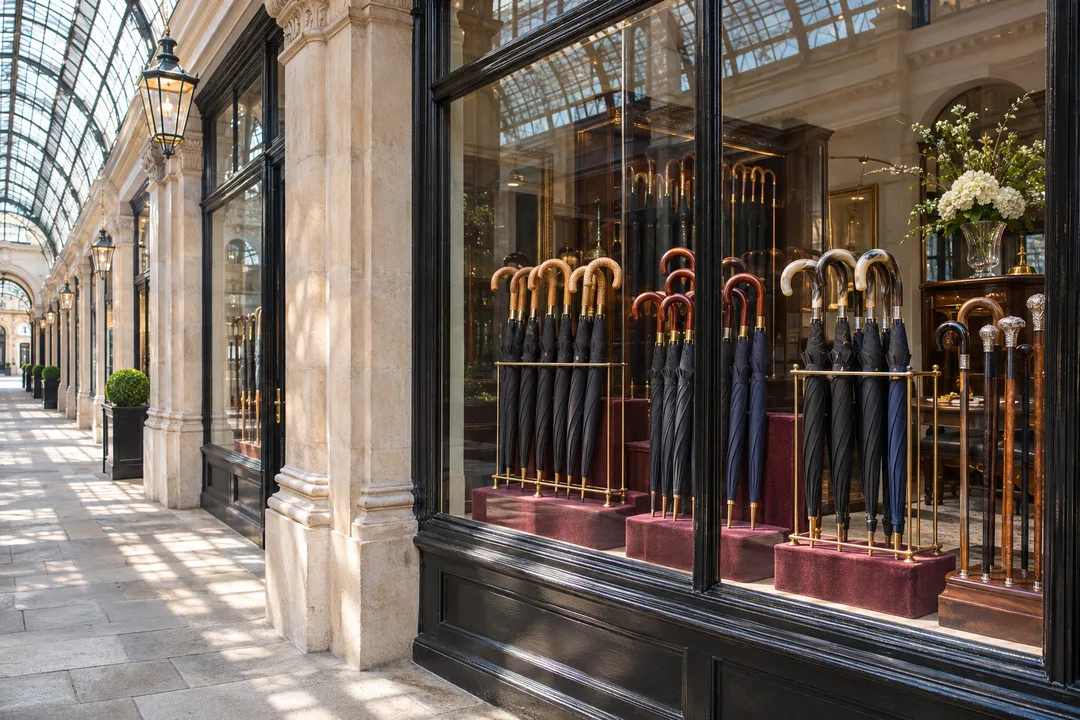
Turn off the wet pavement of Piccadilly into the sheltered calm of a glass-roofed Regency arcade, and you immediately notice how Mayfair treats rainwear as an extension of bespoke tailoring. When my brother Ronan arrived from Dublin for an autumn concert near Hanover Square, he asked me—after my years apprenticing in a West End cutting room—where to find a slender city umbrella that would complement a heavy flannel overcoat without looking bulky at the cloakroom counter. Following a dedicated umbrella shop browsing guide through Mayfair lets you examine traditional frame joinery at an unhurried pace. Between Burlington Arcade, Piccadilly Arcade, Jermyn Street, and the terracotta frontages of Mount Street, specialist counters display umbrellas whose proportions have been refined for centuries of West End foot traffic. Knowing what to inspect at the collar, tip cup, and tie wrap transforms a brief shelter from the drizzle into a masterclass in British workshop craft.
Arcade Thresholds and West End Rainwear Tradition
Mayfair's covered passages were designed specifically so nineteenth-century walkers could move between tailors, shirtmakers, and hatters without muddying their boots or soaking their lapels. That architectural heritage still shapes how you browse for an umbrella here today. As soon as you cross beneath the arched entrance of Burlington Arcade or Piccadilly Arcade, traditional etiquette requires lowering your open canopy, giving it one discreet flick toward the outer street gutter, and carrying it furled beside your hip while passing the bow-fronted vitrines.
Inside these intimate ground-floor parlours, umbrellas are never stacked in tangled wire bins. Instead, they stand in baize-lined mahogany grids where you can compare the warm amber sheen of malacca cane against dark scorched maple, polished water-buffalo horn, and Straight-grained English cherrywood. Because the shops sit steps away from Savile Row and Jermyn Street, counter staff are accustomed to customers who bring along an overcoat or tweed jacket simply to see how a handle tone sits against a specific cloth weight and herringbone pattern.
Before setting out across the West End, launch the Karpo APP to map nearby Mayfair arcades, traditional gentlemen's outfitters, and sheltered coffee bars so you can move smoothly between Piccadilly and Mount Street whenever a sudden squall rolls across Green Park.
Four Frame Details That Define a City Umbrella
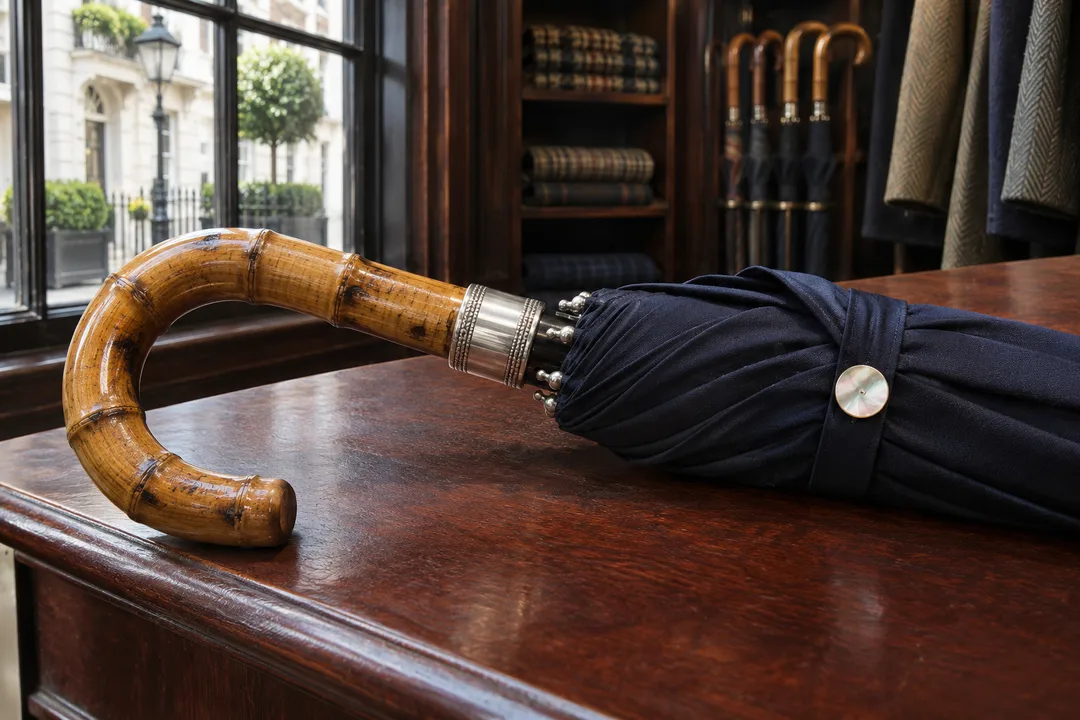
First, examine how the handle joins the shaft—or whether there is no joint at all. In a classic Mayfair city model built for the slimmest possible silhouette, a tempered steel tube shaft is paired with a hand-shaped handle of malacca rattan, hallmarked silver-collared cherry, or stitched bridle leather. Because the metal core is far narrower than a timber pole, the eight steel ribs nest snugly against the centre rod when closed, creating the celebrated pencil roll that West End tailors admire.
Second, look closely at the tip cup, the optional sliding metal sleeve fitted just above the handle grip. When you wind the fabric pleats tightly around the frame and slide a brass or nickel tip cup down over the eight rib ends, the little metal points stay locked flush against the shaft without needing an bulky outer cuff. Run your fingertips around the rim of the cup to feel how cleanly it seats against the wood without scratching the varnish.
Third, inspect the fastening band and button. Heritage makers avoid wide hook-and-loop synthetic tapes that catch on cashmere scarves or fray after a single winter. Instead, look for a narrow ribbon strap anchored with hand-sewn bar tacks and fastened around a carved mother-of-pearl, horn, or engraved metal button. Fourth, check the tapered ferrule at the bottom tip: a proper horn or heavy brass cap absorbs the daily tap of York stone flagstones without splitting the end grain of the stick.
Silk Versus High-Density Woven Canopies in Town
Ronan initially assumed all dark umbrellas used the same synthetic cloth until a specialist along Mount Street held two open frames up against the skylight. Woven silk canopies remain the pinnacle of traditional West End umbrella making: the natural tension of silk threads allows the gores to stretch taut as a tambourine when raised and fold down into razor-sharp, whisper-thin pleats when furled. When raindrops strike taut silk, they produce a distinctive crisp pattering sound that seasoned collectors recognize immediately.
For everyday city commuting where your umbrella may be opened and shut four times between Bond Street and Piccadilly Circus, high-density yarn-dyed polyester pongee offers a remarkably close visual matte finish with far gentler upkeep. Unlike shiny utility nylon, fine pongee has a dry, cotton-like hand feel that resists creasing even if you have to furl it briefly to board a crowded bus or step into a gallery lift.
While comparing canopies in the shop, step back to check the dome profile in a full-length mirror. A deep, slightly domed curve shields your shoulders and collar from angled wind blowing down Albemarle Street, whereas a flatter profile gives you wider visibility when crossing busy intersections around Berkeley Square.
A Sheltered Stroll From Piccadilly to Mount Street Gardens
After choosing a frame, trace a walking route through Mayfair that lets you enjoy the neighbourhood's quietest architectural corners between showers. Begin by gliding northward through Burlington Arcade into Cork Street, where ground-floor art spaces invite calm window browsing beneath deep stone cornices. Keep your newly rolled canopy balanced horizontally by its centre point or tucked lightly under your arm as you cross Bond Street toward Bruton Street and Berkeley Square, where towering plane trees filter the grey afternoon sky.
Continue west along Mount Street, one of London's finest sequences of red-brick and terracotta Queen Anne Revival buildings. Here, wide pavements and recessed stone porches make it easy to pause and admire window displays of leather luggage, fine stationery, and bespoke footwear without jostling other walkers. Halfway along the street, slip through the narrow pedestrian passage that leads into Mount Street Gardens, a tranquil pocket of red-oak benches, evergreen shrubs, and damp gravel paths sheltered by the surrounding brickwork.
From the gardens, loop north to Grosvenor Square or duck into Shepherd Market's cobbled courtyard lanes for a pot of afternoon tea or a savoury pastry under a heated awning. Use the Karpo APP along the way to discover tucked-away Mayfair mews passages, independent galleries, and quiet wine parlours within a five-minute walk.
Cloakroom Etiquette and Long-Term Handle Care
A well-chosen Mayfair umbrella deserves thoughtful handling when you arrive at a dining room, recital hall, or club entrance. If the umbrella is wet, never force it into a crowded cylindrical stand where heavier frames can bend its ribs or tear the damp fabric. Ask the attendant whether there is a drip rack where it can rest unfastened, or keep the tie strap loose until the outer cloth has aired out completely.
To preserve the pencil-slim roll once the fabric is bone-dry, hold the handle in one hand, gather all eight rib tips together at the collar, and rotate the umbrella slowly while drawing your other palm downward over the gores in one spiral motion. Fasten the button ring without stretching the ribbon band, and slide the tip cup gently over the rib points if your frame includes one.
Natural handles such as malacca cane, bamboo, and horn respond well to occasional conditioning. Rub a tiny drop of neutral beeswax polish or camellia oil onto a lint-free cloth to keep wooden grips from turning brittle during winter heating seasons, and avoid hanging a leather-covered crook over sharp metal rails that could indent the hide.
Ask Karpo for more information.
Keep reading
- Brixton Vintage Thrift Shop Finder: South London Retro Gems
 Notting Hill Vintage Thrift Shop Finder: Preloved Rails
 Soho Vintage Thrift Shop Finder: West End Designer Archives