 Greenwich Gelato Shop Crawl: Market Cobbles to Park Hilltop
Coffee & Dessert
Marylebone Treacle Tart Dessert Crawl: Warm Slices to Order
Walk Marylebone from Chiltern Street to Marylebone Lane for golden-syrup treacle tarts. Compare brioche-crumb wedges with clotted cream and warm custard pours.
Stepping out from a morning strings rehearsal near Wigmore Street with wooden instrument cases slung over their shoulders, two chamber violists and their visiting Cornwall aunt launch a focused treacle tart dessert crawl across Marylebone. Rather than settling into a single formal hotel lounge, they treat the red-brick grid between Chiltern Street and Marylebone Lane as a tasting corridor for Britain's most comforting golden-syrup bake. In this pocket of central London, pastry kitchens divide into two distinct schools: modern viennoiserie counters that fold toasted brioche crumbs and bitter Seville orange peel into shallow fluted rings, and wood-paneled Edwardian dining rooms that bake deep farmhouse loaves in heavy crimped tins. Walking between both styles lets you compare how crumb grind, citrus acidity, and dairy pairings transform the same amber syrup.
Why Chiltern Street Brioche Crumb Tarts Set the Benchmark
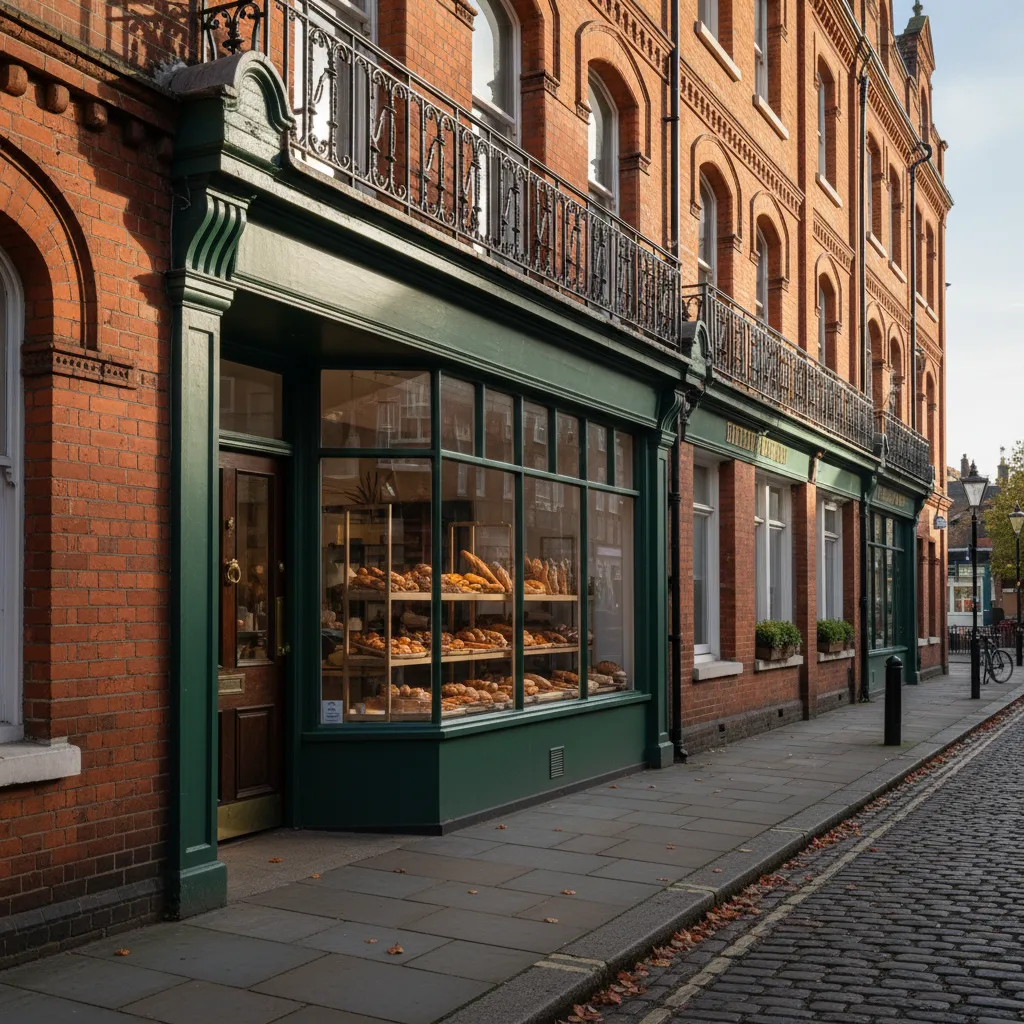
The route begins along the quiet red-brick curve of Chiltern Street, where independent bakeries display whole fluted tarts on grey marble slabs right behind the glass. Here the pastry chefs treat treacle tart with patisserie precision, rolling brown-butter sweet pastry thin enough to snap cleanly under the side of a dessert fork. Instead of standard white sandwich loaves, these bakers dry leftover brioche and sour-cream loaves on cooling racks, blitzing them into irregular golden granules that drink up warm syrup without turning pasty. When a wedge arrives on bone china, the filling holds a glossy, amber-brown sheen flecked with finely grated Seville orange zest and a whisper of sea salt that cuts right through the cane sweetness.
Watch the regulars along Chiltern Street and you will notice gallery curators from Portman Village, bespoke tailors taking a mid-morning break, and solo readers claiming the narrow marble window ledges. The unspoken neighborhood rule at these artisan counters is to order a single room-temperature slice with a quenelle of cool, yellow-crusted Jersey clotted cream rather than asking the barista to microwave the pastry. Reheating a brioche-crumb tart melts the delicate butter lattice inside the crust and causes the syrup to separate onto the plate. Pairing that dense, citrus-bright wedge with an unsweetened flat white or a pot of second-flush Assam tea keeps your palate sharp for the second half of the walk.
Crossing to Marylebone Lane for Deep-Dish Custard Slices
From Chiltern Street, cut east across Blandford Street into the winding village spine of Marylebone Lane and the food-shop cluster around Moxon Street. The architectural mood shifts from sleek red-brick porticos to bow-fronted Georgian shopfronts, cheesemonger awnings, and snug upstairs tearooms where pudding is served straight from wide ceramic dishes. Here the aunt from Cornwall immediately spots the traditional farmhouse approach: a taller, thicker shortcrust wall rubbed with cold salted butter and a coarse breadcrumb filling made from day-old crusty white Tin loaves. These kitchens blend pale golden syrup with a small spoonful of dark molasses treacle, giving the slice a deeper butterscotch aroma and a chewy, caramelized top edge.
At these Marylebone Lane counters, the preferred accompaniment shifts from cold clotted cream to a warm porcelain jug of vanilla-pod custard or a splash of cold unhomogenized pouring cream. Because the coarse white breadcrumbs leave tiny air pockets throughout the filling, pouring warm custard around the base of the pastry allows the crust to soften slightly while the center remains pleasingly taut. If you are sharing across a group of three, ask the server for two forks and one dessert spoon so everyone can scoop the syrupy corner crust alongside the pool of dairy. A cup of brisk Earl Grey with a strip of fresh lemon peel echoes the lemon juice baked into the syrup mixture.
Evaluating Shortcrust Shells, Syrup Darkening, and Citrus Zest
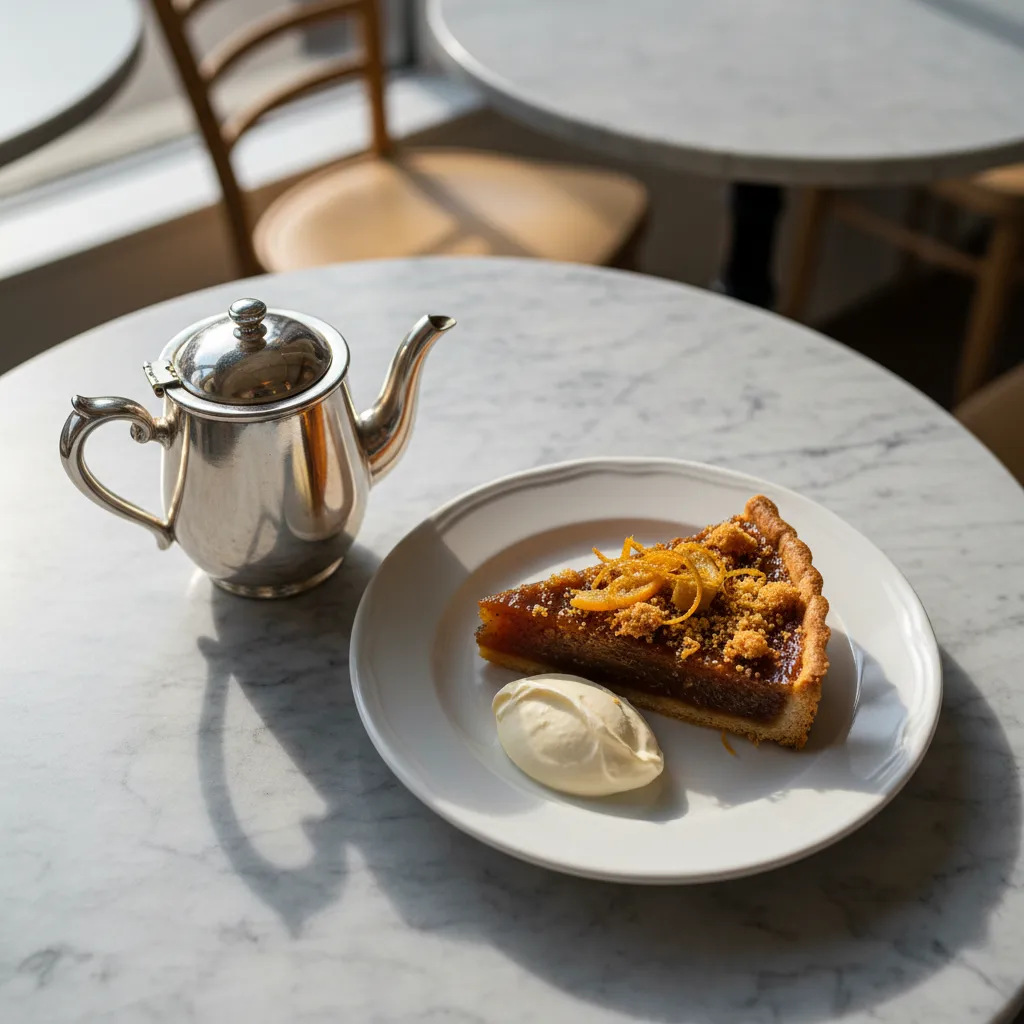
Comparing the two stops side by side reveals four technical details that separate a memorable treacle tart from a cloying sugar bomb. First, inspect the underside of the pastry shell: a properly blind-baked base stays pale biscuit-gold and dry from tip to crimped rim, never translucent or soggy from unabsorbed syrup. Second, look at the crumb-to-syrup suspension; the filling should slice with a gentle wobble like set marmalade rather than running across the china or stiffening into dry cake. Third, pay attention to the acid balance, where freshly squeezed lemon juice, bitter orange zest, or a sprig of lemon thyme prevents the golden syrup from coating your tongue.
Temperature and topping restraint also play a decisive role during a multi-stop tasting walk. Many visitors assume every British pudding must arrive piping hot, yet golden syrup actually expresses more complex floral and caramel notes when cooled to just above room temperature. When a kitchen pulls a tart straight from the deck oven, let it rest on the table for five minutes so the crumb matrix firms up and the citrus aromatics come forward. Use the Karpo APP before leaving your first stop to map nearby Marylebone bakery counters, tearooms, and pastry windows along your route so you can pace your tasting without backtracking across Oxford Street traffic.
What to Skip and How to Pivot Around Full Tearoom Tables
Honest discernment saves both appetite and patience on this dessert crawl. Skip any pre-boxed slices wrapped in plastic film near the commuter concourses toward Baker Street or Bond Street, where condensation softens the shortcrust into damp cardboard and artificial caramel flavoring replaces real cane syrup. You should also skip ordering heavy chocolate ganaches, sticky toffee puddings, or sweetened chai lattes alongside your tart, because competing sugars flatten the subtle interplay between toasted breadcrumbs and lemon zest. Avoid the peak weekend post-lunch rush when narrow Marylebone High Street cafe tables fill with shopping bags and strollers.
Having a clear backup plan keeps the afternoon relaxed when your first-choice tearoom has a line at the door. If the small marble tables along Chiltern Street or Marylebone Lane are completely occupied for more than ten minutes, switch immediately to a parchment-wrapped takeaway box from a pastry hatch near Moxon Street or New Quebec Street. Ask the counter staff to pack the clotted cream or crème fraîche in a separate lidded pot so the crust stays crisp in your coat pocket. If a sudden London drizzle rolls across the rooftops, duck under the covered archway passages off Thayer Street or step into the sheltered glass courtyard of the Wallace Collection.
Linking Manchester Square Courtyards to Paddington Street Gardens
To turn the tasting into a balanced neighborhood stroll, thread Marylebone's calm garden squares and architectural landmarks between your pastry stops. Begin by admiring the proportioned townhouses and plane trees of Manchester Square before heading into Chiltern Street for your first brioche-crumb slice. After crossing toward Moxon Street — where browsing the neighboring fromagerie or independent bookshop offers a welcome visual break from sweet windows — carry your second takeaway wedge north into Paddington Street Gardens. The cast-iron benches beneath the mature London plane trees provide a quiet, leafy sanctuary where two violists and their aunt can compare notes on crust snap and citrus finish.
Before wrapping up the walk toward Regent's Park or Baker Street, a few practical habits make the route effortless. Carry a small linen napkin and a travel fork in your daypack if you plan to eat on garden benches, as flaky shortcrust pastry and sticky amber syrup reward a proper utensil over thin wooden disposables. Share one slice per stop among two or three people so you can appreciate both the modern Seville-orange brioche version and the traditional lemon-and-white-crumb farmhouse bake without sugar fatigue. Open the Karpo APP whenever you want to pivot toward nearby Fitzrovia coffee bars or Mayfair patisseries for an afternoon digestif stroll.
Ask Karpo for more information.
Keep reading
- Greenwich Gelato Shop Crawl: Market Cobbles to Park Hilltop
 Hackney Gelato Shop Crawl: Small-Batch Arch and Park Route
 Islington Gelato Shop Crawl: Sunday Canal and Passage Walk