 Richmond Park Sunset Viewing Planner: Deer Meadow Horizons
Weekend Plans
Shoreditch Traditional Tea Ceremony Room: Sunday Bowls
Pair a Shoreditch traditional tea ceremony room with Sunday flowers on Columbia Road. Learn which handmade bowls to notice and what a starter kit needs.
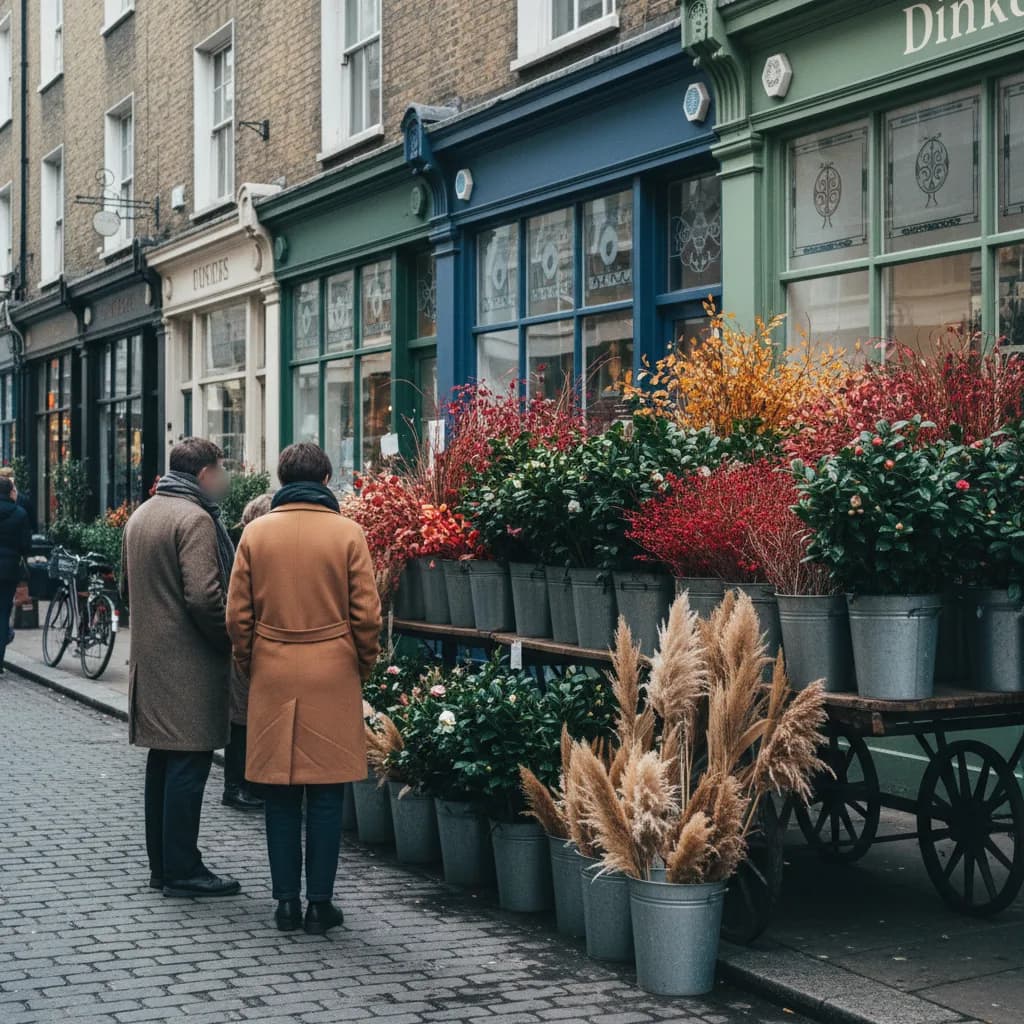
Sunday is the natural day for a traditional tea ceremony room outing in Shoreditch, because the morning flower market on Columbia Road sets up the theme before you sit down. Tea rooms put a single seasonal flower in the alcove, and walking past buckets of branches, grasses and camellias first trains your eye for what the host has chosen. Plan the flowers early, the tea session around midday or early afternoon, and leave the late afternoon for browsing ceramics.
Why a Flower Market Is the Right Warm-Up
Flowers in a tea room follow a style called chabana, which is deliberately sparse compared with the formal arrangements of ikebana. A host might place one camellia bud and a single leafy stem in a bamboo or ceramic vase, aiming for something that looks freshly picked rather than designed. The old guidance attributed to Sen no Rikyu, the sixteenth-century tea master who shaped the ritual, is to arrange flowers as they are in the field.
On Columbia Road you will see the opposite approach, with stalls stacked high and traders calling out bunch deals as the morning goes on. That contrast is useful. After half an hour among crowded buckets, a single stem in a quiet alcove reads as intentional, and you start to notice how a bare branch or a half-open bud signals early winter. Bring a tote if you plan to buy, and keep flowers outside the tea room unless the host invites them in.
Reading a Handmade Bowl Like a Regular
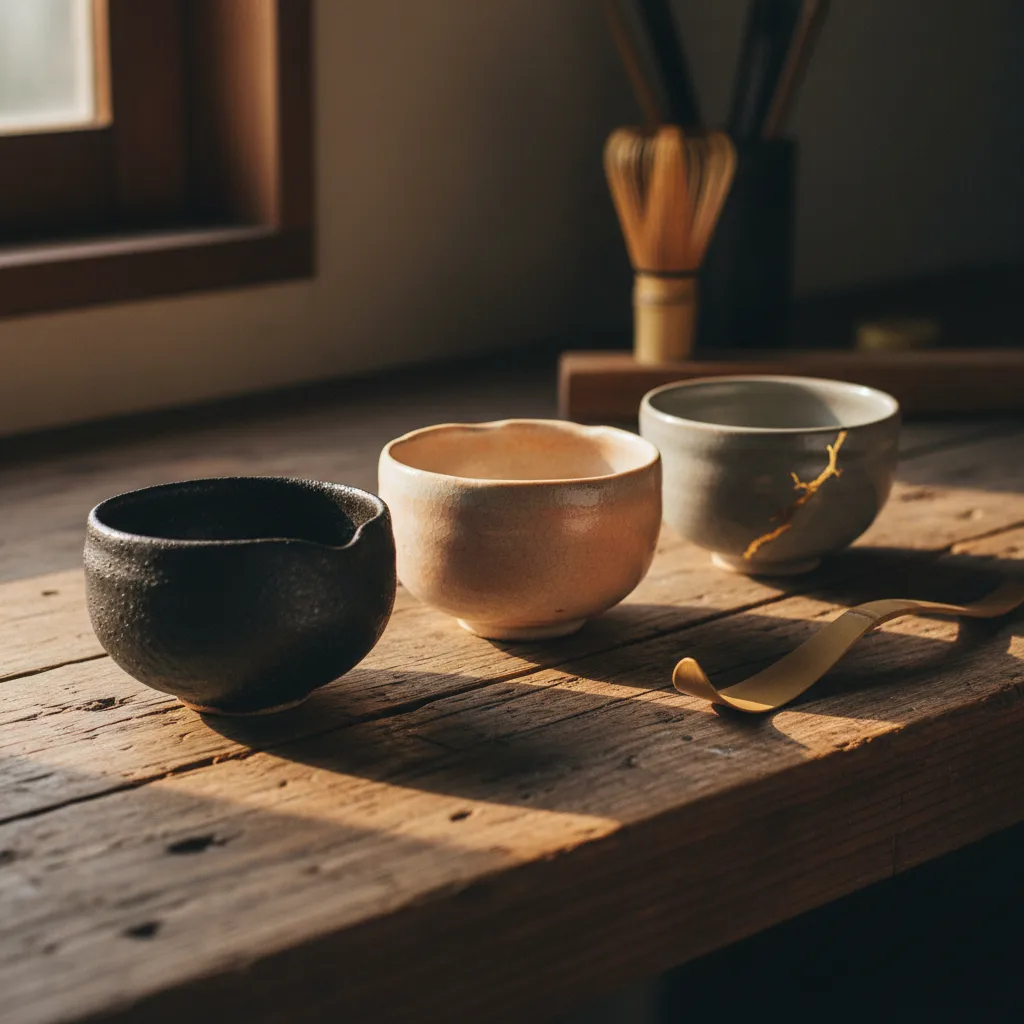
The bowl is the object guests are expected to look at most closely, and East London's studio-pottery culture makes Shoreditch a good place to learn the vocabulary. After drinking, guests traditionally set the bowl down, lean forward and study it: the glaze, the weight, the foot ring underneath. Raku bowls are hand-shaped rather than thrown on a wheel, low-fired and often black or red, which keeps the tea warm and feels soft in the palm.
Other styles you may meet include Hagi ware, whose pale glaze slowly changes colour as tea seeps into fine crackles over years of use, and Karatsu ware, with earthy iron-rich decoration. A bowl repaired with kintsugi, where cracks are filled with lacquer dusted in gold, is not a flaw to ignore; hosts often use such bowls precisely because the repair tells a story. Asking where a bowl was made, and by whom, is always a welcome question.
Here is the honest bit: do not judge a tea room by how expensive its utensils look. A thoughtful host with modest bowls and a carefully chosen scroll often gives a richer session than a showroom setting. What matters is whether the host explains why each object is there. If the answer to your first question is a sales pitch rather than a story, that is a signal to try another room next time.
From Brick Lane to the Museum of the Home
Once the flower stalls thin out, walk south toward Brick Lane, where the Sunday market spreads through former brewery buildings and side yards. It is loud and busy, so treat it as a quick pass rather than a destination if your tea session is next. Shoreditch High Street station on the Windrush line sits at the lane's northern end and connects easily if your tea room is further along the line.
For a calmer stretch, head north up Kingsland Road to the Museum of the Home, housed in a row of eighteenth-century almshouses with gardens arranged by period. Entry to the galleries is free, and its displays of how Londoners furnished their living rooms across centuries offer a thoughtful counterpoint to the strict, minimal interior of a tea room. The small gardens are worth a lap in any season, even in drizzle.
If your session runs into mid-afternoon, Hoxton Square and the lanes around Old Street station offer plenty of places to sit with a notebook and jot down what the host explained, which is a habit many tea students keep. Writing the name of the scroll phrase, the sweet and the bowl style while they are fresh makes your second visit far more rewarding.
A Starter Kit Without the Clutter
Plenty of first-time guests leave wanting to try matcha at home, and East London's ceramics shops and Japanese grocers make it tempting to buy a full set. You only need four things: a bowl wide enough for the whisk to move, a bamboo whisk called a chasen, a bamboo scoop called a chashaku, and good ceremonial-grade matcha kept sealed in the fridge. A small fine-mesh sieve to sift out lumps is a cheap fifth item worth adding.
Skip the decorative caddy, stand and silk cloth for now. Those belong to the formal procedure and make more sense once you start lessons. Instead, learn the whisking motion: a quick zigzag from the wrist, not a circular stir, until the surface turns into fine foam. Most hosts will happily demonstrate it if you ask at the end of a session, and two minutes of guidance is worth more than any boxed kit.
Water is where most home attempts go wrong. Boiling water scorches matcha and makes it harsh, so let the kettle rest for a few minutes until it is well below the boil, then pour a small amount over about two scoops of sifted powder. Whisk, taste and adjust next time rather than adding more powder mid-bowl. If the result is bitter, cooler water fixes it more often than a pricier tin of tea does.
Practical Notes for an East London Sunday
Columbia Road is busiest late morning, so arrive early if you want to browse rather than shuffle. Hoxton station on the Windrush line is the closest stop for the flower market, while Old Street on the Northern line and Liverpool Street serve the southern end of Shoreditch. Many tea rooms keep small group sizes and set start times, so contact the host ahead to secure a place and ask whether chairs are available if kneeling is difficult.
Wear socks without holes, carry a small bag and keep fresh flowers wrapped and outside. Before you go, describe your Sunday plan to the Karpo APP, including the flower market, your preferred tea style and how far you are happy to walk, and save the matching tea options and ceramic shops in one list. It keeps the day flowing from blooms to bowl to the walk home.
Ask Karpo for more information.
Keep reading
- Richmond Park Sunset Viewing Planner: Deer Meadow Horizons
 South Bank Sunset Viewing Planner: Thames Riverside Walks
 Parliament Hill Sunset Viewing Planner: London Heath Vistas