 Brixton Vintage Thrift Shop Finder: South London Retro Gems
Hidden Gems & Odd Finds

Covent Garden Traditional Calligraphy Supply: Test a Pen
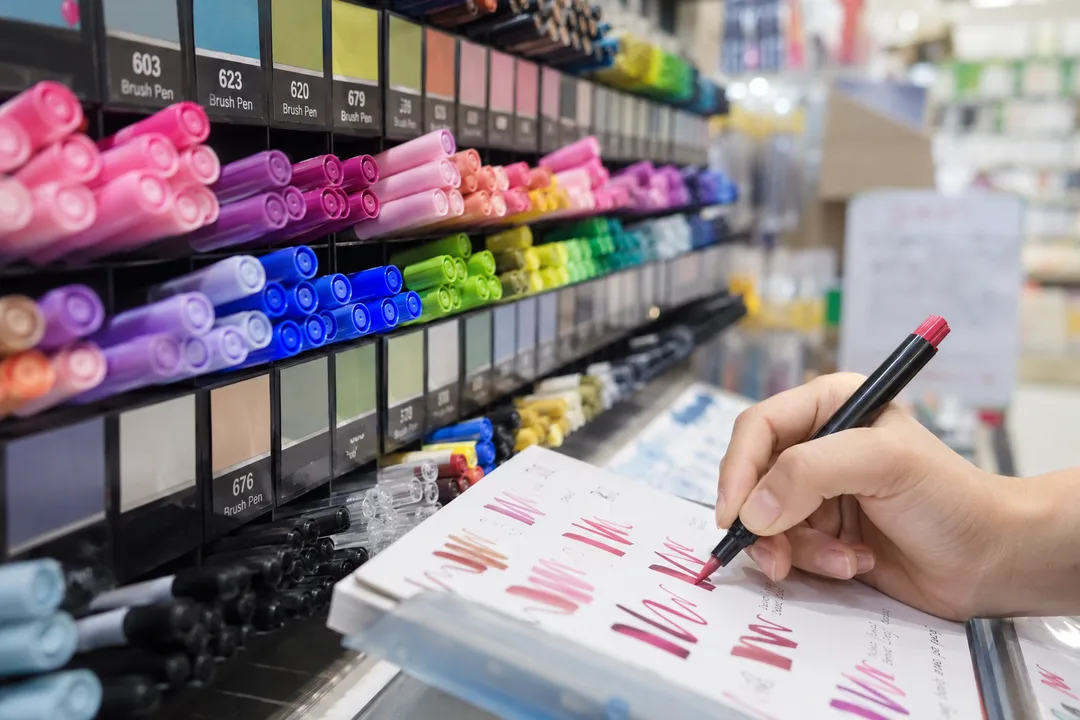
London Graphic Centre in Covent Garden keeps long walls of brush pens and nibs. Test strokes in a planned order and leave with a calligraphy kit that fits.
London Graphic Centre in Covent Garden features an expansive ground-floor pen and lettering section that serves as an active creative resource in central London. Creative communities across the capital frequently rely on its comprehensive range of ink pens, technical drafting markers and specialist calligraphy tools. Approaching a traditional calligraphy supply trip here works best as a deliberate, structured stroke test: arrive with three specific letterforms you want to master and leave with the exact instruments that produce crisp, balanced geometry.
What Sets This Shop Apart From a Craft Aisle
The stock leans professional, aimed at the designers, architects and illustrators who work around Seven Dials: technical pens, layout pads, cutting mats and drafting tools sit beside calligraphy nibs and bottled inks. That mix matters for a calligrapher. You can pick up a gridded layout pad and a proper T-square on the same visit as your broad-edge markers, which means your practice sheets come out level from the first evening.
London Graphic Centre has also hosted lettering sessions with the Lettering Arts Trust during London Craft Week, a sign of how seriously the trade side treats hand lettering. Even outside those events, seeing the tips in person is the real asset. Holding a dozen pens against your own hand in a few minutes is something no online basket can match.
Plan a Ten-Minute Stroke Test
Pick three letters before you arrive. A lowercase a, a capital R and an ampersand cover most of the stroke shapes in Italic and Roman hands: a curve, a diagonal, a thin entry and a heavy swell. Write them with your current pen at home so you have a baseline. Bring a strip of your usual practice paper, write the same three letters with each candidate tool you are allowed to try, side by side, and photograph the row before moving on.
Hold the angle steady. Broad-edge work lives or dies on pen angle, usually around thirty degrees for Italic, so draw a light pencil guide on a scrap card and bring it along. Comparing tools at different angles tells you nothing. After ten minutes you should see which tips give clean hairlines and which drag or skip. Cross off the losers immediately rather than keeping them as maybes.
Brush Pens Versus Dip Nibs
Brush pens are where this shop's range is deepest, from firm to soft tips. They suit pointed-brush scripts and casual brush lettering, and they travel well. Their weakness is the traditional contrast of a broad nib: a felt or fibre tip rounds off at the corners after a few weeks, so the crisp square entry of a Foundational Hand disappears.
Dip nibs keep that edge for years with care. If your goal is traditional broad-pen work, spend most of your time on broad-edge tools, and treat brush pens as a sketching tool for layout roughs. An honest call: skip the novelty metallic markers unless you need them for a specific card. They look striking on the rack, but they flood on thin paper and teach poor pressure control.
Paper and Guidelines Worth Adding
A gridded or dotted layout pad pays for itself within a week, because ruling your own lines eats into practice time. Look for a smooth, bleed-proof sheet that takes marker ink without feathering, then add a heavier cartridge pad for dip-nib work. Test both with your chosen tool before buying, since a pen that shines on a bleed-proof pad can spread on softer paper.
If you plan to frame anything, ask about hot-pressed watercolour paper in single sheets rather than a full block. A single large sheet cut down into quarters gives you four finished pieces for the cost of one experiment. Pick up a soft eraser and an H pencil while you are there, since hard leads score the surface and show through thin ink.
Think about the guidelines themselves too. A transparent ruler with a parallel-line grid lets you set x-height and ascender lines in seconds, and a light box turns any thin sheet into ruled paper by tracing a guide sheet underneath. Both live on the drafting side of the shop, not the calligraphy rack, which is why so many lettering beginners walk past them.
Who Else Is Testing Pens Beside You
During typical daytime hours, illustrators, design students and studio lettering artists test pen grips and line variations across sample pads. Calligraphers frequently compare metallic brush pens and dip nibs for formal cards and layout commissions. The shared courtesy along the test racks is straightforward: ask team members before uncapping sample pens, keep test marks tidy on the provided paper strips, and always return pens to their designated slots so fellow letterers find items readily.
Seven Dials and Neal's Yard on Foot
Leave by the Shelton Street side and you are two minutes from Seven Dials, where seven streets meet at the sundial pillar. Neal's Yard, a small courtyard of painted shopfronts off Monmouth Street, is a calm corner to sit and write out your shortlist with the new pens. On a busy Saturday the Covent Garden Piazza crowds thin out quickly once you head north toward Shaftesbury Avenue.
For lettering inspiration, the British Museum is about fifteen minutes north on foot through Bloomsbury, and its Islamic and ancient Near East galleries hold some of the strongest letterforms in London. If you would rather stay close, St Paul's Church on Bedford Street, the actors' church behind the Piazza, has a quiet garden and carved memorial plaques worth a sketch.
Practical Notes
Covent Garden offers compact pedestrian lanes with smooth connections across central London's transit network. Bring a dedicated pencil case for fresh nibs and markers, alongside your three-letter baseline reference card on your standard practice paper. If you purchase bottled drawing ink, request that it be bagged securely upright so jars stay level throughout your commute.
Treat the first visit as a test day and the second as a buying day once you have used a tool for a week. That rhythm stops a drawer full of half-used markers and builds a kit around your actual hand. Ask Karpo APP to pair the trip with a lettering workshop or a quiet café near Seven Dials so your new tools get used the same day.
Ask Karpo for more information.
Keep reading
- Brixton Vintage Thrift Shop Finder: South London Retro Gems
 Notting Hill Vintage Thrift Shop Finder: Preloved Rails
 Soho Vintage Thrift Shop Finder: West End Designer Archives